
Pilgrimage as a Path to Holiness
“God evidently loves pilgrims. For to some, like Tobias, he sent angels as guides. To others, like Abraham, he just said, ‘Arise and go’” (Catherine Doherty, Strannik, 7).
Catherine de Hueck Doherty, the foundress of Madonna House, was born and raised in Russia. Her Russian upbringing obviously had an important role in her spiritual formation, which in turn, had and continues to have an important role in Madonna House spiritual formation. The intricacies of that topic can be explored in Catherine’s many books and lectures, as well as many writings by members of the Madonna House community. This little article, on the other hand, is just a reflection on her book Strannik, which is Russian for pilgrim, and how it has helped me to better understand the pilgrimages that I love.
The subtitle of Strannik is “The Call to the Pilgrimage of the Heart” and it expresses a deeper meaning of pilgrimage that Catherine seeks, in her roundabout way, to unpack for the reader. God has placed in the heart of each human being a desire for unity, and this desire can only be satisfied by God. We may try to quench our thirst, to borrow Our Lord’s analogy used with the woman at the well, at other founts, but only Christ is the living water that wells up to eternal life (Jn. 4:1-42).
We are all called to seek true union with God. That is the pilgrimage that we all must embark upon. Many have made the mistake, according to Catherine, of thinking that life is necessarily a pilgrimage and that we are journeying toward God whether we realize it or not. She asserts, however, “We can escape this pilgrimage. We can easily forget it. We can put a screen in our heart between it and all the rest of our life. We can go after many things; we can go on pilgrimages seeking gold and silver, fame, power, and so on. But those are not really pilgrimages; they are shams” (Strannik, 15). The pilgrimage to eternal life, union with the Trinity (sobornost), is only possible through Christ. He is the key.
However, before we become true pilgrims, walking toward sobornost and inviting others to join us, Catherine says that we must first enter poustinia. Poustinia is being set apart for God. Literally, it can be a cabin where one goes to fast and pray to be purified of the things that separate us from God. Figuratively, it is entering into one’s own heart and setting it apart for God. The former assists the latter, but it is not, Catherine says, essential to poustinia that we go to an isolated cabin. Then, she says, “when the poustinia has cleansed me totally, has opened me to God and to others, when I have committed myself to God—the Lord of History, the Triune God—then I can leave all things behind and move on the pilgrimage that God has called me to” (Strannik, 18-19).
True pilgrims are easily recognized because their journey reminds others of Christ – of His Passion and His Resurrection: “They are truly pilgrims because God called them to this and because they have contemplated sobornost, in poustinia. Now they are making this rhythm of sobornost, poustinia, and strannika (pilgrimage) their way of life” (Strannik, 19). Catherine’s poustinia and strannika don’t require us to seek God in far off places. God is pursuing us, and so He offers Himself to us, most importantly, in the Sacraments, in Scripture, in our neighbours, and in the circumstances of daily life. The physical poustinia and strannika should, if they are made in the right spirit, lead to deeper union with God.
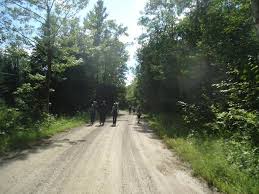
Last summer fifty pilgrims set out from Our Lady of Fatima Parish, Renfrew to spend three days on a prayerful journey to St. Ann’s, Cormac for the annual pilgrimage. Thanks to the generosity of many people, St. Ann’s “Walk the Opeongo Line” Pilgrimage was a success. There were some bumps along the way and not everything went according to plan, but that’s all part of the pilgrim experience. Catherine writes, “The pilgrim is totally open; he is not afraid of persecution. He accepts persecution because he is a follower of a persecuted God. A pilgrim is a person of pain. If he is not ready to accept pain, he cannot be a pilgrim. Pain walks with him night and day. But strangely enough, joy does too” (Strannik, 48). We began the journey seeking to deepen our relationship with God, and He took advantage of the time to teach us many lessons.

Saint Kateri , Canada’s Protectress
This was the title given to Saint Kateri Tekakwitha, by Pope Benedict XVI, when he canonized her on October 28th, 2012, along with six others, in Saint Peter’ Square (she had been beatified by Pope John Paul II back in 1980). With Saint Joseph as our protector, along with the Canadian martyrs, we seem to[…]Continue reading→

Remembering Father Alphonse de Valk
(Today marks the sixth anniversary of the death of Father Alphonse de Valk, C.S.B., a faithful, courageous and indefatigable Basilian priest, pro-life-and-family apostle, and the founder of Catholic Insight magazine. Here is what we wrote those on his entering into eternity five years ago, as we continue to remember him in our prayers and thoughts)[…]Continue reading→

My Name is Bernadette
April 16th is a propitious day, for besides the anniversary of Father de Valk’s death, who founded Catholic Insight in its print form decades ago, and the commemoration of the ‘two Benedicts’, mentioned in accompanying posts, today we also recall Saint Bernadette Soubirous, the young visionary to whom the Virgin Mary appeared numerous times at[…]Continue reading→

Canonizing Sister Faustina and Divine Mercy
HOMILY OF THE HOLY FATHER MASS IN ST PETER’S SQUARE FOR THE CANONIZATION OF SR MARY FAUSTINA KOWALSKA Sunday, 30 April 2000 1. “Confitemini Domino quoniam bonus, quoniam in saeculum misericordia eius”; “Give thanks to the Lord for he is good; his steadfast love endures for ever” (Ps 118: 1). So the Church sings on the Octave of[…]Continue reading→

Divine Mercy Sunday – An Echo of Every Mass
Reach out your hand and put it in my side. Do not doubt but believe’… ‘My Lord and my God!’ (Jn. 20:18)). Today is Divine Mercy Sunday, and as we celebrate the end of the Easter Octave, we contemplate the wounded side of our Saviour, the Church’s source of life. On Good Friday in the[…]Continue reading→

Saint Stanislaus of Szczepanów
We celebrate Saint Stanislaus today (+ April 11, 1079), in light of this Easter Octave, a bishop and martyr who accepted the episcopacy only at the direct order of Pope Alexander II. He proved a wise and courageous leader of his flock, put to death by his own king, Boleslaus, for rebuking the monarch’s ‘immoral[…]Continue reading→
First Holy Communion: Sermon from May 16, 1943
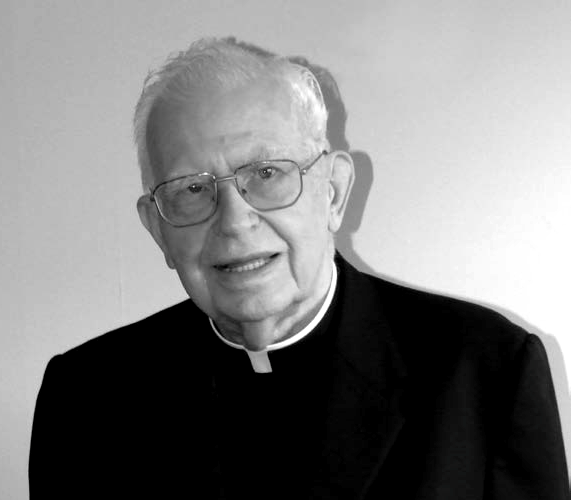
Here is a sermon from the good old days by +Rev. Msgr. Vincent Nicholas Foy (August 14, 1915 – March 13, 2017), from 1943. Readers may recall that Pope Saint Pius X, by the decree Quam Singulari in 1910, lowered the customary age of reception of Holy Communion – after the rigours of the plague[…]Continue reading→
In the Glorious Light of Easter, Alleluia!
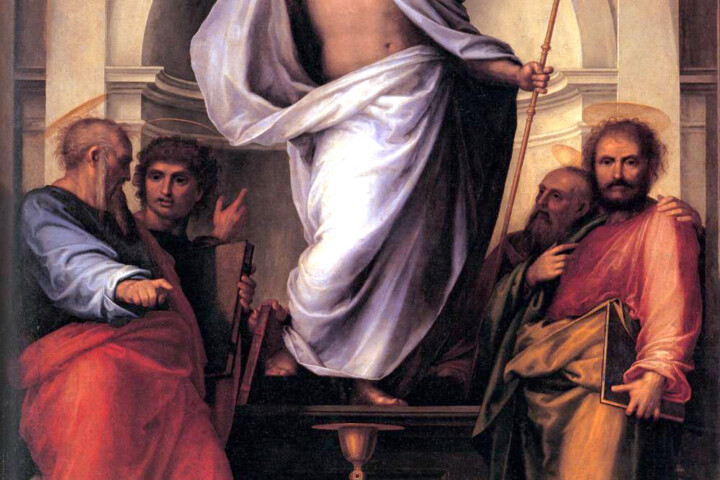
Set your minds on things that are above, not on things that are on earth, for you have died, and your life is hidden with Christ in God. When Christ who is your life is revealed, then you also will be revealed with him in glory (Col. 3:3-4). The Resurrection of Our Lord and Saviour[…]Continue reading→
An Ancient Homily for Holy Saturday
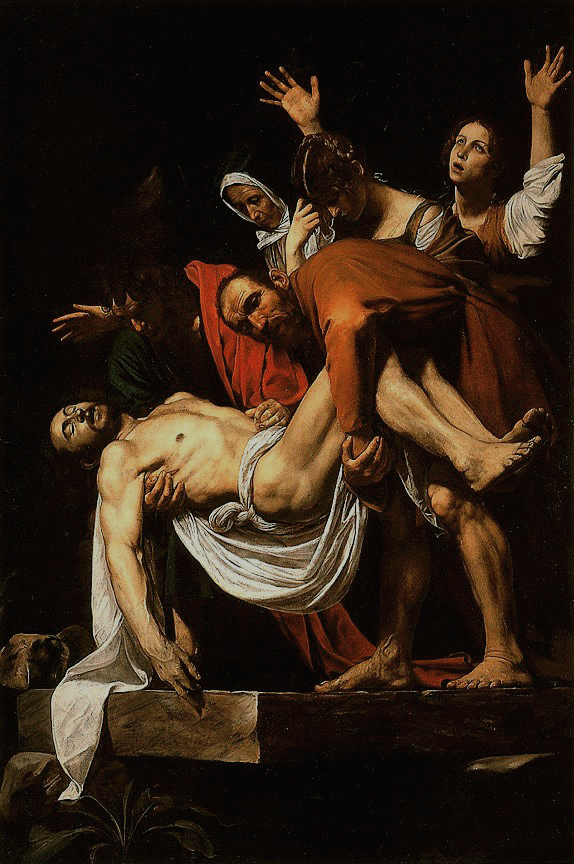
The time between Good Friday and Easter Sunday is one of waiting, in silence, as the world wonders – anticipates – what will happen, after the death of Christ. We re-live this time each year in the anamnesis of our liturgy, and in turn look forward to the glorious re-creation of all things at the[…]Continue reading→
Europe’s Long Descent
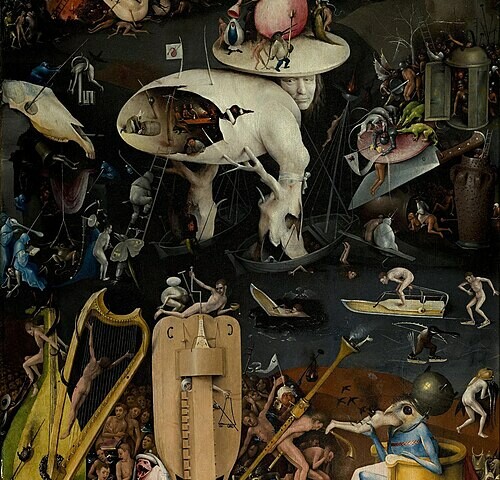
(As we meditate on this day on Christ’s burial, and His descent into hell, it is fitting to ponder here with contributor Peter Marcus how the world seems to be heading there as well. The difference is that, although God cannot ‘redeem’ hell, nor those therein, He can and did redeem the world. There is[…]Continue reading→