
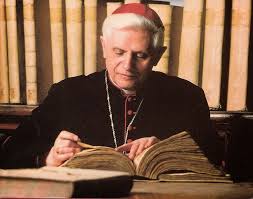
Christ’s Sacrifice Was one of Redemption, Not Popularity
Dear Brothers and Sisters,
This Sunday’s Gospel (cf. Jn 6:51–58) is the concluding part and culmination of the discourse given by Jesus in the Synagogue of Capernaum after he had fed thousands of people with five loaves and two fishes the previous day. Jesus reveals the meaning of this miracle, namely that the promised time had come; God the Father, who had fed the Israelites in the desert with manna, now sent him, the Son, as the true Bread of life; and this bread is his flesh, his life, offered in sacrifice for us. It is therefore a question of welcoming him with faith, not of being shocked by his humanity, and it is about eating his flesh and drinking his blood (cf. Jn 6:54) in order to obtain for ourselves the fullness of life. It is clear that this address was not given to attract approval. Jesus knew this and gave this speech intentionally. In fact it was a critical moment, a turning point in his public mission. The people, and the disciples themselves, were enthusiastic when he performed miraculous signs; the multiplication of the loaves and fishes was a clear revelation that he was the Messiah, so that the crowd would have liked to carry Jesus in triumph and proclaim him King of Israel. But this was not what Jesus wanted. With his long address he dampens the enthusiasm and incites much dissent. In explaining the image of the bread, he affirms that he has been sent to offer his own life and he who wants to follow him must join him in a deep and personal way, participating in his sacrifice of love. Thus Jesus was to institute the Sacrament of the Eucharist at the Last Supper, so that his disciples themselves might share in his love—this was crucial—and, as one body united with him, might extend his mystery of salvation in the world.
In listening to this address the people understood that Jesus was not the Messiah they wanted, one who would aspire to an earthly throne. He did not seek approval to conquer Jerusalem; rather he wanted to go to the Holy City to share the destiny of the prophets: to give his life for God and for the people. Those loaves, broken for thousands, were not meant to result in a triumphal march but to foretell the sacrifice on the Cross when Jesus was to become Bread, Body and Blood, offered in expiation. Jesus therefore gave the address to bring the crowds down to earth and mostly to encourage his disciples to make a decision. In fact from that moment many of them no longer followed him.
Dear friends, let us once again be filled with wonder by Christ’s words. He, a grain of wheat scattered in the furrows of history, is the first fruits of the new humanity, freed from the corruption of sin and death. And let us rediscover the beauty of the Sacrament of the Eucharist which expresses all God’s humility and holiness. In his making himself small, God makes himself small, a fragment of the universe to reconcile all in his love. May the Virgin Mary, who gave the world the Bread of Life, teach us to live in ever deeper union with him.
Angelus
Castel Gandolfo
Sunday, 19 August 2012

Saint Kateri , Canada’s Protectress
This was the title given to Saint Kateri Tekakwitha, by Pope Benedict XVI, when he canonized her on October 28th, 2012, along with six others, in Saint Peter’ Square (she had been beatified by Pope John Paul II back in 1980). With Saint Joseph as our protector, along with the Canadian martyrs, we seem to[…]Continue reading→

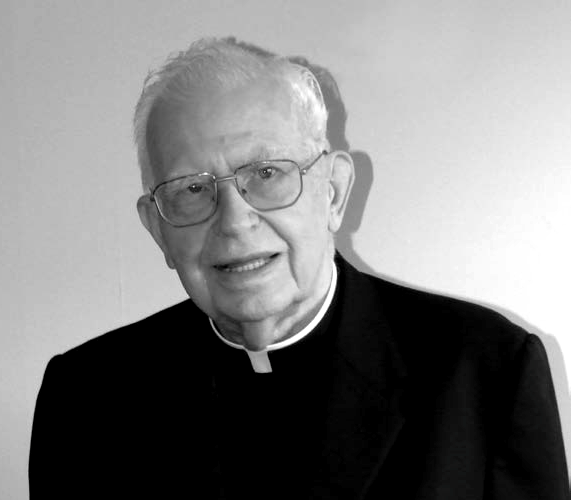
Remembering Father Alphonse de Valk
(Today marks the sixth anniversary of the death of Father Alphonse de Valk, C.S.B., a faithful, courageous and indefatigable Basilian priest, pro-life-and-family apostle, and the founder of Catholic Insight magazine. Here is what we wrote those on his entering into eternity five years ago, as we continue to remember him in our prayers and thoughts)[…]Continue reading→

My Name is Bernadette
April 16th is a propitious day, for besides the anniversary of Father de Valk’s death, who founded Catholic Insight in its print form decades ago, and the commemoration of the ‘two Benedicts’, mentioned in accompanying posts, today we also recall Saint Bernadette Soubirous, the young visionary to whom the Virgin Mary appeared numerous times at[…]Continue reading→

Canonizing Sister Faustina and Divine Mercy
HOMILY OF THE HOLY FATHER MASS IN ST PETER’S SQUARE FOR THE CANONIZATION OF SR MARY FAUSTINA KOWALSKA Sunday, 30 April 2000 1. “Confitemini Domino quoniam bonus, quoniam in saeculum misericordia eius”; “Give thanks to the Lord for he is good; his steadfast love endures for ever” (Ps 118: 1). So the Church sings on the Octave of[…]Continue reading→

Divine Mercy Sunday – An Echo of Every Mass
Reach out your hand and put it in my side. Do not doubt but believe’… ‘My Lord and my God!’ (Jn. 20:18)). Today is Divine Mercy Sunday, and as we celebrate the end of the Easter Octave, we contemplate the wounded side of our Saviour, the Church’s source of life. On Good Friday in the[…]Continue reading→

Saint Stanislaus of Szczepanów
We celebrate Saint Stanislaus today (+ April 11, 1079), in light of this Easter Octave, a bishop and martyr who accepted the episcopacy only at the direct order of Pope Alexander II. He proved a wise and courageous leader of his flock, put to death by his own king, Boleslaus, for rebuking the monarch’s ‘immoral[…]Continue reading→
First Holy Communion: Sermon from May 16, 1943
Here is a sermon from the good old days by +Rev. Msgr. Vincent Nicholas Foy (August 14, 1915 – March 13, 2017), from 1943. Readers may recall that Pope Saint Pius X, by the decree Quam Singulari in 1910, lowered the customary age of reception of Holy Communion – after the rigours of the plague[…]Continue reading→
In the Glorious Light of Easter, Alleluia!
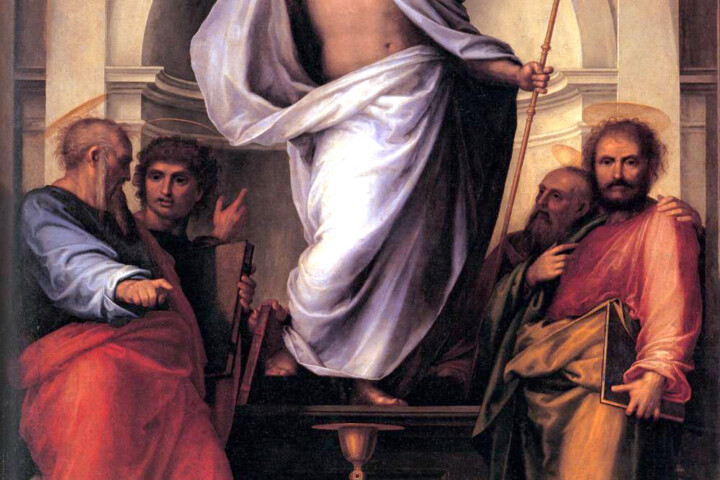
Set your minds on things that are above, not on things that are on earth, for you have died, and your life is hidden with Christ in God. When Christ who is your life is revealed, then you also will be revealed with him in glory (Col. 3:3-4). The Resurrection of Our Lord and Saviour[…]Continue reading→
An Ancient Homily for Holy Saturday
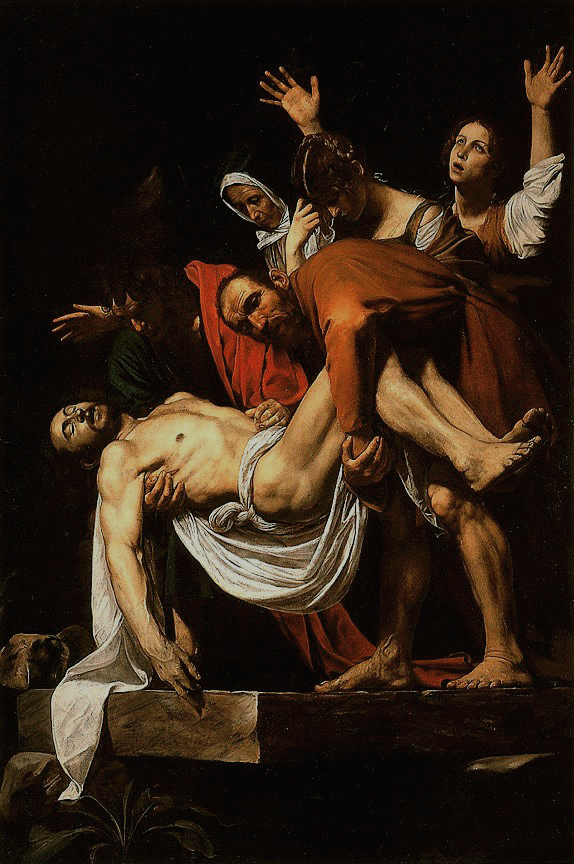
The time between Good Friday and Easter Sunday is one of waiting, in silence, as the world wonders – anticipates – what will happen, after the death of Christ. We re-live this time each year in the anamnesis of our liturgy, and in turn look forward to the glorious re-creation of all things at the[…]Continue reading→
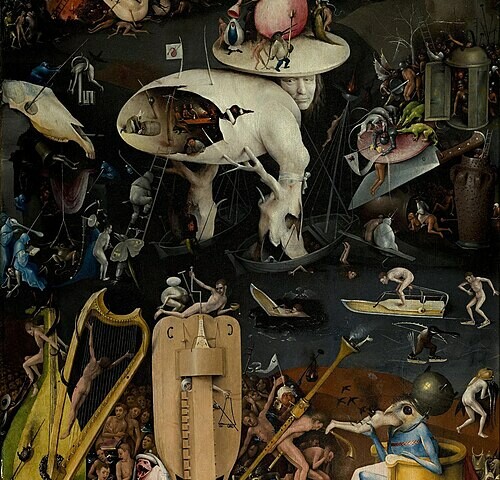
Europe’s Long Descent
(As we meditate on this day on Christ’s burial, and His descent into hell, it is fitting to ponder here with contributor Peter Marcus how the world seems to be heading there as well. The difference is that, although God cannot ‘redeem’ hell, nor those therein, He can and did redeem the world. There is[…]Continue reading→