

Waking Up to God
It is the most phenomenal transformation of the day, born again into consciousness, and like birth, both forced upon us and the fruit of our own exertion. Teenagers seem to resent it most, whereas late in life it becomes a happy surprise, or sometimes, the weary resumption of seemingly fruitless toil.
The verb “to wake” is traced back to Proto-Germanic and Sanskrit origins meaning “to be lively” and “to watch”, and both meanings lead to the noun, where we attend to the body of one who has died. The wake is a vigil, attending to a transition into mystery. And at a wake we sit beside the empty body, and we sit beside ourselves, perhaps more than at any other time. No one is simply there, at a wake. There is a cool otherness where there had been a warm togetherness. But in reaching out to others, there is a warmth that is especially warm for the coolness around it.
There is also the wake which is the track left by a moving ship. It feels a bit film noir to watch, but it is at least as interesting as the nearing horizon on the bow. There is churning turmoil and then swirling resolution in waves then ripples. But these indulgent divergences are too much like the sleep from which waking must forcefully break.
Unlike “waking”, “up” is in no way thrust upon us, it is something we must do all by ourselves. That first struggle against the oppressive force of gravity requires a force of will which makes waking up a moment of battle. That first note is a C sharp, and so everything that follows is going to have a least a faint echo of that initial jarring dissonance. To wake up is to be a self, to inhabit your form and to project out into the world. It is not for the faint of heart; the pump must beat strong to bring colour and vigor. We inflate and animate, we take in and make sense of and drive forward.
Waking up is common to both humans and animals, but for us it is much more than the daily emergence from unconsciousness to consciousness. It is the perfect metaphor for all of life as we constantly awaken to an ever-broadening architectonic understanding. We rise again from our surrender to Hypnos, sleep, the twin of Thanatos, the death wish, for another day as a stranger in a strange land. There is an otherness about awakeness. We are ourselves though never in complete possession of ourselves. There is something eternal within us, within our contingent selves in a contingent world.
As Jacques says:
All the world’s a stage,
And all the men and women merely players,
They have their exists and entrances, and one man in his time plays many parts,
His acts being seven ages. At first the infant,
Mewling and puking in the nurses arms,
Then, the whining schoolboy with his satchel
And shining morning face, creeping like a snail
Unwillingly to school. And then the lover,
Sighing like a furnace, with a woeful ballad
Made to his mistress’ eyebrow. Then a soldier,
Full of strange oaths, and bearded like the pard,
Jealous in honour, sudden, and quick in quarrel,
Seeking the bubble reputation
Even in the cannon’s mouth. And then the justice
In fair round belly, with good capon lin’d,
With eyes severe, and beard of formal cut,
Full of wise saws, and modern instances,
And so he plays his part. The sixth age shifts
Into lean and slipper’d panataloon,
With spectacles on nose, and pouch on side,
His youthful hose well shav’d, a world too wide,
For his shrunken shank, and his big manly voice,
Turning again towards childish treble, pipes
And whistles in his sound. Last scene of all,
That ends this strange eventful history,
Is second childishness and mere oblivion,
Sans teeth, sans eyes, sans taste, sans everything.
We feel the blood drain as we take the measure of being, but then the anti-gravity within us reinvigorates and propels us back into the senses and seeing. We are saved by our bodies; an itch to be scratched, a dryness in the mouth, a sound that distracts. We pull back from the words and listen to the music of being. There’s more of a dream in wakefulness than it seemed.
The nihilists call it “patternicity”; the projection of orderliness and pattern where there is none. They say that just because man searches for meaning, doesn’t mean there is meaning to be found. A wish does not a fact make. And so the ontological argument seems absurd to the modern mind, schooled in the absurdity of orderliness rising out of chaos randomly. But the honest thinker knows the mind does not project, it reflects. Even the most fanciful creation is a recombination of things which are. Thinking on up the line of cause and effect is bound to inspire vertigo, but the only way to keep from falling off the ladder is by reminding yourself that you know what you know, and what you know continues to be true even as each step carries you higher, further from the ground. Nowhere, never, have we observed orderliness emerge randomly from chaos, and so to project this as a principle which over-rides all that we have ever observed, experienced and known is to let our hands turn to liquid and our ankles shake like jelly, to slide off the ladder of what is real and reasonable and fall weightless until we meet the hard and certain ground below.
Wakefulness requires a sharp certainty that we know what we know.

Saint Kateri , Canada’s Protectress
This was the title given to Saint Kateri Tekakwitha, by Pope Benedict XVI, when he canonized her on October 28th, 2012, along with six others, in Saint Peter’ Square (she had been beatified by Pope John Paul II back in 1980). With Saint Joseph as our protector, along with the Canadian martyrs, we seem to[…]Continue reading→

Remembering Father Alphonse de Valk
(Today marks the sixth anniversary of the death of Father Alphonse de Valk, C.S.B., a faithful, courageous and indefatigable Basilian priest, pro-life-and-family apostle, and the founder of Catholic Insight magazine. Here is what we wrote those on his entering into eternity five years ago, as we continue to remember him in our prayers and thoughts)[…]Continue reading→

My Name is Bernadette
April 16th is a propitious day, for besides the anniversary of Father de Valk’s death, who founded Catholic Insight in its print form decades ago, and the commemoration of the ‘two Benedicts’, mentioned in accompanying posts, today we also recall Saint Bernadette Soubirous, the young visionary to whom the Virgin Mary appeared numerous times at[…]Continue reading→

Canonizing Sister Faustina and Divine Mercy
HOMILY OF THE HOLY FATHER MASS IN ST PETER’S SQUARE FOR THE CANONIZATION OF SR MARY FAUSTINA KOWALSKA Sunday, 30 April 2000 1. “Confitemini Domino quoniam bonus, quoniam in saeculum misericordia eius”; “Give thanks to the Lord for he is good; his steadfast love endures for ever” (Ps 118: 1). So the Church sings on the Octave of[…]Continue reading→

Divine Mercy Sunday – An Echo of Every Mass
Reach out your hand and put it in my side. Do not doubt but believe’… ‘My Lord and my God!’ (Jn. 20:18)). Today is Divine Mercy Sunday, and as we celebrate the end of the Easter Octave, we contemplate the wounded side of our Saviour, the Church’s source of life. On Good Friday in the[…]Continue reading→

Saint Stanislaus of Szczepanów
We celebrate Saint Stanislaus today (+ April 11, 1079), in light of this Easter Octave, a bishop and martyr who accepted the episcopacy only at the direct order of Pope Alexander II. He proved a wise and courageous leader of his flock, put to death by his own king, Boleslaus, for rebuking the monarch’s ‘immoral[…]Continue reading→
First Holy Communion: Sermon from May 16, 1943
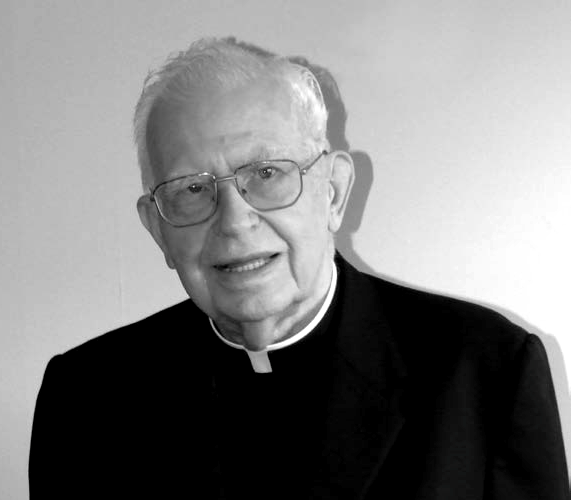
Here is a sermon from the good old days by +Rev. Msgr. Vincent Nicholas Foy (August 14, 1915 – March 13, 2017), from 1943. Readers may recall that Pope Saint Pius X, by the decree Quam Singulari in 1910, lowered the customary age of reception of Holy Communion – after the rigours of the plague[…]Continue reading→
In the Glorious Light of Easter, Alleluia!
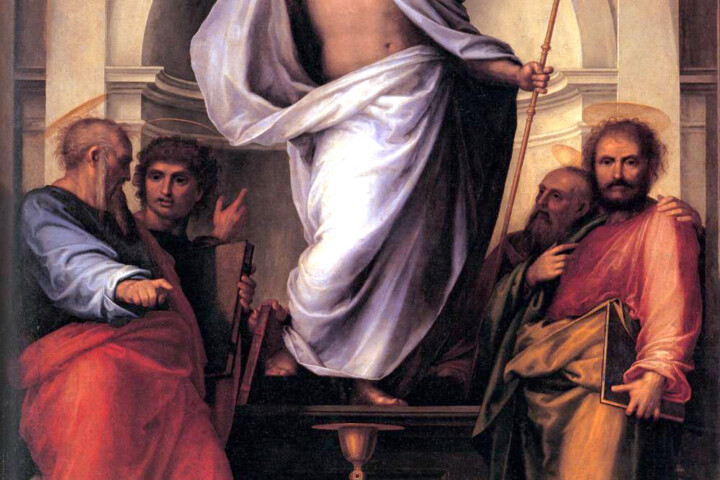
Set your minds on things that are above, not on things that are on earth, for you have died, and your life is hidden with Christ in God. When Christ who is your life is revealed, then you also will be revealed with him in glory (Col. 3:3-4). The Resurrection of Our Lord and Saviour[…]Continue reading→
An Ancient Homily for Holy Saturday
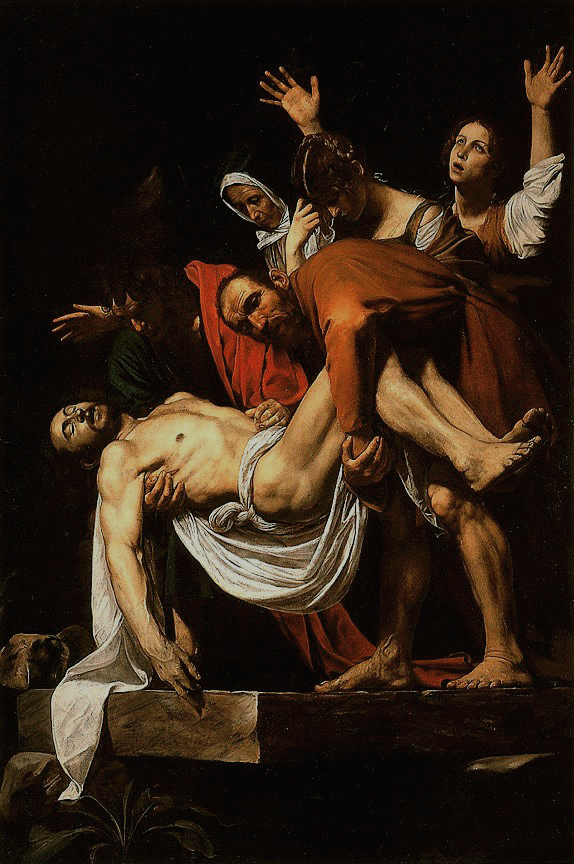
The time between Good Friday and Easter Sunday is one of waiting, in silence, as the world wonders – anticipates – what will happen, after the death of Christ. We re-live this time each year in the anamnesis of our liturgy, and in turn look forward to the glorious re-creation of all things at the[…]Continue reading→
Europe’s Long Descent
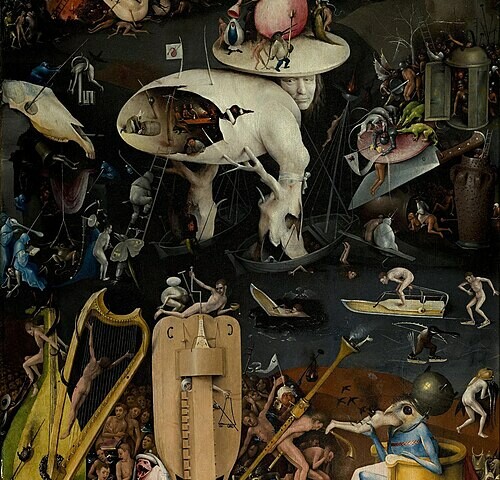
(As we meditate on this day on Christ’s burial, and His descent into hell, it is fitting to ponder here with contributor Peter Marcus how the world seems to be heading there as well. The difference is that, although God cannot ‘redeem’ hell, nor those therein, He can and did redeem the world. There is[…]Continue reading→