

The Blessings of Monotony
(As we all enter back into our ‘ordinary’ routines after Chrismas holidays, it is good to reflect upon the blessings of monotony, upon which I myself have been pondering of late, the praise of doing small things well, by doing them often. We have much to learn from children in this regard, for they are rarely ever bored. Hence, I thought this article from our archives, originally published in 2012, would benefit us once again. Editor).
In the vast collection of literature that has been written throughout the history of mankind, the one thing that all books have in common is that they reflect some bit of truth about the lives of the people who wrote them. Some of them reflect the world very well, and in those reflections one sees very clearly truths and connections that are often hidden by “real life.” Others are blurred or distorted connections, and the few truths that do appear are purely accidental, but they are still there for readers to stumble over at odd moments. One of the most interesting aspects of good literature is that it can surface at random moments in everyday life. Suddenly life and literature crash into each other and something about life becomes a little bit clearer.
For instance, I recently gave up a life of travel and adventure to come stay with my nineteen-month-old niece and my very, very pregnant sister. About a week ago, my niece brought me an oversized board book called Sheep in a Jeep. This book, as the title suggests, involves a small flock of sheep who try to drive a jeep, with necessarily hilarious outcomes. This book does not reflect reality very well, and there are relatively few hidden truths in its pages, except for the very obvious ones about sheep being terrible drivers and actions having consequences. I read to the end of the book and my niece, who doesn’t talk much, laughed and flipped back to the beginning. I read it again, and again she flipped back to the beginning. Again. Again. One more time, and then once more. And again. Around the thirtieth time, when my voice was getting tired and I could correctly recite the book without looking at the pages once, I remembered a much more truthful bit of literature, G.K. Chesterton’s Orthodoxy. In this fascinating book, Chesterton writes that:
Because children have abounding vitality, because they are in spirit fierce and free, therefore they want things repeated and unchanged. They always say ‘Do it again’; and the grown-up does it again until he is nearly dead. For grown-up people are not strong enough to exult in monotony. But perhaps God is strong enough to exult in monotony. It is possible that God says every morning ‘Do it again’ to the sun; and every evening, ‘Do it again’ to the moon. It may not be necessity that makes all daisies alike; it may be that God makes every daisy separately, but has never got tired of making them.
My niece has dozens of books; many of them were within arm’s reach when she was making me read the same book over and over and over. She could have chosen to bring me a dozen different books one after the other, but she chose not to. She was too busy “exulting in monotony.” Even if I did snatch up another book to try to tempt her away from the sheep, it was only a matter of minutes before she wanted them back again.
This quote from Chesterton reflects the truth that humans are made in the image of God. It suggests that infants, in their relative innocence, are like God in their ability to enjoy the same things over and over without tiring. But grownups cannot bear monotony for long, and that raises a question that is also the territory of toddlers: “Why?”
It cannot be because grownups love change so much. No matter how many times I read Sheep in a Jeep I will still laugh when I see my niece laughing at her favorite pages. Every time I go to Mass, I rejoice that it is very much the same as the time before. Every Christmas I give my aunt a hand-painted house to add to her village collection. Most grownups develop routines about life and work that make the world make sense. From time to time when grownups get too antsy they go on vacation, but even the vacations have an element of monotony—happening at roughly the same time every year, and often involving going to the same place. These bits of monotony give us the confidence that we must have to even dare to get out of bed in the morning. So, it is not that grownups require or desire constant change.
The trouble seems to be more that grownups are ashamed of monotony. We look at the same thing done again and again and we firmly believe that to love monotony is to be juvenile. We are told that we absolutely must have change to be happy. We are supposed to try new foods, and read new books, and move to new places, and make new friends, and look for a thousand ways to spice life up.
Perhaps what we cannot see is that introducing a bit of variety only serves to remind of us how much we like a healthy dose of monotony. Reading the book, Can I Just Take a Nap? which is full of careless, cliché rhymes and awkward meters makes me very glad that my niece prefers Sheep in a Jeep. Listening to her cry about something makes me quite relieved that simply picking up the book often makes her burst out laughing. And let’s face facts; nobody is ever going to be sorry that the sun rises every morning.

Saint Kateri , Canada’s Protectress
This was the title given to Saint Kateri Tekakwitha, by Pope Benedict XVI, when he canonized her on October 28th, 2012, along with six others, in Saint Peter’ Square (she had been beatified by Pope John Paul II back in 1980). With Saint Joseph as our protector, along with the Canadian martyrs, we seem to[…]Continue reading→

Remembering Father Alphonse de Valk
(Today marks the sixth anniversary of the death of Father Alphonse de Valk, C.S.B., a faithful, courageous and indefatigable Basilian priest, pro-life-and-family apostle, and the founder of Catholic Insight magazine. Here is what we wrote those on his entering into eternity five years ago, as we continue to remember him in our prayers and thoughts)[…]Continue reading→

My Name is Bernadette
April 16th is a propitious day, for besides the anniversary of Father de Valk’s death, who founded Catholic Insight in its print form decades ago, and the commemoration of the ‘two Benedicts’, mentioned in accompanying posts, today we also recall Saint Bernadette Soubirous, the young visionary to whom the Virgin Mary appeared numerous times at[…]Continue reading→
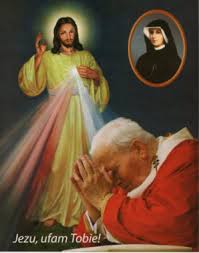
Canonizing Sister Faustina and Divine Mercy
HOMILY OF THE HOLY FATHER MASS IN ST PETER’S SQUARE FOR THE CANONIZATION OF SR MARY FAUSTINA KOWALSKA Sunday, 30 April 2000 1. “Confitemini Domino quoniam bonus, quoniam in saeculum misericordia eius”; “Give thanks to the Lord for he is good; his steadfast love endures for ever” (Ps 118: 1). So the Church sings on the Octave of[…]Continue reading→

Divine Mercy Sunday – An Echo of Every Mass
Reach out your hand and put it in my side. Do not doubt but believe’… ‘My Lord and my God!’ (Jn. 20:18)). Today is Divine Mercy Sunday, and as we celebrate the end of the Easter Octave, we contemplate the wounded side of our Saviour, the Church’s source of life. On Good Friday in the[…]Continue reading→

Saint Stanislaus of Szczepanów
We celebrate Saint Stanislaus today (+ April 11, 1079), in light of this Easter Octave, a bishop and martyr who accepted the episcopacy only at the direct order of Pope Alexander II. He proved a wise and courageous leader of his flock, put to death by his own king, Boleslaus, for rebuking the monarch’s ‘immoral[…]Continue reading→
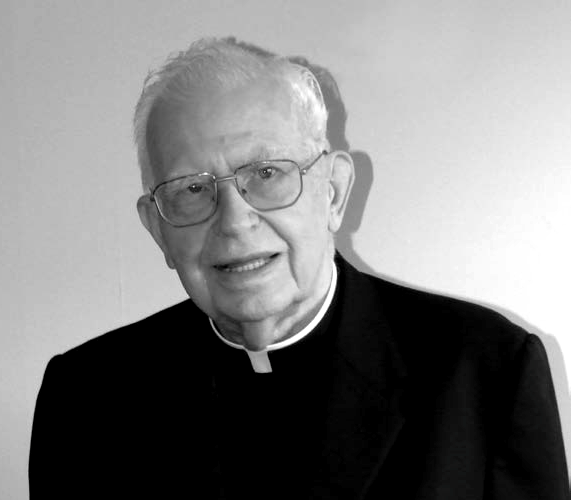
First Holy Communion: Sermon from May 16, 1943
Here is a sermon from the good old days by +Rev. Msgr. Vincent Nicholas Foy (August 14, 1915 – March 13, 2017), from 1943. Readers may recall that Pope Saint Pius X, by the decree Quam Singulari in 1910, lowered the customary age of reception of Holy Communion – after the rigours of the plague[…]Continue reading→
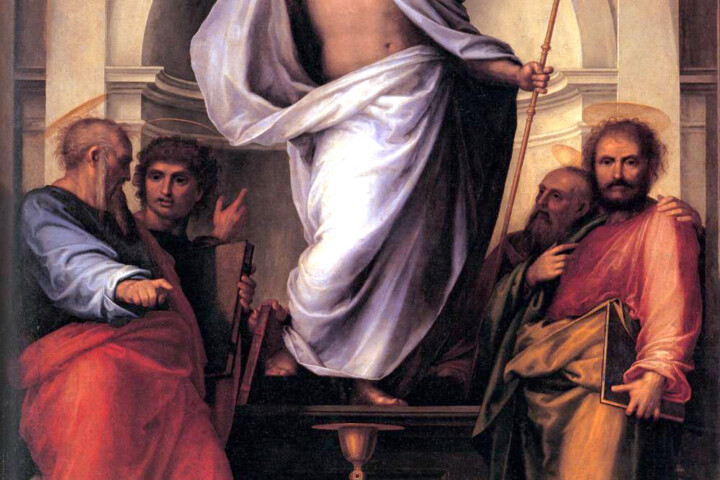
In the Glorious Light of Easter, Alleluia!
Set your minds on things that are above, not on things that are on earth, for you have died, and your life is hidden with Christ in God. When Christ who is your life is revealed, then you also will be revealed with him in glory (Col. 3:3-4). The Resurrection of Our Lord and Saviour[…]Continue reading→
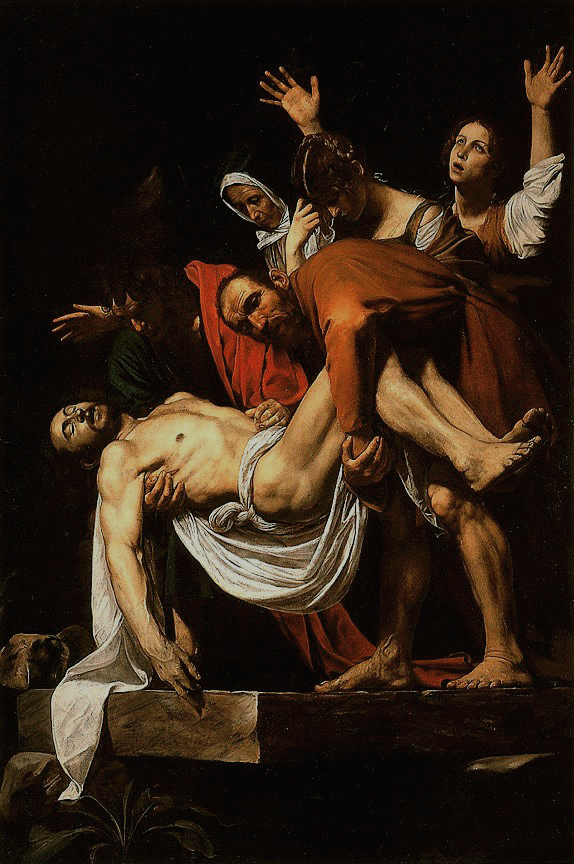
An Ancient Homily for Holy Saturday
The time between Good Friday and Easter Sunday is one of waiting, in silence, as the world wonders – anticipates – what will happen, after the death of Christ. We re-live this time each year in the anamnesis of our liturgy, and in turn look forward to the glorious re-creation of all things at the[…]Continue reading→
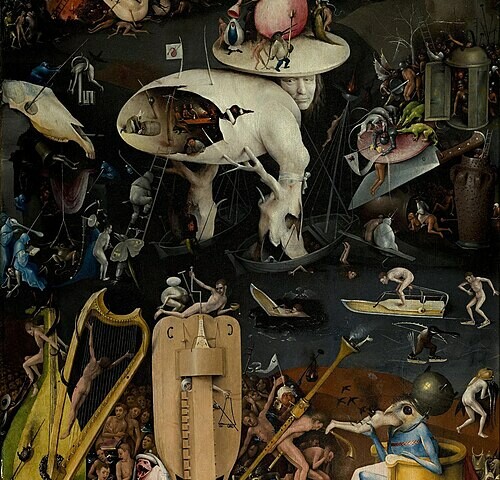
Europe’s Long Descent
(As we meditate on this day on Christ’s burial, and His descent into hell, it is fitting to ponder here with contributor Peter Marcus how the world seems to be heading there as well. The difference is that, although God cannot ‘redeem’ hell, nor those therein, He can and did redeem the world. There is[…]Continue reading→