
Growing in Holiness Through Marriage: A Personal Reflection
Last summer, my husband and I were present at the renewal of vows of a couple whose wedding I participated in as a bridesmaid. As my husband and I sat in the church with three of our four children, I couldn’t help but reflect that the renewal of vows that we were now witnessing seemed even more meaningful than the original vows exchanged 25 years ago. This, now, was a love that had experienced all the challenges that the priest had referred to at the original ceremony. Rather than a new and young love which is beautiful to witness, in part because it is fresh and pure and untouched by sorrow, my friends’ marriage had in fact been touched by chronic illness, workplace difficulties, and the challenge of keeping safe and healthy two active boys. Those of us, who know the couple well, knew that, in fact, this couple had lived their vows well. This was a love that had been tempered by the couple’s journey through life as individuals and as part of a team. In contrast to marriages in which the participant’s behaviour becomes one of the main contributors to the unhappiness of their spouse, this marriage, although not untouched by difficulty or disagreement, represents the best of what marriage has the potential to be. My friend’s marriage represents a commitment to an ideal and a way of living that sees marriage as a means through which one grows in holiness and in relationship to God.
Although my own marriage has stood the test of time for twenty six years, I feel like my husband’s journey and my own, together as a couple, has at times succeeded simply because we “chose well”, rather than that we fully understood the magnitude of the task we were undertaking. In hindsight, I wish that an experienced couple would have initiated us into “how to love well” at the beginning of our marriage. This catechesis would have included three key teachings that must be understood if the Christian couple is to be able to realize the purpose of marriage. These teachings include understanding our fundamental identity as humans, understanding the purpose of marriage, and understanding how to communicate in relationship. In fact, these are the key understandings that support our growth from the individual who falls in love to the individual who truly understand what it means to offer and receive another human as a gift of self.
Before we can truly comprehend the purpose of marriage, we need to understand what it means to be human. We understand who we are, what our purpose is and why we are here when we understand that we are a creation of God. Like all of God’s creation we are good, but we are also uniquely created with a material dimension that allows our spiritual dimension to take shape through our body. Made in the image of God, we are to creatively serve God in this world by serving others and as a result, to grow in holiness through our relationships in this world. Marriage, then, becomes the opportunity to grow in holiness through our relationship with our spouse. We don’t come to marriage holy, but through marriage, given that we understand its purpose, we have the means in which we can grow in holiness. Pope John Paul II describes this holiness that we are called to as a state of original innocence. In his General Audience of October, 29th, 1980 he states that man is called “precisely to that supreme value that is love. . . . Called as a person in the truth of his humanity . . . called in that truth which has been his heritage from the beginning, the heritage of his heart, which is deeper than the sinfulness inherited.” [1]
To enter into marriage, without understanding that this is who we are as a human, is a risky endeavor precisely because our relationships with people in general cannot be ordered properly without knowing who we are as a person. Knowing how we stand in existence in relation to God, and that we are infinitely valuable as God’s creation, allows us to integrate both the spiritual and physical dimensions of ourselves. As a result, we are able to enter into the business of living by trusting ourselves and our ability to offer ourselves as a gift to another human being while maintaining our individuality and integrity as a person. It is out of this fullness that we are able to initiate and maintain relationships that require commitment, service to others, and the gift of our time. It is our decision to offer ourselves in this way that causes our relationships to flourish.
To marry then, might be seen as a deliberate choice and commitment to enter into a permanent relationship with another person and to serve that person as if their needs were as important, but not more important, than one’s own. As children enter into this type of marriage they are exposed to the transforming power of God’s love through the love of the parents. In his book, Becoming Human, Jean Vanier states, “a mother and father reveal to their children that they have value and beauty. . . . To reveal someone’s beauty is to reveal their value by giving them time, attention, and tenderness. To love is not just to do something for them but to reveal to them their own uniqueness. [2] Here the ongoing creative work that we are called to participate in, in marriage, is revealed. Not only to create children through a physical act, but to guide them into engaging creatively with life so that they come to see the truth, as well, about their own existence. Parents lead children into becoming aware of their strengths and gifts so that the children become aware of their uniqueness and grow into living out their vocation in this world. In marriage then, two people grow as individuals and as a couple, through the marriage, but also shape their children to grow into being human. Children create new opportunities for the parents to become selfless and to give of themselves freely. As marriage echoes the covenant that exists between God and His people, and enables the couple to grow in a deeper understanding of covenant love, children become a blessing of the covenant between the husband and the wife; first by blessing the parent with unconditional love, but also by providing the opportunity to learn how to love. Eventually, grandchildren bless the couple with different opportunities to love by serving their children by helping them and by influencing their grandchildren.
Communication is a prerequisite to being able to live in relationship with another person. Communication starts by each person being aware of who they are as a person. This awareness is a result of being aware of God. We can come to know God through his grace or revelation of Himself to us. We can come to know more about our relationship with God by paying attention to our relationships with other people, how we respond to other people, and by being aware of our own shortcomings in our relationships with other people. We need to be able to articulate our own needs as a human being and trust that our spouse will respond to those needs, but also be able to listen from the heart to the needs of our spouse and to the needs of our children. It is almost impossible to love without being able to communicate, because communication is the act of acknowledging the true identity and value of the other person. Communication looks like observing the “other” and being attentive to their particular personality, their needs, and their desires; thus, it cannot take place without being present in “both” body and spirit to the other person. Communication in a family also looks like affirmation and appreciation of the other members of the family because, in a family, each person is loved simply because they are. In a family, people are loved into being. Being loved into being, means we are then free to do.
When couples, and as a result children, don’t understand their identity in relationship to God, the marriage and the family can quickly get off track. When we don’t really understand how valuable we are or how valuable our spouse and children are, we can neglect our own needs as a person or the needs of the other members of our family. If we fail to understand that our needs as humans can only be adequately met through God, we may unwittingly try to meet our needs for love through our work, our achievements or our spouse, which, although all potentially good things, cannot be made the basis of our identity. Attempting to meet our needs in this way prevents us from fulfilling our purpose of being a blessing to others because it makes us think that we have to have “things or a person” to be loved or to be happy. We become frantic and self centered as we try to control our environment to meet needs that simply can’t be met in this way. Think of the workaholic who is compelled, for emotional reasons, to work more hours than needed and neglects his family; or the individual who expects their spouse to meet needs that are unrealistic. Think of the person who doesn’t have the courage to articulate his needs, yet blames his spouse for not knowing what he needs; or the parent who criticizes or shames the child for making a mistake when what the child needs most is instruction from the parent.
Situations like these which destroy marriages and families are rooted in a basic misunderstanding of who we are as people and what marriage is meant to be. Marriage is not the romantic fantasy depicted in romance novels and movies. Marriage is reality. When we marry we choose a partner with whom we make a commitment. This commitment is to be in a relationship where we practice loving another person. Although, because we are human, our love will always be imperfect, the opportunity to forgive and be forgiven and to experience mercy from another human being is also part of our relationship and our journey in marriage. While it may be accurate to describe marriage as requiring perseverance and effort, if lived with the greater ideal in mind, it would never be accurate to describe it as drudgery or joyless. Rather, by enabling us to grow into who we truly are, marriage is, in fact, a great source of joy.
[1] General Audiences: John Paul II’s Theology of the Body Pope John Paul II, 46:6.
https://www.ewtn.com/library/PAPALDOC/JP2TBIND.HTM.
[2] Jean Vanier, Becoming Human (Toronto, CBC Massey Lectures Series, 1998) 22.
Holly Rawlek is a Learning Support Teacher at Holy Cross Collegiate in Strathmore, Alberta where she resides with her husband of twenty six years and her four children. She recently completed a Masters in Religious Education from Newman Theological College in Edmonton, Alberta and is passionate about applying her theological studies to helping her students and her children learn to live well and to become fully human through their relationship with God.

Saint Kateri , Canada’s Protectress
This was the title given to Saint Kateri Tekakwitha, by Pope Benedict XVI, when he canonized her on October 28th, 2012, along with six others, in Saint Peter’ Square (she had been beatified by Pope John Paul II back in 1980). With Saint Joseph as our protector, along with the Canadian martyrs, we seem to[…]Continue reading→
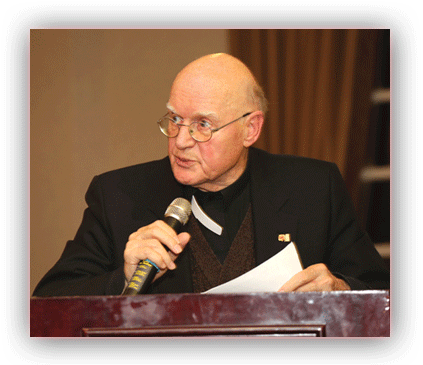
Remembering Father Alphonse de Valk
(Today marks the sixth anniversary of the death of Father Alphonse de Valk, C.S.B., a faithful, courageous and indefatigable Basilian priest, pro-life-and-family apostle, and the founder of Catholic Insight magazine. Here is what we wrote those on his entering into eternity five years ago, as we continue to remember him in our prayers and thoughts)[…]Continue reading→

My Name is Bernadette
April 16th is a propitious day, for besides the anniversary of Father de Valk’s death, who founded Catholic Insight in its print form decades ago, and the commemoration of the ‘two Benedicts’, mentioned in accompanying posts, today we also recall Saint Bernadette Soubirous, the young visionary to whom the Virgin Mary appeared numerous times at[…]Continue reading→
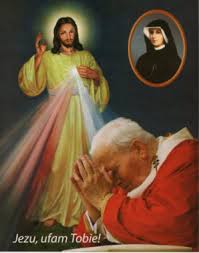
Canonizing Sister Faustina and Divine Mercy
HOMILY OF THE HOLY FATHER MASS IN ST PETER’S SQUARE FOR THE CANONIZATION OF SR MARY FAUSTINA KOWALSKA Sunday, 30 April 2000 1. “Confitemini Domino quoniam bonus, quoniam in saeculum misericordia eius”; “Give thanks to the Lord for he is good; his steadfast love endures for ever” (Ps 118: 1). So the Church sings on the Octave of[…]Continue reading→
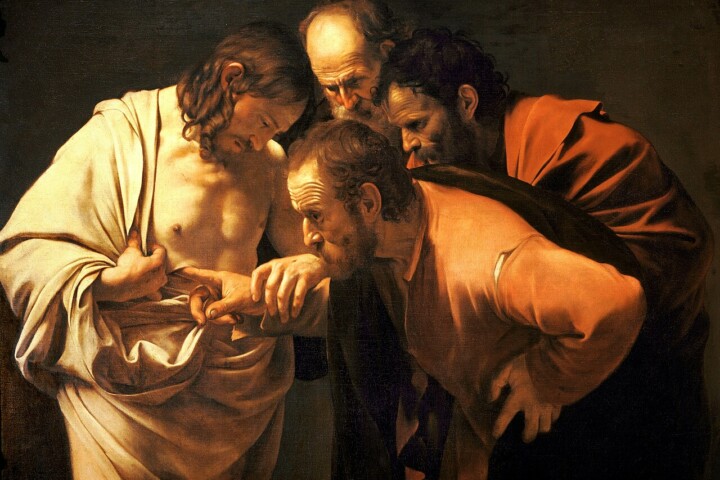
Divine Mercy Sunday – An Echo of Every Mass
Reach out your hand and put it in my side. Do not doubt but believe’… ‘My Lord and my God!’ (Jn. 20:18)). Today is Divine Mercy Sunday, and as we celebrate the end of the Easter Octave, we contemplate the wounded side of our Saviour, the Church’s source of life. On Good Friday in the[…]Continue reading→

Saint Stanislaus of Szczepanów
We celebrate Saint Stanislaus today (+ April 11, 1079), in light of this Easter Octave, a bishop and martyr who accepted the episcopacy only at the direct order of Pope Alexander II. He proved a wise and courageous leader of his flock, put to death by his own king, Boleslaus, for rebuking the monarch’s ‘immoral[…]Continue reading→
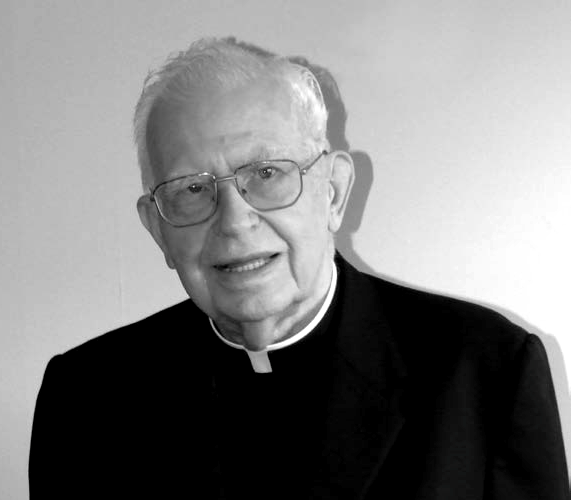
First Holy Communion: Sermon from May 16, 1943
Here is a sermon from the good old days by +Rev. Msgr. Vincent Nicholas Foy (August 14, 1915 – March 13, 2017), from 1943. Readers may recall that Pope Saint Pius X, by the decree Quam Singulari in 1910, lowered the customary age of reception of Holy Communion – after the rigours of the plague[…]Continue reading→
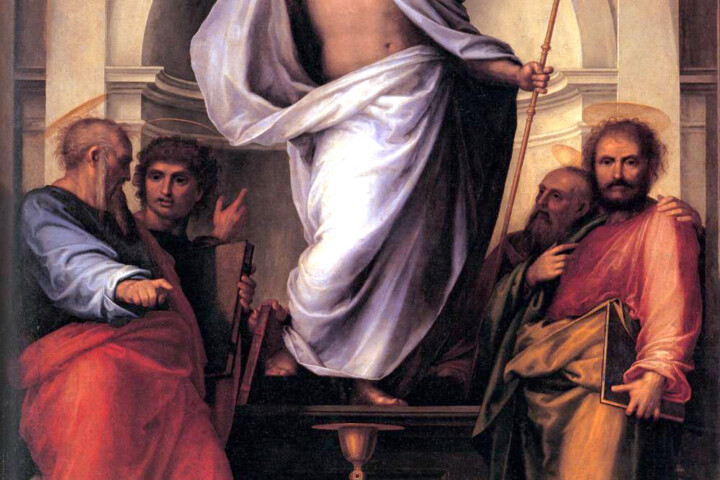
In the Glorious Light of Easter, Alleluia!
Set your minds on things that are above, not on things that are on earth, for you have died, and your life is hidden with Christ in God. When Christ who is your life is revealed, then you also will be revealed with him in glory (Col. 3:3-4). The Resurrection of Our Lord and Saviour[…]Continue reading→
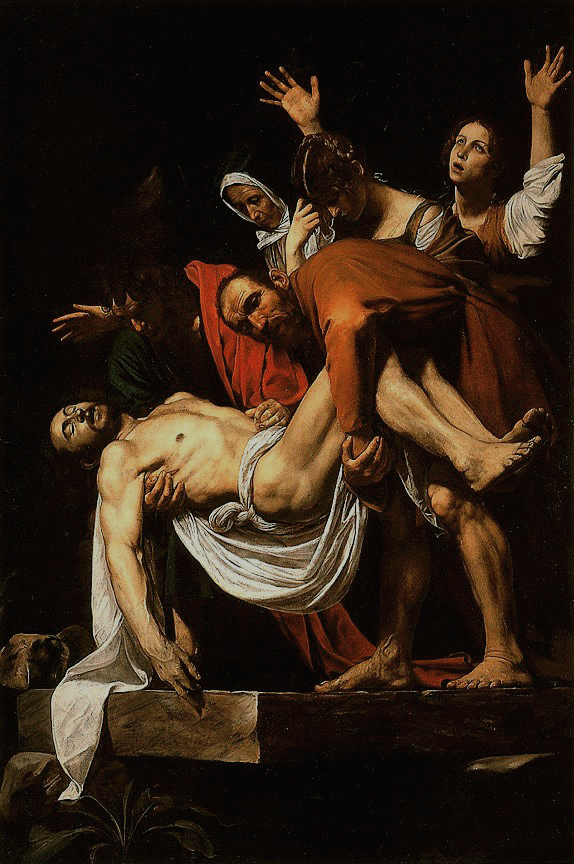
An Ancient Homily for Holy Saturday
The time between Good Friday and Easter Sunday is one of waiting, in silence, as the world wonders – anticipates – what will happen, after the death of Christ. We re-live this time each year in the anamnesis of our liturgy, and in turn look forward to the glorious re-creation of all things at the[…]Continue reading→
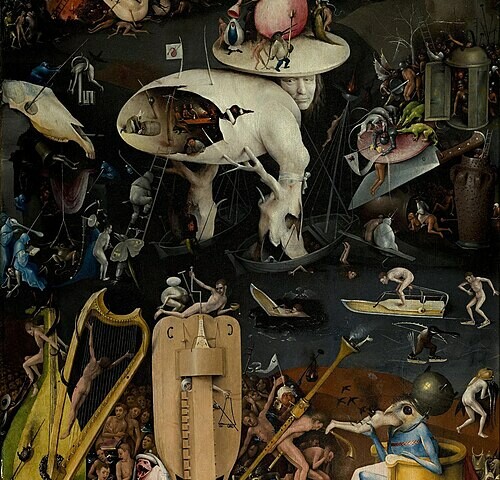
Europe’s Long Descent
(As we meditate on this day on Christ’s burial, and His descent into hell, it is fitting to ponder here with contributor Peter Marcus how the world seems to be heading there as well. The difference is that, although God cannot ‘redeem’ hell, nor those therein, He can and did redeem the world. There is[…]Continue reading→