
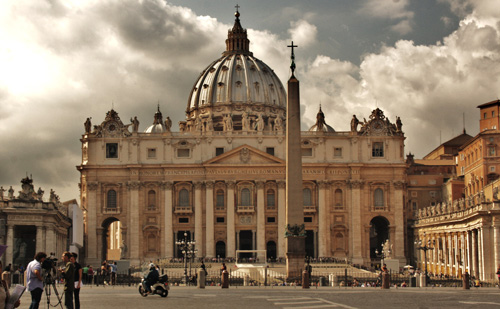
Of Romans and Mustard Seeds
If an early Christian had been asked to speculate where the centre of the Catholic Church on earth would end up, it’s not inconceivable that he would have guessed Rome. True, the savaging beasts and bloodthirsty crowds that beset him in that country may have made it seem an unlikely venue, but the early Christians appreciated paradox. When you’re aware that to die is to live, it is not unlikely that you could foresee the place of your persecution becoming the base for Christian operations.
Why Rome became home for the world’s Catholics is a fascinating question, and the argument here is that the faith of a Roman centurion may be responsible. Note the question is “why” Rome achieved this distinction, not “how”. History books can answer the latter. “Why” searches for God’s reasons, and as will be attempted here, plumbs the paradox that is central to divine reality.
Death on a Friday Afternoon by Fr. Richard John Neuhaus is a deeply thoughtful reflection on the last words of Christ from the Cross. The book prompted this reflection in noting that the “distant country” in which the Prodigal Son dissipated is, in fact, what we call the real world. This world of “deadlines and duties, fears and failures,” is the distraction from which the Prodigal returned. A few pages later, Neuhaus notes that the Roman soldiers in Jerusalem who crucified Christ were there on just another assignment, far from home. The poignancy of that thought, that those who took part in an act of such evil did so in a workaday manner, is matched by the contrast between the Prodigal and the soldiers: the wayward son left the ravages of the distant country to return home, where the Father is; but the soldiers left what they thought was home to ravage what was in fact their true home (home is where Christ is).
Among these soldiers working mundanely at the centre of salvation history, there was an exception who saw through the seeming ordinariness of his assignment. To appreciate the magnitude of this recognition, consider it in contemporary circumstances. A man who has been schooled in materialism, who has never seen the inside of a Church, whose newspapers and television purvey a consistent diet of naked secularism, sees past the deadlines and duties, fears and failures, and says, “I believe resolutely in Jesus Christ.” That remarkable trajectory is the path of the centurion with the suffering servant, a man who realized Rome was not home but a distraction, a distant country, and the real world was with him in Capernaum. And so he addressed Christ: “Lord, I am not worthy to receive you, but only say the word and my servant shall be healed.”
The centurion’s words are all the more remarkable for their instinctive understanding of the Christian life. Two thousand years after Christ, believers still struggle with the central role of humility in belief. But this soldier from Rome unversed in Jewish life, this riff-raff, had a visceral experience of the virtue at the time of Christianity’s birth; an experience the Apostles hadn’t yet managed. He knew somehow that to acknowledge Christ’s worthiness involved an acknowledgement of his own unworthiness. He knew that, notwithstanding this unworthiness, he could still make an entreaty so enormous as the healing of a life. Little wonder that Matthew notes in his account, “When Jesus heard this he was astonished and said to those following him, ‘I tell you solemnly, nowhere in Israel have I found faith like this.'” (8:10)
Little wonder, furthermore, that the centurion’s words not only made their way into the liturgy, but were placed at that critical position just prior to reception of the Eucharist. For the care this soldier showed his servant had a corollary in the care for his own eternal well-being, a truth acknowledged by the liturgical substitution of “my soul” for “my servant”.
So a Roman travelled the remarkable return road of the Prodigal Son, but did so having achieved the realization that the “real world” he thought was home was not, and having recognized his true home without ever having seen it. A Roman’s words took a pivotal place in the Christian liturgy. A Roman astonished Christ with a faith greater than any He had seen. Surely, faith like this could lead to the transformation of Rome.
The paradox that the centre of Christianity’s persecution became the centre of its Church is complemented by the paradox that a Roman’s faith bloomed in a Roman culture inimical to Christianity. That the latter could have driven the former is an intriguing possibility. If there’s any truth to this speculation, the centurion’s story would be a real-life riff on the parable of the Prodigal, in which the son brings the distant country home to his Father.
A direct line from the faith of the centurion to the blood of Polycarp to the receptivity of Constantine to the Seat of Peter? Well, there is that business about what can move mountains.
Sean Thompson, a negotiator and educator by profession, speaks and writes on Catholic issues.

Saint Kateri , Canada’s Protectress
This was the title given to Saint Kateri Tekakwitha, by Pope Benedict XVI, when he canonized her on October 28th, 2012, along with six others, in Saint Peter’ Square (she had been beatified by Pope John Paul II back in 1980). With Saint Joseph as our protector, along with the Canadian martyrs, we seem to[…]Continue reading→

Remembering Father Alphonse de Valk
(Today marks the sixth anniversary of the death of Father Alphonse de Valk, C.S.B., a faithful, courageous and indefatigable Basilian priest, pro-life-and-family apostle, and the founder of Catholic Insight magazine. Here is what we wrote those on his entering into eternity five years ago, as we continue to remember him in our prayers and thoughts)[…]Continue reading→

My Name is Bernadette
April 16th is a propitious day, for besides the anniversary of Father de Valk’s death, who founded Catholic Insight in its print form decades ago, and the commemoration of the ‘two Benedicts’, mentioned in accompanying posts, today we also recall Saint Bernadette Soubirous, the young visionary to whom the Virgin Mary appeared numerous times at[…]Continue reading→

Canonizing Sister Faustina and Divine Mercy
HOMILY OF THE HOLY FATHER MASS IN ST PETER’S SQUARE FOR THE CANONIZATION OF SR MARY FAUSTINA KOWALSKA Sunday, 30 April 2000 1. “Confitemini Domino quoniam bonus, quoniam in saeculum misericordia eius”; “Give thanks to the Lord for he is good; his steadfast love endures for ever” (Ps 118: 1). So the Church sings on the Octave of[…]Continue reading→

Divine Mercy Sunday – An Echo of Every Mass
Reach out your hand and put it in my side. Do not doubt but believe’… ‘My Lord and my God!’ (Jn. 20:18)). Today is Divine Mercy Sunday, and as we celebrate the end of the Easter Octave, we contemplate the wounded side of our Saviour, the Church’s source of life. On Good Friday in the[…]Continue reading→

Saint Stanislaus of Szczepanów
We celebrate Saint Stanislaus today (+ April 11, 1079), in light of this Easter Octave, a bishop and martyr who accepted the episcopacy only at the direct order of Pope Alexander II. He proved a wise and courageous leader of his flock, put to death by his own king, Boleslaus, for rebuking the monarch’s ‘immoral[…]Continue reading→
First Holy Communion: Sermon from May 16, 1943
Here is a sermon from the good old days by +Rev. Msgr. Vincent Nicholas Foy (August 14, 1915 – March 13, 2017), from 1943. Readers may recall that Pope Saint Pius X, by the decree Quam Singulari in 1910, lowered the customary age of reception of Holy Communion – after the rigours of the plague[…]Continue reading→
In the Glorious Light of Easter, Alleluia!
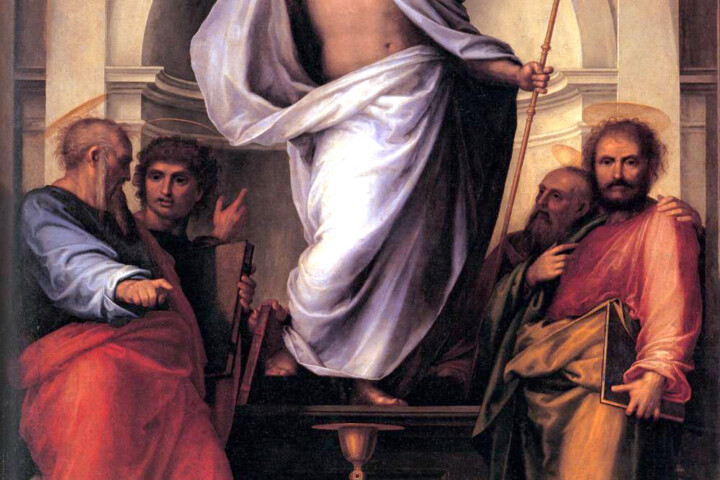
Set your minds on things that are above, not on things that are on earth, for you have died, and your life is hidden with Christ in God. When Christ who is your life is revealed, then you also will be revealed with him in glory (Col. 3:3-4). The Resurrection of Our Lord and Saviour[…]Continue reading→
An Ancient Homily for Holy Saturday
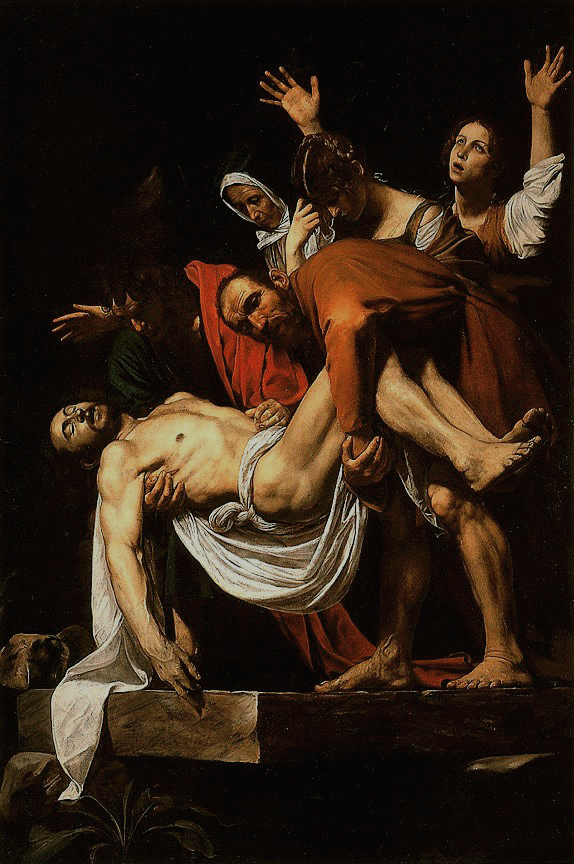
The time between Good Friday and Easter Sunday is one of waiting, in silence, as the world wonders – anticipates – what will happen, after the death of Christ. We re-live this time each year in the anamnesis of our liturgy, and in turn look forward to the glorious re-creation of all things at the[…]Continue reading→
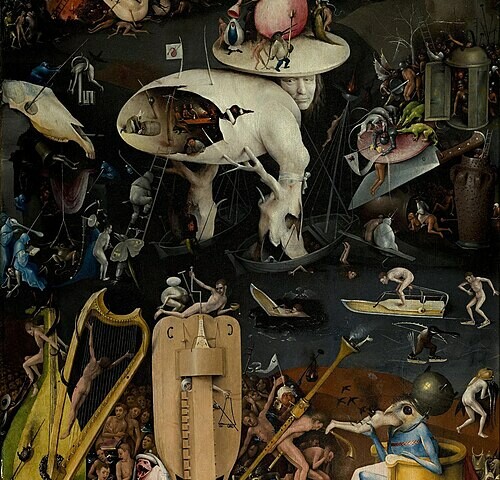
Europe’s Long Descent
(As we meditate on this day on Christ’s burial, and His descent into hell, it is fitting to ponder here with contributor Peter Marcus how the world seems to be heading there as well. The difference is that, although God cannot ‘redeem’ hell, nor those therein, He can and did redeem the world. There is[…]Continue reading→