
6th Sunday of Easter: We become His friends
You are my friends if you do what I command you. I do not call you servants any longer because the servant does not know what the master is doing; but I have called you friends, because I have made known to you everything that I have heard from my Father. (Jn 15:14-15)
We are nearly at the end of the Easter Season, a privileged time of catechesis or instruction for both the newly baptized and for all of us who renewed our baptismal vows on Easter Sunday. This liturgical catechesis, called mystagogy, draws us into the Mystery of Christ and today the words of the Gospel express what living the Mystery of Christ in its fullness means in very simple terms: we become His friends.
In the scriptural texts of this liturgical season we have the content of what our Lord in today’s Gospel reading refers to as everything that He has heard from the Father. What is this everything? It is the truth about God and man and specifically, how we have been created to share God’s own life. St. Paul says that this Mystery hidden for ages is “Christ in you, the hope of glory” (Col 1:27). To know this and to live by this truth enables us to understand and to live life by a logic that governs how we live and relate to one another and to the world around us. Again, very simply we ask: How does any given situation help me to grow in Gods’ friendship?
“Christ in you, the hope of glory” (Col 1:27). This is our purpose, our meaning, and our destiny. The fullest revelation of this Mystery is given to us in the Passion, Death, and Resurrection of Our Lord, the Paschal Mystery. In the Mystery of the redemption the nature of God is revealed; as well as the truth about human beings created in the image and likeness of God. It is because of our Lord’s redemptive death that we have life—both in the world—not a mere existence, but life; and, in the next world, eternal life. In the Paschal Mystery, the words of Scripture are fulfilled; and because all that took place did so according to the Scriptures and not by accident or betrayal or misunderstanding, this means that the truth about God, about us, and about the universe is made known in Christ.
“I have called you friends because I have made known to you everything that I have heard from my Father.” The death of Jesus on the Cross is a revelation of God’s nature. As His friends, our Lord makes known to us Who He is. The Cross reveals to us that God is not solitary, but a Trinity of Persons. The Cross reveals to us that God’s Trinitarian life is essentially self-surrender and love. For this reason, to speak of the human person in absolute terms of individual isolation distorts the very nature of the human person. We were created for friendship; ultimately, divine friendship, and this truth is essential to a proper understanding of personhood. God did indeed make us for relationships; and the relational nature of our being reflects the relational nature of God Himself, “one God in Trinity, and Trinity in Unity” (Athanasian Creed). The self-surrender and love of God’s Trinitarian life enables us to understand that Christian life, our life in Christ, can only be lived if understood in light of this logic of self-surrendering love; as a self-offering. In his Epistle to the Romans St. Paul exhorts us: “I appeal to you, therefore, brethren, by the mercies of God, to present your bodies as a living sacrifice, holy and acceptable to God, which is your spiritual worship” (Rom 12:1).
The fullest expression of this Mystery is in the celebration of the Holy Sacrifice of the Mass and the devout reception of Holy Communion. In the Sacrifice which we are about to offer, this Mystery of self-surrendering love will become really present on this Altar; and our spiritual worship, the offering of ourselves as a living sacrifice together with the Sacrifice of Jesus, the atoning sacrifice for our sins will contain the everything that Jesus has made known to us and the only thing that we need to know: namely, that God is love, self-giving and self-sacrificing love; that this self-sacrificing love is the logic that enables us to live our lives in imitation of Christ.
None of this, however, is possible without a deep spirit of prayer. It is by prayer alone that we become our Lord’s true friends and His faithful disciples. Throughout the ages Catholics have looked to our Lady as a model of Christian discipleship most worthy of imitation. In her we see the promises of the Lord fulfilled and from her we learn how to serve and to live the Christian Mystery. Some of the most beautiful works of art, whether in music or other forms, celebrate this truth. Who is not moved at the hearing of the Ave Maria, whatever the musical setting? How many artists have reproduced a Madonna and Child or Our Lady at the foot of the Cross? Who is not captivated by their beauty?
But “we must pray not only with our affectivity and our will; we must pray with our whole being, not least of all our understanding and our intellect. Prayer must be nourished by study and instruction if it is not to fall prey to subjective fantasy and whim. Judaeo-Christian prayer has always been characterized by its deep rootedness in revelation—what God has told us about Himself that we could never have discovered on our own” (Erasmo Leiva-Merikakis, Fire of Mercy). There is a traditional form that can help us to do this; the Holy Rosary. The Mysteries of the Rosary are a summary of the Gospels. The Rosary teaches the fundamental doctrines of the Faith and it opens us to mystery and grace. “The Rosary is a blessed blending of mental and vocal prayer by which we honour and learn to imitate the mysteries and the virtues of the life, death, Passion, and glory of Jesus and Mary” (St. Louis de Montfort, The Secret of the Rosary, Part I).
This month of May is dedicated to our Lady. This week we will celebrate the Feast of Our Lady of Fatima on 13 May. This date marks the first of a series of apparitions during which our Lady called mankind to conversion and exhorted us to pray the Rosary every day. Our Lady especially asked for prayers of reparation for the offences, sacrileges, and indifference against the Mystery of the Eucharist. The Rosary devoutly prayed deepens our knowledge that Christ our Lord is the Passover Lamb of Sacrifice through Whom we have life; and this is ultimately the one thing we need to know. In the Eucharist this knowledge is given to us by our Lord Himself. For this reason we celebrate this Holy Sacrifice reverently and devoutly, with hearts burning with love; for here, in both Word and Sacrament, our Lord who deigns to call us His friends shares with us everything that He has heard from the Father. “I have called you friends, because I have made known to you everything that I have heard from my Father.”

Saint Kateri , Canada’s Protectress
This was the title given to Saint Kateri Tekakwitha, by Pope Benedict XVI, when he canonized her on October 28th, 2012, along with six others, in Saint Peter’ Square (she had been beatified by Pope John Paul II back in 1980). With Saint Joseph as our protector, along with the Canadian martyrs, we seem to[…]Continue reading→

Remembering Father Alphonse de Valk
(Today marks the sixth anniversary of the death of Father Alphonse de Valk, C.S.B., a faithful, courageous and indefatigable Basilian priest, pro-life-and-family apostle, and the founder of Catholic Insight magazine. Here is what we wrote those on his entering into eternity five years ago, as we continue to remember him in our prayers and thoughts)[…]Continue reading→

My Name is Bernadette
April 16th is a propitious day, for besides the anniversary of Father de Valk’s death, who founded Catholic Insight in its print form decades ago, and the commemoration of the ‘two Benedicts’, mentioned in accompanying posts, today we also recall Saint Bernadette Soubirous, the young visionary to whom the Virgin Mary appeared numerous times at[…]Continue reading→

Canonizing Sister Faustina and Divine Mercy
HOMILY OF THE HOLY FATHER MASS IN ST PETER’S SQUARE FOR THE CANONIZATION OF SR MARY FAUSTINA KOWALSKA Sunday, 30 April 2000 1. “Confitemini Domino quoniam bonus, quoniam in saeculum misericordia eius”; “Give thanks to the Lord for he is good; his steadfast love endures for ever” (Ps 118: 1). So the Church sings on the Octave of[…]Continue reading→
Divine Mercy Sunday – An Echo of Every Mass
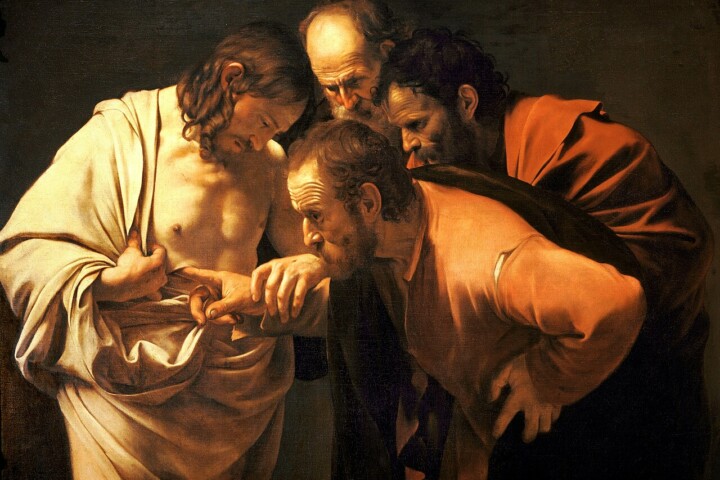
Reach out your hand and put it in my side. Do not doubt but believe’… ‘My Lord and my God!’ (Jn. 20:18)). Today is Divine Mercy Sunday, and as we celebrate the end of the Easter Octave, we contemplate the wounded side of our Saviour, the Church’s source of life. On Good Friday in the[…]Continue reading→
First Holy Communion: Sermon from May 16, 1943
Here is a sermon from the good old days by +Rev. Msgr. Vincent Nicholas Foy (August 14, 1915 – March 13, 2017), from 1943. Readers may recall that Pope Saint Pius X, by the decree Quam Singulari in 1910, lowered the customary age of reception of Holy Communion – after the rigours of the plague[…]Continue reading→
In the Glorious Light of Easter, Alleluia!
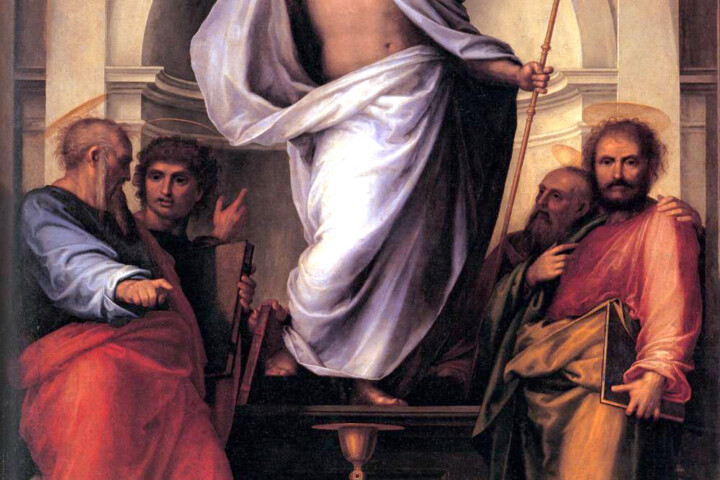
Set your minds on things that are above, not on things that are on earth, for you have died, and your life is hidden with Christ in God. When Christ who is your life is revealed, then you also will be revealed with him in glory (Col. 3:3-4). The Resurrection of Our Lord and Saviour[…]Continue reading→
An Ancient Homily for Holy Saturday
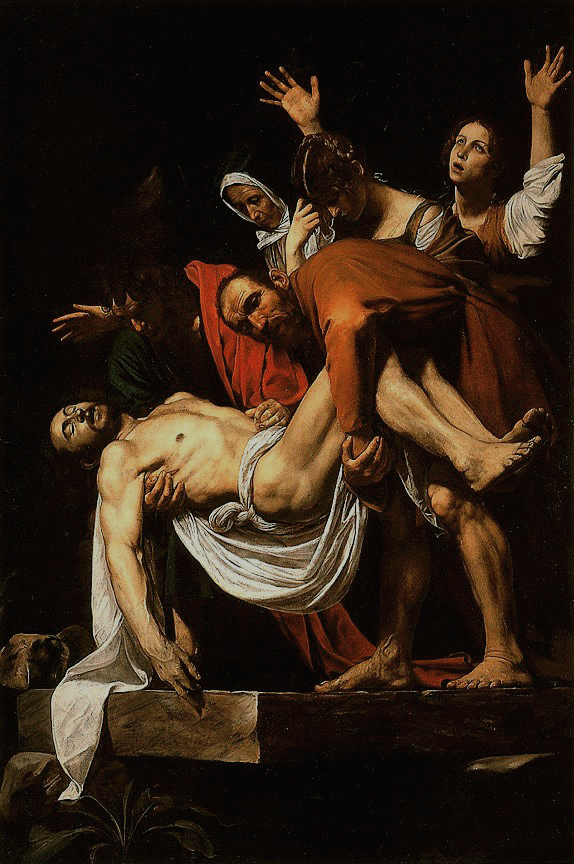
The time between Good Friday and Easter Sunday is one of waiting, in silence, as the world wonders – anticipates – what will happen, after the death of Christ. We re-live this time each year in the anamnesis of our liturgy, and in turn look forward to the glorious re-creation of all things at the[…]Continue reading→
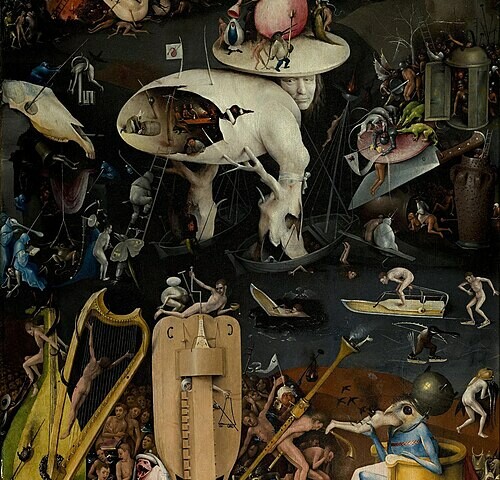
Europe’s Long Descent
(As we meditate on this day on Christ’s burial, and His descent into hell, it is fitting to ponder here with contributor Peter Marcus how the world seems to be heading there as well. The difference is that, although God cannot ‘redeem’ hell, nor those therein, He can and did redeem the world. There is[…]Continue reading→
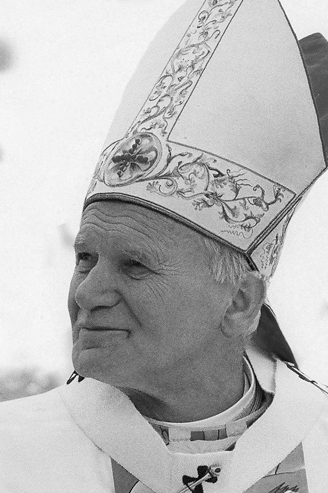
Pope Saint John Paul II’s First Good Friday Homily
ADDRESS OF HIS HOLINESS JOHN PAUL II AT THE CONCLUSION OF THE STATIONS OF THE CROSS AT THE COLOSSEUM Good Friday, 13 April 1979 When we make the Way of the Cross from one station to the next, in spirit we are always at the spot wherethis journey had its “historical” place: where it[…]Continue reading→