
2nd Sunday in Lent: The glory of the crucified Christ
On the second Sunday in Lent we always read the Gospel of the Transfiguration of our Lord. We do so in order that our focus may be directed towards the glory of Easter and our Lord’s victory over sin and death by His glorious Resurrection. Our Lenten penance is not an end in itself but a means to an end; that cleansed of our faults and sanctified in both body and mind we might more fully appreciate and participate in God’s own glory. The word that Sacred Scripture most commonly uses to describe the nature of God is glory. We associate glory with power, majesty, radiance, awe, and wonder. Yet all the Gospels, especially the Gospel of John, speak of God’s humiliation as His exaltation, His glory. By faith, we are seized by the beauty and glory of the Crucified Christ. In this mystery of the Transfiguration a twofold glory is revealed: the glory which our Lord possesses as the eternal Son of the Father and the glory that is manifested in His sacred Passion; the glory that is manifested from the unsurpassable torture of Holy Week. God Himself is “whipped to blood, crowned with thorns, mocked, spat upon, ridiculed, nailed, pierced… In this consummate ugliness, this unspeakable outrage, shines a picture of divine beauty, of divine glory. The Gospel of the Transfiguration presents us with a vision of the glory of God on its way to the Passion” (Cardinal Hans Urs Von Balthasar).
The glory revealed to Peter, James, and John is a glimpse of the glory of the Resurrection, a glory that we too are destined to share; however, it is the Passion that “leads to the glory of the Resurrection” (Preface for the Second Sunday in Lent, The Roman Missal). Consequently, we are ever mindful that “we preach Christ crucified … Christ the power of God and the wisdom of God” (1 Cor 1:23-24). Our Lord Jesus Christ “is the radiant light of God’s glory and the perfect copy of His nature” (Heb 1:3). Those who gaze on the Crucified Christ in faith are able to perceive that His hour of highest spiritual beauty—and glory—is a moment of utmost bodily degradation. In the humiliation of the Cross the Saviour brings near and makes visible the divine glory for we see in Him the ineffable love of God for sinners. This is a love, a beauty, and a glory that can only be perceived by a prayerful, contemplative gaze. It is only by means of prayer and penance that we can come to some understanding of why our Lord brought about our salvation in such weakness, diminishment, and pain.
No human life is exempt from diminishment and pain. If we are given the grace to grow older, the weight of years alone brings about diminishment. Why must it be so? Perhaps our own diminishment is meant to conform us to the self-emptying of the Son of God on the Cross. This may very well be the grace of old age. That our redemption has taken place through suffering of the flesh and spilling of blood may mean that it could take place in no other way. It is for this reason that above all things we must seek simply to be with Jesus and to learn from Him what He alone can teach us in the silence of prayer. On the Cross we have the ultimate and only adequate answer to the problem of evil, the only solution to the mystery of sin. The world’s redemption could only be brought about “in the mystery of a love that by suffering understands all the insults inflicted upon it” (Hans Urs Von Balthasar). Our profession of faith, if taken seriously, is journey into the depth of this Mystery.
What do we discover as we come to know more of this mystery? Quite simply, that the essence of Christian discipleship is to be with Jesus and to learn from Him who accompanies us on life’s journey and who is never distant from us by means of His grace. We must endeavour to abandon ourselves to the will of the Father as He did, and in this is our peace: not only our peace but also our way to holiness, to glory. Christians are not immune from suffering. Indeed, our long history teaches us that often we suffer more precisely because of our Christian faith but as St. Paul asks in our second reading, “who will separate us from the love of Christ? Will hardship, or distress or persecution, or famine, or nakedness, or peril or sword? No, in all these things we are more than conquerors, through him who loved us” (Rom 8:35-37). These words are more than ever relevant as we witness the persecution of Christians in the Middle East, Africa and elsewhere. Our faith enables us not only to overcome the trials we suffer but also to be sanctified by them and through them. We understand these as our means to holiness; a state to which we are called.
“The entire virtue of what we call holiness lies in faithfulness to what God ordains” (Jean Pierre de Caussade, The Joy of Full Surrender, [Paraclete Press], p.17). Surely, this is what we learn when we contemplate the life and Passion of our Lord. Fidelity to duty, discipline of life, moral rectitude; these are the ways in which we are faithful to what God ordains. They are no less the means by which our lives are so transformed and so transfigured that we come to “live for the praise of his glory” (Eph 1:12). Anything that contradicts these principles is a path to misery and destruction and a betrayal of the Cross of Christ.
After His glorious resurrection our Lord asked the disciples on the road to Emmaus, “Was it not necessary that the Christ should suffer these things and enter into his glory?” (Lk 24:26). And so it is with us; we must be willing to recognize what is best for us in what God ordains for us. Like the disciples on the mountain, the revelation of God’s will for us, whether it be in the suffering that He asks of us or permits us to endure, or simply in the challenges that we face in living; these may confound us and might even cause us to be very much afraid. Like Peter, James, and John, however, we too are privileged to perceive the glory of the Lord; a glory however that is veiled in the poverty, humility, and vulnerability of the Crucifix that hangs before us and in the Sacrament of the Cross, the Eucharist. These reveal a love so powerful that neither hate nor death could conquer it. Because we receive and worship this Sacrament, this same love is at work in the hearts of all who believe. By its power great deeds of love are done and great evils are faced and overcome. The Passion of our Lord gives a human face to the love of God for a fallen humanity. Our own sufferings, mysterious as they may be in both their origin and purpose, place us in the very heart of the Paschal Mystery. Suffering is not meaningless nor is it without purpose, and neither is our life. “Nothing short of suffering, except in rare cases, makes us what we should be; gentle instead of harsh, meek instead of violent, conceding instead of arrogant, lowly instead of proud, pure-hearted instead of sensual” (Bl. John Henry Newman, “The Sweet Yoke of Christ,” 1839).

Saint Kateri , Canada’s Protectress
This was the title given to Saint Kateri Tekakwitha, by Pope Benedict XVI, when he canonized her on October 28th, 2012, along with six others, in Saint Peter’ Square (she had been beatified by Pope John Paul II back in 1980). With Saint Joseph as our protector, along with the Canadian martyrs, we seem to[…]Continue reading→

Remembering Father Alphonse de Valk
(Today marks the sixth anniversary of the death of Father Alphonse de Valk, C.S.B., a faithful, courageous and indefatigable Basilian priest, pro-life-and-family apostle, and the founder of Catholic Insight magazine. Here is what we wrote those on his entering into eternity five years ago, as we continue to remember him in our prayers and thoughts)[…]Continue reading→

My Name is Bernadette
April 16th is a propitious day, for besides the anniversary of Father de Valk’s death, who founded Catholic Insight in its print form decades ago, and the commemoration of the ‘two Benedicts’, mentioned in accompanying posts, today we also recall Saint Bernadette Soubirous, the young visionary to whom the Virgin Mary appeared numerous times at[…]Continue reading→

Canonizing Sister Faustina and Divine Mercy
HOMILY OF THE HOLY FATHER MASS IN ST PETER’S SQUARE FOR THE CANONIZATION OF SR MARY FAUSTINA KOWALSKA Sunday, 30 April 2000 1. “Confitemini Domino quoniam bonus, quoniam in saeculum misericordia eius”; “Give thanks to the Lord for he is good; his steadfast love endures for ever” (Ps 118: 1). So the Church sings on the Octave of[…]Continue reading→

Divine Mercy Sunday – An Echo of Every Mass
Reach out your hand and put it in my side. Do not doubt but believe’… ‘My Lord and my God!’ (Jn. 20:18)). Today is Divine Mercy Sunday, and as we celebrate the end of the Easter Octave, we contemplate the wounded side of our Saviour, the Church’s source of life. On Good Friday in the[…]Continue reading→
First Holy Communion: Sermon from May 16, 1943
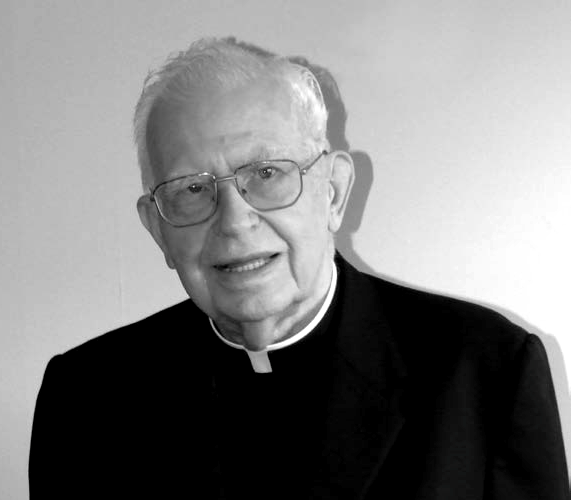
Here is a sermon from the good old days by +Rev. Msgr. Vincent Nicholas Foy (August 14, 1915 – March 13, 2017), from 1943. Readers may recall that Pope Saint Pius X, by the decree Quam Singulari in 1910, lowered the customary age of reception of Holy Communion – after the rigours of the plague[…]Continue reading→
In the Glorious Light of Easter, Alleluia!
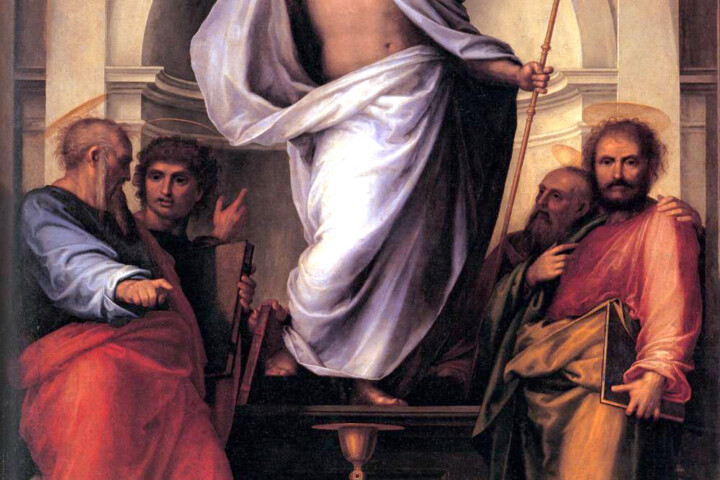
Set your minds on things that are above, not on things that are on earth, for you have died, and your life is hidden with Christ in God. When Christ who is your life is revealed, then you also will be revealed with him in glory (Col. 3:3-4). The Resurrection of Our Lord and Saviour[…]Continue reading→
An Ancient Homily for Holy Saturday
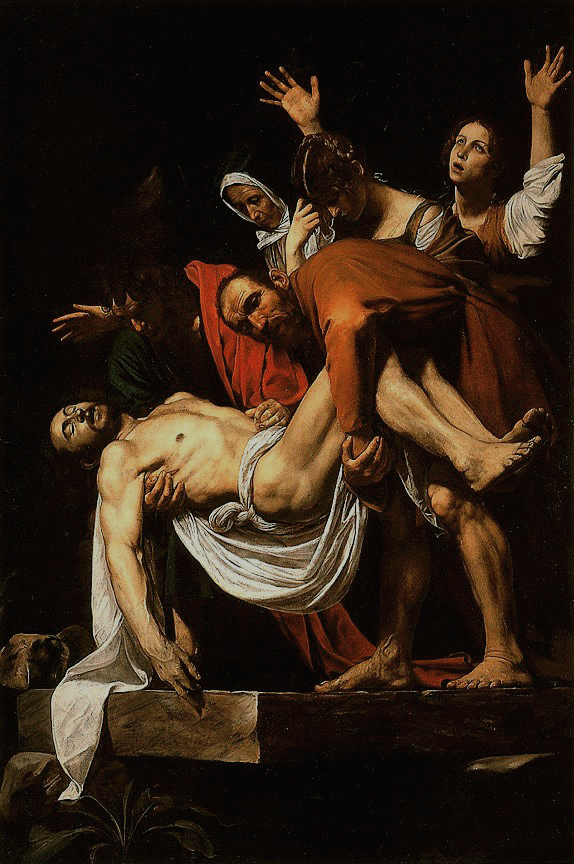
The time between Good Friday and Easter Sunday is one of waiting, in silence, as the world wonders – anticipates – what will happen, after the death of Christ. We re-live this time each year in the anamnesis of our liturgy, and in turn look forward to the glorious re-creation of all things at the[…]Continue reading→
Europe’s Long Descent
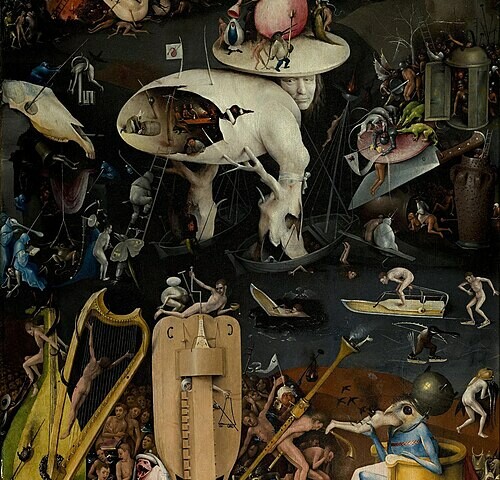
(As we meditate on this day on Christ’s burial, and His descent into hell, it is fitting to ponder here with contributor Peter Marcus how the world seems to be heading there as well. The difference is that, although God cannot ‘redeem’ hell, nor those therein, He can and did redeem the world. There is[…]Continue reading→
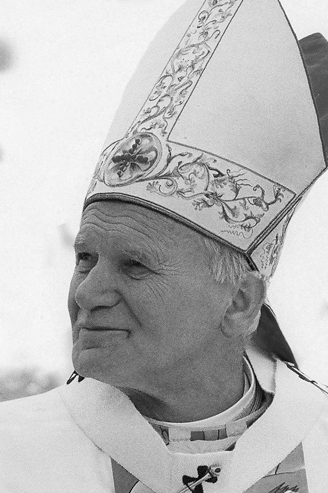
Pope Saint John Paul II’s First Good Friday Homily
ADDRESS OF HIS HOLINESS JOHN PAUL II AT THE CONCLUSION OF THE STATIONS OF THE CROSS AT THE COLOSSEUM Good Friday, 13 April 1979 When we make the Way of the Cross from one station to the next, in spirit we are always at the spot wherethis journey had its “historical” place: where it[…]Continue reading→