
Behold the true Jordan
I have given you as a covenant to the people, a light to the nations, to open the eyes that are blind, to bring out prisoners from the dungeon, from the prison those who sit in darkness (Is 42:6-7).
An ancient antiphon from the Liturgy of the Hours for the Feast of the Epiphany places today’s Feast of our Lord’s Baptism and the Christmas Mystery within the context of God’s manifestation of His saving purpose to humanity. “Three mysteries mark this holy day: today the star leads the Magi to the Infant Christ; today water is changed into wine for the wedding feast; today Christ wills to be baptized by John in the river Jordan to bring us salvation” (Magnificat Antiphon, Second Vespers). Though separated chronologically, each of these events in the life of our Lord proclaims the manifestation of His divinity. “Great indeed is the mystery of our religion: Christ manifested in the flesh, justified in the Spirit, seen by angels, preached among nations, believed in the world, taken up in glory” (1 Tim 3:16). Today’s Feast celebrates our Lord’s manifestation as God’s Son, the Beloved. His baptism marks the beginning of His public life, just as our own baptism marks the beginning of our Christian life, for no one is born a Christian. His baptism marks the revelation of His Sonship and “it is on His part the acceptance and inauguration of His mission as God’s Suffering Servant” (Catechism of the Catholic Church, 536). It is in our Lord’s Passion and Death that the full meaning of this particular mission is revealed. So we begin our liturgical and spiritual journey to celebration of the Paschal Mystery at Easter.
In plunging into the waters of the Jordan, our Lord performs a gesture rich in meaning. This gesture manifests and symbolises His self-emptying or kenosis. Jesus plunges into the waters and so enters fully into our human condition. He is totally immersed into the realities of human existence: of hunger and thirst, of shelter, of work. This immersion prefigures His descent into death; and His coming out of the water prefigures His resurrection and glorification as God’s Son. How we share in this reality is explained for us by St. Paul in his Epistle to the Colossians: “And you were buried with him in baptism, in which you were also raised with him through faith in the working of God, who raised him from the dead” (Col 2:12).
If by His baptism our Lord embraces our human condition, then our sharing in His baptism means not only a share in His Sonship, enabling us to call God Father, but also a share in this mystery of self-emptying (kenosis) and of service. Ultimately, we are called to live the very life of God in and through our union of shared existence with the Beloved Son. What this means practically for us is that we yield to do the work God wants to do in each one of us. We may term this the passive element of our relationship with God. Simply, this means that our Lord wants to share His life with us. Both our Lord’s baptism and our own may be understood in light of these words from the second psalm: “He said to me, ‘You are my son, today I have begotten you Ask of me, and I will make the nations your heritage and the ends of the earth your possession.’” At the Jordan, Jesus the Word (Logos) of God from all eternity is revealed as the Beloved (Agapitos). By the grace of adoption and by faith, the same is said of us as we are born again and re-created in the waters of baptism. The mystery of the Church is the fulfillment of this promise.
Although in many countries, ours included, there has been a loss of faith, the truth is that the Church continues to perform the works of service and of mercy, both spiritual and corporal. This is the active element of our relationship with God. When our spiritual union with our Lord is intense and meaningful, its fruit manifested in the works of mercy and of charity is limitless. The truth is that no government, no other church, no organization political or social has fed, clothed, and educated as many people, cared for as many sick, or even begun to perform the works of mercy performed by the Catholic Church. Nevertheless, the year 2014 was the worst year for persecution of Christians in recent history. In this, I believe that we must discern the Church’s share in our Lord’s mission as God’s Suffering Servant. What the future holds in this regard is difficult to predict, so we must pray for the grace to persevere.
Almost forty years ago, Pope St. John Paul II, then Cardinal Archbishop of Krakow in Poland, spoke these words at the Eucharistic Congress held in Philadelphia (1976): “We are now standing in the face of the greatest historical confrontation humanity has ever experienced. I do not think that the wide circle of the American Society, or the whole wide circle of the Christian Community realize this fully. We are now facing the final confrontation between the Church and the anti-church, between the gospel and the anti-gospel, between Christ and the antichrist. The confrontation lies within the plans of Divine Providence. It is, therefore, in God’s Plan, and it must be a trial which the Church must take up, and face courageously.” The way of Christian discipleship which we have undertaken to follow, mysteriously, is also a share in the mission of the Son of God who came to take away the sins of the world. The union of our suffering with the Atoning Sacrifice of our Lord is a source of grace and of reparation.
In celebrating the Feast of our Lord’s Baptism, we commemorate the event which marks the beginning of His public ministry, of His mission as God’s Suffering Servant. This is a mission also shared by our Lord’s disciples, particularly by those who have been asked by our Lord to carry the heavy burden of suffering. We see in those who suffer like Christ a chosen soul, one who has been marked out, and we approach such a person with profound reverence. Such is the transformative power of suffering patiently and lovingly borne that it affects both the one who suffers and those who witness the suffering. It is in this spirit that we are one with our persecuted brethren in the world. Let us not forget them in our prayers and sacrifices. In prayer, let us also mystically join our Lord in His descent into the waters of the Jordan. “Behold the true Jordan, that is, the descent of the humble. All that is required is that we should not be reluctant to go down day by day more deeply, be submerged more completely, and be wholly buried with Christ. Let us give Him thanks, whose humility both consecrated the form of baptism today for those who believe and reserved an equivalent grace for those who repent” (Guerric of Igny on the Baptism of the Lord).

Saint Kateri , Canada’s Protectress
This was the title given to Saint Kateri Tekakwitha, by Pope Benedict XVI, when he canonized her on October 28th, 2012, along with six others, in Saint Peter’ Square (she had been beatified by Pope John Paul II back in 1980). With Saint Joseph as our protector, along with the Canadian martyrs, we seem to[…]Continue reading→

Remembering Father Alphonse de Valk
(Today marks the sixth anniversary of the death of Father Alphonse de Valk, C.S.B., a faithful, courageous and indefatigable Basilian priest, pro-life-and-family apostle, and the founder of Catholic Insight magazine. Here is what we wrote those on his entering into eternity five years ago, as we continue to remember him in our prayers and thoughts)[…]Continue reading→

My Name is Bernadette
April 16th is a propitious day, for besides the anniversary of Father de Valk’s death, who founded Catholic Insight in its print form decades ago, and the commemoration of the ‘two Benedicts’, mentioned in accompanying posts, today we also recall Saint Bernadette Soubirous, the young visionary to whom the Virgin Mary appeared numerous times at[…]Continue reading→

Canonizing Sister Faustina and Divine Mercy
HOMILY OF THE HOLY FATHER MASS IN ST PETER’S SQUARE FOR THE CANONIZATION OF SR MARY FAUSTINA KOWALSKA Sunday, 30 April 2000 1. “Confitemini Domino quoniam bonus, quoniam in saeculum misericordia eius”; “Give thanks to the Lord for he is good; his steadfast love endures for ever” (Ps 118: 1). So the Church sings on the Octave of[…]Continue reading→

Divine Mercy Sunday – An Echo of Every Mass
Reach out your hand and put it in my side. Do not doubt but believe’… ‘My Lord and my God!’ (Jn. 20:18)). Today is Divine Mercy Sunday, and as we celebrate the end of the Easter Octave, we contemplate the wounded side of our Saviour, the Church’s source of life. On Good Friday in the[…]Continue reading→

First Holy Communion: Sermon from May 16, 1943
Here is a sermon from the good old days by +Rev. Msgr. Vincent Nicholas Foy (August 14, 1915 – March 13, 2017), from 1943. Readers may recall that Pope Saint Pius X, by the decree Quam Singulari in 1910, lowered the customary age of reception of Holy Communion – after the rigours of the plague[…]Continue reading→

In the Glorious Light of Easter, Alleluia!
Set your minds on things that are above, not on things that are on earth, for you have died, and your life is hidden with Christ in God. When Christ who is your life is revealed, then you also will be revealed with him in glory (Col. 3:3-4). The Resurrection of Our Lord and Saviour[…]Continue reading→

An Ancient Homily for Holy Saturday
The time between Good Friday and Easter Sunday is one of waiting, in silence, as the world wonders – anticipates – what will happen, after the death of Christ. We re-live this time each year in the anamnesis of our liturgy, and in turn look forward to the glorious re-creation of all things at the[…]Continue reading→

Europe’s Long Descent
(As we meditate on this day on Christ’s burial, and His descent into hell, it is fitting to ponder here with contributor Peter Marcus how the world seems to be heading there as well. The difference is that, although God cannot ‘redeem’ hell, nor those therein, He can and did redeem the world. There is[…]Continue reading→
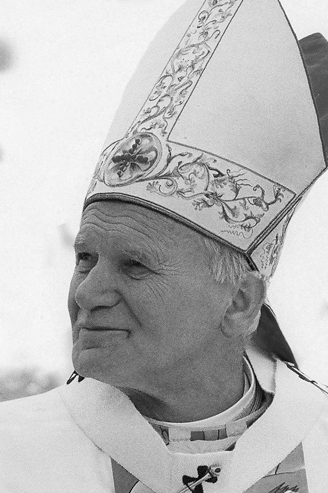
Pope Saint John Paul II’s First Good Friday Homily
ADDRESS OF HIS HOLINESS JOHN PAUL II AT THE CONCLUSION OF THE STATIONS OF THE CROSS AT THE COLOSSEUM Good Friday, 13 April 1979 When we make the Way of the Cross from one station to the next, in spirit we are always at the spot wherethis journey had its “historical” place: where it[…]Continue reading→