
33rd Sunday: The duty of talent
So then let us not fall asleep as others do, but let us keep awake and be sober (1 Thes 5:6).
As we approach the end of the liturgical year, the Scripture lessons of the Mass direct our attention towards the coming of our Lord, the Day of the Lord when judgment will be given and they history of salvation will be fulfilled. The biblical readings also make it clear that it is absolutely impossible to determine in advance the date and time of this coming. As we wait for this day, our waiting should not cause us to evade the present. On the contrary, we must live it fully, actively, in such a way that we may bear fruit.
“So then let us not fall asleep as others do, but let us keep awake and be sober” (1 Thes 5:6). This is the message of our Gospel parable, the Parable of the Talents. “To one he gave five talents, to another two, to another one, to each according to his ability” (Mt 25:15). To appreciate what our Lord wishes to communicate and the implications of this parable, we should note that a talent was not any kind of coin. A talent was a measure of value worth about one hundred pounds of silver. A talent was more than twenty years’ wages for a labourer. At today’s silver prices, we could say that to one slave the master gave $26,000; to another $52,000; and to the slave who was given five talents, he gave $130,000. Those are tidy sums for investment.
The message of the parable is clear. We are exhorted to make use of our gifts of nature and grace, little or great. The master has entrusted huge sums to his servants; by their standards they have received invaluable capital. This parable is about stewardship and it clearly warns against the dangers of sloth, whereby God-given blessings and abilities are squandered because of fear (26:25) or laziness (25:26-28). Personal diligence, however, is greatly rewarded with superior gifts and responsibilities. This personal diligence may also be understood as sobriety of life which enables us to avoid extremes that are often a cause of misfortune. St. Paul reminds us that “God did not give us a spirit of timidity but a spirit of power and love and self-control [or sobriety]” (2 Tim 1:7).
A simple, moderate lifestyle is most fitting for those who have responded to the call of Christian discipleship. This sobriety of life makes us sensitive to the needs of others: those afflicted by negative material poverty, which is dehumanizing and must be combated; and negative spiritual poverty, which is the absence of spiritual wealth and of truly human values (Cf. Raniero Cantalamesssa, OFM Cap., Poverty, p. xi). Both forms of poverty are addressed, in a sense, each and every time we come together to celebrate the Sunday Eucharist. God Himself enriches our spiritual poverty with the wisdom of the Scriptures and the Reality of His Presence in the Eucharist. In turn, our charity, expressed in the offerings that we make, comes to the aid of the materially poor.
The parable of the talents, generally speaking, expresses a self-evident truth. All of us here are endowed by God with talents, great or small, whatever the field of endeavour. One of the most satisfying aspects of life in the Church is the opportunity that we have to share our talents with our communities and the world in general. Historically, the Catholic Church has been the greatest patron of the arts because as St. Irenaeus observed, “the glory of God is man fully alive.” Under the Church’s patronage the talents of individuals have flourished. The great works of art, in all their forms, born from faith and expressing faith, that characterise especially our liturgical life bear witness to the Church’s cultivation of humanity’s talents. This too is a form of evangelization. It is the way of beauty (via pulchritudinis) that helps us grow in our relationship with God in prayer. It is a way that we must recover and foster to the best of our abilities.
The Gospel parable, however, also teaches us that failure to cultivate one’s talents results in their loss. The servant who receives one talent and who fails to cultivate what is given him is rebuked not only as lazy and slothful but wicked; that is to say, evil. By definition, evil is the absence of good. In the absence of what could have been had the talent been invested and cultivated, one confronts what we describe as a sin of omission. Our Lord expects us to invest our God-given talents and His teaching makes it very clear that in our efforts we must think not only of our own good but also that of others. We can only do this if we consciously make an effort to think of others and to love them.
Responsible stewardship, it seems to me, also implies a concern for the development of the gifts and talents of others. St. Paul wisely admonishes us to “do nothing out of selfishness or conceit” (Phil 2:3). This is good advice whether in regard to our own talents or the talents of others. Whatever the talents our Lord has entrusted to us, it is clear that we are expected to develop these gifts in such a way that they will help us to obtain the gift of salvation; “for what does it profit a man, to gain the whole world and forfeit his life?” (Mk 8:36).
At His return, when the Master calls us to Himself, may He find us rich in good works towards God and man. Ultimately, this is the wealth that we must endeavour to possess; no matter how little or great the talents entrusted to us. The communion of the Church enables us to share in one another’s goodness. We call this vast wealth the treasury of merit or the treasury of the Church. These are the merits of our Saviour Jesus Christ and His faithful; a treasury, that because of the communion of saints, also benefits others. The Eucharist which we receive strengthens and deepens this communion. May our reception of this Sacred Mystery bring us growth in charity (Prayer After Communion, Thirty-second Sunday Per Annum, The Roman Missal); that we may be zealous in good works and ever mindful of the needs of others. “So then let us not fall asleep as others do, but let us keep awake and be sober” (1 Thes 5: 6).

Saint Kateri , Canada’s Protectress
This was the title given to Saint Kateri Tekakwitha, by Pope Benedict XVI, when he canonized her on October 28th, 2012, along with six others, in Saint Peter’ Square (she had been beatified by Pope John Paul II back in 1980). With Saint Joseph as our protector, along with the Canadian martyrs, we seem to[…]Continue reading→

Remembering Father Alphonse de Valk
(Today marks the sixth anniversary of the death of Father Alphonse de Valk, C.S.B., a faithful, courageous and indefatigable Basilian priest, pro-life-and-family apostle, and the founder of Catholic Insight magazine. Here is what we wrote those on his entering into eternity five years ago, as we continue to remember him in our prayers and thoughts)[…]Continue reading→

My Name is Bernadette
April 16th is a propitious day, for besides the anniversary of Father de Valk’s death, who founded Catholic Insight in its print form decades ago, and the commemoration of the ‘two Benedicts’, mentioned in accompanying posts, today we also recall Saint Bernadette Soubirous, the young visionary to whom the Virgin Mary appeared numerous times at[…]Continue reading→
Canonizing Sister Faustina and Divine Mercy
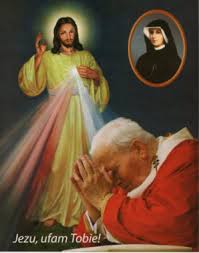
HOMILY OF THE HOLY FATHER MASS IN ST PETER’S SQUARE FOR THE CANONIZATION OF SR MARY FAUSTINA KOWALSKA Sunday, 30 April 2000 1. “Confitemini Domino quoniam bonus, quoniam in saeculum misericordia eius”; “Give thanks to the Lord for he is good; his steadfast love endures for ever” (Ps 118: 1). So the Church sings on the Octave of[…]Continue reading→

Divine Mercy Sunday – An Echo of Every Mass
Reach out your hand and put it in my side. Do not doubt but believe’… ‘My Lord and my God!’ (Jn. 20:18)). Today is Divine Mercy Sunday, and as we celebrate the end of the Easter Octave, we contemplate the wounded side of our Saviour, the Church’s source of life. On Good Friday in the[…]Continue reading→
First Holy Communion: Sermon from May 16, 1943
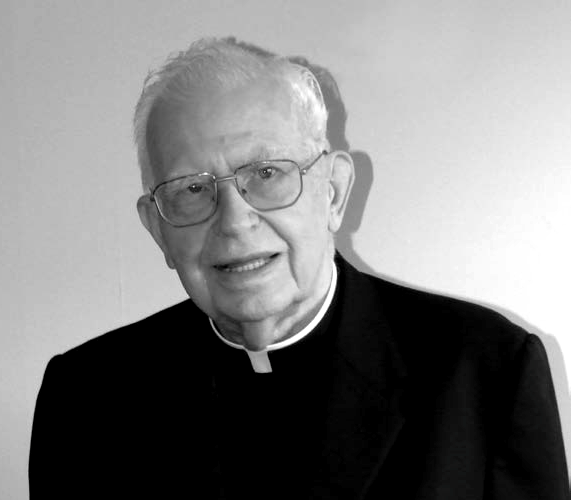
Here is a sermon from the good old days by +Rev. Msgr. Vincent Nicholas Foy (August 14, 1915 – March 13, 2017), from 1943. Readers may recall that Pope Saint Pius X, by the decree Quam Singulari in 1910, lowered the customary age of reception of Holy Communion – after the rigours of the plague[…]Continue reading→
In the Glorious Light of Easter, Alleluia!
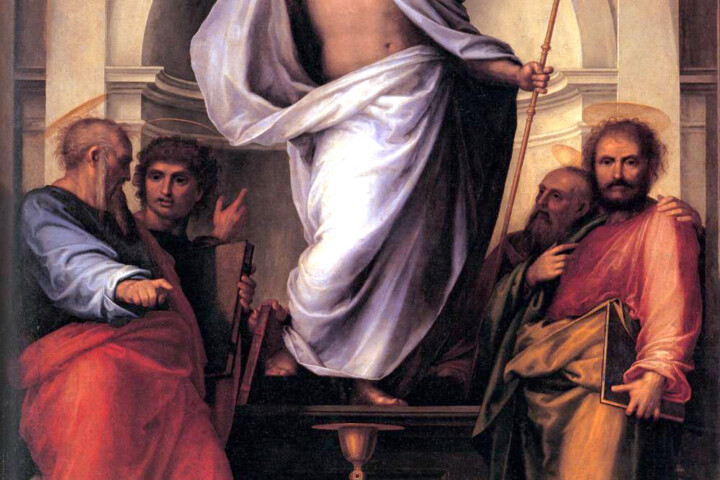
Set your minds on things that are above, not on things that are on earth, for you have died, and your life is hidden with Christ in God. When Christ who is your life is revealed, then you also will be revealed with him in glory (Col. 3:3-4). The Resurrection of Our Lord and Saviour[…]Continue reading→
An Ancient Homily for Holy Saturday
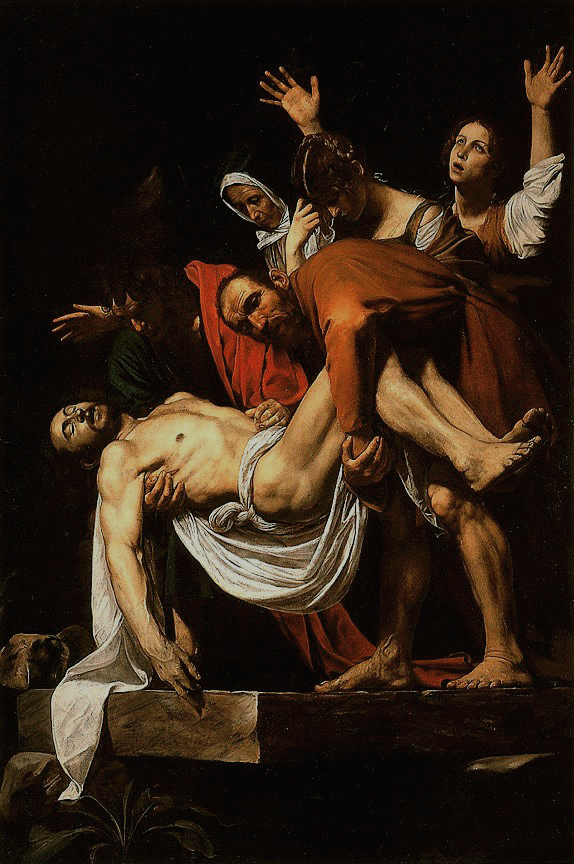
The time between Good Friday and Easter Sunday is one of waiting, in silence, as the world wonders – anticipates – what will happen, after the death of Christ. We re-live this time each year in the anamnesis of our liturgy, and in turn look forward to the glorious re-creation of all things at the[…]Continue reading→
Europe’s Long Descent
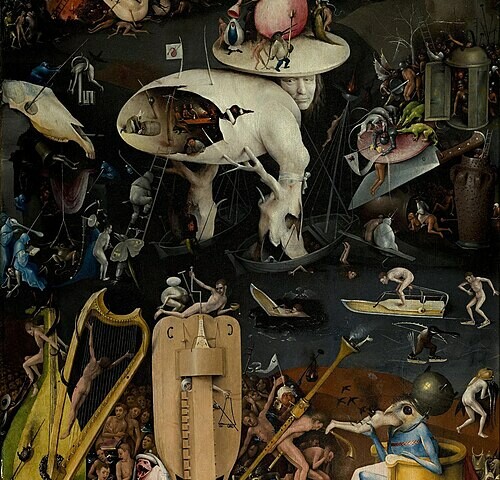
(As we meditate on this day on Christ’s burial, and His descent into hell, it is fitting to ponder here with contributor Peter Marcus how the world seems to be heading there as well. The difference is that, although God cannot ‘redeem’ hell, nor those therein, He can and did redeem the world. There is[…]Continue reading→
Pope Saint John Paul II’s First Good Friday Homily
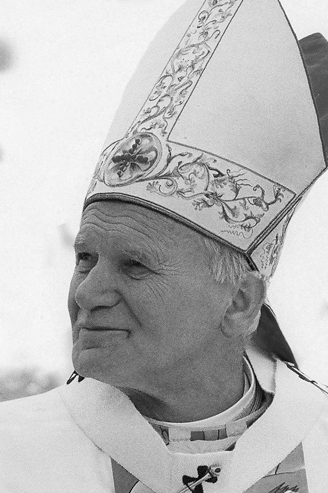
ADDRESS OF HIS HOLINESS JOHN PAUL II AT THE CONCLUSION OF THE STATIONS OF THE CROSS AT THE COLOSSEUM Good Friday, 13 April 1979 When we make the Way of the Cross from one station to the next, in spirit we are always at the spot wherethis journey had its “historical” place: where it[…]Continue reading→