
27th Sunday: The vineyard of the Lord
Turn again, O God of hosts; look down from heaven and see; have regard for this vine, the stock that your right hand has planted (Ps 80).
The Scripture lessons of the Mass today invite us to enter into the mystery of the Church on earth as the vineyard of the Lord. As we continue to read and reflect on the parables of the Kingdom, “the inner nature of the Church is made known to us in various images” (Lumen Gentium, 6). Our Gospel text presents the Church as “a choice vineyard … planted by the heavenly cultivator” (Ibid, 6). Though it is self-evident that we are the Church, “the true vine is Christ who gives life and fruitfulness to the branches; that is to us, who through the Church remain in Christ without whom we can do nothing” (Ibid, 6).
The last words of our Gospel text make it very clear that membership in the Church demands commitment. “Therefore I tell you, the kingdom of God will be taken away from you and given to a people that produces the fruits of the kingdom” (Mt 21:43). Though by no means an exhaustive list, St. Paul enumerates what the fruits of the Kingdom are: “love, joy, peace, patience, kindness, goodness, faithfulness, gentleness and self-control” (Gal 5:22-23). Simply to acknowledge this is to assent to the idea of change and growth—for the better! Our spiritual lives are not meant to be static. We try and sometimes struggle to conform ourselves to Christ our Lord and in so doing we endeavour to produce these fruits individually, and of course, collectively. In any parish big or small, it would be almost impossible to quantify all the good that is done by the faithful and all the organisations that encourage their members to engage in some form of apostolate. As individuals and as the community of the Church we are continually challenged “to live the simplicity of a great love, which is both the simplest and the hardest thing on earth, because it demands no more and no less than the gift of oneself” (Pope Benedict XV). It is important for us to be mindful that for the Church, charity is not a kind of welfare activity, which could be equally left to others; “it is a part of her nature, an indispensable expression of her very being” (Pope Benedict XVI, Deus Caritas Est, 25). This is because the Church’s mission has its origin in the Mystery of the Triune God, in the mystery of His creative love. Love is not something within God; He Himself is Love by nature, and divine love does not want to exist in isolation. It wants to pour itself out. This Love has come down to us in a particular way through the Incarnation and self-offering of the Son of God. In like manner, the Eucharist is the reality of this Love that enables us to pour ourselves out so that the Redeemer’s outreach to humanity may continue.
The effectiveness of the Church’s outreach to humanity depends not on resources, wealth, or even numbers, but on truth. We who are the Church must have as our point of reference not what is popular or relative or relevant but what is true. The Church in our country and elsewhere faces challenges which stem not so much from violence and persecution but from indifference. For many, God and the history of revelation that Sacred Scripture recounts are deemed irrelevant. Yet, it is not by watering down the Faith but by living it in its fullness that we will remain faithful to our commitment and to Sacred Tradition. The Apostle exhorts us: “Keep on doing the things that you have learned and received and heard and seen” (Phil 4:9).
This month, the Synod of Bishops is meeting in Rome to discuss the pastoral challenges of the family. Evidently, our times have not been good for this essential component of society. There are many voices calling for a change in Church teaching and praxis in order to accommodate changing societal mores but such demands presuppose that the Church has the power to make such changes. Quite simply, we do not. Our Holy Father is bringing Bishops and laymen and women together in this extraordinary synod in the hope of restoring a damaged and marginalised institution. The Church’s teaching about the family is foundational for both the Church and for society. The Catholic Church today is virtually alone in defending biblical marriage; just as she is alone in preaching the gospel of life. Perhaps more than any other cause—and there are many—Catholics are called to witness to the sanctity of life and marriage. Every family is a vine planted by our Lord; every family is a school for the Lord’s service. The same could be said a parish. Individually and collectively we witness to the love of God in our world and we endeavour to establish His Kingdom by producing the fruits of the Kingdom.
There has never been a time in our long history when we have not encountered opposition of some sort. We do well to keep in mind the words of our Lord to His first disciples: “Fear not, little flock, for it is your Father’s good pleasure to give you the kingdom” (Lk 12:32). As Pope Benedict observed some years ago, “for people of every era, not just our own, the Christian Faith is a scandal. That the eternal God should know us and care about us … that He who is immortal should have suffered and died on the Cross, that we who are mortal should be given the promise of resurrection and eternal life—to believe all this is to posit something truly remarkable.” This is what we posit and affirm each time we come together as God’s family and especially when we receive Holy Communion, the Body, Blood, Soul, and Divinity of our Lord Jesus Christ. Faith in the Eucharist orients us properly towards God and it orients us properly towards one another and the world that is always in need of the Gospel of hope.
Everything that we need to live our Faith, to grow in it and to produce the fruits of the Kingdom, is here before us: the Gospel, the Eucharist, and our Lady. She is our model in discipleship and no less our model in living the Mystery of the Eucharist. Because she is the Mother of Christ, we invoke her also as our Lady of the Most Blessed Sacrament. As we begin the month of October, dedicated to the Rosary, let us ask our Lady to obtain for us a deep love of the Blessed Sacrament and to help us to live our Faith in all its fullness, as she did. Only a profound relationship with God makes it possible to reach out fully to others. The Eucharist is the means by which this relationship deepens and produces the fruits of holiness in abundance. From the Tabernacle, the heart of every church, our Lord appeals to us: “Abide in me, and I in you. As the branch cannot bear fruit by itself, unless it abides in the vine, neither can you, unless you abide in me” (Jn 15:4).
What we all desire, surely, is a mature, adult faith; deeply rooted in our friendship with the Lord. In the strength of this friendship all our relationships take on a deeper and fuller meaning; in the family, in the parish, in society; and the sanctifying work by which our Lord has redeemed us becomes no less our work in our Lord’s vineyard.

Saint Kateri , Canada’s Protectress
This was the title given to Saint Kateri Tekakwitha, by Pope Benedict XVI, when he canonized her on October 28th, 2012, along with six others, in Saint Peter’ Square (she had been beatified by Pope John Paul II back in 1980). With Saint Joseph as our protector, along with the Canadian martyrs, we seem to[…]Continue reading→

Remembering Father Alphonse de Valk
(Today marks the sixth anniversary of the death of Father Alphonse de Valk, C.S.B., a faithful, courageous and indefatigable Basilian priest, pro-life-and-family apostle, and the founder of Catholic Insight magazine. Here is what we wrote those on his entering into eternity five years ago, as we continue to remember him in our prayers and thoughts)[…]Continue reading→

My Name is Bernadette
April 16th is a propitious day, for besides the anniversary of Father de Valk’s death, who founded Catholic Insight in its print form decades ago, and the commemoration of the ‘two Benedicts’, mentioned in accompanying posts, today we also recall Saint Bernadette Soubirous, the young visionary to whom the Virgin Mary appeared numerous times at[…]Continue reading→

Canonizing Sister Faustina and Divine Mercy
HOMILY OF THE HOLY FATHER MASS IN ST PETER’S SQUARE FOR THE CANONIZATION OF SR MARY FAUSTINA KOWALSKA Sunday, 30 April 2000 1. “Confitemini Domino quoniam bonus, quoniam in saeculum misericordia eius”; “Give thanks to the Lord for he is good; his steadfast love endures for ever” (Ps 118: 1). So the Church sings on the Octave of[…]Continue reading→

Divine Mercy Sunday – An Echo of Every Mass
Reach out your hand and put it in my side. Do not doubt but believe’… ‘My Lord and my God!’ (Jn. 20:18)). Today is Divine Mercy Sunday, and as we celebrate the end of the Easter Octave, we contemplate the wounded side of our Saviour, the Church’s source of life. On Good Friday in the[…]Continue reading→
First Holy Communion: Sermon from May 16, 1943
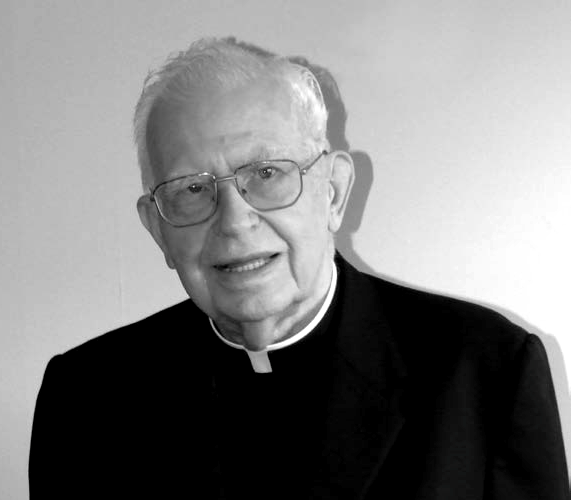
Here is a sermon from the good old days by +Rev. Msgr. Vincent Nicholas Foy (August 14, 1915 – March 13, 2017), from 1943. Readers may recall that Pope Saint Pius X, by the decree Quam Singulari in 1910, lowered the customary age of reception of Holy Communion – after the rigours of the plague[…]Continue reading→
In the Glorious Light of Easter, Alleluia!
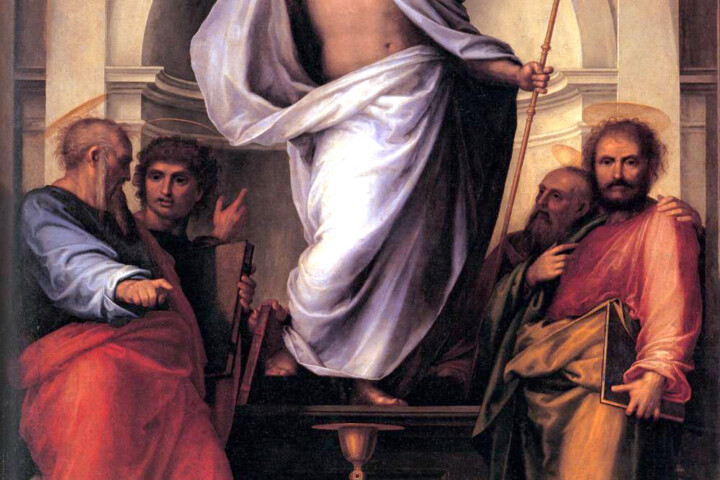
Set your minds on things that are above, not on things that are on earth, for you have died, and your life is hidden with Christ in God. When Christ who is your life is revealed, then you also will be revealed with him in glory (Col. 3:3-4). The Resurrection of Our Lord and Saviour[…]Continue reading→
An Ancient Homily for Holy Saturday
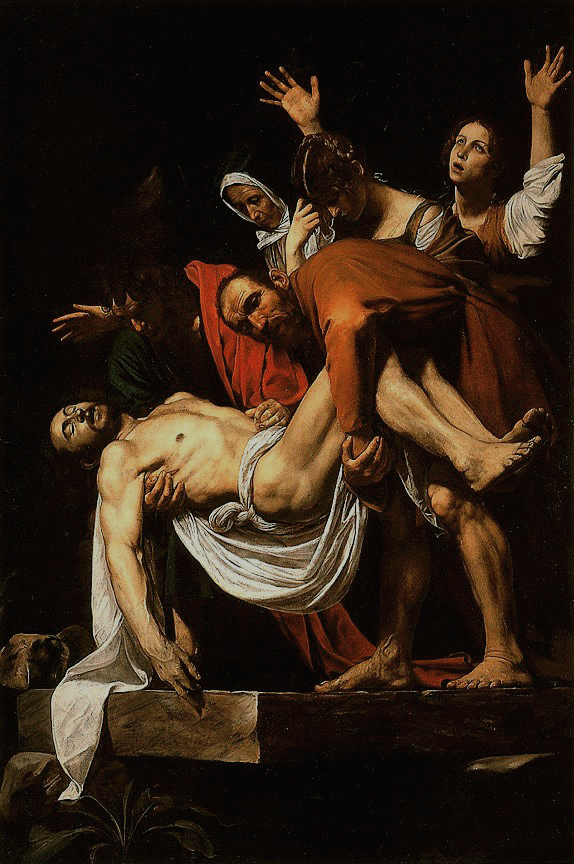
The time between Good Friday and Easter Sunday is one of waiting, in silence, as the world wonders – anticipates – what will happen, after the death of Christ. We re-live this time each year in the anamnesis of our liturgy, and in turn look forward to the glorious re-creation of all things at the[…]Continue reading→
Europe’s Long Descent
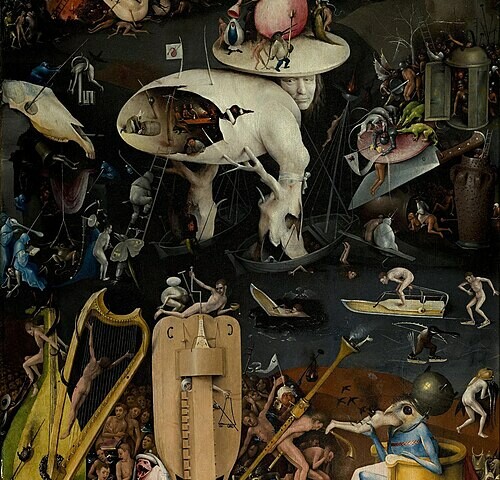
(As we meditate on this day on Christ’s burial, and His descent into hell, it is fitting to ponder here with contributor Peter Marcus how the world seems to be heading there as well. The difference is that, although God cannot ‘redeem’ hell, nor those therein, He can and did redeem the world. There is[…]Continue reading→
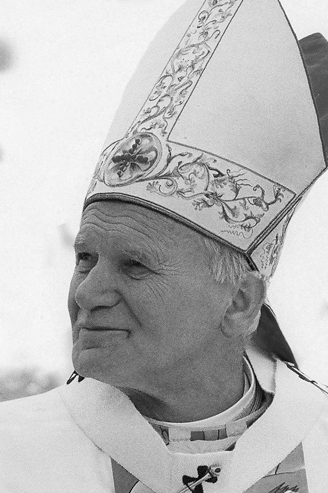
Pope Saint John Paul II’s First Good Friday Homily
ADDRESS OF HIS HOLINESS JOHN PAUL II AT THE CONCLUSION OF THE STATIONS OF THE CROSS AT THE COLOSSEUM Good Friday, 13 April 1979 When we make the Way of the Cross from one station to the next, in spirit we are always at the spot wherethis journey had its “historical” place: where it[…]Continue reading→