
18th Sunday: The medicine of immortality
Jesus saw a great crowd; and he had compassion for them and cured their sick. … And all ate and were filled (Mt 14: 14; 20).
The healing of the sick and the feeding of the multitude prefigure the miracle that is the Mass throughout the ages. We do not think of the Eucharist as a Sacrament of healing but in our tradition we do speak of the Eucharist as the medicine of immortality. St. Thomas Aquinas, the author of so many of our Eucharistic hymns and prayers, summarizes what takes place when our Lord nourishes us at the Eucharistic Sacrifice: “O Sacred Banquet, in which Christ is received as food: the memory of his Passion is recalled, the soul is filled with grace and to us is given a pledge of our future glory.” Past, present, and future comprise the Mystery of our Lord’s Real Presence in the Most Blessed Sacrament of the Altar. We are all of us familiar with the Marxist criticism of religion as the opiate of the masses; that religion promises a pie in the sky when we die. Yet, the Gospel scene that the Sacred Liturgy presents to us for our prayer today makes it very clear that this is an unfounded criticism for our Lord concerns Himself with very real and immediate concerns—hunger and sickness.
Though our Gospel passage recounts the miracle of the multiplication of the loaves and fish, we are told that the crowds followed our Lord after they had learned of the murder of John the Baptist. In the shock of a brutal episode, they did what we would do; they went to Someone who might be able to answer their questions, perhaps their doubts, their consternation at the murder of a Prophet. It is entirely probable that many of them had received the baptism of repentance preached by John and which our Lord had also received “to fulfill all righteousness (Mt 3:15). So they followed Him and came to Him, just as we have come to Him; in response to a timeless invitation that is always opportune: “Come to me, all who labour and are heavy laden, and I will give you rest. Take my yoke upon you and learn from me; for I am gentle and lowly of heart, and you will find rest for your souls. For my yoke is easy and my burden is light” (Mt 11:28-30).
In their sorrow and confusion our Lord had compassion for them and cured their sick and then He fed them. The miracle reveals His power as God. As such, the miracle is what we call a theophany, a manifestation on earth of the personal presence of God. The glory that is revealed however and the manner of its revelation affirm a truth; namely, that God’s omnipotence always works through compassion for He is “rich in mercy” (Eph 2:4). This is especially evident in the Mystery of the Eucharist, the Mystery of Faith. Our Lord comes to us in His Eucharistic poverty and becomes one with us in our innate poverty; and abasing Himself even more, He becomes for us our very sustenance, the Bread of Life. Yet in so doing He manifests the breadth of His compassionate glory. Consider for a moment the depth of His condescension; He not only dies for our salvation, He perpetuates for all ages the Sacrifice which sustains our life. O Sacred Banquet, in which Christ is received as food: the memory of his Passion is recalled, the soul is filled with grace and to us is given a pledge of our future glory.
The Gospel narrative further reveals to us that in the feeding of the great crowd our Lord enlists the help of His disciples. Taking the five loaves and the two fish, he looked up to heaven, and blessed and broke the loaves, and gave them to the disciples, and the disciples gave them to the crowds. These very words and actions are found in the Canon of the Mass, the source and summit of the life and mission of the Church. The Second Vatican Council teaches us that “to accomplish so great a work, Christ is always present in His Church, especially in her liturgical celebrations. He is present in the sacrifice of the Mass, not only in the person of His minister, ‘the same now offering, through the ministry of priests, who formerly offered himself on the cross,’ but especially under the Eucharistic species. … From this it follows that every liturgical celebration, because it is an action of Christ the priest and of His Body which is the Church, is a sacred action surpassing all others; no other action of the Church can equal its efficacy by the same title and to the same degree” (Sacrosanctum Concilium, 7).
The dynamic that our Gospel scene describes is, in essence, the Mass celebrated and lived; for it is not enough to attend Holy Mass or even to celebrate it. We must live the Mass. This is how the Mystery of Faith becomes operative in our lives for it is through the Church that the crowds who still seek Christ our Lord continue to be nourished with the Word of truth and the Bread of Life.
The Catholic Church has been and continues to be the greatest servant of humanity but the Church has always proclaimed the primacy of God. Our first duty as human beings is to adore God as we do at Holy Mass, in Eucharistic adoration or in visiting the Blessed Sacrament. From a true adoration and love of God grows our love for the poor and our neighbour. The consequence of Eucharistic piety and reverence is service of and reverence also for the poor. This is how we can renew our world so afflicted with so much violence, both physical as we see it happening if the Middle East and the moral and spiritual violence that threatens our own society. The Mass teaches us that man has been created to share God’s own life “which is foreshadowed in the present age by our reception of [our Lord’s] precious Body and Blood” (Prayer after Communion, Corpus Christi, The Roman Missal).
And to us is given a pledge of our future glory…
Each and every time that we receive our Lord worthily, whenever we adore Him present in the most Blessed Sacrament our union with Him deepens and He transforms and transfigures our lives; such that they become truly Eucharistic—that is to say, godly. This is why a Catholic cannot ever say that Mass attendance is optional. Blessed Teresa of Calcutta said that “in each of our lives Jesus comes as the Bread of Life—to be eaten, to be consumed by us. This is how He loves us. Then Jesus comes in our human life as the hungry one, the other, hoping to be fed with the Bread of our life, our hearts by loving, and our hands by serving. In loving and serving, we prove that we have been created in the likeness of God, for God is Love and when we love we are like God.” The Christian faith when authentically professed and lived is quite simply Eucharistic. May the compassion of our Lord that we experience in the Mystery of Eucharist make our hearts ever more generous; that our own lives too may be rich in mercy.
Image courtesy of photobucket.com

Saint Kateri , Canada’s Protectress
This was the title given to Saint Kateri Tekakwitha, by Pope Benedict XVI, when he canonized her on October 28th, 2012, along with six others, in Saint Peter’ Square (she had been beatified by Pope John Paul II back in 1980). With Saint Joseph as our protector, along with the Canadian martyrs, we seem to[…]Continue reading→

Remembering Father Alphonse de Valk
(Today marks the sixth anniversary of the death of Father Alphonse de Valk, C.S.B., a faithful, courageous and indefatigable Basilian priest, pro-life-and-family apostle, and the founder of Catholic Insight magazine. Here is what we wrote those on his entering into eternity five years ago, as we continue to remember him in our prayers and thoughts)[…]Continue reading→

My Name is Bernadette
April 16th is a propitious day, for besides the anniversary of Father de Valk’s death, who founded Catholic Insight in its print form decades ago, and the commemoration of the ‘two Benedicts’, mentioned in accompanying posts, today we also recall Saint Bernadette Soubirous, the young visionary to whom the Virgin Mary appeared numerous times at[…]Continue reading→

Canonizing Sister Faustina and Divine Mercy
HOMILY OF THE HOLY FATHER MASS IN ST PETER’S SQUARE FOR THE CANONIZATION OF SR MARY FAUSTINA KOWALSKA Sunday, 30 April 2000 1. “Confitemini Domino quoniam bonus, quoniam in saeculum misericordia eius”; “Give thanks to the Lord for he is good; his steadfast love endures for ever” (Ps 118: 1). So the Church sings on the Octave of[…]Continue reading→

Divine Mercy Sunday – An Echo of Every Mass
Reach out your hand and put it in my side. Do not doubt but believe’… ‘My Lord and my God!’ (Jn. 20:18)). Today is Divine Mercy Sunday, and as we celebrate the end of the Easter Octave, we contemplate the wounded side of our Saviour, the Church’s source of life. On Good Friday in the[…]Continue reading→
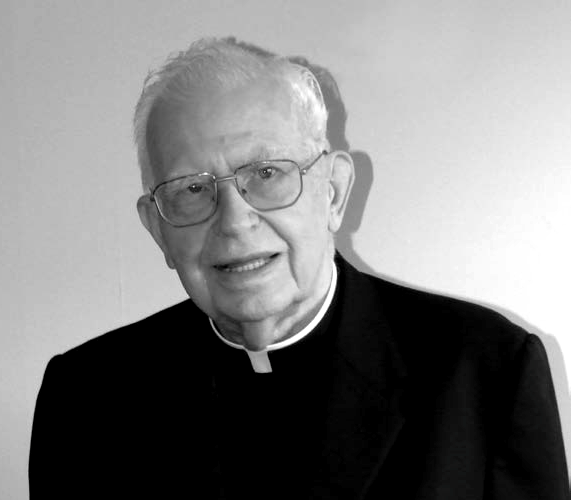
First Holy Communion: Sermon from May 16, 1943
Here is a sermon from the good old days by +Rev. Msgr. Vincent Nicholas Foy (August 14, 1915 – March 13, 2017), from 1943. Readers may recall that Pope Saint Pius X, by the decree Quam Singulari in 1910, lowered the customary age of reception of Holy Communion – after the rigours of the plague[…]Continue reading→
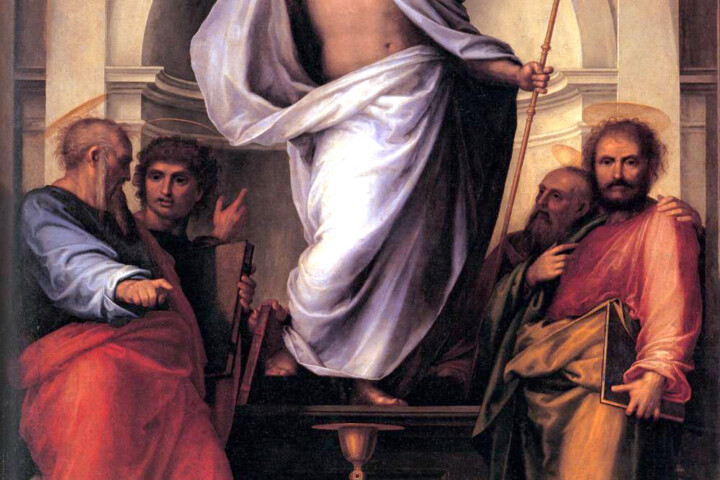
In the Glorious Light of Easter, Alleluia!
Set your minds on things that are above, not on things that are on earth, for you have died, and your life is hidden with Christ in God. When Christ who is your life is revealed, then you also will be revealed with him in glory (Col. 3:3-4). The Resurrection of Our Lord and Saviour[…]Continue reading→
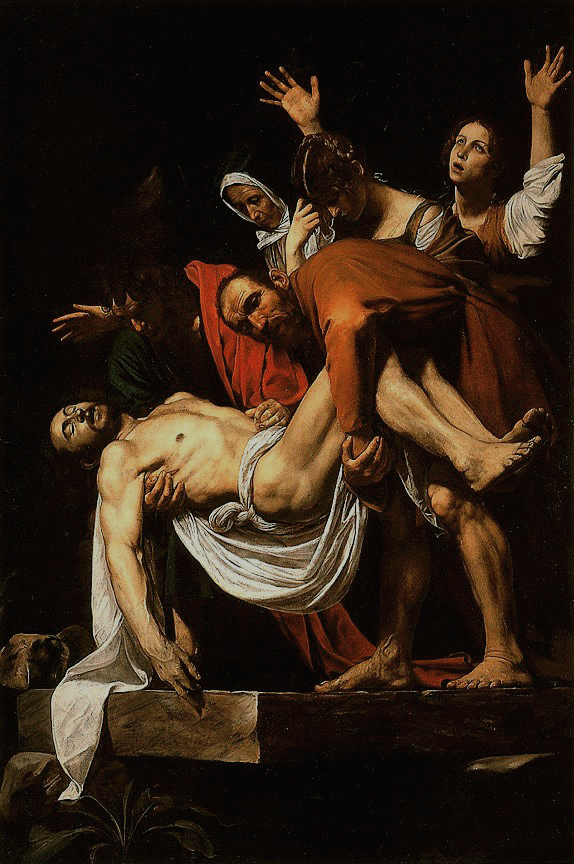
An Ancient Homily for Holy Saturday
The time between Good Friday and Easter Sunday is one of waiting, in silence, as the world wonders – anticipates – what will happen, after the death of Christ. We re-live this time each year in the anamnesis of our liturgy, and in turn look forward to the glorious re-creation of all things at the[…]Continue reading→
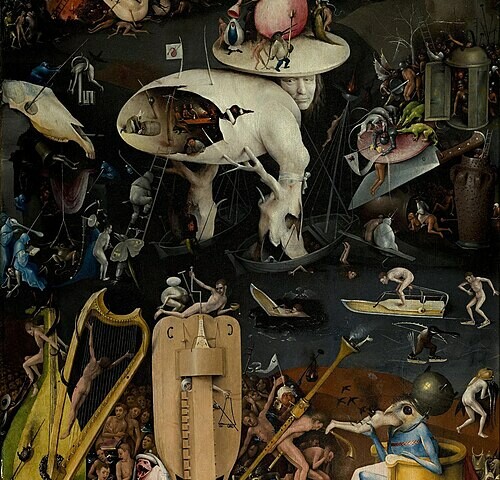
Europe’s Long Descent
(As we meditate on this day on Christ’s burial, and His descent into hell, it is fitting to ponder here with contributor Peter Marcus how the world seems to be heading there as well. The difference is that, although God cannot ‘redeem’ hell, nor those therein, He can and did redeem the world. There is[…]Continue reading→
Pope Saint John Paul II’s First Good Friday Homily
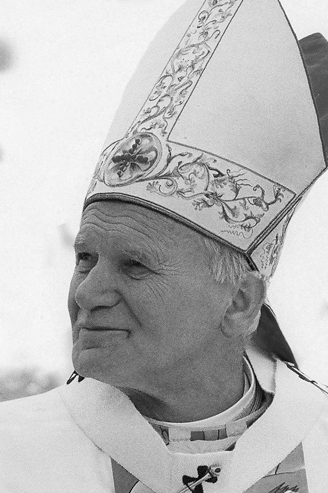
ADDRESS OF HIS HOLINESS JOHN PAUL II AT THE CONCLUSION OF THE STATIONS OF THE CROSS AT THE COLOSSEUM Good Friday, 13 April 1979 When we make the Way of the Cross from one station to the next, in spirit we are always at the spot wherethis journey had its “historical” place: where it[…]Continue reading→