
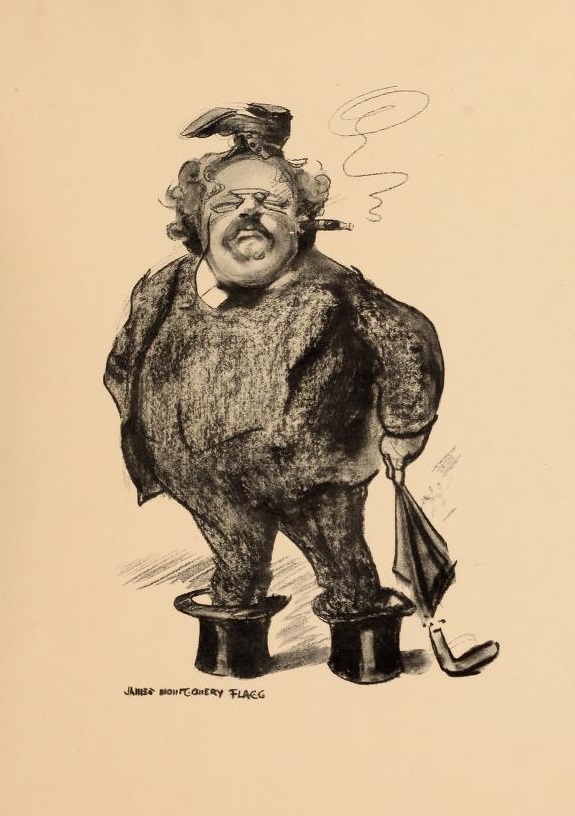
The Ethics of Elfland
Orthodoxy, Chapter 4: “The Ethics of Elfland” by G. K. Chesterton
When the business man rebukes the idealism of his office-boy, it is commonly in some such speech as this: “Ah, yes, when one is young, one has these ideals in the abstract and these castles in the air; but in middle age they all break up like clouds, and one comes down to a belief in practical politics, to using the machinery one has and getting on with the world as it is.” Thus, at least, venerable and philanthropic old men now in their honoured graves used to talk to me when I was a boy. But since then I have grown up and have discovered that these philanthropic old men were telling lies. What has really happened is exactly the opposite of what they said would happen. They said that I should lose my ideals and begin to believe in the methods of practical politicians. Now, I have not lost my ideals in the least; my faith in fundamentals is exactly what it always was. What I have lost is my old childlike faith in practical politics. I am still as much concerned as ever about the Battle of Armageddon; but I am not so much concerned about the General Election. As a babe I leapt up on my mother’s knee at the mere mention of it. No; the vision is always solid and reliable. The vision is always a fact. It is the reality that is often a fraud. As much as I ever did, more than I ever did, I believe in Liberalism. But there was a rosy time of innocence when I believed in Liberals.
I take this instance of one of the enduring faiths because, having now to trace the roots of my personal speculation, this may be counted, I think, as the only positive bias. I was brought up a Liberal, and have always believed in democracy, in the elementary liberal doctrine of a self-governing humanity. If any one finds the phrase vague or threadbare, I can only pause for a moment to explain that the principle of democracy, as I mean it, can be stated in two propositions. The first is this: that the things common to all men are more important than the things peculiar to any men. Ordinary things are more valuable than extraordinary things; nay, they are more extraordinary. Man is something more awful than men; something more strange. The sense of the miracle of humanity itself should be always more vivid to us than any marvels of power, intellect, art, or civilization. The mere man on two legs, as such, should be felt as something more heart-breaking than any music and more startling than any caricature. Death is more tragic even than death by starvation. Having a nose is more comic even than having a Norman nose.
This is the first principle of democracy: that the essential things in men are the things they hold in common, not the things they hold separately. And the second principle is merely this: that the political instinct or desire is one of these things which they hold in common. Falling in love is more poetical than dropping into poetry. The democratic contention is that government (helping to rule the tribe) is a thing like falling in love, and not a thing like dropping into poetry. It is not something analogous to playing the church organ, painting on vellum, discovering the North Pole (that insidious habit), looping the loop, being Astronomer Royal, and so on. For these things we do not wish a man to do at all unless he does them well. It is, on the contrary, a thing analogous to writing one’s own love-letters or blowing one’s own nose. These things we want a man to do for himself, even if he does them badly. I am not here arguing the truth of any of these conceptions; I know that some moderns are asking to have their wives chosen by scientists, and they may soon be asking, for all I know, to have their noses blown by nurses. I merely say that mankind does recognize these universal human functions, and that democracy classes government among them. In short, the democratic faith is this: that the most terribly important things must be left to ordinary men themselves—the mating of the sexes, the rearing of the young, the laws of the state. This is democracy; and in this I have always believed.
But there is one thing that I have never from my youth up been able to understand. I have never been able to understand where people got the idea that democracy was in some way opposed to tradition. It is obvious that tradition is only democracy extended through time. It is trusting to a consensus of common human voices rather than to some isolated or arbitrary record. The man who quotes some German historian against the tradition of the Catholic Church, for instance, is strictly appealing to aristocracy. He is appealing to the superiority of one expert against the awful authority of a mob. It is quite easy to see why a legend is treated, and ought to be treated, more respectfully than a book of history. The legend is generally made by the majority of people in the village, who are sane. The book is generally written by the one man in the village who is mad.
Photo credit: By James Montgomery Flagg [Public domain], via Wikimedia Commons.

Saint Kateri , Canada’s Protectress
This was the title given to Saint Kateri Tekakwitha, by Pope Benedict XVI, when he canonized her on October 28th, 2012, along with six others, in Saint Peter’ Square (she had been beatified by Pope John Paul II back in 1980). With Saint Joseph as our protector, along with the Canadian martyrs, we seem to[…]Continue reading→

Remembering Father Alphonse de Valk
(Today marks the sixth anniversary of the death of Father Alphonse de Valk, C.S.B., a faithful, courageous and indefatigable Basilian priest, pro-life-and-family apostle, and the founder of Catholic Insight magazine. Here is what we wrote those on his entering into eternity five years ago, as we continue to remember him in our prayers and thoughts)[…]Continue reading→

My Name is Bernadette
April 16th is a propitious day, for besides the anniversary of Father de Valk’s death, who founded Catholic Insight in its print form decades ago, and the commemoration of the ‘two Benedicts’, mentioned in accompanying posts, today we also recall Saint Bernadette Soubirous, the young visionary to whom the Virgin Mary appeared numerous times at[…]Continue reading→
Canonizing Sister Faustina and Divine Mercy
HOMILY OF THE HOLY FATHER MASS IN ST PETER’S SQUARE FOR THE CANONIZATION OF SR MARY FAUSTINA KOWALSKA Sunday, 30 April 2000 1. “Confitemini Domino quoniam bonus, quoniam in saeculum misericordia eius”; “Give thanks to the Lord for he is good; his steadfast love endures for ever” (Ps 118: 1). So the Church sings on the Octave of[…]Continue reading→

Divine Mercy Sunday – An Echo of Every Mass
Reach out your hand and put it in my side. Do not doubt but believe’… ‘My Lord and my God!’ (Jn. 20:18)). Today is Divine Mercy Sunday, and as we celebrate the end of the Easter Octave, we contemplate the wounded side of our Saviour, the Church’s source of life. On Good Friday in the[…]Continue reading→
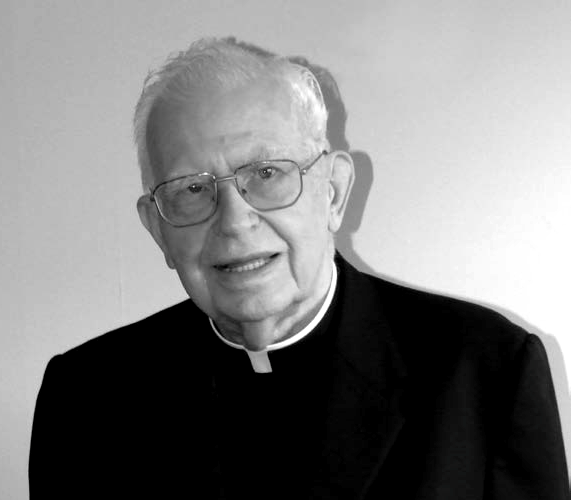
First Holy Communion: Sermon from May 16, 1943
Here is a sermon from the good old days by +Rev. Msgr. Vincent Nicholas Foy (August 14, 1915 – March 13, 2017), from 1943. Readers may recall that Pope Saint Pius X, by the decree Quam Singulari in 1910, lowered the customary age of reception of Holy Communion – after the rigours of the plague[…]Continue reading→
In the Glorious Light of Easter, Alleluia!
Set your minds on things that are above, not on things that are on earth, for you have died, and your life is hidden with Christ in God. When Christ who is your life is revealed, then you also will be revealed with him in glory (Col. 3:3-4). The Resurrection of Our Lord and Saviour[…]Continue reading→
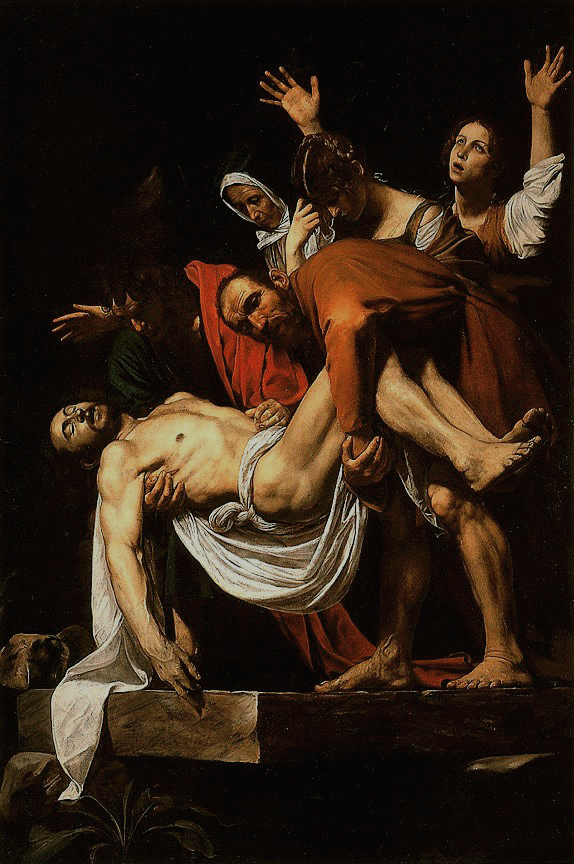
An Ancient Homily for Holy Saturday
The time between Good Friday and Easter Sunday is one of waiting, in silence, as the world wonders – anticipates – what will happen, after the death of Christ. We re-live this time each year in the anamnesis of our liturgy, and in turn look forward to the glorious re-creation of all things at the[…]Continue reading→
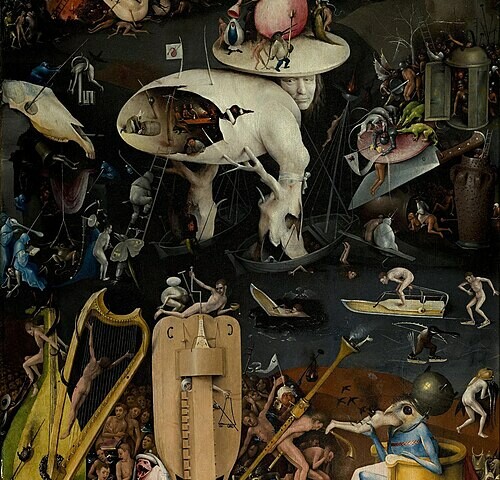
Europe’s Long Descent
(As we meditate on this day on Christ’s burial, and His descent into hell, it is fitting to ponder here with contributor Peter Marcus how the world seems to be heading there as well. The difference is that, although God cannot ‘redeem’ hell, nor those therein, He can and did redeem the world. There is[…]Continue reading→
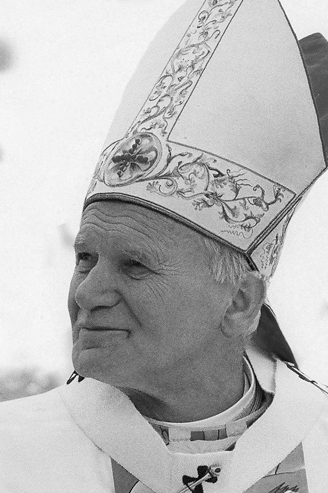
Pope Saint John Paul II’s First Good Friday Homily
ADDRESS OF HIS HOLINESS JOHN PAUL II AT THE CONCLUSION OF THE STATIONS OF THE CROSS AT THE COLOSSEUM Good Friday, 13 April 1979 When we make the Way of the Cross from one station to the next, in spirit we are always at the spot wherethis journey had its “historical” place: where it[…]Continue reading→