
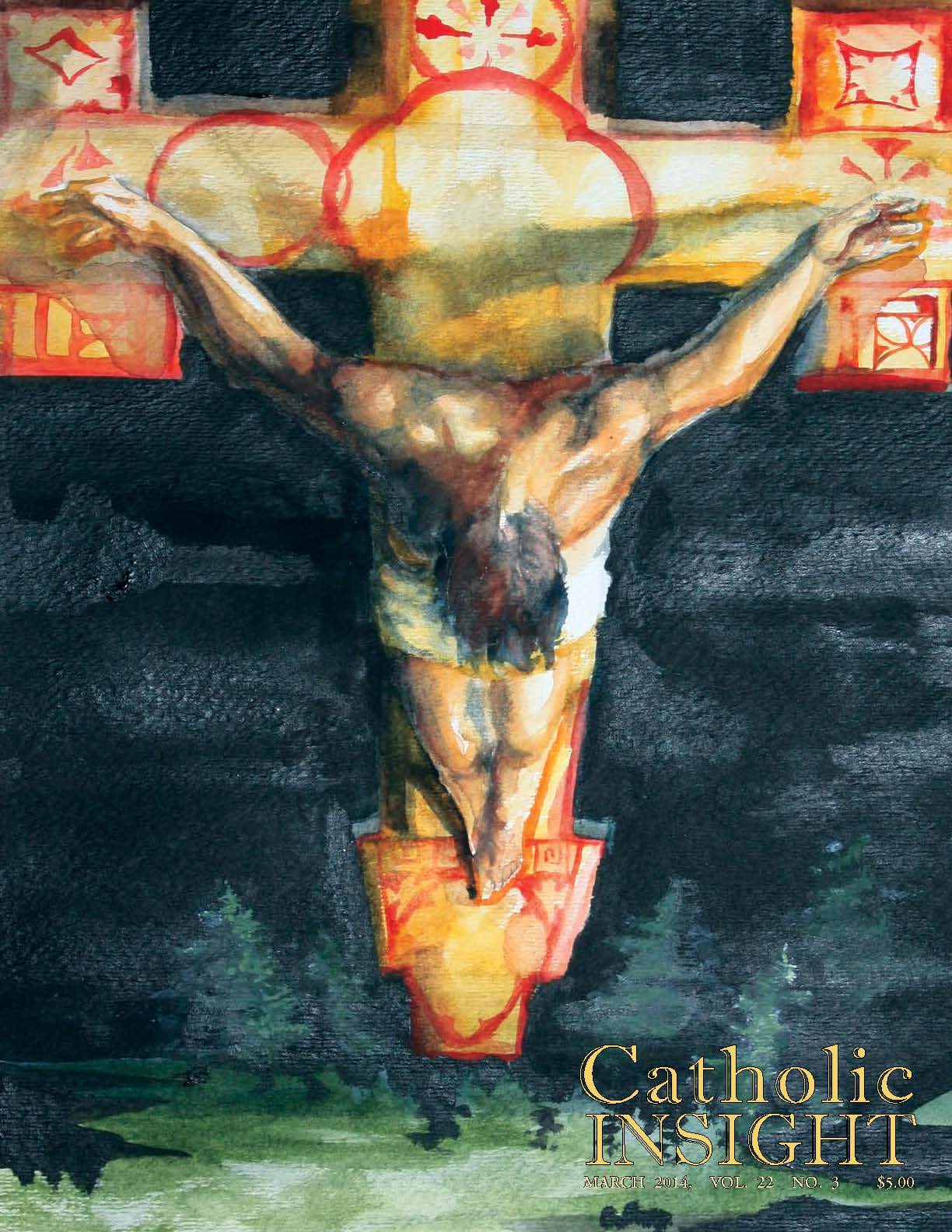
Crucifixion
Our March 2014 cover artist, Joseph Ferrant, is the sixth of eight children. He is currently studying English and Theatre at Redeemer University and is a student at Our Lady Seat of Wisdom. He has been drawing for quite a long time, and has studied art formally at the Academy of Realist Art in Toronto.
What is this piece about?
As much as I would love to claim some sort of thematically deep ideal behind the work, it is pretty much what it looks like: a somewhat blatant rip-off of Salvador Dali’s Christ of St. John of the Cross, set on a semi-Franciscan cross in a bit of forest. The original composition of the body is a view from, supposedly, God the Father, though Dali himself took the composition from a sketch John of the Cross made after a mystical experience in which he saw the cross from that point of view. I always loved Dali’s Crucifixion, but I still wanted to make it more “my own” and I also felt that it really didn’t have the right amount of realism. Christ was, after all, suffering, being the fleshy fruit on a new tree of life, and I always found those bloodless Christs to be a sacrilege to this ancient art tradition. Still, splattering some red around and adding a crown of thorns wasn’t enough, and in my attempt to find things in the original that could be changed without changing the composition or lighting, I resorted to changing the cross. Because it was winter and because of my proximity at the time to Madonna House, I thought I would paint a Russian Orthodox cross. To my embarrassment, I mistook the cross of St. Francis for an Orthodox one and made a mix between the two. The pines are there because pines are easy to paint and they fit with the theme, though you could also see them as the darkness or wilderness of the world.
Who or what did you learn from?
Mostly I was self-taught, until I joined a craft store group and did training in folk and craft art for a couple years. After that for another decade or so, I did some beginner art classes infrequently around Ontario, while still practising on my own. I really can’t say I advanced very quickly and my interest in the process did at times wane. However, in my second year of university a friend of mine suggested a traditional art workshop or atelier in Toronto, called the Academy of Realist Art. The following summer I spent three months there, at the beginner’s level, perfecting my drawing. Arguably, I learned more in those three months than in years doing art on my own.
How would you define beauty?
After having to write three major papers on this theme (and after getting mediocre marks for all of them) I think my opinion on the matter is void. Still, to give you some idea I say: Beauty is a canonless canon. We all know it exists. We all scale things by it. But damned if we don’t know the first thing about where it starts and where it ends or why it is even present in our range of consciousness to observe. I guess that is why it is listed as a transcendental.
Still, on a particular level, researchers have found that humans tend to like things that are symmetrical and harmonious, having perfect or near perfect mathematical harmony. As this order is very much intrinsic to the fundamental building blocks of physical realty both on the cellular and atomic levels, I would argue that all of reality is beautiful. Which I think fits rather nicely with the first words of Genesis.
What is the purpose of art?
I would say the best definition for art is the one most Christian artists and theologians typically have used: that the act of creating is symbiotic to the creative nature of God and as such art is a way of recognizing or conventionalizing God. It’s also a good way to see how omnipotent a divine creator would have to be, when compared to our own endeavours. And of course, beauty, the common cause for and result of art, marks our own desires for something beyond ourselves and sets us in mind of the sublime.
In regards to my area of art (classical realism) I have found, through studying and creating it, that art works a bit like a mother bird digesting worms for its young. In its original status, visual reality is hard to take in all its forms, tones, shapes, colours, and lines. Often, most people don’t even see that reality is made up of parts; that light and colour have diminishing tonalities, depths, points, and highlights; that figures and faces are made up of geometric shapes and lines and contain symmetry and composition. So when the artist takes an image and reduces the reality of it to a flatter, less detailed “reality,” the beauty of image from reality is refreshed as it were and made digestible. Even in the case of hyper-realism, just knowing the fact that an artist, say, managed to paint all the pores in a portrait of a face, can cause a viewer to do a double-take on reality.
Who inspires you and what inspires you?
Many artists have inspired me from very early on. Though it’s somewhat sentimental, I have to say my parents always did their part in infusing a love for visual arts (as well as forking out the money for lessons and supplies and managing to not be snide when I’d triumphantly present some tortured piece of paper with scribbles on it, tempering praise with constructive criticism). To point to more exemplary art figures, I love the work of the Pre-Raphaelites, William Bouguereau, and Pietro Annigoni, as well as Caravaggio and Vermeer. Also, I grew up surrounded by the works of my godfather, Petru Botezatu, a Romanian icon painter, and much of my early attempts at painting were inspired by his work.
I am also very much inspired by nature, particularly around my home in the Ottawa Valley, and though they are somewhat apprehensive of it, my sisters have been the muses and subjects of many a portrait. Lastly, I’m inspired by my Faith and by Christ. Catholicism, more than any one source, has been a muse of the most varied and wondrous beauty. Painting this bride in all her dark brilliance has been a joy.

Saint Kateri , Canada’s Protectress
This was the title given to Saint Kateri Tekakwitha, by Pope Benedict XVI, when he canonized her on October 28th, 2012, along with six others, in Saint Peter’ Square (she had been beatified by Pope John Paul II back in 1980). With Saint Joseph as our protector, along with the Canadian martyrs, we seem to[…]Continue reading→

Remembering Father Alphonse de Valk
(Today marks the sixth anniversary of the death of Father Alphonse de Valk, C.S.B., a faithful, courageous and indefatigable Basilian priest, pro-life-and-family apostle, and the founder of Catholic Insight magazine. Here is what we wrote those on his entering into eternity five years ago, as we continue to remember him in our prayers and thoughts)[…]Continue reading→

My Name is Bernadette
April 16th is a propitious day, for besides the anniversary of Father de Valk’s death, who founded Catholic Insight in its print form decades ago, and the commemoration of the ‘two Benedicts’, mentioned in accompanying posts, today we also recall Saint Bernadette Soubirous, the young visionary to whom the Virgin Mary appeared numerous times at[…]Continue reading→

Canonizing Sister Faustina and Divine Mercy
HOMILY OF THE HOLY FATHER MASS IN ST PETER’S SQUARE FOR THE CANONIZATION OF SR MARY FAUSTINA KOWALSKA Sunday, 30 April 2000 1. “Confitemini Domino quoniam bonus, quoniam in saeculum misericordia eius”; “Give thanks to the Lord for he is good; his steadfast love endures for ever” (Ps 118: 1). So the Church sings on the Octave of[…]Continue reading→

Divine Mercy Sunday – An Echo of Every Mass
Reach out your hand and put it in my side. Do not doubt but believe’… ‘My Lord and my God!’ (Jn. 20:18)). Today is Divine Mercy Sunday, and as we celebrate the end of the Easter Octave, we contemplate the wounded side of our Saviour, the Church’s source of life. On Good Friday in the[…]Continue reading→
First Holy Communion: Sermon from May 16, 1943
Here is a sermon from the good old days by +Rev. Msgr. Vincent Nicholas Foy (August 14, 1915 – March 13, 2017), from 1943. Readers may recall that Pope Saint Pius X, by the decree Quam Singulari in 1910, lowered the customary age of reception of Holy Communion – after the rigours of the plague[…]Continue reading→
In the Glorious Light of Easter, Alleluia!
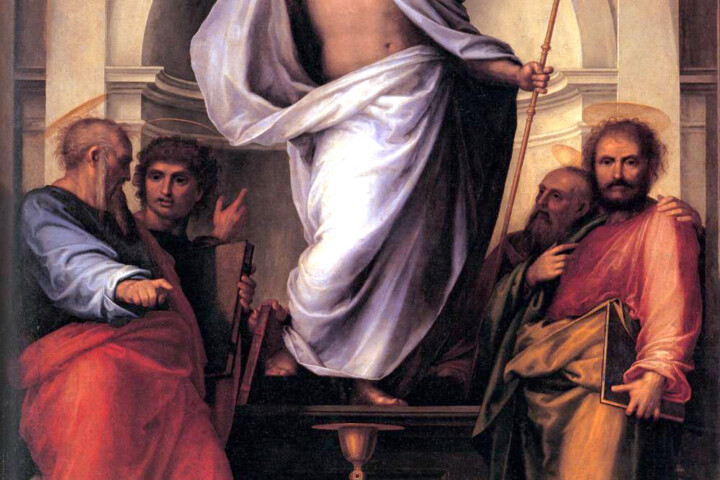
Set your minds on things that are above, not on things that are on earth, for you have died, and your life is hidden with Christ in God. When Christ who is your life is revealed, then you also will be revealed with him in glory (Col. 3:3-4). The Resurrection of Our Lord and Saviour[…]Continue reading→
An Ancient Homily for Holy Saturday
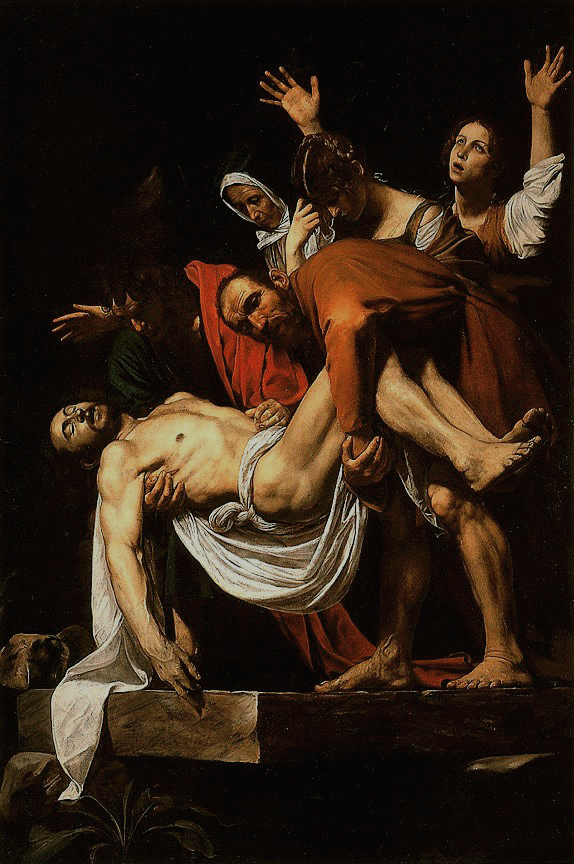
The time between Good Friday and Easter Sunday is one of waiting, in silence, as the world wonders – anticipates – what will happen, after the death of Christ. We re-live this time each year in the anamnesis of our liturgy, and in turn look forward to the glorious re-creation of all things at the[…]Continue reading→
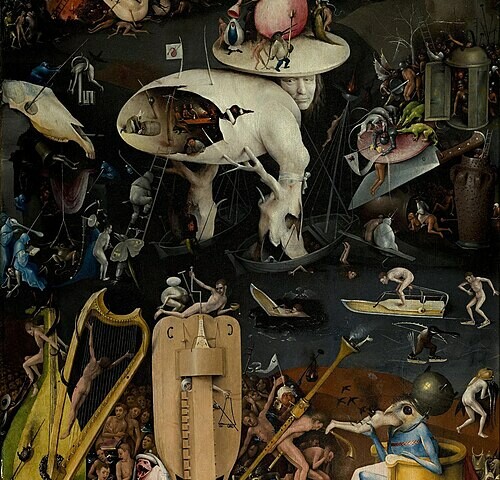
Europe’s Long Descent
(As we meditate on this day on Christ’s burial, and His descent into hell, it is fitting to ponder here with contributor Peter Marcus how the world seems to be heading there as well. The difference is that, although God cannot ‘redeem’ hell, nor those therein, He can and did redeem the world. There is[…]Continue reading→
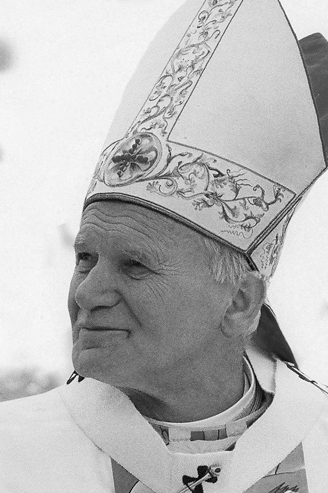
Pope Saint John Paul II’s First Good Friday Homily
ADDRESS OF HIS HOLINESS JOHN PAUL II AT THE CONCLUSION OF THE STATIONS OF THE CROSS AT THE COLOSSEUM Good Friday, 13 April 1979 When we make the Way of the Cross from one station to the next, in spirit we are always at the spot wherethis journey had its “historical” place: where it[…]Continue reading→