

Books I have not read
There are lots of books that I have never read and never will read. The act of not-reading is portrayed as passive, but there is activity in not-reading. For example, I have actively chosen to not-read anything written by those listed as Great Canadian Writers. I happily read Canadians who are not on this official list—such as Michael O’Brien, Robert Service, John Buchan, or Stephen Leacock. I once read two pages of a Margaret Lawrence novel—more than any sane man should have to suffer. As for the rest of the CanLit authors, the whole depressing miserable lot of them can wallow in their gloom without my taking part in the festival of misery.
My reasons for not-reading such writers is that I know they will cause me to become unmanned. Some folk can read Hemingway and revel in his style or take delight in his insight into human nature. The little I know from not-reading Hemingway makes me certain that his worldview will disillusion me and add the burden of his reality to my mind.
It is not reality that I am afraid of; I am desperately afraid of losing my own hold on how I perceive reality. The best metaphor I can use is that of an optical illusion, in which one tries to see a bearded man in that famous picture of black splotches formed by puddles somewhere. Some claim this picture of black splotches is really a picture of Our Lord.
I do not want to see Our Lord in black splotches. I am quite happy seeing Him at Mass at the elevation. Let splotches be splotches, I say, and let holiness be hidden and idealized; let evil be common and dull. Then along comes some well-intentioned self-appointed missionary who will not leave me alone until I am converted: “Look there—a beard! There—the eyes—nose—and mouth! … See? Can you see it?”
And, against my will, in spite of myself, the splotches become an image of a bearded man with pathetic gentle eyes in the style of the very worst religious art. Now seared into my mind is a saccharine portrayal of Our Lord that is not mine, I do not know whose it is, but it is not the one I find at Mass or in the Rosary.
I agree that the image is really there, so in this way I have had my eyes opened to a reality. But the splotches are also really there as splotches. One reality has forever supplanted the other reality in my mind’s eye—it is a one-way event. I cannot re-possess the splotches: for me they are gone forever.
In a way, I have lost a kind of first innocence. The splotches are not splotches any longer; now they carry someone else’s meaning. For my dog the splotches remain. When I show this picture to my dog, he only looks to see if it is good to eat, and then turns away unruffled.
So with my not-reading, I suppose I could be charged with narrow-mindedness or prudery. I disagree. My objection is not that my rejected writers are irreligious, but that they are unmanly. They glorify decrepitude and spread cynicism. It is hard enough to keep a hold of that quiet, halting courage that men need to be faithful husbands and fathers, to keep getting up to look for work after being laid off, to keep eating sandwiches in waxed paper to save money for second-hand children’s clothes, and to keep loving our country. This is the day-to-day courage that trained our parents and grandparents so that when their country called or their religion was threatened, they could answer and remain steadfast.
Courage to remain steadfast—this is missing in modern literature, even as an ideal. Steadfastness is made fun of as timid, prudish, or narrow-minded. Cynics, convinced that they are being realistic, delight in deflowering young minds. Think of how many students are forced to read Old Man and the Sea, The Scarlet Letter, Lord of the Flies, Such is my Beloved, or The Great Gatsby, but are never told about Treasure Island or The Pickwick Papers. In school I was forced to read The Pearl by John Steinbeck and the wretched thing continues to infect me like a pustulating sore that will not heal.
I will do without these gloomy scribes: I will not give up my right to see the real world through Christian eyes.

Saint Kateri , Canada’s Protectress
This was the title given to Saint Kateri Tekakwitha, by Pope Benedict XVI, when he canonized her on October 28th, 2012, along with six others, in Saint Peter’ Square (she had been beatified by Pope John Paul II back in 1980). With Saint Joseph as our protector, along with the Canadian martyrs, we seem to[…]Continue reading→

Remembering Father Alphonse de Valk
(Today marks the sixth anniversary of the death of Father Alphonse de Valk, C.S.B., a faithful, courageous and indefatigable Basilian priest, pro-life-and-family apostle, and the founder of Catholic Insight magazine. Here is what we wrote those on his entering into eternity five years ago, as we continue to remember him in our prayers and thoughts)[…]Continue reading→

My Name is Bernadette
April 16th is a propitious day, for besides the anniversary of Father de Valk’s death, who founded Catholic Insight in its print form decades ago, and the commemoration of the ‘two Benedicts’, mentioned in accompanying posts, today we also recall Saint Bernadette Soubirous, the young visionary to whom the Virgin Mary appeared numerous times at[…]Continue reading→

Canonizing Sister Faustina and Divine Mercy
HOMILY OF THE HOLY FATHER MASS IN ST PETER’S SQUARE FOR THE CANONIZATION OF SR MARY FAUSTINA KOWALSKA Sunday, 30 April 2000 1. “Confitemini Domino quoniam bonus, quoniam in saeculum misericordia eius”; “Give thanks to the Lord for he is good; his steadfast love endures for ever” (Ps 118: 1). So the Church sings on the Octave of[…]Continue reading→
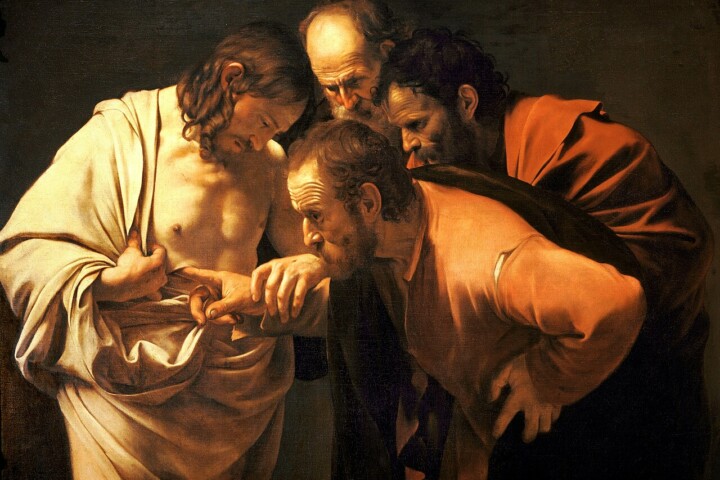
Divine Mercy Sunday – An Echo of Every Mass
Reach out your hand and put it in my side. Do not doubt but believe’… ‘My Lord and my God!’ (Jn. 20:18)). Today is Divine Mercy Sunday, and as we celebrate the end of the Easter Octave, we contemplate the wounded side of our Saviour, the Church’s source of life. On Good Friday in the[…]Continue reading→
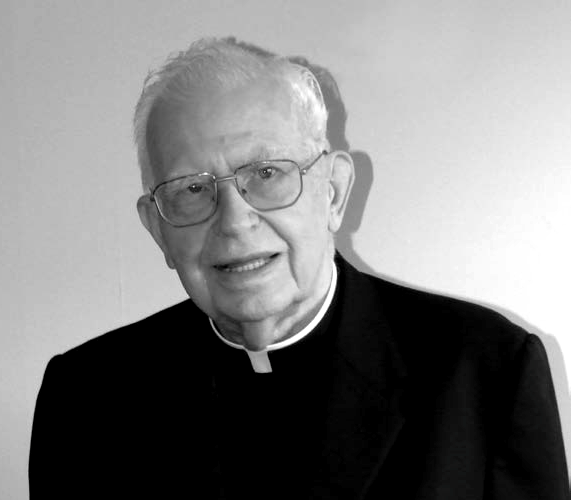
First Holy Communion: Sermon from May 16, 1943
Here is a sermon from the good old days by +Rev. Msgr. Vincent Nicholas Foy (August 14, 1915 – March 13, 2017), from 1943. Readers may recall that Pope Saint Pius X, by the decree Quam Singulari in 1910, lowered the customary age of reception of Holy Communion – after the rigours of the plague[…]Continue reading→
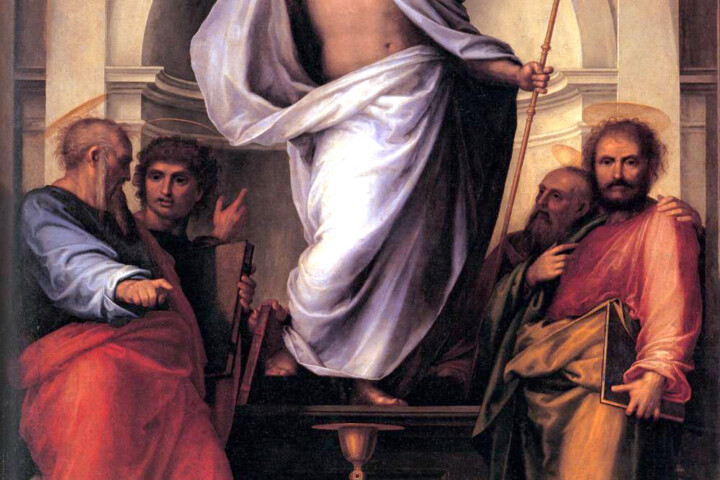
In the Glorious Light of Easter, Alleluia!
Set your minds on things that are above, not on things that are on earth, for you have died, and your life is hidden with Christ in God. When Christ who is your life is revealed, then you also will be revealed with him in glory (Col. 3:3-4). The Resurrection of Our Lord and Saviour[…]Continue reading→
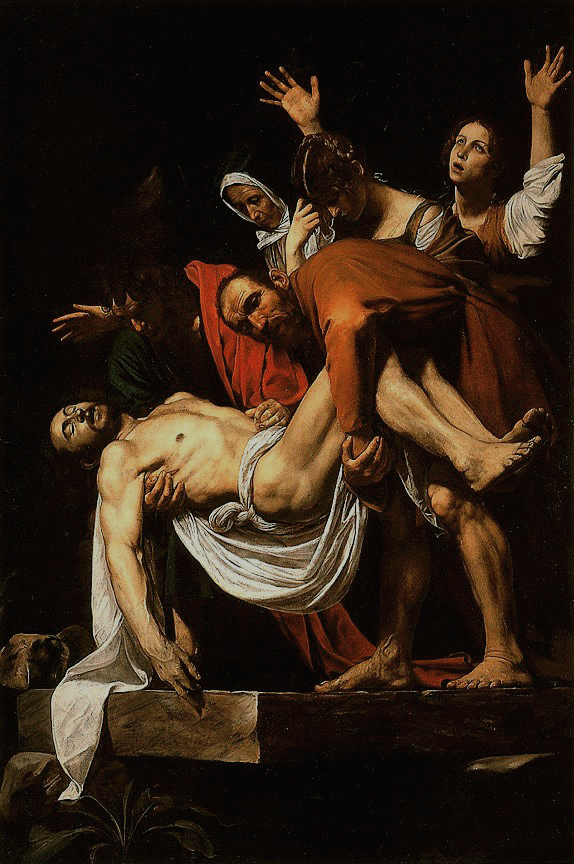
An Ancient Homily for Holy Saturday
The time between Good Friday and Easter Sunday is one of waiting, in silence, as the world wonders – anticipates – what will happen, after the death of Christ. We re-live this time each year in the anamnesis of our liturgy, and in turn look forward to the glorious re-creation of all things at the[…]Continue reading→
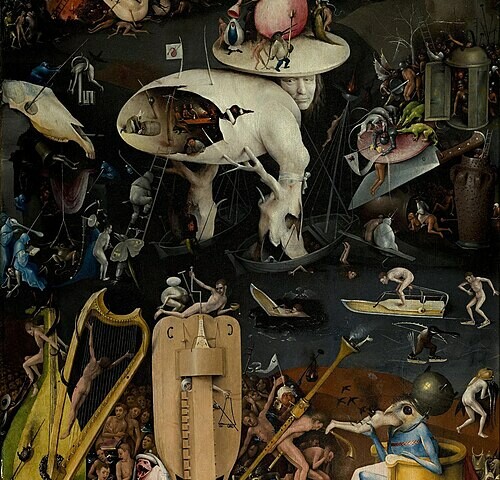
Europe’s Long Descent
(As we meditate on this day on Christ’s burial, and His descent into hell, it is fitting to ponder here with contributor Peter Marcus how the world seems to be heading there as well. The difference is that, although God cannot ‘redeem’ hell, nor those therein, He can and did redeem the world. There is[…]Continue reading→
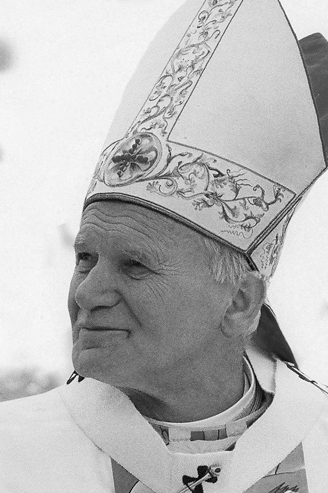
Pope Saint John Paul II’s First Good Friday Homily
ADDRESS OF HIS HOLINESS JOHN PAUL II AT THE CONCLUSION OF THE STATIONS OF THE CROSS AT THE COLOSSEUM Good Friday, 13 April 1979 When we make the Way of the Cross from one station to the next, in spirit we are always at the spot wherethis journey had its “historical” place: where it[…]Continue reading→