
Making a bread oven
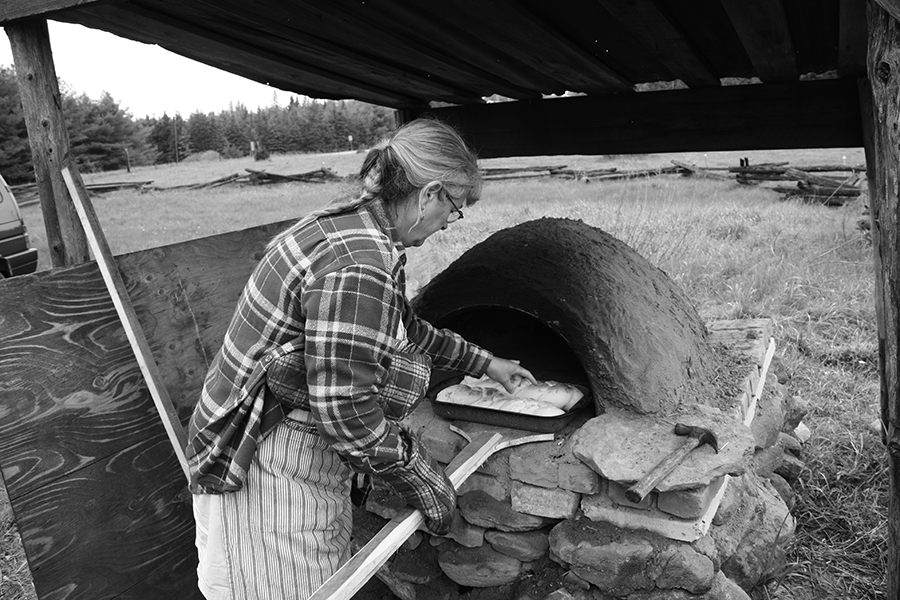
A bread oven is simply a dry hollow pile of mud and straw in which a fire is built. When the fire dies down, the hot mud bakes whatever is put into it, whether bread, vegetables, or meat. It is a technology that has pre-historic origins and follows a common pattern across continents: the bread ovens of Africa, the Native American Hornos, and most important for us, the clay ovens of French Canada. Curiously, I cannot find any rural tradition for clay ovens in British history. It appears that the industrial revolution, which began there, has almost completely destroyed any historical connection with such a timeless technology.
This bread oven used to be the centre of the domestic church, the source of sustenance for the life of the family. When real bread has been held, the words of the gospel make sense: what Father would give his son a stone when he asked for bread. Real bread looks like a stone. The force of the comparison is lost when we only experience modern factory bread. The domestic oven is a homely tabernacle, a place where bread is made so that natural life is sustained.
Of course, we do not live by bread alone. Indeed, as human beings we have mouths so that we may sustain our life by receiving the Body of Christ in the Mass. Nevertheless, it is no accident that those cultures which observe the domestic traditions have a lively Catholic Faith, for the logic and lessons of Humane Vitae are written in the hearts of those who live with real things and eat real food.
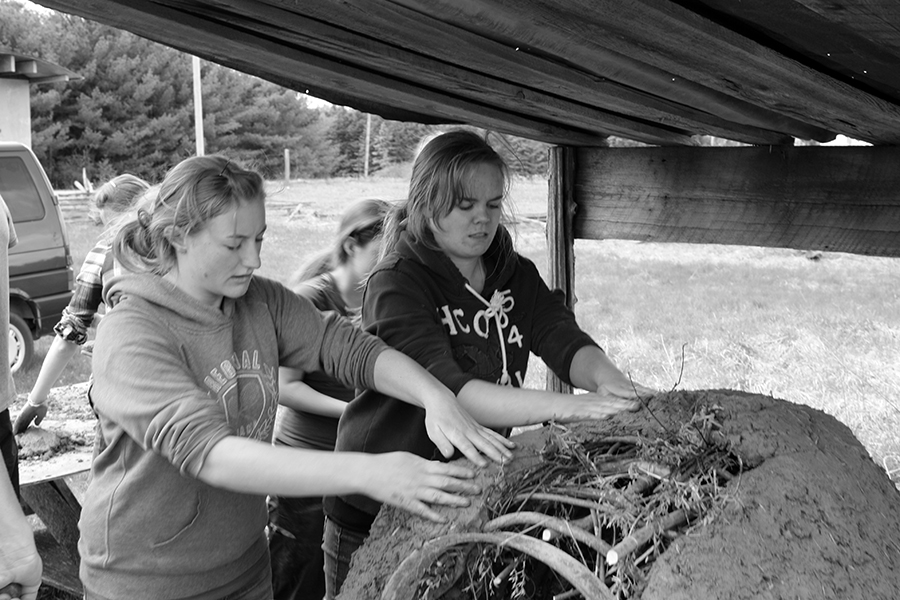
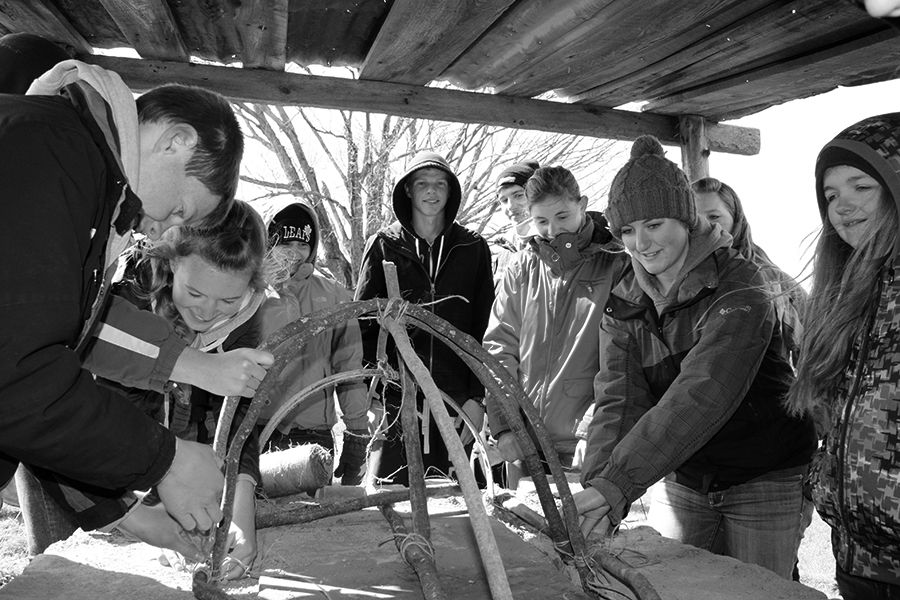
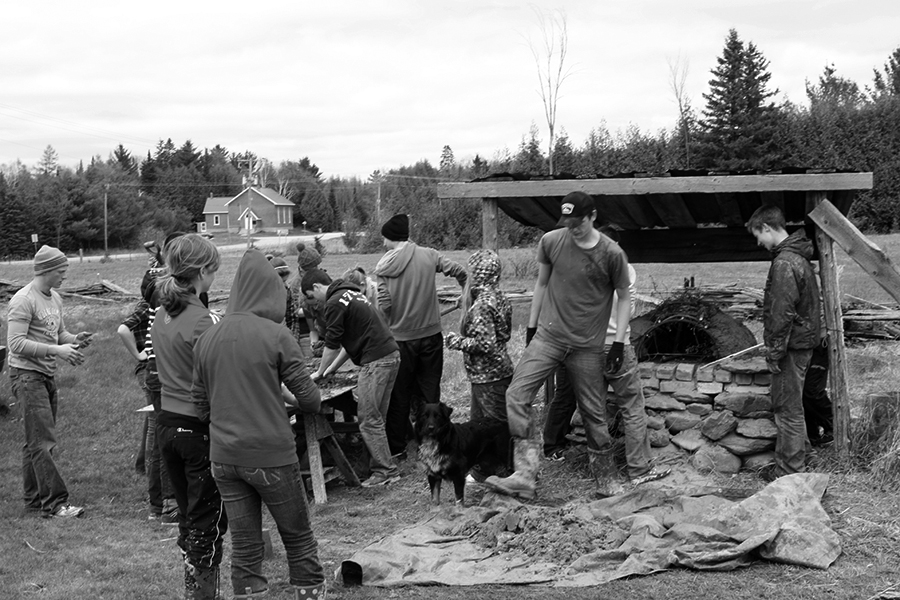
Making a bread oven is simple. This one was built as a high school project with Wayside Academy, but I have built them as home-school projects as well. First one must gather rocks into a pile and then place some flat rocks on the top as the hearth. This process evokes the actions of St. Francis of Assisi, who began his rebuilding of the Church one rock at a time. On the top of the flat rock base, a frame of willow branches is tied up using cotton twine, like a rounded stick igloo, abut the size of a bushel basket. These form the ribs of the oven, a natural representation of the ribs taken from Adam and surrounded by clay to form Eve. Indeed, we even do this part, mixing clay and dried straw or grass with water, to be formed by hand into wet odd-shaped bricks.
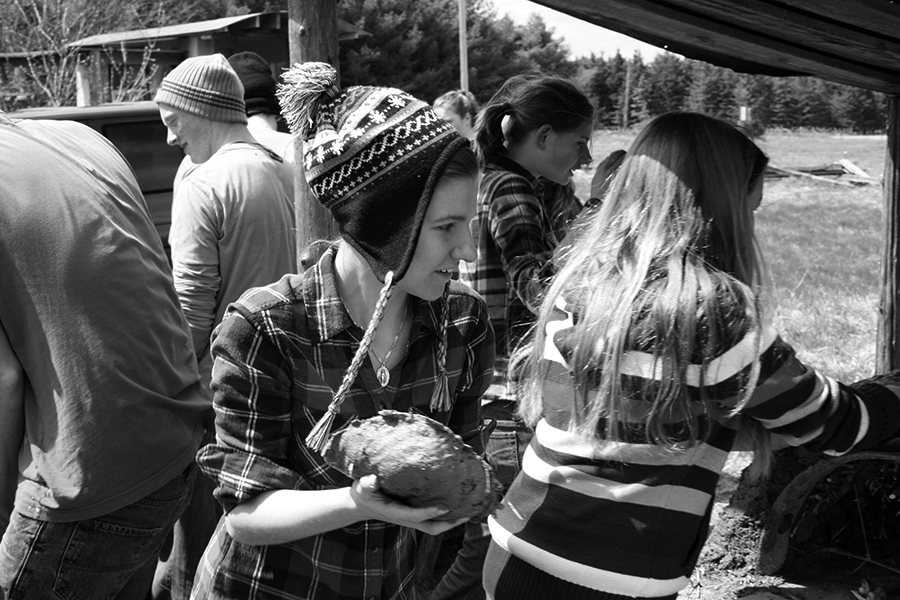
There is no reason to worry about what kind of clay to use. The desire for perfection in materials is a modern industrial fiction. The best clay to use is that which is available. That is the evidence from folk wisdom embodied in the traditional trades all over the world. Clay that is near at hand is better than the clay that must be carried. To find the best clay, simply dig about two feet down. The stuff found there will almost always be sufficient for the task.
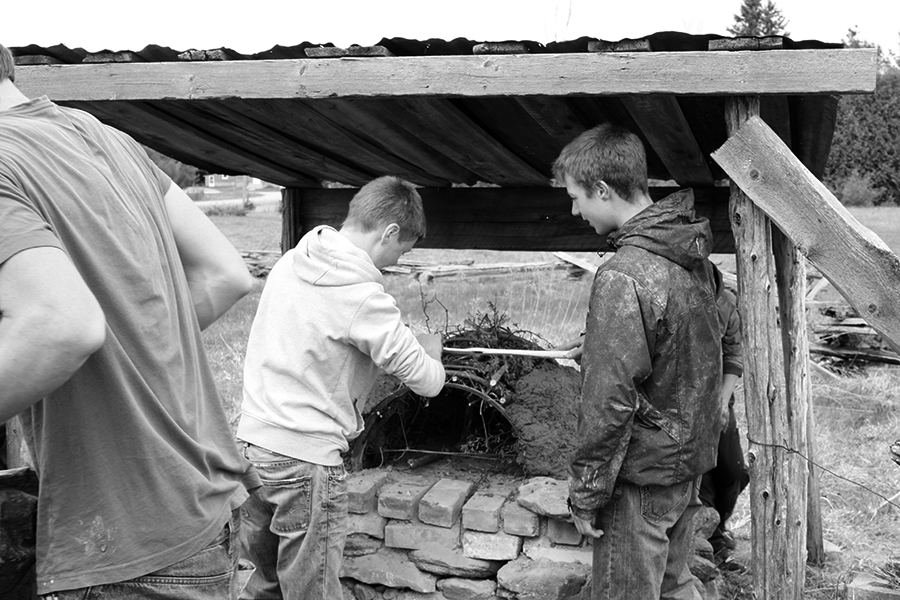
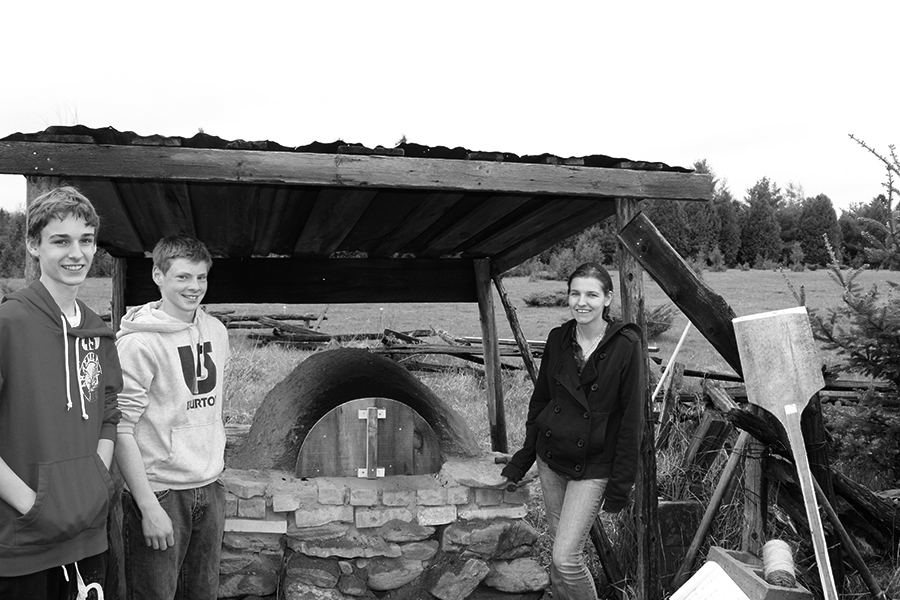
The wet clay bricks are piled around the sides of the willow frame a couple of rows at a time and allowed to set for a few hours so they will not sag. The opening is about sixteen inches wide, or the length of the arm from the elbow to the first knuckle. An old wheel rim is a perfect form for this. The opening must be about two-thirds the height of the top of the oven. When the whole is complete, it dries for a week (the time of creation) and then the first small fire is set inside it, the smoke billowing out the front. Several of these fires harden the clay. The oven is finished by adding a door of hardwood with some steel roofing nailed to it.
To make bread, we begin with wheat, a grain that has been cultivated from the time when humans first took up agriculture. Our wheat today is not like the old-fashioned wheat of yesteryear. Red Fife wheat, the Ontario miracle that made the new world prairies so productive, is now a heritage breed. Our modern wheat is a genetically modified thing, milled by steel rollers to produce perhaps the most unlovely of all food: modern, indestructible, unrottable, unmouldable, tasteless bread—a matrix for processed spreads and unidentifiable meats.
Real wheat from the hand of God grows in soil made of clay, organic matter, and manure. It locks up the sunlight as carbohydrate in its grains. These grains are coated with life, plants we scientifically identify as yeast but which used to be called leaven. This combination of wheat and leaven is crushed and pounded by rocks, in much the same process that produced the soil itself by grinding rocks into fine sand over the ages. The resultant flour is mixed with water, which is essential to all life, and placed into the clay oven and fired by dried sticks. The heat from the fire is simply a sudden release of the very sunlight that pulled the wheat out of the ground. This heat is absorbed by the clay to bake the dough into usable forms.
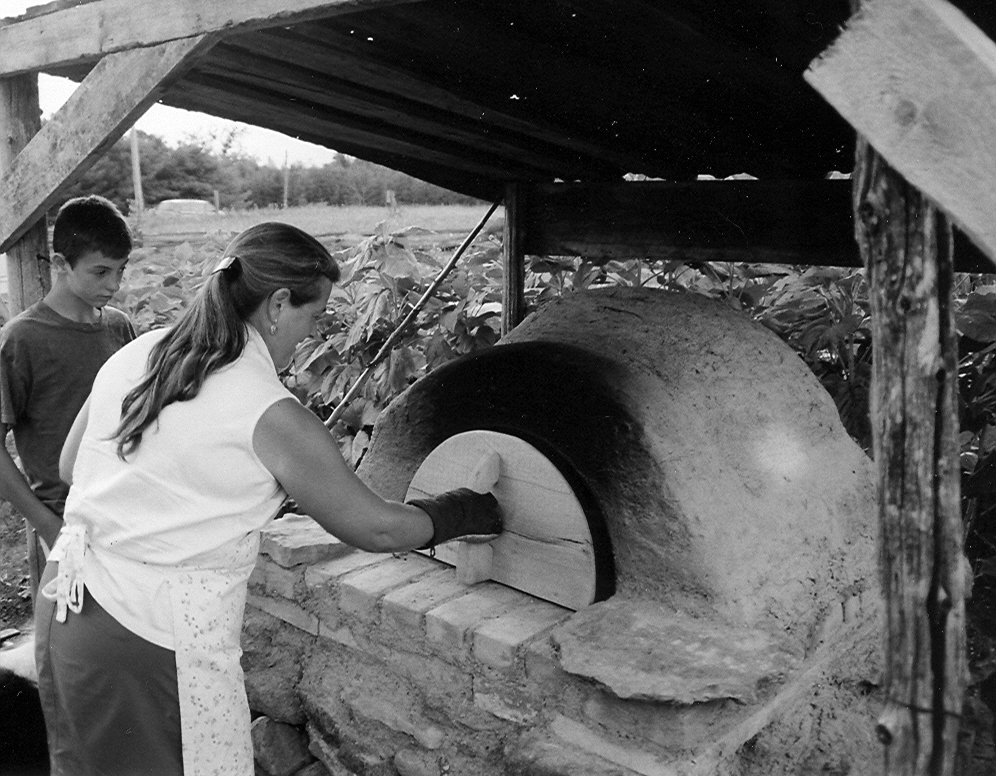
When we eat this bread, we are eating sunlight stored in grain made palatable for us by sunlight stored in wood. Food is grown and cooked in clay with the nutrients provided by manure, so that literally stones are turned into bread for us by the sun. And doing this, we reach back across time to a technology that predates iron and bronze. We are there with the first peasants, our first parents, and we share this technology with the remaining peasantry that still exists across the world.
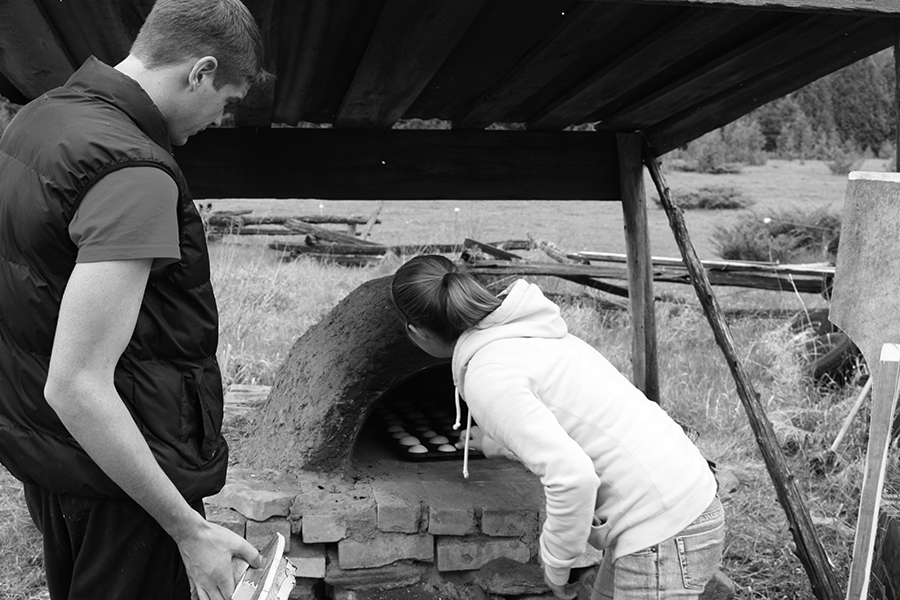
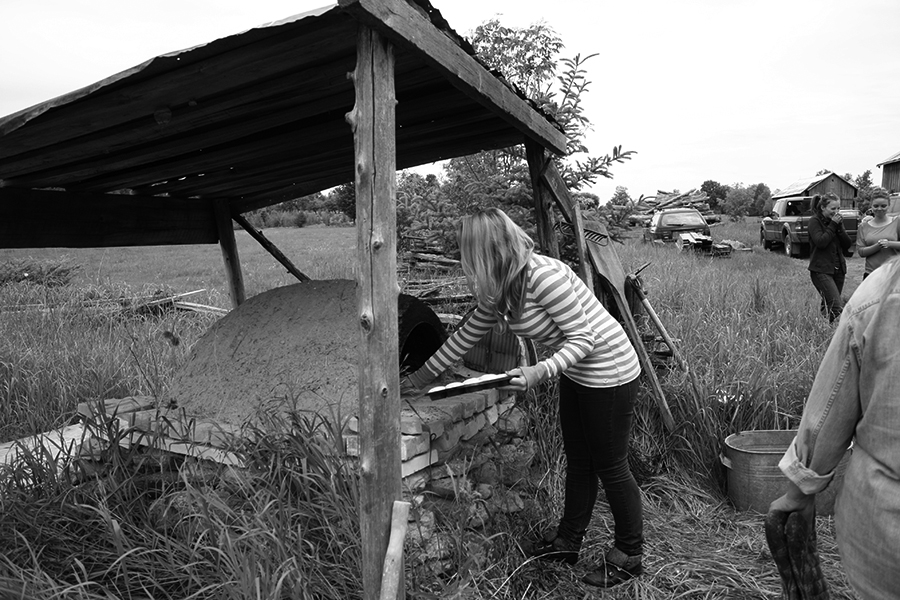
The fuel is twigs or sticks gathered from the ground under the trees on any street, sticks that are now put out for trash. These can be used to cook with. When the fire dies down, rake the glowing coals into a pail of water. When dried out, these can be used as charcoal for the barbecue. It took the class about two days to complete the oven, a day to fire it and, the next morning, a few hours to mix the dough, fire the oven, and bake bread in time for lunch.

Saint Kateri , Canada’s Protectress
This was the title given to Saint Kateri Tekakwitha, by Pope Benedict XVI, when he canonized her on October 28th, 2012, along with six others, in Saint Peter’ Square (she had been beatified by Pope John Paul II back in 1980). With Saint Joseph as our protector, along with the Canadian martyrs, we seem to[…]Continue reading→

Remembering Father Alphonse de Valk
(Today marks the sixth anniversary of the death of Father Alphonse de Valk, C.S.B., a faithful, courageous and indefatigable Basilian priest, pro-life-and-family apostle, and the founder of Catholic Insight magazine. Here is what we wrote those on his entering into eternity five years ago, as we continue to remember him in our prayers and thoughts)[…]Continue reading→

My Name is Bernadette
April 16th is a propitious day, for besides the anniversary of Father de Valk’s death, who founded Catholic Insight in its print form decades ago, and the commemoration of the ‘two Benedicts’, mentioned in accompanying posts, today we also recall Saint Bernadette Soubirous, the young visionary to whom the Virgin Mary appeared numerous times at[…]Continue reading→

Canonizing Sister Faustina and Divine Mercy
HOMILY OF THE HOLY FATHER MASS IN ST PETER’S SQUARE FOR THE CANONIZATION OF SR MARY FAUSTINA KOWALSKA Sunday, 30 April 2000 1. “Confitemini Domino quoniam bonus, quoniam in saeculum misericordia eius”; “Give thanks to the Lord for he is good; his steadfast love endures for ever” (Ps 118: 1). So the Church sings on the Octave of[…]Continue reading→

Divine Mercy Sunday – An Echo of Every Mass
Reach out your hand and put it in my side. Do not doubt but believe’… ‘My Lord and my God!’ (Jn. 20:18)). Today is Divine Mercy Sunday, and as we celebrate the end of the Easter Octave, we contemplate the wounded side of our Saviour, the Church’s source of life. On Good Friday in the[…]Continue reading→
First Holy Communion: Sermon from May 16, 1943
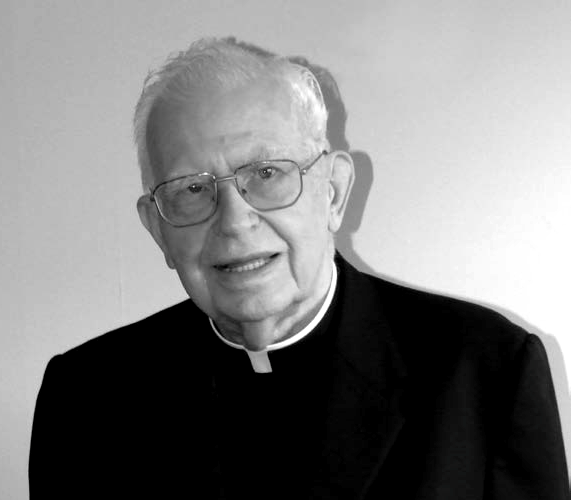
Here is a sermon from the good old days by +Rev. Msgr. Vincent Nicholas Foy (August 14, 1915 – March 13, 2017), from 1943. Readers may recall that Pope Saint Pius X, by the decree Quam Singulari in 1910, lowered the customary age of reception of Holy Communion – after the rigours of the plague[…]Continue reading→
In the Glorious Light of Easter, Alleluia!
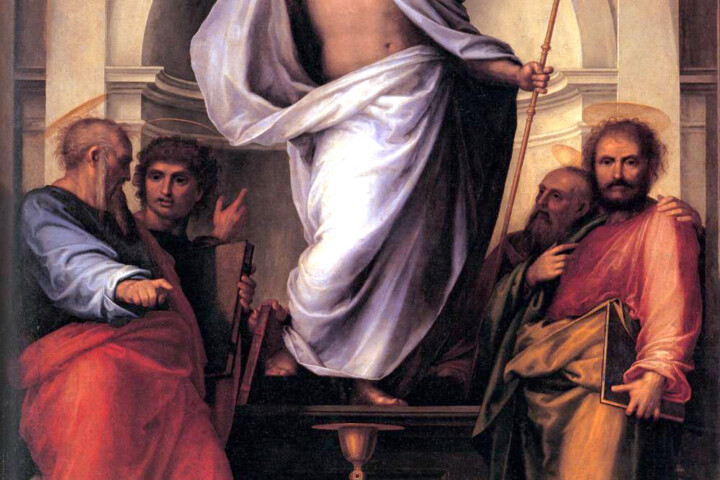
Set your minds on things that are above, not on things that are on earth, for you have died, and your life is hidden with Christ in God. When Christ who is your life is revealed, then you also will be revealed with him in glory (Col. 3:3-4). The Resurrection of Our Lord and Saviour[…]Continue reading→
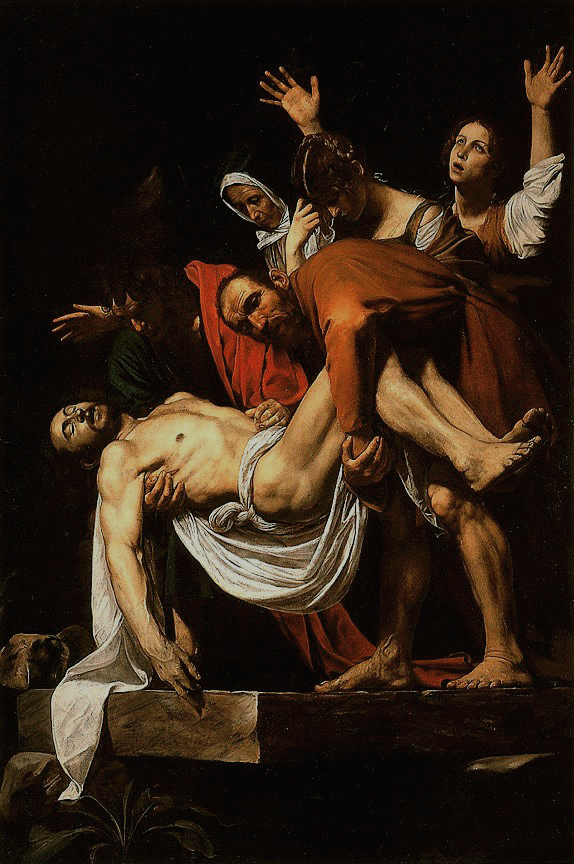
An Ancient Homily for Holy Saturday
The time between Good Friday and Easter Sunday is one of waiting, in silence, as the world wonders – anticipates – what will happen, after the death of Christ. We re-live this time each year in the anamnesis of our liturgy, and in turn look forward to the glorious re-creation of all things at the[…]Continue reading→
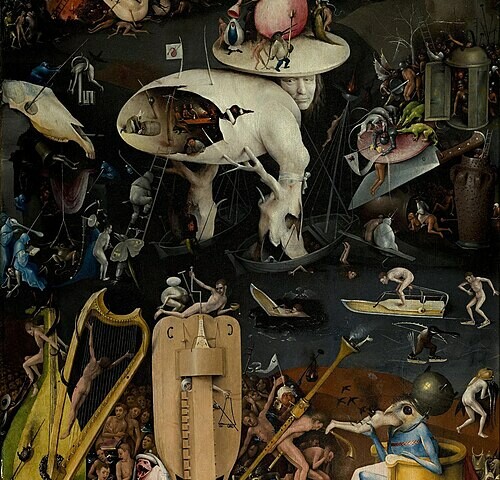
Europe’s Long Descent
(As we meditate on this day on Christ’s burial, and His descent into hell, it is fitting to ponder here with contributor Peter Marcus how the world seems to be heading there as well. The difference is that, although God cannot ‘redeem’ hell, nor those therein, He can and did redeem the world. There is[…]Continue reading→
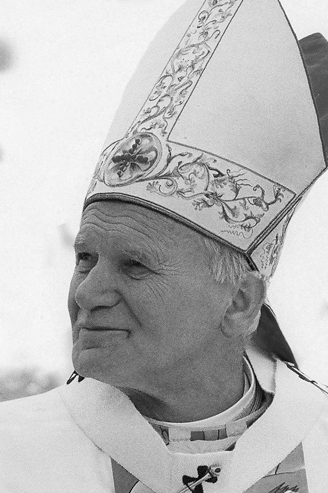
Pope Saint John Paul II’s First Good Friday Homily
ADDRESS OF HIS HOLINESS JOHN PAUL II AT THE CONCLUSION OF THE STATIONS OF THE CROSS AT THE COLOSSEUM Good Friday, 13 April 1979 When we make the Way of the Cross from one station to the next, in spirit we are always at the spot wherethis journey had its “historical” place: where it[…]Continue reading→