
Food for thought
The Incarnation was made present to the world through Mary. On Christmas, Mary placed Our Lord in an animal feed trough, where he was seen by the local shepherds. One could not go to the Infant Christ at Bethlehem without Mary’s consent. As a young man, waiting for a sign to begin his public life, Mary introduced Our Lord to the world at a wedding, when she told those listening to do what He said, whereupon He made gallons of very good wine. The gospels gives us Christ multiplying bread for the crowd, followed by Christ insisting that we eat His Body which would he would offer as the Bread of Life.
Grace builds on nature. Our Lord being placed in a manger as if he is some kind of animal food corresponds with that part of our nature which we share with animals—needing food as sustenance. Then, in his public life, wine and bread were multiplied to provide food for us as social beings—wine satisfying the need for the family to celebrate marriage and bread for community dinner. These anticipated that moment when Christ offered himself on the Cross, attended by Our Lady, an event manifested for us by the Mass with its food for our souls, the Eucharist.
The gospels were written for an agrarian culture which was man’s normal state until modern times. The gospels move upward, from food for man’s physical body, to food for man as a social being, culminating in the reality of the Mass as food for regenerated man in the Body of Christ.
Now for the first time in Christendom’s history, most of us live in an industrial, urban society where the language and allusions of the gospels form no part of our everyday experience. We no longer have stones lying around or build structures by hand in a way that requires corner stones; most people no longer make bread at home, or have a direct knowledge of old and new wineskins; goats, sheep, and pruning vines are things of the past. There is merit in our having at least some first-hand experience of the imagery of the parables presented to us by Christ.
Consider bread. Modern bread is an indestructible industrial product that comes from a factory in plastic bags. For our Christian ancestors, bread was a product of the home and was made in a clay or brick bread oven. In Catholic Quebec, clay ovens were important parts of St. Jean Baptiste parades. The Canadiennes spoke in a homely rhetoric based on bread and tenderly referred to their children as loaves. Today in many third-world societies clay ovens are compared to the beautiful distended womb of expecting mothers, which is what bread ovens look like.
A domestic bread oven is built along the lines of the Ark of the Covenant which was built to hold manna. This Ark anticipated the real Ark of the Covenant, Our Lady, whose womb was the first Tabernacle. Historically, one could see these lessons about the Mass and Tabernacle reflected in the natural and daily process of baking in a clay bread oven within the space of the domestic church, the home.
The lessons of the gospel, the Eucharistic Christ as the Bread of Life, make perfect sense even to the youngest child. In modern families, zapping boxes of industrial food for scattered individuals to eat at odd hours does not work as an illustration of the Mass, of Our Lady as Ark of the Covenant, or of the Incarnation at Christmas.
Every attack on marriage is a sacrilege, an attempt to destroy the Mass through the domestic church as its proxy. It is easy to see the obvious ways marriage is threatened, birth control being the most serious. Yet there are subtler forces at work to destroy the domestic church: food in boxes that is not real food, scattered families that never sit down together for supper, an endless variety of media that pretends to inform but really just entertain, newspapers that have no news, TV which at its best is worse than no TV. The entertainments that surround us, whether high brow or low brow, intellectual or crass, are not culture. They are just milieu.
The culture of life comes from the home, and the home is based on the Mass. When we understand this we can begin to rebuild the culture. To have a home we must make it a home and do homely things there: feast over Christmas dinner, make our own bread, sing around the piano together however badly it is done. When we do these things we ap- proach that natural state from which the gospel parables get their force. Merry Christmas.
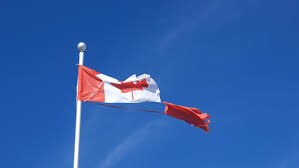
Carney’s Amoral Majority
After five defections – euphemistically described as ‘crossing the floor’ – and three by-elections, Mark Carney and his Liberals how have their coveted majority. One wonders what bowls of pottage were offered in back-room deals. In the archaic monarchical system that is the Dominion of Canada, this majority allows the newly-minted Prime Minister to rule[…]Continue reading→
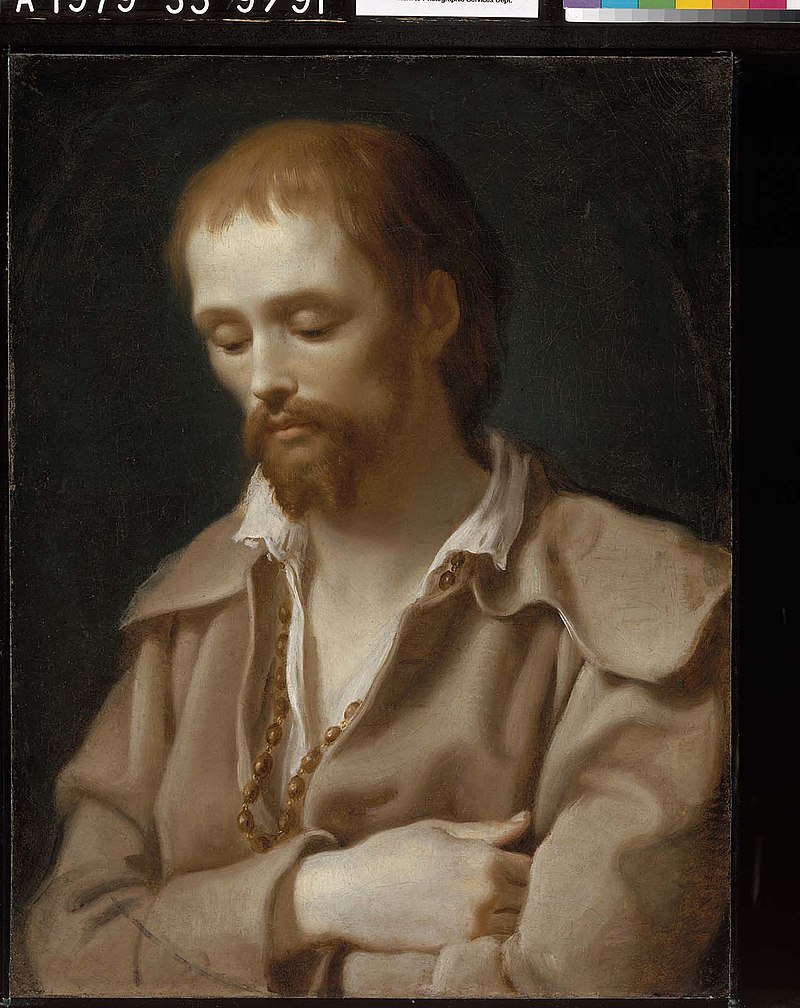
A Tale of Two Benedicts
A grace-filled Holy Week to all our readers! As we await and prepare for the Resurrection about to dawn upon us, we might keep in mind two Benedicts: Pope Emeritus Benedict XVI, requiescat in pace, elected on this day in 2005; and today’s commemoration of the mystic pilgrim, Benedict Joseph Labre, who died on this[…]Continue reading→
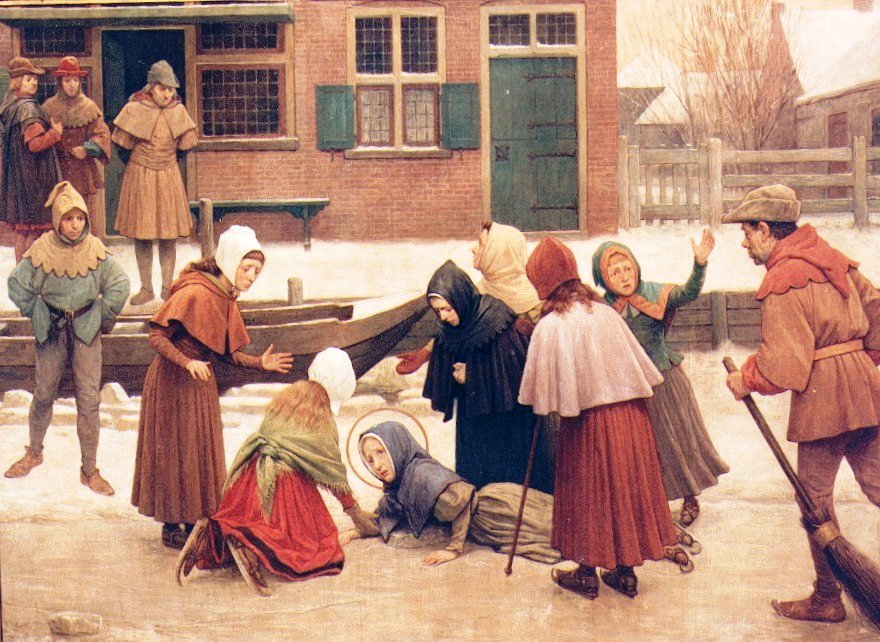
Saint Lydwina of Schiedam and Suffering Joyfully
Saint Lydwina of Schiedam (1380 – 1433) was one of the countless and glorious ‘victim souls’ in the history of the Church, those whose lives are filled with suffering, often of an unimaginable intensity, but who suffer joyfully. She was a fifteen-year old Dutch girl, out skating one day, when she fell and broke one[…]Continue reading→
The Glorious Martyrdoms of Martin and Maximus
As we enter into Eastertide, we recall on this 13th of April Pope Saint Martin I (+655), one of the noblest, if most tragic, of the successors of Saint Peter. Born in Umbria, Italy, he was of noble lineage, with great intelligence combined with charity and love of the poor and the Church. While still[…]Continue reading→

Saint Stanislaus of Szczepanów
We celebrate Saint Stanislaus today (+ April 11, 1079), in light of this Easter Octave, a bishop and martyr who accepted the episcopacy only at the direct order of Pope Alexander II. He proved a wise and courageous leader of his flock, put to death by his own king, Boleslaus, for rebuking the monarch’s ‘immoral[…]Continue reading→
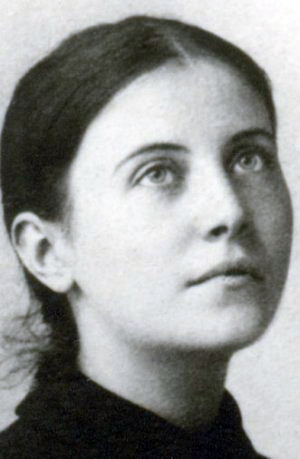
Saint Gemma Galgani
On this April 11th, in 1903 – the same year that the Italian Guiseppe Sarto was elected Pope later that summer as Pius X – a lovely, young Italian woman died, by the name of Gemma Galgani. She lived a brief life of 24 years, as did a number of other young saints, including Pier[…]Continue reading→
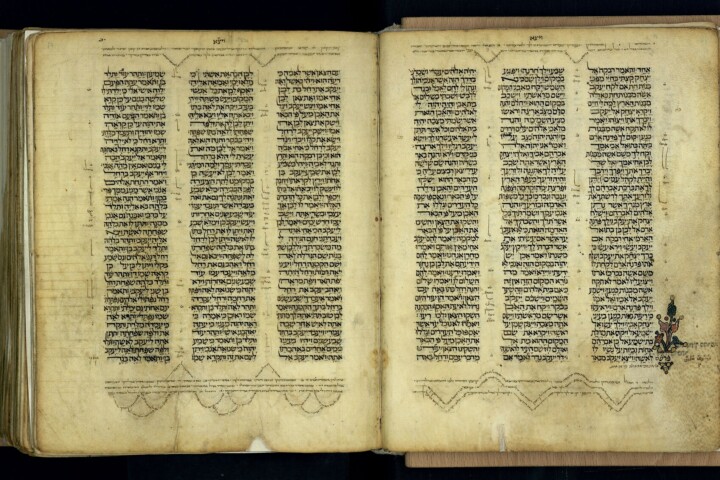
An Ideological and Improper Translation
I noticed something odd with the psalm reading at Mass the other day. Our bishops’ conference here in Canada has decreed that the Mass in English – Novus Ordo – use the ‘NRSV’, the ‘New Revised Standard Version’, an ‘updated’ translation of the original RSV, first published in 1952. This ‘new translation’ has the tendency[…]Continue reading→
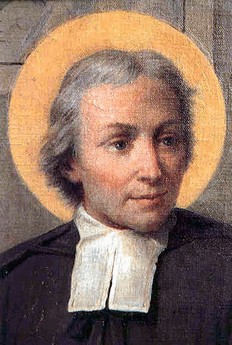
Saint Jean-Baptiste de la Salle: A Teacher for Teachers
Jean-Baptiste de la Salle (1651 – 1719), a French nobleman, ordained a priest, founded the first order in the Church’s history entirely without priests, and this came about almost by accident. I say ‘almost’, for, of course, there are no accidents with God. Destined for ordination from an early age, Jean-Baptiste never looked back, even[…]Continue reading→
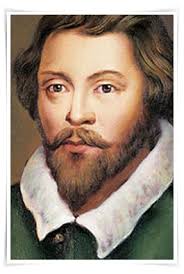
Three Easter Musical Gems: Bach, Palestrina and Byrd
A very blessed and glorious Easter! Christus surrexit vere, alleluia! As we begin this Easter Octave with the great Solemnity of Easter, music to lift the soul would be one of Bach’s Easter cantatas, composed during his time at Leipzig in the early 1700’s, for the six Sundays of this festive season, leading up to[…]Continue reading→
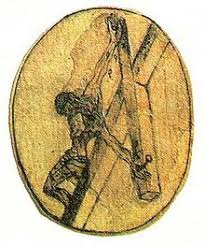
Good Friday and Suffering
Evil and pain is always a mystery, that whole mysterium iniquitatis, of which Saint Paul writes (2 Thess 2:7). In 1984, Pope Saint John Paul II penned an Apostolic Letter on the nature and purpose of human suffering, Salvifici Doloris (curiously, now looking back, the same year he made his first apostolic journey to Canada).[…]Continue reading→