

Why I blog and why you should too
Computer technology, social media and its users have been stigmatized and blamed for much of the world’s problems. Everything from illiteracy to a decrease in IQ is blamed in part on technology and sometimes on blogs and bloggers themselves. And perhaps there is something to it? I mean, everyone and their dog (literally!) has a blog. Blogs are free, easy to start, and anyone can write anything about anything. Bloggers use the platform for their own agendas, which could range from the nefarious to the embarrassingly banal. But I have spent many an awkward moment having to defend myself as a blogger, and the last thing I want is to be lumped into the category of “Those Contributing to the Decline of Modern Western Civilization.”
Pope Emeritus Benedict XVI didn’t see it that way. In a conference on modern means of mass communications in 2010, he exhorted participants not to fear but to “set sail on the digital sea, facing into the deep with the same passion that has governed the ship of the Church for two thousand years … [W]e want to qualify ourselves by living in the digital world with a believer’s heart, helping to give a soul to the internet’s incessant flow of communication.” The problem wasn’t, and isn’t, technology itself. The problem is that believers aren’t taking over the Internet with the same zeal that ignited the missionaries and saints.
But that’s changing. The last few years have given rise to “blogging converts, online activists, and bishops who tweet” (to quote the title of a new book by Brandon Vogt) and conversation—and conversion—is happening because of it. Fr. Robert Barron, for example, blogs at his Word on Fire site, commenting on pop culture (books, movies, trends, etc.) as well as hot-button topics like same-sex marriage. To this day he has had over forty thousand comments posted to his video entries—many of them coming from un-churched, secularized young adults—and he is able to successfully evangelize to these “unreachable” people, both within the faith and without, through these virtual conversations.
For myself, I’d been blogging about a year when I noticed a theme appear in my writing—that of rediscovering authentic femininity. When a dear friend and I met up at a retreat and bemoaned the lack of a feminine presence in our society, our blog, The Feminine Gift, was born. We were both on personal journeys to know our own femininity better and we imagined that others were too—and we weren’t wrong.
True femininity has been slowly squashed and quelled over the last fifty years, and Tess and I were feeling it. Not surprisingly, so were others. Women seem to respond to our writing and through our blog we continue to encourage women to set the world on fire by being who God meant them to be— authentic Catholic women.
The thing is, technology is here now, like it or not, and we’ve not only got to make our peace with it, but we must use it to the best of its (and our) abilities. Darker forces certainly are doing so. Statistics are confirming two things. First, that the Church in North America is shrinking faster than you can say “Lord, have mercy” and second, that much of that shrinkage is due to generations of poorly catechized Catholics. We must do everything we can to bring them back to the Lord, and with a good portion of people tethered to technology these days, doing so couldn’t be easier.
St. Francis used to exhort his followers to do what was necessary, then do what is possible, and soon they’d be doing the impossible. Right now what is necessary is using every means at our disposal to spread the Gospel—including technology—with the “impossible” goal of bringing all humanity back to God.
Photo attribution: By EFF (Own work) [CC-BY-3.0 (http://creativecommons.org/licenses/by/3.0)], via Wikimedia Commons.

Saint Kateri , Canada’s Protectress
This was the title given to Saint Kateri Tekakwitha, by Pope Benedict XVI, when he canonized her on October 28th, 2012, along with six others, in Saint Peter’ Square (she had been beatified by Pope John Paul II back in 1980). With Saint Joseph as our protector, along with the Canadian martyrs, we seem to[…]Continue reading→

Remembering Father Alphonse de Valk
(Today marks the sixth anniversary of the death of Father Alphonse de Valk, C.S.B., a faithful, courageous and indefatigable Basilian priest, pro-life-and-family apostle, and the founder of Catholic Insight magazine. Here is what we wrote those on his entering into eternity five years ago, as we continue to remember him in our prayers and thoughts)[…]Continue reading→

My Name is Bernadette
April 16th is a propitious day, for besides the anniversary of Father de Valk’s death, who founded Catholic Insight in its print form decades ago, and the commemoration of the ‘two Benedicts’, mentioned in accompanying posts, today we also recall Saint Bernadette Soubirous, the young visionary to whom the Virgin Mary appeared numerous times at[…]Continue reading→

Canonizing Sister Faustina and Divine Mercy
HOMILY OF THE HOLY FATHER MASS IN ST PETER’S SQUARE FOR THE CANONIZATION OF SR MARY FAUSTINA KOWALSKA Sunday, 30 April 2000 1. “Confitemini Domino quoniam bonus, quoniam in saeculum misericordia eius”; “Give thanks to the Lord for he is good; his steadfast love endures for ever” (Ps 118: 1). So the Church sings on the Octave of[…]Continue reading→

Divine Mercy Sunday – An Echo of Every Mass
Reach out your hand and put it in my side. Do not doubt but believe’… ‘My Lord and my God!’ (Jn. 20:18)). Today is Divine Mercy Sunday, and as we celebrate the end of the Easter Octave, we contemplate the wounded side of our Saviour, the Church’s source of life. On Good Friday in the[…]Continue reading→
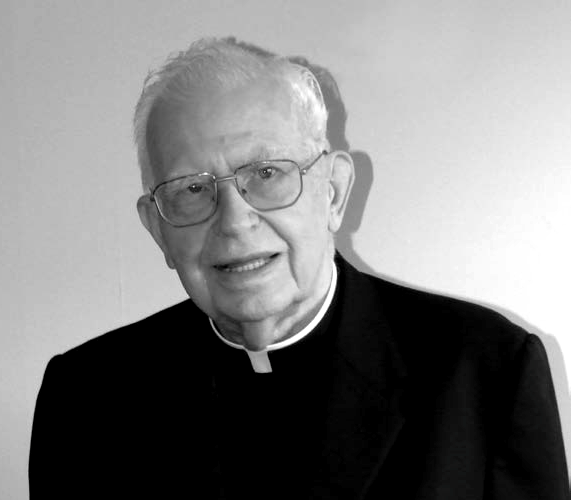
First Holy Communion: Sermon from May 16, 1943
Here is a sermon from the good old days by +Rev. Msgr. Vincent Nicholas Foy (August 14, 1915 – March 13, 2017), from 1943. Readers may recall that Pope Saint Pius X, by the decree Quam Singulari in 1910, lowered the customary age of reception of Holy Communion – after the rigours of the plague[…]Continue reading→
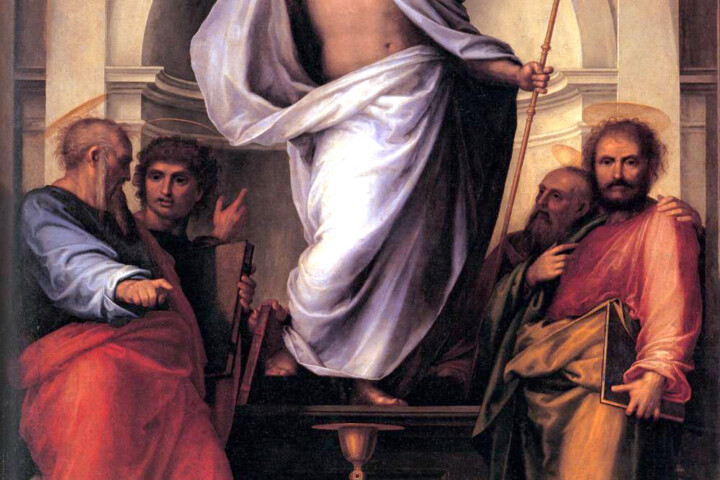
In the Glorious Light of Easter, Alleluia!
Set your minds on things that are above, not on things that are on earth, for you have died, and your life is hidden with Christ in God. When Christ who is your life is revealed, then you also will be revealed with him in glory (Col. 3:3-4). The Resurrection of Our Lord and Saviour[…]Continue reading→
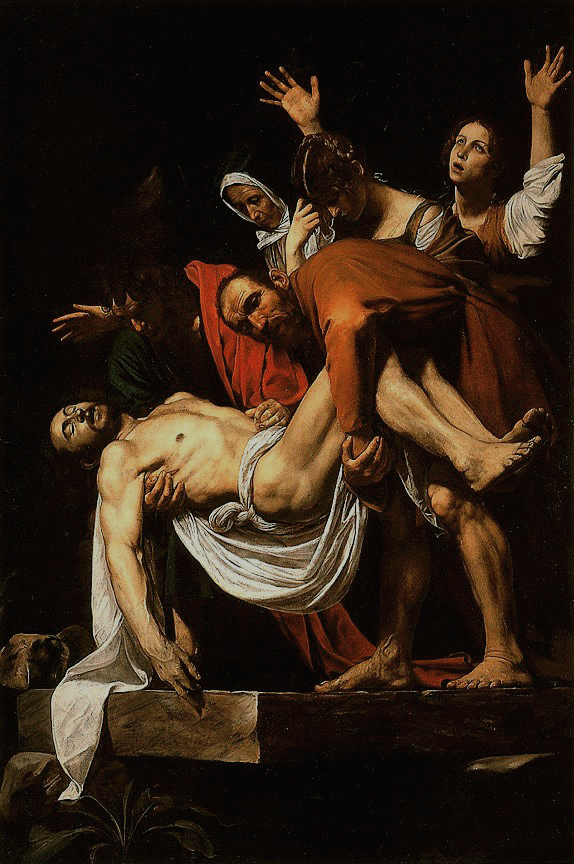
An Ancient Homily for Holy Saturday
The time between Good Friday and Easter Sunday is one of waiting, in silence, as the world wonders – anticipates – what will happen, after the death of Christ. We re-live this time each year in the anamnesis of our liturgy, and in turn look forward to the glorious re-creation of all things at the[…]Continue reading→
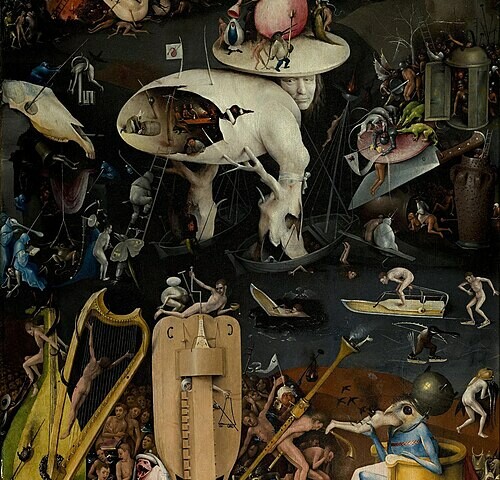
Europe’s Long Descent
(As we meditate on this day on Christ’s burial, and His descent into hell, it is fitting to ponder here with contributor Peter Marcus how the world seems to be heading there as well. The difference is that, although God cannot ‘redeem’ hell, nor those therein, He can and did redeem the world. There is[…]Continue reading→
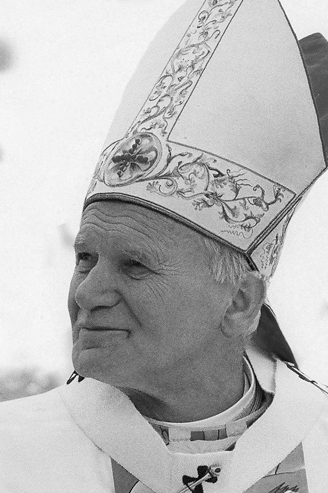
Pope Saint John Paul II’s First Good Friday Homily
ADDRESS OF HIS HOLINESS JOHN PAUL II AT THE CONCLUSION OF THE STATIONS OF THE CROSS AT THE COLOSSEUM Good Friday, 13 April 1979 When we make the Way of the Cross from one station to the next, in spirit we are always at the spot wherethis journey had its “historical” place: where it[…]Continue reading→