
Quarterly Review for January 1873
FROM: ORESTES BROWNSON, “QUARTERLY REVIEW FOR JANUARY 1873”
The Works of Orestes A. Brownson, Vol. XX
Collected and arranged by Henry F. Brownson
Detroit: H. F. Brownson, 1887
I am not willing that my name should go down to posterity with the slightest suspicion resting on it of disloyalty to the Church; not, indeed, that I care much for it on my own personal account, but for the sake of the Catholic cause, which I hold dearer than life, and which I would not have suffer the least detriment through me or my ill reputation; and also for the sake of my surviving children, to whom I can leave no inheritance but that of an untarnished name. It was almost the last wish expressed to me by my late wife, whose judgment I never found at fault, that I should revive my Review, if only for a single year, and prove to the world that my faith has never wavered; that I am still an humble but devoted son of the Church, and that I am, as I always professed to be, an uncompromising Catholic and a thorough-going Papist I have no palinode to sing; I enter on no explanations of the causes of the opposition I encountered from some of my own brethren. Such explanations would be mistimed and misplaced, and could edify nobody. I willingly admit that I made many mistakes; but I regard as the greatest of all the mistakes into which I fell through the last three or four years that I published my Review, that of holding back the stronger points of the Catholic Faith, on which I had previously insisted; of labouring to present Catholicity in a form as little repulsive to my non-Catholic countrymen as possible; and of insisting on only the minimum of Catholicity, or what had been expressly defined by the Holy See, or a general council. I am not likely to fall into the same mistake again. My experiment was not very successful; and besides, the Syllabus and the decrees of the council of the Vatican, published since, would protect me from it, if nothing else would. I have no ambition to be regarded as a liberal Catholic. A liberal Catholic I am not, never was, save in appearance for a brief moment, and never can be. I have no element of liberal Catholicity in my nature or in my convictions, and the times, if I read them aright, demand Catholicity in its strength, not in its weakness; in its supernatural authority and power, not as reduced to pure rationalism or mere human sentimentality. What is most needed in these times—perhaps in all times—is the truth that condemns, point-blank, the spirit of the age, and gives no quarter to its dominant errors; and nothing can be more fatal than to seek to effect a compromise with them, or to form an alliance with what is called liberalism—a polite name for sedition, rebellion, and revolutionism.
Carney’s Amoral Majority
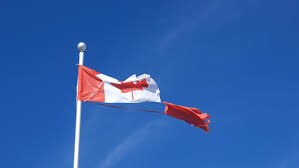
After five defections – euphemistically described as ‘crossing the floor’ – and three by-elections, Mark Carney and his Liberals how have their coveted majority. One wonders what bowls of pottage were offered in back-room deals. In the archaic monarchical system that is the Dominion of Canada, this majority allows the newly-minted Prime Minister to rule[…]Continue reading→

A Tale of Two Benedicts
A grace-filled Holy Week to all our readers! As we await and prepare for the Resurrection about to dawn upon us, we might keep in mind two Benedicts: Pope Emeritus Benedict XVI, requiescat in pace, elected on this day in 2005; and today’s commemoration of the mystic pilgrim, Benedict Joseph Labre, who died on this[…]Continue reading→

Saint Lydwina of Schiedam and Suffering Joyfully
Saint Lydwina of Schiedam (1380 – 1433) was one of the countless and glorious ‘victim souls’ in the history of the Church, those whose lives are filled with suffering, often of an unimaginable intensity, but who suffer joyfully. She was a fifteen-year old Dutch girl, out skating one day, when she fell and broke one[…]Continue reading→

The Glorious Martyrdoms of Martin and Maximus
As we enter into Eastertide, we recall on this 13th of April Pope Saint Martin I (+655), one of the noblest, if most tragic, of the successors of Saint Peter. Born in Umbria, Italy, he was of noble lineage, with great intelligence combined with charity and love of the poor and the Church. While still[…]Continue reading→

Saint Stanislaus of Szczepanów
We celebrate Saint Stanislaus today (+ April 11, 1079), in light of this Easter Octave, a bishop and martyr who accepted the episcopacy only at the direct order of Pope Alexander II. He proved a wise and courageous leader of his flock, put to death by his own king, Boleslaus, for rebuking the monarch’s ‘immoral[…]Continue reading→

Saint Gemma Galgani
On this April 11th, in 1903 – the same year that the Italian Guiseppe Sarto was elected Pope later that summer as Pius X – a lovely, young Italian woman died, by the name of Gemma Galgani. She lived a brief life of 24 years, as did a number of other young saints, including Pier[…]Continue reading→
An Ideological and Improper Translation
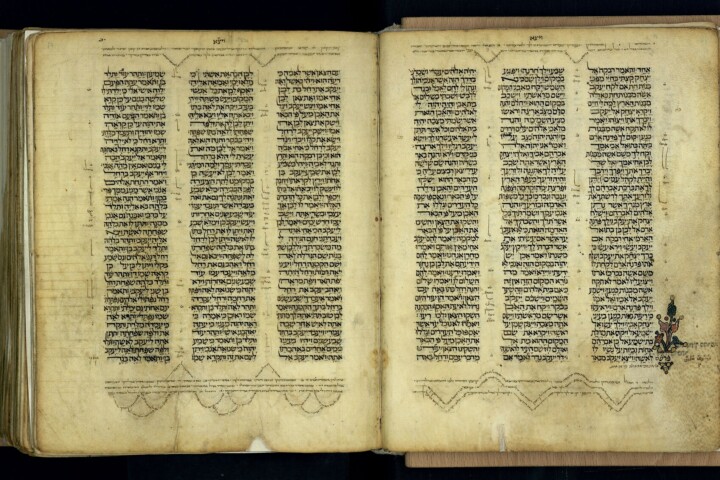
I noticed something odd with the psalm reading at Mass the other day. Our bishops’ conference here in Canada has decreed that the Mass in English – Novus Ordo – use the ‘NRSV’, the ‘New Revised Standard Version’, an ‘updated’ translation of the original RSV, first published in 1952. This ‘new translation’ has the tendency[…]Continue reading→
Saint Jean-Baptiste de la Salle: A Teacher for Teachers
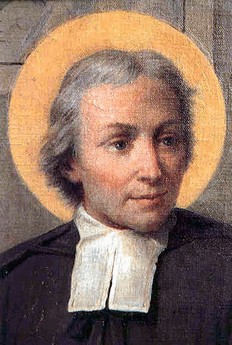
Jean-Baptiste de la Salle (1651 – 1719), a French nobleman, ordained a priest, founded the first order in the Church’s history entirely without priests, and this came about almost by accident. I say ‘almost’, for, of course, there are no accidents with God. Destined for ordination from an early age, Jean-Baptiste never looked back, even[…]Continue reading→
Three Easter Musical Gems: Bach, Palestrina and Byrd
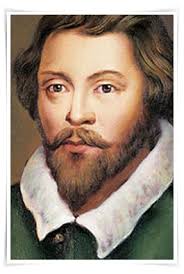
A very blessed and glorious Easter! Christus surrexit vere, alleluia! As we begin this Easter Octave with the great Solemnity of Easter, music to lift the soul would be one of Bach’s Easter cantatas, composed during his time at Leipzig in the early 1700’s, for the six Sundays of this festive season, leading up to[…]Continue reading→
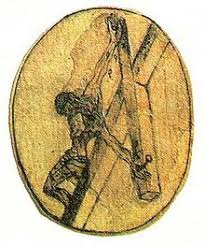
Good Friday and Suffering
Evil and pain is always a mystery, that whole mysterium iniquitatis, of which Saint Paul writes (2 Thess 2:7). In 1984, Pope Saint John Paul II penned an Apostolic Letter on the nature and purpose of human suffering, Salvifici Doloris (curiously, now looking back, the same year he made his first apostolic journey to Canada).[…]Continue reading→