

A gentle, thoughtful man
Meet Father Zakaria Boutros—a gentle, thoughtful man, one of the leading figures of the Egyptian Coptic Christian community and now obliged to live in exile in the United States after twice being arrested in his homeland, and having Muslims in Iran and Saudi Arabia put a $60 million bounty on his head. While he is anonymous to most North Americans, Boutros is famous (or notorious) throughout North Africa, the Middle East, and Central Asia, where his daily television broadcasts attract enormous audiences and his website millions of hits. His style is uncompromising. Speaking in Egyptian-accented Arabic and fluent in Islamic scholarship and the various sub-cultures of the Muslim world, he carefully unwraps the layers of the Koran and the life and teachings of Mohammad and presents his viewers with a virtually unprecedented critique of their faith. It’s the combination of accessibility and originality that makes him so threatening to militant Islam.
I spoke to him shortly after the Innocence of Muslims movie trailer had been posted on YouTube back in September, leading to demonstration and violence throughout the Islamic world. “There are nineteen scenes in the film” he explained. “While it is terribly made, only one of those scenes is actually inaccurate. From their own books, their own words, they tell us that the rest is true. So why are they so angry?”
It is not something we heard, or will hear, in mainstream media. But then, Boutros is generally silenced in such circles. “Look, we know people are leaving Islam because of what I say and the Muslims know people are leaving Islam because of what I say,” he explains. A long pause, then: “People in the west simply don’t understand the significance of this in a Muslim world that has not and probably will not embrace pluralism. The Islamic response is not to argue with me but to try to kill me.”
Nor is this just the sordid reaction of wealthy fanatics and terror mobs. In 2008 the Iranian parliament passed the “Islamic Penal Code,” whereby any woman who left Islam would be punished with life in prison and any man with execution. One hundred and ninety-six parliamentarians supported the bill; seven opposed it. The world’s, including the United Nations’, reaction to that contravention of myriad international laws was screamingly silent.
Iran merely institutionalized what is already reality in Egypt, Pakistan, Sudan, Saudi Arabia, and the Gulf states. Even in areas of the Islamic world where Christianity has traditionally been tolerated, conversion is still seen as socially and morally criminal.
Egypt is a particularly troubling case because of the size of the Christian minority, the horror of their treatment and the cynical denial by the Egyptian government. There are between eight and ten million Christians in Egypt, around ten per cent of the population, and for the last thirty years in particular they have faced organized discrimination in the law, education, employment, and housing, and as a consequence leave Egypt in disproportionately large numbers. Matters have worsened rather than improved since the so-called Arab Spring.
Beyond this now regular, degrading oppression there are numerous cases of grotesque violence. In January 2000, for example, in El-Kosheh, Upper Egypt, twenty-one Christians were killed in riots by local Muslims, aided by the police. When authorities eventually reacted, they arrested more than a thousand local Christians, many of whom were tortured. There are numerous cases of Coptic girls being kidnapped by Muslim gangs and then being forcibly converted and married to Muslim men. If they flee these marriages and try to return to Christianity they are killed as apostates.
Church desecration is common, as are public burnings of Bibles and Christian literature. There are also documented cases of Christians being ritually crucified, the rape of Christian girls and the prolonged beating of children, some of them babies. These are not isolated incidents condemned by the state, but part of a recurring pattern often ignored and, in some regions, actively encouraged by police and militia. Egyptian apologists will point to certain Christians in positions of influence or, more frequently, argue that these accusations are propaganda lies told by Christians and Jews in North America and Europe.
As for Father Boutros, when I ask him if he has a bodyguard, he says he does and points his finger toward the heavens, toward God. Pray for this man; pray for all Christians living under Islam.
Carney’s Amoral Majority
After five defections – euphemistically described as ‘crossing the floor’ – and three by-elections, Mark Carney and his Liberals how have their coveted majority. One wonders what bowls of pottage were offered in back-room deals. In the archaic monarchical system that is the Dominion of Canada, this majority allows the newly-minted Prime Minister to rule[…]Continue reading→

A Tale of Two Benedicts
A grace-filled Holy Week to all our readers! As we await and prepare for the Resurrection about to dawn upon us, we might keep in mind two Benedicts: Pope Emeritus Benedict XVI, requiescat in pace, elected on this day in 2005; and today’s commemoration of the mystic pilgrim, Benedict Joseph Labre, who died on this[…]Continue reading→

Saint Lydwina of Schiedam and Suffering Joyfully
Saint Lydwina of Schiedam (1380 – 1433) was one of the countless and glorious ‘victim souls’ in the history of the Church, those whose lives are filled with suffering, often of an unimaginable intensity, but who suffer joyfully. She was a fifteen-year old Dutch girl, out skating one day, when she fell and broke one[…]Continue reading→

The Glorious Martyrdoms of Martin and Maximus
As we enter into Eastertide, we recall on this 13th of April Pope Saint Martin I (+655), one of the noblest, if most tragic, of the successors of Saint Peter. Born in Umbria, Italy, he was of noble lineage, with great intelligence combined with charity and love of the poor and the Church. While still[…]Continue reading→

Saint Stanislaus of Szczepanów
We celebrate Saint Stanislaus today (+ April 11, 1079), in light of this Easter Octave, a bishop and martyr who accepted the episcopacy only at the direct order of Pope Alexander II. He proved a wise and courageous leader of his flock, put to death by his own king, Boleslaus, for rebuking the monarch’s ‘immoral[…]Continue reading→
Saint Gemma Galgani
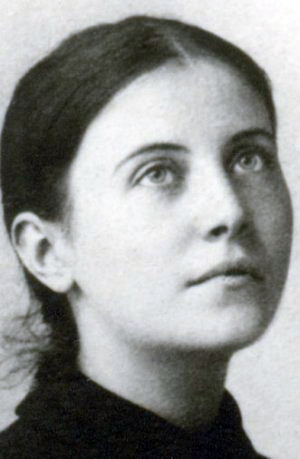
On this April 11th, in 1903 – the same year that the Italian Guiseppe Sarto was elected Pope later that summer as Pius X – a lovely, young Italian woman died, by the name of Gemma Galgani. She lived a brief life of 24 years, as did a number of other young saints, including Pier[…]Continue reading→
An Ideological and Improper Translation
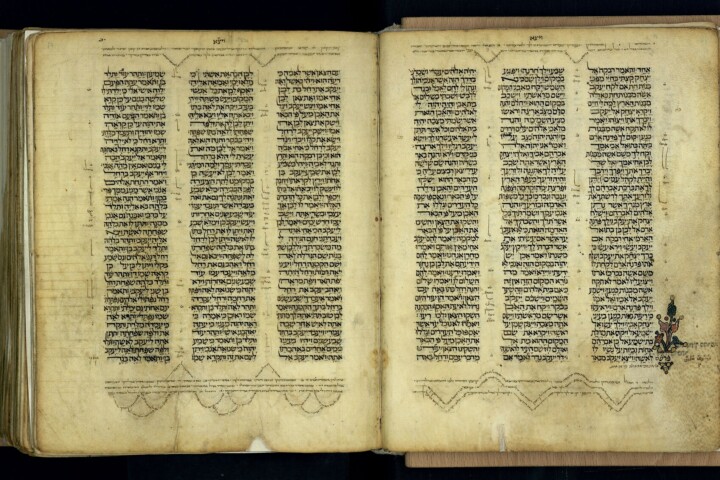
I noticed something odd with the psalm reading at Mass the other day. Our bishops’ conference here in Canada has decreed that the Mass in English – Novus Ordo – use the ‘NRSV’, the ‘New Revised Standard Version’, an ‘updated’ translation of the original RSV, first published in 1952. This ‘new translation’ has the tendency[…]Continue reading→
Saint Jean-Baptiste de la Salle: A Teacher for Teachers
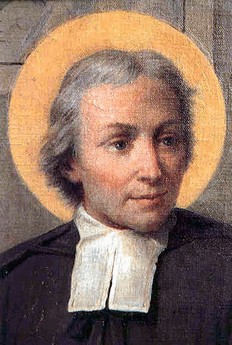
Jean-Baptiste de la Salle (1651 – 1719), a French nobleman, ordained a priest, founded the first order in the Church’s history entirely without priests, and this came about almost by accident. I say ‘almost’, for, of course, there are no accidents with God. Destined for ordination from an early age, Jean-Baptiste never looked back, even[…]Continue reading→
Three Easter Musical Gems: Bach, Palestrina and Byrd
A very blessed and glorious Easter! Christus surrexit vere, alleluia! As we begin this Easter Octave with the great Solemnity of Easter, music to lift the soul would be one of Bach’s Easter cantatas, composed during his time at Leipzig in the early 1700’s, for the six Sundays of this festive season, leading up to[…]Continue reading→
Good Friday and Suffering
Evil and pain is always a mystery, that whole mysterium iniquitatis, of which Saint Paul writes (2 Thess 2:7). In 1984, Pope Saint John Paul II penned an Apostolic Letter on the nature and purpose of human suffering, Salvifici Doloris (curiously, now looking back, the same year he made his first apostolic journey to Canada).[…]Continue reading→