
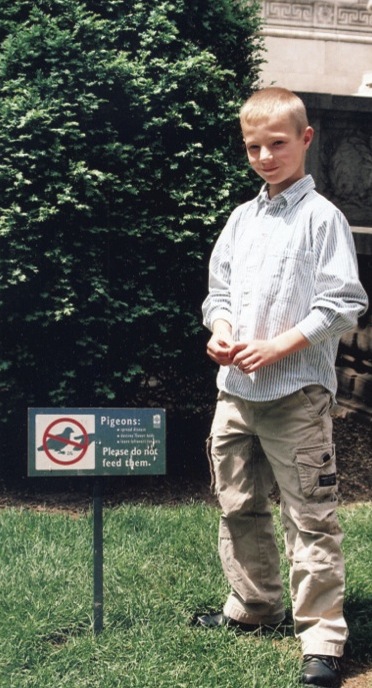
Pigeons and doves
Several years ago we were in New York City attending the ordination of a friend of mine, a red-headed Ontarian who is now called Fr. Juan Diego and belongs to the Franciscan Friars of the Renewal. These friars are the modern embodiment of St. Francis himself. The ordination took place at St. Patrick’s Cathedral, and there were seven friars ordained along with seven diocesan priests. Inside the entryway of the Cathedral on the floor there is a beautiful large tiled mosaic with white doves with some verse about Peace (I cannot recall the exact phrase) surrounding it. The sentiment expressed is an encouraging one for it is one of the last things seen when leaving after Mass, a reminder that one is going into the world for a purpose.
Being among the friars, one is struck by how young they all are—it is an order of bearded and sandaled twenty-year-olds, with some grey-beards distributed among them. Meeting them, one learns who St. Francis was by meeting his followers, and what that first band of friars must have been like. There were lots of things that were wonderful about that trip, not least of which was the party in the Bronx afterwards. Like any Catholic event, there was lots of good food and beer and especially lots of children of all ages running around and playing tag.
We had some time to spend in New York City, and we spent it like the hicks we are. After the ordination, we spread out a blanket and picnicked on the Cathedral lawn. Then we walked the sidewalks of Manhattan looking up at sights we had only read about or seen in the movies. On the corners were beggars, people selling watches and hats, and people walking blithely through the traffic as if through a hayfield. The most fun we had was riding the wooden escalators at the Macy’s Department Store—we just kept going up and down, past the enticements to spend money.
During our walks, we came across a grand building that looked like a temple of some sort. This was the Carnegie Library, complete with large imposing stone pillars, stone steps, and an expansive lawn surrounding it. Unlike the lawn at St. Patrick’s Cathedral, at the library the grass was roped off, making it useless grass since there would be no feet to enjoy it or children to play on it. But what was most amazing were the signs all over the lawn:
“Pigeons spread disease, destroy flower beds, leave leftovers for rats. Please do not feed them.”
The other name for a pigeon is rock dove, and a rock dove is just a type of dove that has learned to live with us in our concrete cities. The sign admonishing us to not feed the city doves that surrounded us was lying, for feeding pigeons does not spread any disease. It takes a special kind of killjoy mentality to erect signs telling people not to feed doves, the same kind of mind that replaces holy water fonts with hand sanitizer. If there were sound medical reasons for not feeding doves, then every city in the world would be rife with such diseases.
But even if one could get sick from feeding doves, why is it that feeding doves on the Carnegie Library lawn is more dangerous than feeding doves in the rest of the city? If city doves are agents of pestilence and plague, then surely more signs are needed, to be erected on all the lawns of the city. The Carnegie Library executives and librarians may not realize this—not being trained as ornithologists—but pigeons can fly.
It is not the threat of disease that is the problem here, but the fact of the city doves or pigeons themselves. The obvious worry is that the combination of pigeons and a lawn will attract children, children to feed them, children who might step over the ropes and perhaps play tag on that lawn. That is the real risk, that kids might enjoy themselves playing innocent games.
It is no accident that the Catholic Church is pro-life, nor that St. Patrick’s Cathedral links doves with peace and the Holy Spirit, not disease. And it is no accident that the sons of St. Francis are friends of doves and children.

Saint Kateri , Canada’s Protectress
This was the title given to Saint Kateri Tekakwitha, by Pope Benedict XVI, when he canonized her on October 28th, 2012, along with six others, in Saint Peter’ Square (she had been beatified by Pope John Paul II back in 1980). With Saint Joseph as our protector, along with the Canadian martyrs, we seem to[…]Continue reading→

Remembering Father Alphonse de Valk
(Today marks the sixth anniversary of the death of Father Alphonse de Valk, C.S.B., a faithful, courageous and indefatigable Basilian priest, pro-life-and-family apostle, and the founder of Catholic Insight magazine. Here is what we wrote those on his entering into eternity five years ago, as we continue to remember him in our prayers and thoughts)[…]Continue reading→

My Name is Bernadette
April 16th is a propitious day, for besides the anniversary of Father de Valk’s death, who founded Catholic Insight in its print form decades ago, and the commemoration of the ‘two Benedicts’, mentioned in accompanying posts, today we also recall Saint Bernadette Soubirous, the young visionary to whom the Virgin Mary appeared numerous times at[…]Continue reading→

Canonizing Sister Faustina and Divine Mercy
HOMILY OF THE HOLY FATHER MASS IN ST PETER’S SQUARE FOR THE CANONIZATION OF SR MARY FAUSTINA KOWALSKA Sunday, 30 April 2000 1. “Confitemini Domino quoniam bonus, quoniam in saeculum misericordia eius”; “Give thanks to the Lord for he is good; his steadfast love endures for ever” (Ps 118: 1). So the Church sings on the Octave of[…]Continue reading→

Divine Mercy Sunday – An Echo of Every Mass
Reach out your hand and put it in my side. Do not doubt but believe’… ‘My Lord and my God!’ (Jn. 20:18)). Today is Divine Mercy Sunday, and as we celebrate the end of the Easter Octave, we contemplate the wounded side of our Saviour, the Church’s source of life. On Good Friday in the[…]Continue reading→
First Holy Communion: Sermon from May 16, 1943
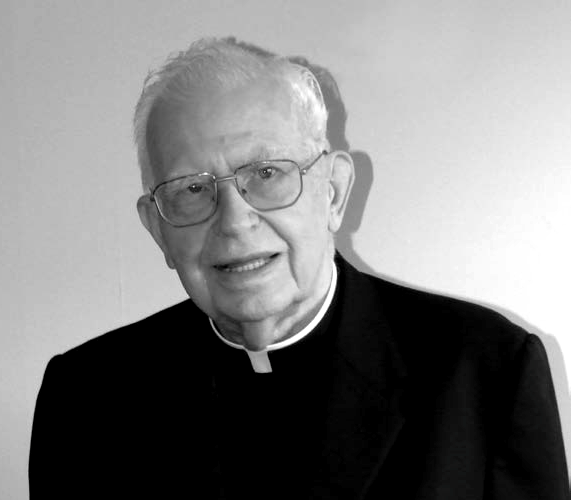
Here is a sermon from the good old days by +Rev. Msgr. Vincent Nicholas Foy (August 14, 1915 – March 13, 2017), from 1943. Readers may recall that Pope Saint Pius X, by the decree Quam Singulari in 1910, lowered the customary age of reception of Holy Communion – after the rigours of the plague[…]Continue reading→
In the Glorious Light of Easter, Alleluia!
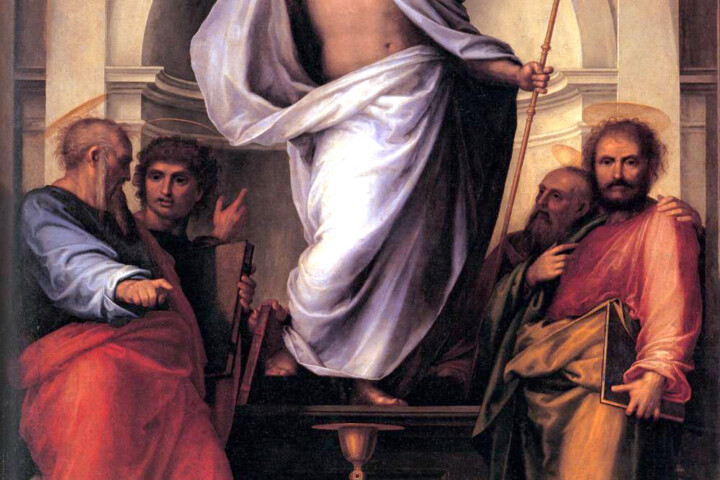
Set your minds on things that are above, not on things that are on earth, for you have died, and your life is hidden with Christ in God. When Christ who is your life is revealed, then you also will be revealed with him in glory (Col. 3:3-4). The Resurrection of Our Lord and Saviour[…]Continue reading→
An Ancient Homily for Holy Saturday
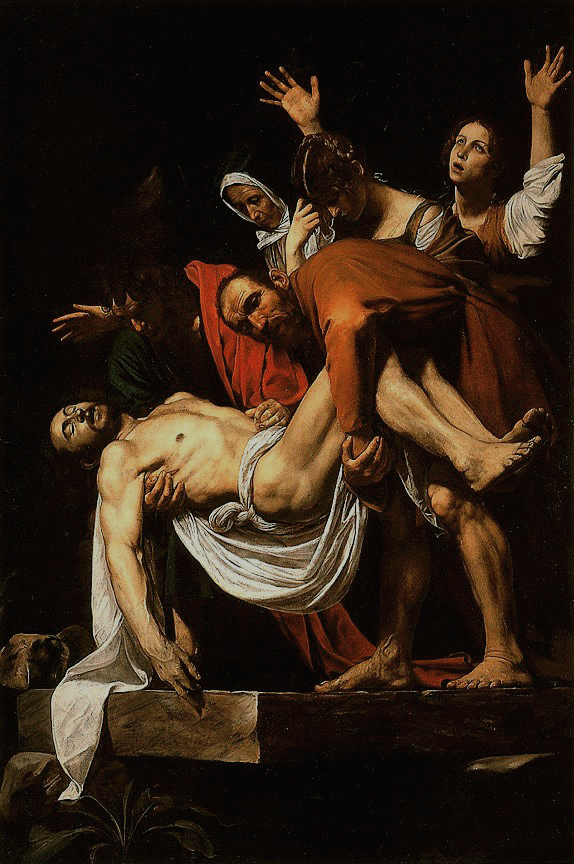
The time between Good Friday and Easter Sunday is one of waiting, in silence, as the world wonders – anticipates – what will happen, after the death of Christ. We re-live this time each year in the anamnesis of our liturgy, and in turn look forward to the glorious re-creation of all things at the[…]Continue reading→
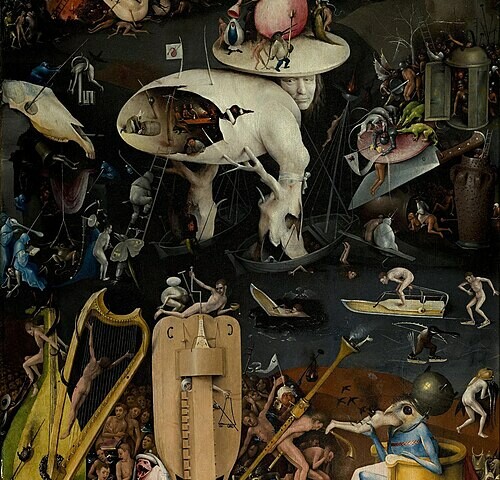
Europe’s Long Descent
(As we meditate on this day on Christ’s burial, and His descent into hell, it is fitting to ponder here with contributor Peter Marcus how the world seems to be heading there as well. The difference is that, although God cannot ‘redeem’ hell, nor those therein, He can and did redeem the world. There is[…]Continue reading→
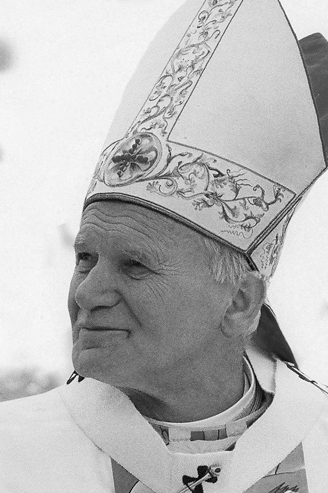
Pope Saint John Paul II’s First Good Friday Homily
ADDRESS OF HIS HOLINESS JOHN PAUL II AT THE CONCLUSION OF THE STATIONS OF THE CROSS AT THE COLOSSEUM Good Friday, 13 April 1979 When we make the Way of the Cross from one station to the next, in spirit we are always at the spot wherethis journey had its “historical” place: where it[…]Continue reading→