
Reaction
In the past week, there has been a lot of rough weather. The worst of it, or at least the worst that has gotten major news coverage, seems to be the tornado in Oklahoma City, Oklahoma.
Oklahoma City is certainly not a place where tornadoes are a new thing. It hasn’t even been a decade since the town hit so badly this week was destroyed by another tornado. Even accounting for this familiarity, however, there is something pretty impressive in the way that the people in this city reacted to some thirteen hundred homes being damaged. There were a surprising number of people who brushed off the fact that they were standing in front of a pile of rubble that was once their home, stating instead that the most important thing was that they were alive. There were so many who were certain that they would have their town built back up within the next year. Moreover, what they said is probably true. Moore, Oklahoma probably will be rebuilt faster than one might think humanly possible. Their reaction to this disaster was pretty amazing.
C. S. Lewis wrote that pain is like a megaphone. Pain demands attention. It cannot be ignored. A catastrophe causes pain. It demands a reaction. The reactions in their incredible variety are the fascinating part. The way that the people involved react to the situation can have quite an impact on how others perceive them.
An interesting example of people dealing with disasters can be found in Charles Dickens’ The Life and Adventures of Nicholas Nickleby. It is, between curious descriptions and curiouser conversations, almost entirely a story of disasters and reactions. Nicholas Nickleby’s father finds out that he lost all his money and reacts with despair. He gives up and dies of a broken heart. Nicholas’s uncle consistently reacts in a manner that immediately satisfies his whims, but which ultimately become his destruction. Smike, neglected and tormented, simply endures the agonies of his life with superhuman patience. Nicholas himself, being the hero, reacts with swift, decisive action.
There are all those characters reacting to all of the bad things that Dickens decided to throw at them, but there is only one hero, only one guy who the reader really, really has to root for. G. K. Chesterton wrote of Nicholas, “He has no psychology; he has not even any particular character.” Nobody loves Nicholas Nickleby because he offers great insight into the human character, or because he overcomes some personal flaw and saves the world, or because he is marvelously witty or clever. All we really have to go on is the way in which he reacts to the bad stuff that he runs into. The reader gets to like him simply because, as Chesterton so tidily sums it up:
[Nicholas] takes a situation as assistant to a Yorkshire schoolmaster; he sees an act of tyranny of which he strongly disapproves; he cries out “Stop!” in a voice that makes the rafters ring; he thrashes the schoolmaster within an inch of his life; he throws the schoolmaster away like an old cigar, and he goes away. The modern intellect is positively prostrated and flattened by this rapid and romantic way of righting wrongs.
The manner in which a person responds to pain or disaster is surprisingly important. Nicholas’ actions are not always wise. Chesterton goes so far as to call him “a somewhat chivalrous young donkey.” The appeal is not necessarily that he does exactly the right thing, but that in moments of crisis, he figures out what he believes to be the best and most expedient route to settling the problem.
Obviously, I am not saying that thrashing any available wrongdoer within an inch of his life is the way to go. It’s usually a pretty bad idea. However, there is often something admirable in simply taking action, in doing what needs to be done without waiting for backup or government funds or your evil uncle’s help. Life is full of disasters that cannot be controlled or avoided. In the end, though, the disaster tends to be largely forgotten. The thing that people go on remembering is the reaction to it, and that is the one thing that ordinary people can control.
A Closed, Unsustainable, Descending Loop
As a follow-up to my thoughts on Payette’s payout, here be a stark image of where are here in Canada. As the graph shows in, well, graphic terms, since 2025, the public sector has contributed to 95.5% of economic growth. The private sector – which funds the public sector, or is supposed to – has[…]Continue reading→
Pope Leo and a Rosary for Peace
Pope Leo XIV has asked Catholics across the world to join him in a Rosary for peace today, at 18:00 Rome time (6 pm), which would be noon from where I write (EST). If you are able, whether at that time or another, and in whatever way you pray, to join in intercession with the[…]Continue reading→
Payette’s Payout
I was glancing through some headlines, and noticed a mention of Julie Payette – engineer and astronaut and sometime the Queen’s representative in Canada – which brought back vague memories. She was appointed Governor-General by Justin Trudeau in 2017. Ms. Payette resigned in 2021, amidst claims that she created a ‘toxic work environment’, with allegations[…]Continue reading→
Your Easter Prayer
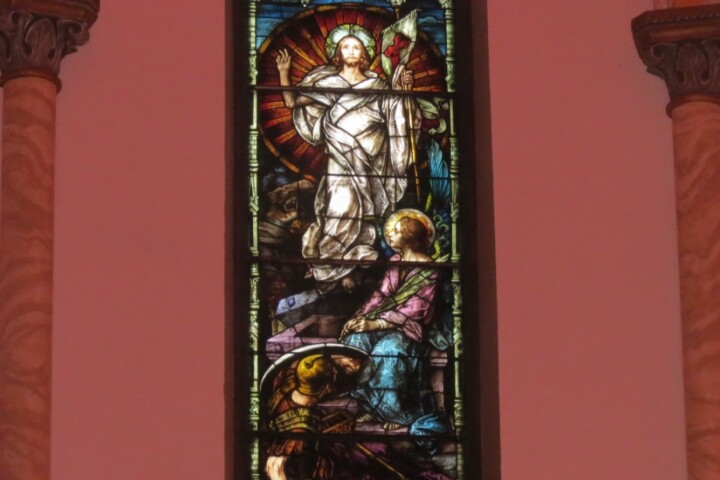
Happy Easter Lord Jesus Christ. It’s Easter day and we smile In the Lord’s in gentle light and His tomb is bare the stone is rolled A story new that must be told And Lord Jesus Christ We love you it’s so true and Lord Jesus Christ has risen From his sleep and the Promises[…]Continue reading→
Three Musical Offerings for the Annunciation
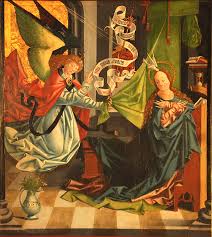
A very blessed Solemnity of the Annunciation to one and all! This March 25th marking the greatest event in history – the Incarnation of the Son of God – goes back to the very origins of the Church, and changed everything. What was lost, is now found, what was dead, is now very much alive.[…]Continue reading→
Eleganti Sums up the SSPX
Bishop Marian Eleganti, auxiliary emeritus of Chur, Switzerland, through which I happened to pilgrimage last summer, sums up the irregular situation of the SSPX. His thoughts bear pondering: Firstly, acting with full autonomy without papal mandate or confirmed mission; secondly, operating with bishops not in union with the Pope and the episcopal college; thirdly, maintaining[…]Continue reading→
The Perils of Sedevacantism
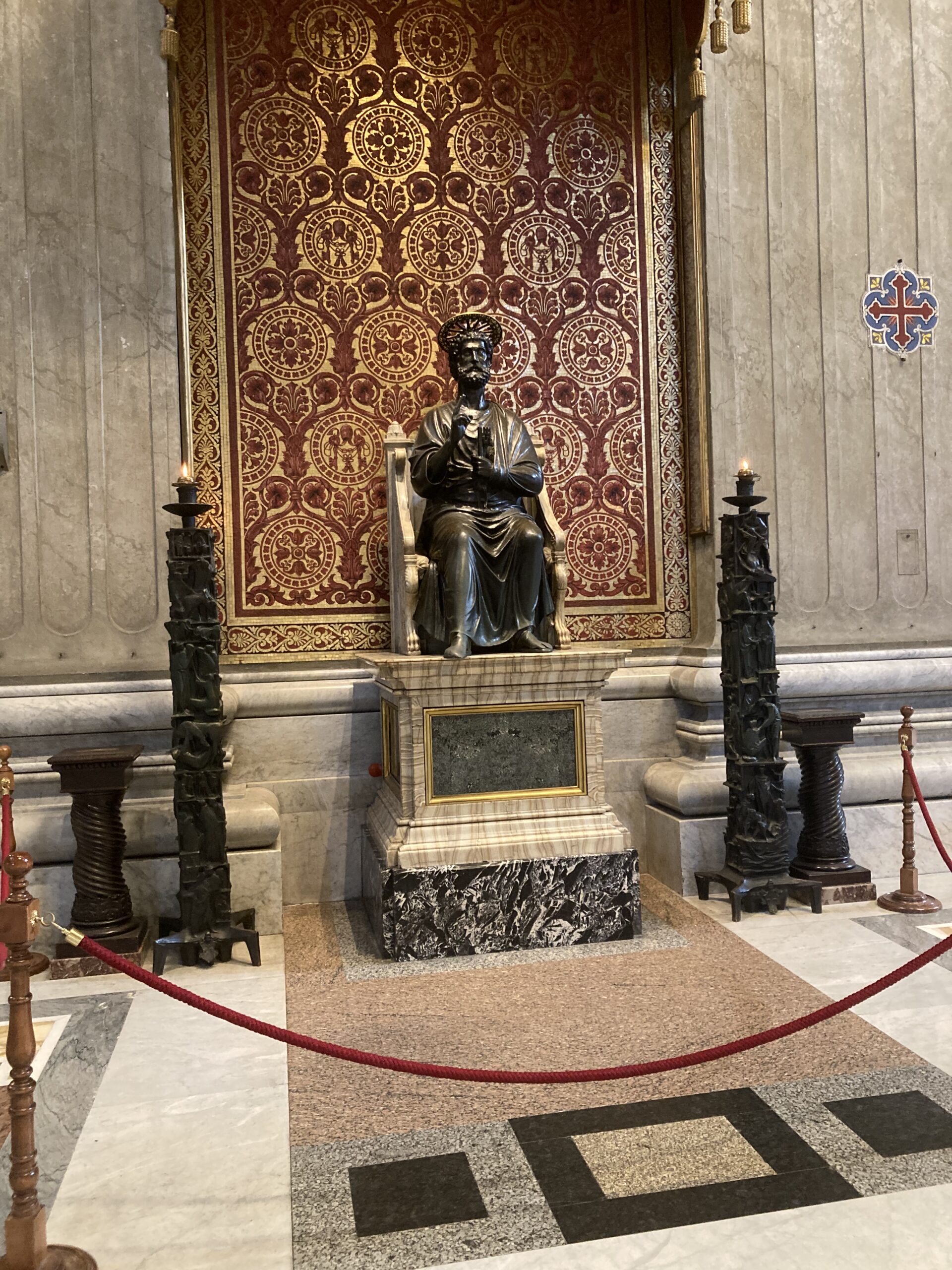
(With John-Henry Westen of LifeSite raising the question of sedevacantism, urging a petition for the cardinals to question the validity of Francis’ and Leo’s papacies, here is a re-post of something I wrote earlier, on why we must tread with great caution in declaring a papacy, or any given pope, null and void. Whatever good[…]Continue reading→

Entropic AI
Entropy may be described as the tendency of all things degrade, to move from order to disorder, from cosmos to chaos, from specificity to entropy. It is the inevitable consequence of any closed system, and encapsulated as the Second Law of Thermodynamics. Any such system – whether that be a machine, a living organism, a[…]Continue reading→
How Do We Know Christ Really Lived?
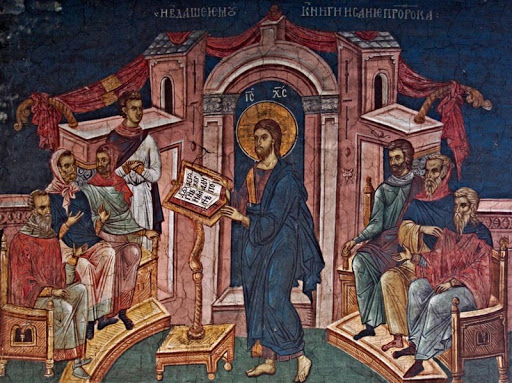
Every now and then we hear in various and sundry places one of the greatest blasphemies of them all: that Jesus never really lived and that the reports of his life and teachings, his death and resurrection, were all made up by unscrupulous men apparently bent on exploiting others for greed and power. At this[…]Continue reading→
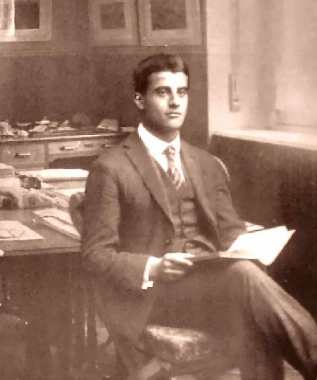
“Verso L ’Alto” – A Meditation on the Hidden Sanctity of Pier Giorgio Frassati
The Italian Alps — that formidable stretch of Europe’s great mountain arc — rise in dramatic splendour above the landscape that so enduringly shaped St. Pier Giorgio Frassati’s life of prayer and adventure. The Australian Alps, sharing the name only in part, resemble their European counterparts more in spirit than in scale. In the former,[…]Continue reading→