
How to Change the World
In light of the building collapse in Bangladesh, the media has turned to the ethics of our clothing trades…again. Clothing lines like Joe Fresh (in Canada) and big businesses like Walmart don’t hide the fact that they buy much of their stock from countries that care exactly zero about human life or, rather, from countries that allow (and maybe encourage?) people to work in dangerous conditions that inevitably lead to significant loss of life. It drew my attention to the little hands that might have stitched together my Coach bag or my Gap jeans and the impoverished Chinese, Indonesian, or Indian sweatshop women that are paid next to nothing to make the things I buy.
When we were on our honeymoon in the Dominican Republic, the bus ride from the airport to the resort took us through a sugar cane field. Our guide told us about the Haitian workers who were hired to work the fields for what was the equivalent of a few pennies an hour—about $36 a month—for 18 hours of back-breaking work a day, if I recall correctly. She quickly rationalized it away saying that the money was way more than they’d ever earn in Haiti, so it’s good for this practice to continue. I was downright horrified as we journeyed through the shantytowns, passing hundreds of hovels covered with corrugated cardboard or steel. But I suppose we’ll tell ourselves whatever helps us sleep at night, like “it’s not like I can do anything about it anyways” or resign ourselves to the fact that the world isn’t perfect and move right along because “their problems don’t affect me.”
I’m ridiculously ashamed to admit that I thought both of those things in that moment. Yes, I was horrified at the injustice of it all, but at the same time I eat sugar. And I own name branded things. I shop at big businesses. And I’m pretty certain that about 99% of my purchases originate in some way shape or form from a developing country. And so do yours. I can’t judge Joe Fresh because I wear it. What can I say? It’s cheap and fashionable clothing made by workers in buildings that have large cracks in their foundations, about which the owners do nothing. It’s those owner’s fault, not mine.
And this problem is so much bigger than I can comprehend. I mean, the way I see it, unless a whole country full of people change their economy completely and all get onto the same page and boycott, protest, or simply stop buying cheaply acquired stuff, this will continue. So I don’t see it changing in the near future. If one company stops buying from unethical suppliers, another will jump right in and continue. And another building will collapse or catch fire, and another hundred or more lives will be lost. So why even bother?
Because our brothers and sisters are suffering. We don’t “get to” ignore the plight of our brothers and sisters struggling with pain and hardship just because the world is corrupt and will remain corrupt. Sure, most of us cannot go and make the landowners in the Dominican pay ethical wages to their Haitian workers, or fly to Indonesia and force the government or building owners to pay attention to the safety of their workers. Yet we absolutely cannot ever complacently sit back on our laurels, as our economy grows fatter and fatter on the backs of the poorest of the poor.
Sure we can’t force change on Indonesian lawmakers, but what we can do is stop wasting the things we buy. We can wear our clothes until they can be cut into rags, and then use them until they disintegrate. We can try to support companies we know support the ethical treatment of the human person. We can financially and otherwise sustain the poor through programs such as Chalice or Canadian Food for Children—where profits aren’t made and the needy of the third world get back the very clothing they’re shipping out in the first place. We can teach our children the importance of ministering to the poor in small yet meaningful ways. We can write blog posts about it and we can pray like the dickens for those daily living in and coping with injustice. There’s also nothing to say we can’t do “bigger things,” like organize a boycott or write letters to our Parliament and Prime Minister to encourage right and morally ethical importation practices. There is a time and place for these actions too.
Mother Teresa once said, “Never worry about numbers. Help one person at a time and always start with the person nearest you.” And Mother knew what she was talking about, working in the slums of Calcutta. So the most important thing we can do is treat the poor around us with love and respect and in doing so “cast a stone across the waters to create many ripples.” We can’t force the whole world to be exactly as we’d like it to be right at this moment, but we can love our neighbours and perhaps change their world in the process.

Saint Kateri , Canada’s Protectress
This was the title given to Saint Kateri Tekakwitha, by Pope Benedict XVI, when he canonized her on October 28th, 2012, along with six others, in Saint Peter’ Square (she had been beatified by Pope John Paul II back in 1980). With Saint Joseph as our protector, along with the Canadian martyrs, we seem to[…]Continue reading→

Remembering Father Alphonse de Valk
(Today marks the sixth anniversary of the death of Father Alphonse de Valk, C.S.B., a faithful, courageous and indefatigable Basilian priest, pro-life-and-family apostle, and the founder of Catholic Insight magazine. Here is what we wrote those on his entering into eternity five years ago, as we continue to remember him in our prayers and thoughts)[…]Continue reading→

My Name is Bernadette
April 16th is a propitious day, for besides the anniversary of Father de Valk’s death, who founded Catholic Insight in its print form decades ago, and the commemoration of the ‘two Benedicts’, mentioned in accompanying posts, today we also recall Saint Bernadette Soubirous, the young visionary to whom the Virgin Mary appeared numerous times at[…]Continue reading→
Canonizing Sister Faustina and Divine Mercy
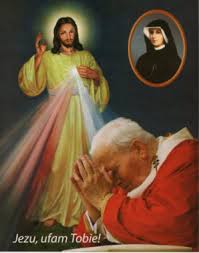
HOMILY OF THE HOLY FATHER MASS IN ST PETER’S SQUARE FOR THE CANONIZATION OF SR MARY FAUSTINA KOWALSKA Sunday, 30 April 2000 1. “Confitemini Domino quoniam bonus, quoniam in saeculum misericordia eius”; “Give thanks to the Lord for he is good; his steadfast love endures for ever” (Ps 118: 1). So the Church sings on the Octave of[…]Continue reading→

Divine Mercy Sunday – An Echo of Every Mass
Reach out your hand and put it in my side. Do not doubt but believe’… ‘My Lord and my God!’ (Jn. 20:18)). Today is Divine Mercy Sunday, and as we celebrate the end of the Easter Octave, we contemplate the wounded side of our Saviour, the Church’s source of life. On Good Friday in the[…]Continue reading→
First Holy Communion: Sermon from May 16, 1943
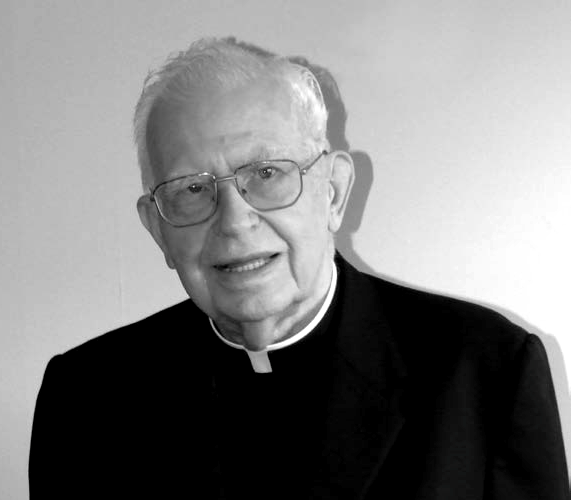
Here is a sermon from the good old days by +Rev. Msgr. Vincent Nicholas Foy (August 14, 1915 – March 13, 2017), from 1943. Readers may recall that Pope Saint Pius X, by the decree Quam Singulari in 1910, lowered the customary age of reception of Holy Communion – after the rigours of the plague[…]Continue reading→

In the Glorious Light of Easter, Alleluia!
Set your minds on things that are above, not on things that are on earth, for you have died, and your life is hidden with Christ in God. When Christ who is your life is revealed, then you also will be revealed with him in glory (Col. 3:3-4). The Resurrection of Our Lord and Saviour[…]Continue reading→

An Ancient Homily for Holy Saturday
The time between Good Friday and Easter Sunday is one of waiting, in silence, as the world wonders – anticipates – what will happen, after the death of Christ. We re-live this time each year in the anamnesis of our liturgy, and in turn look forward to the glorious re-creation of all things at the[…]Continue reading→
Europe’s Long Descent
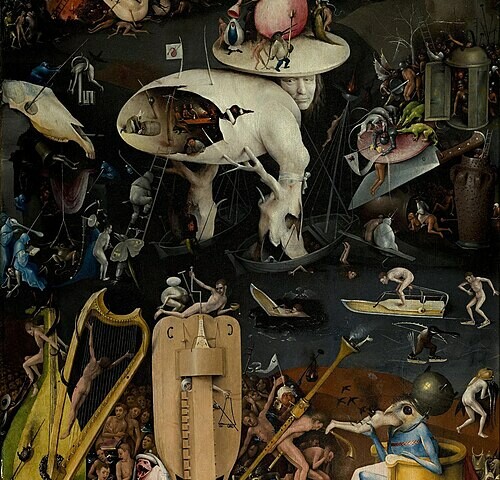
(As we meditate on this day on Christ’s burial, and His descent into hell, it is fitting to ponder here with contributor Peter Marcus how the world seems to be heading there as well. The difference is that, although God cannot ‘redeem’ hell, nor those therein, He can and did redeem the world. There is[…]Continue reading→
Pope Saint John Paul II’s First Good Friday Homily
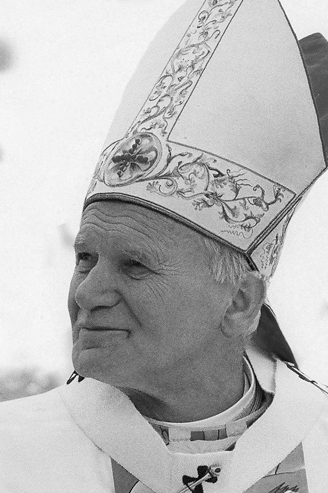
ADDRESS OF HIS HOLINESS JOHN PAUL II AT THE CONCLUSION OF THE STATIONS OF THE CROSS AT THE COLOSSEUM Good Friday, 13 April 1979 When we make the Way of the Cross from one station to the next, in spirit we are always at the spot wherethis journey had its “historical” place: where it[…]Continue reading→