
The Soul of the Internet
One of my blogging heroines often says the only thing that qualifies her to blog is that she is a housewife with a computer—meaning, she’s not qualified to say much so don’t take her words as gospel truth. Well, I can relate. I’m not an expert on anything (except maybe Scrabble; I’m good at that). I’m just a gal with a computer and a drive to form words into meaningful ideas. I started blogging because it’s one of the easiest ways to publish while you practice. You may be writing for an audience of one(self), but you’re still writing and you’re still putting it out there.
Unfortunately there seems to be a trend, especially within religious circles these days, that blames technology for the decline of Western Civilization as we know it. Everything from obesity and the inability of people to relate to others to ADD and every other kind of imaginable evil is clearly the fault of technology, so anyone “online” is de-facto guilty by association. There have been a few awkward moments in conversations of late when I’ve admitted that I’m a blogger—and the only response I get is a long pause and the stink eye. And it leads me to ask myself: what the heck am I doing? Why do I blog? I may have started blogging because it was fun and the words came easily, but it’s well past the “this is work” stage and I still do it. If technology/the digital world is evil, why would I choose to be part of it?
Well, for one thing, I don’t believe that technology is evil. Like any created thing, technology can be used for good or evil, but it is neither good nor evil in and of itself. Granted it is a powerful medium and one that should be used carefully and consciously. Our beloved Pope (for a few more hours at least) Benedict XVI refers to technology as the “digital continent” and has cautioned its users to approach it with the spirit of discernment, being sure to be authentic while still being present to those we encounter daily. He exhorts us to remember that “virtual contact must not take the place of direct human contact with people at every level of our lives.”
Yet at the same time he strongly encourages Catholics to step into the digital era and claim it for Christ.
“I would like to invite all Christians, confidently and with an informed and responsible creativity, to join the network of relationships which the digital era has made possible. … The web is contributing to the development of new and more complex intellectual and spiritual horizons, new forms of shared awareness. In this field too we are called to proclaim our faith that Christ is God, the Saviour of humanity and of history, the one in whom all things find their fulfillment (cf. Eph 1:10).” (Pope Benedict XVI, 45th World Communications Day June 2011)
As long as we are cognizant of our motives, why wouldn’t we use technology and the digital world to continue to draw people into God and evangelize within the modern world?
Because honestly, whether we like it or not, times have changed. Today, the young people especially are so entrenched in the digital world that reaching out to them, bringing Jesus to where they are, means “putting” Jesus online. It might mean texting young parishioners the weekly bulletin instead of printing it out on paper, or having online chat groups or podcasts explaining facets of our faith (like Fr. Robert Barron and his Word on Fire blog which is garnering converts right and left!). We are called to engage this new world of technology and as Pope Benedict tells us not to be afraid to “set sail on the digital sea, facing into the deep with the same passion that has governed the ship of the Church for two thousand years. … [W]e want to qualify ourselves by living in the digital world with a believer’s heart, helping to give a soul to the internet’s incessant flow of communication.” (The Church and New Media, pg.22)
And that, my friends, is why I blog. I do it to give a soul to the internet’s incessant flow of communication; to contribute as much beauty and life-giving love as I can to what is in essence a bunch of zeros and ones. I do it to bring Jesus to the hungry-for-God everywhere. And what better way to do that than online—where hundreds, thousands, even millions of people can read what you’ve written from the comfort of their homes every hour of every day. My readership might be more like tens of people—but still. If God is able to use my words to reach even one person, then for me, it’s worth it.
“At the onset of this digital revolution, [the Church’s] response to New Media is wide open. The world is waiting and listening in the virtual sphere. Will the Church remain silent, or will her voice be proclaimed from the rooftops (and the laptops)? Will she plunge the message of Christ into Facebook feeds, blog posts, podcasts, and text messages, or will she be digitally impotent? If the Church’s promotion of evangelization, formation, community and the common good is to continue throughout future generations, she must harness these technologies and utilize them well.” (The Church and New Media, Pg. 21)
A Closed, Unsustainable, Descending Loop
As a follow-up to my thoughts on Payette’s payout, here be a stark image of where are here in Canada. As the graph shows in, well, graphic terms, since 2025, the public sector has contributed to 95.5% of economic growth. The private sector – which funds the public sector, or is supposed to – has[…]Continue reading→
Pope Leo and a Rosary for Peace
Pope Leo XIV has asked Catholics across the world to join him in a Rosary for peace today, at 18:00 Rome time (6 pm), which would be noon from where I write (EST). If you are able, whether at that time or another, and in whatever way you pray, to join in intercession with the[…]Continue reading→
Payette’s Payout
I was glancing through some headlines, and noticed a mention of Julie Payette – engineer and astronaut and sometime the Queen’s representative in Canada – which brought back vague memories. She was appointed Governor-General by Justin Trudeau in 2017. Ms. Payette resigned in 2021, amidst claims that she created a ‘toxic work environment’, with allegations[…]Continue reading→
Your Easter Prayer
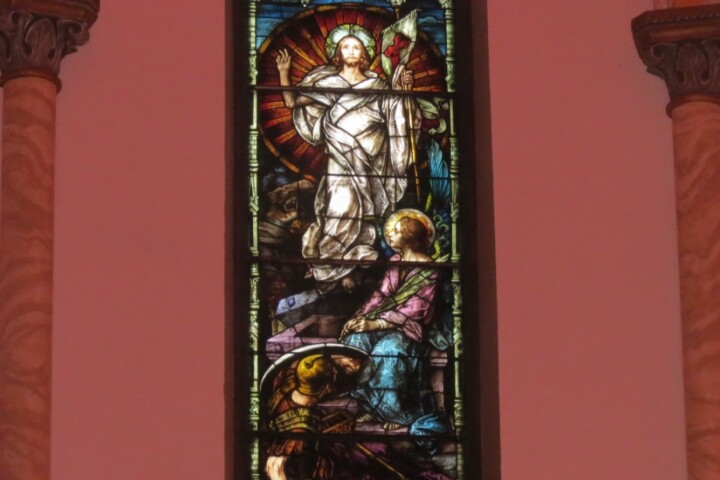
Happy Easter Lord Jesus Christ. It’s Easter day and we smile In the Lord’s in gentle light and His tomb is bare the stone is rolled A story new that must be told And Lord Jesus Christ We love you it’s so true and Lord Jesus Christ has risen From his sleep and the Promises[…]Continue reading→
Three Musical Offerings for the Annunciation
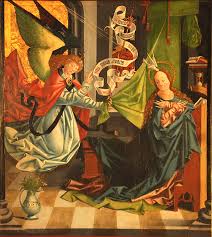
A very blessed Solemnity of the Annunciation to one and all! This March 25th marking the greatest event in history – the Incarnation of the Son of God – goes back to the very origins of the Church, and changed everything. What was lost, is now found, what was dead, is now very much alive.[…]Continue reading→
Eleganti Sums up the SSPX
Bishop Marian Eleganti, auxiliary emeritus of Chur, Switzerland, through which I happened to pilgrimage last summer, sums up the irregular situation of the SSPX. His thoughts bear pondering: Firstly, acting with full autonomy without papal mandate or confirmed mission; secondly, operating with bishops not in union with the Pope and the episcopal college; thirdly, maintaining[…]Continue reading→
The Perils of Sedevacantism
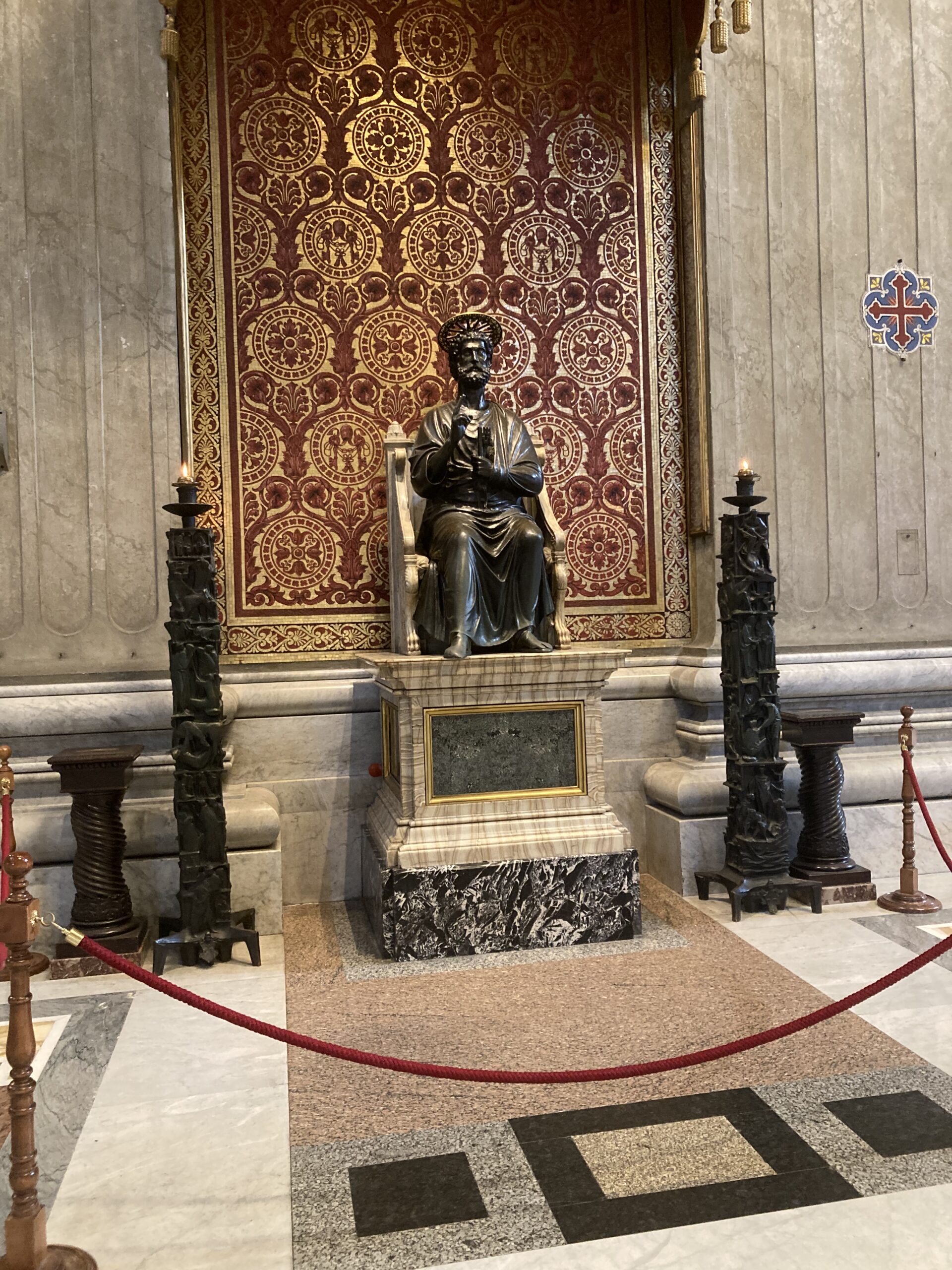
(With John-Henry Westen of LifeSite raising the question of sedevacantism, urging a petition for the cardinals to question the validity of Francis’ and Leo’s papacies, here is a re-post of something I wrote earlier, on why we must tread with great caution in declaring a papacy, or any given pope, null and void. Whatever good[…]Continue reading→

Entropic AI
Entropy may be described as the tendency of all things degrade, to move from order to disorder, from cosmos to chaos, from specificity to entropy. It is the inevitable consequence of any closed system, and encapsulated as the Second Law of Thermodynamics. Any such system – whether that be a machine, a living organism, a[…]Continue reading→
How Do We Know Christ Really Lived?
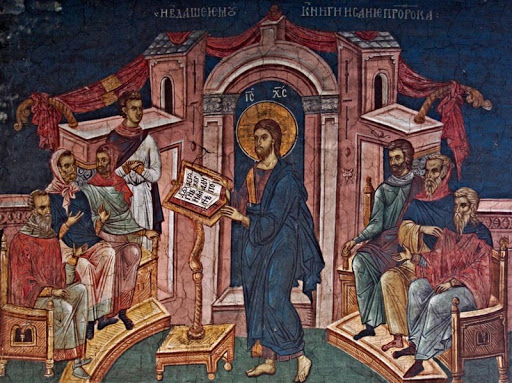
Every now and then we hear in various and sundry places one of the greatest blasphemies of them all: that Jesus never really lived and that the reports of his life and teachings, his death and resurrection, were all made up by unscrupulous men apparently bent on exploiting others for greed and power. At this[…]Continue reading→
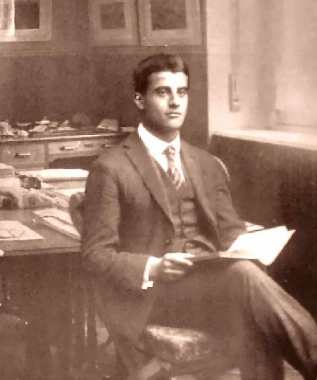
“Verso L ’Alto” – A Meditation on the Hidden Sanctity of Pier Giorgio Frassati
The Italian Alps — that formidable stretch of Europe’s great mountain arc — rise in dramatic splendour above the landscape that so enduringly shaped St. Pier Giorgio Frassati’s life of prayer and adventure. The Australian Alps, sharing the name only in part, resemble their European counterparts more in spirit than in scale. In the former,[…]Continue reading→