
Sacrificing for the victory
Yesterday was the sort of day where curling up on the couch with a cup of hot chocolate and a feather blanket seems like the only logical thing to do. A very nasty wet snow was falling, the temperature was just cold enough to be uncomfortable, and the sky was just gray enough to be really miserable. Since my three brothers and I were all staying inside most of the day anyway, we decided to have a rematch tournament in a game called Othello.
Othello is a very simple game. There is a playing board with sixty-four squares and sixty-four disks that are white one one side and black on the other that fit in the squares. One player is black, the other is white. You capture the other player’s pieces by “flanking” them—getting two disks in your color on either side of one or more the enemy’s pieces. You then flip their disks over, and they become yours. There is no limit to how many you can flip if you just find the right place. As I said, it is a simple game, which means there are a zillion strategies that you can use to win.
My favorite strategy has been named the lose-to-win method. The game always begins on the four center squares with two white pieces and two black pieces in play. As additional disks are added, they work their way to the edges and to the all important corners. (Corners are the most valuable spots because the pieces in the corner cannot be flanked and so cannot be flipped.) Once play gets started on the outside edges, the game changes quite a bit. The person who was conquering everything while the bulk of the game was happening at the middle is suddenly at a disadvantage when so many of his pieces can be easily flanked and flipped. If, on the other hand, you waited and let your pieces be taken all through the beginning—if you lost—then you were probably pushed toward the outer edges more quickly. You find yourself in the perfect position to attack, flip your opponent’s pieces, take the corners, and ultimately triumph.
However, even when you know just how much losing in the beginning is going to help you, it is hard to watch yourself lose. It’s irritating to see openings that would make your brother flinch and still sit back and flip one of his pieces at a time. It’s hard to wait, even when you know just how much it will pay off in the end.
Lent, likewise, requires doing or not doing something that is hard and sacrificing for a while so that you ultimately gain something far more important than bragging rights about a game. Whether one gives up chocolate, coffee, alcohol, or Facebook, or adds half a dozen prayers and sacrifices, fulfilling those promises takes concentration. You know that in the end you will be very glad that you stuck it out for the whole forty days. You know also that at times you will be irritated and bothered by those sacrifices. You will want nothing more than the thing you gave up. In all likelihood, there will be failures.
On the Internet there are all sorts of warnings about giving things up for Lent. Giving up coffee will make you too cranky and your family will suffer. You can’t give up the Internet because some things are just too necessary for everyday life. Giving up Facebook will cut you off too much from your friends and family.
The thing is, Lent is uncomfortable because for most of the year, most of the population of North America spends a ridiculous amount of time and energy trying to have our cake and eat it too. During Lent, we are suddenly asked to give up something that we love and when asked to make that sacrifice, we suddenly see just how much we really, really want whatever it is. For instance, a person might not realize how much time she spends playing a game on her phone until she gives it up and finds out just how readily her finger hits the icon. It’s frustrating to find out how addicted we are to things, but the idea of giving something up during Lent is that it makes us recognize our dependence on earthly things so that we can sever a little of their power over us. We meet our demons during Lent because we stop feeding them.
In this way, Lent is like an adventure. Where you thought there was only yourself, there is suddenly a dragon, one that needs to be slain. Adventures are, in the words of Bilbo Baggins, “Nasty horrible things! Make you late for supper! I can’t think what anybody sees in them!” In The Hobbit Bilbo spends most of his adventure wishing that he was back at home again. He doesn’t hesitate to grumble about the inconveniences of his journey and he frequently doubts his ability to handle the situations that he encounters. But in the end he is far better off for having gone on an adventure. He is better off after being starved, half drowned, and almost eaten on several occasions. He is more aware of who he is, not merely as a hobbit, but as a person whose role in the world is significant and even vital. He is able to become what he was meant to be in the first place.
During Lent, we face the adventure of missing out on something now so that we can win in the end. Yes, there is the possibility that a sacrifice might initially reveal a monster lurking beneath the surface, but it is only when that monster surfaces that we can fight it. Once it is fought, we find out that it was never really a part of us, but an invader. We find ourselves finally able to be a little more human, and are more able to take an active part in the battle of good and evil that is playing out in the world today.
A Closed, Unsustainable, Descending Loop
As a follow-up to my thoughts on Payette’s payout, here be a stark image of where are here in Canada. As the graph shows in, well, graphic terms, since 2025, the public sector has contributed to 95.5% of economic growth. The private sector – which funds the public sector, or is supposed to – has[…]Continue reading→
Pope Leo and a Rosary for Peace
Pope Leo XIV has asked Catholics across the world to join him in a Rosary for peace today, at 18:00 Rome time (6 pm), which would be noon from where I write (EST). If you are able, whether at that time or another, and in whatever way you pray, to join in intercession with the[…]Continue reading→
Payette’s Payout
I was glancing through some headlines, and noticed a mention of Julie Payette – engineer and astronaut and sometime the Queen’s representative in Canada – which brought back vague memories. She was appointed Governor-General by Justin Trudeau in 2017. Ms. Payette resigned in 2021, amidst claims that she created a ‘toxic work environment’, with allegations[…]Continue reading→
Your Easter Prayer
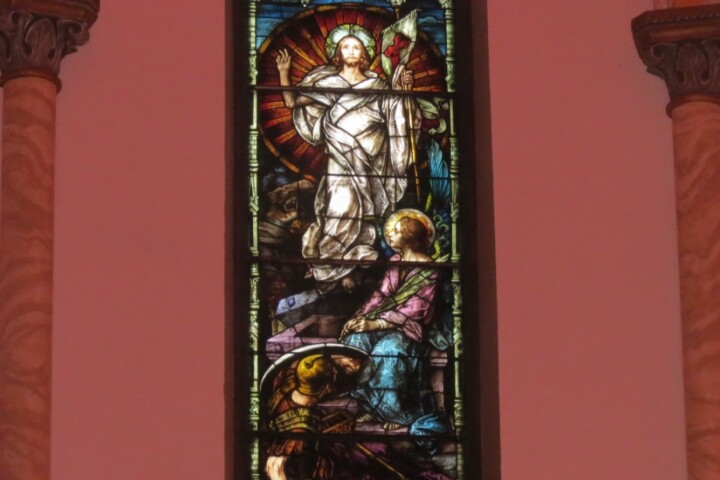
Happy Easter Lord Jesus Christ. It’s Easter day and we smile In the Lord’s in gentle light and His tomb is bare the stone is rolled A story new that must be told And Lord Jesus Christ We love you it’s so true and Lord Jesus Christ has risen From his sleep and the Promises[…]Continue reading→
Three Musical Offerings for the Annunciation
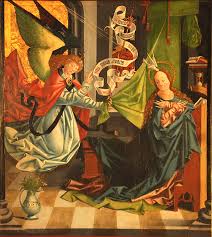
A very blessed Solemnity of the Annunciation to one and all! This March 25th marking the greatest event in history – the Incarnation of the Son of God – goes back to the very origins of the Church, and changed everything. What was lost, is now found, what was dead, is now very much alive.[…]Continue reading→
Fourth Sunday of Lent: Siloam and Spiritual Blindness
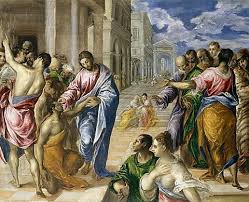
Once you were darkness, but now in the Lord you are light. Live as children of light – for the fruit of the light is found in all that is good and true (Eph. 5:8-9). The account of the cure of the blind man at the pool of Siloam, like the account of the conversation[…]Continue reading→
Eleganti Sums up the SSPX
Bishop Marian Eleganti, auxiliary emeritus of Chur, Switzerland, through which I happened to pilgrimage last summer, sums up the irregular situation of the SSPX. His thoughts bear pondering: Firstly, acting with full autonomy without papal mandate or confirmed mission; secondly, operating with bishops not in union with the Pope and the episcopal college; thirdly, maintaining[…]Continue reading→
Third Sunday of Lent: Thirsting for the True Water of Life
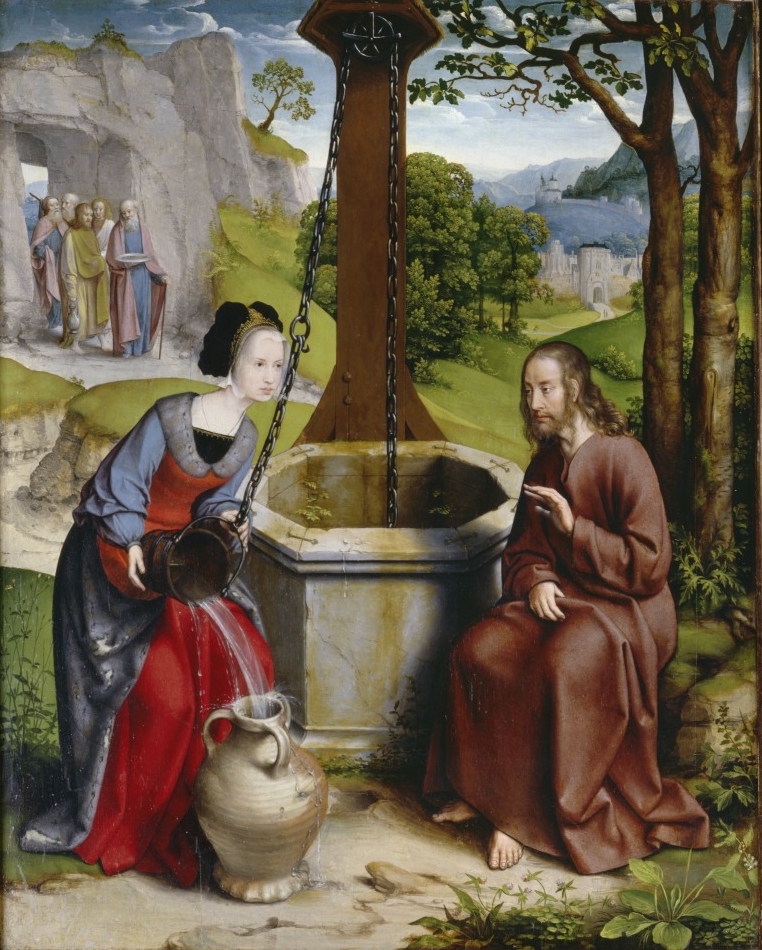
‘Give me a drink’ (Jn. 4:7). The conversation of Our Lord and the Samaritan woman revolves around the gift of water. This request is presented to us to contemplate on this third Sunday in Lent; and it is a request that we will hear again during the Commemoration of the Passion of Our Lord when[…]Continue reading→
Second Sunday of Lent, and Seeing Beyond Our Eyes
Are old people wise? Have they learned anything from experience? Or are they all curmudgeons, continually grumbling about the young generation and contrasting it unfavourably with the way things used to be? Well, as an old man myself, I may observe that it is possible to be both wise and curmudgeonly at one and the[…]Continue reading→
The Perils of Sedevacantism
(With John-Henry Westen of LifeSite raising the question of sedevacantism, urging a petition for the cardinals to question the validity of Francis’ and Leo’s papacies, here is a re-post of something I wrote earlier, on why we must tread with great caution in declaring a papacy, or any given pope, null and void. Whatever good[…]Continue reading→