
All twelve days
“Therefore your end is on you,
Is on you and your kings,
Not for a fire in Ely fen,
Not that your gods are nine or ten,
But because it is only Christian men Guard even heathen things.
“For our God hath blessed creation,
Calling it good. I know
What spirit with whom you blindly band
Hath blessed destruction with his hand;
Yet by God’s death the stars shall stand
And the small apples grow.”
G. K. Chesterton, The Ballad of the White Horse
Many of the traditions that are associated with Christmas are, we are told, of pagan origin: the Yule log, mistletoe, Christmas tree, and the use of fire and lights. Critics of Christmas point these out to us, and we are supposed to fall away in confusion and distress and abandon our faith. I am always amazed when I meet someone who tries these arguments. They know nothing of Catholicism. We hold as a basic of Thomistic theology that grace builds on nature. It would be very surprising if Christmas did not have these originally pagan symbols. Pagans also ate supper at supper time, sat at a table, cooked and warmed themselves over a fire, and sang songs.
The prevalence of Christmas trees, presents, lights, and feasting are themselves tributes to the Incarnation, so much so that even unbelievers participate. The star that appeared over the stable at Bethlehem is memorialized by the lights with which we decorate our homes, so that every home becomes a type of Christmas stable; the mistletoe, considered magic in pagan days because, as a parasite of oaks, it had no visible roots, is itself an anticipation of Our Lord’s claim that foxes have lairs, and birds have nests, but the Son of Man has nowhere to lay His head. The Christmas tree and wreath, being of evergreen, are a pagan anticipation of the tree of life, which is Our Lord Himself and His victory over death.
And, of course, the presents. Presents are a birthday gift and, giving to each other, we give to Christ in each of us.
Neither non-Christians nor Puritans accept these things. They want to keep religion distinct, either from a desire to limit it or a desire to keep it pure, which is the same thing. But a real religion cannot be kept locked away; it arises spontaneously, and I find it amazing that even atheists who express hatred of the Catholic Faith must follow the forms of Christmas as if against their own will.
But, while these forms give tribute to the Incarnation, they are not enough in themselves. There are few things more depressing than the emptiness of a Christ-less Christmas. The television goes on, and everyone watches Christmas specials with skaters dressed as candy canes or elves, as semi-clad women in Santa Claus suits skate past smiling at the camera. Everyone wants the life that Christmas promises, that Christmas can provide; yet many do not want to forgo the pleasures that the culture of death promises, but never delivers. So we reach for the trappings, and miss the thing itself—the disappointment all around us after Christmas Day is palpable.
There are few things more pleasant than the feel, the atmosphere of a home when a newborn baby is brought home from the hospital. The house, no matter how small or derelict (I know this from experience!) is enveloped in reverent quiet; the new mother is calm and content; and the whole family tiptoes in silence. In my home, even the dogs seemed to understand this and would quietly approach the bassinette, look in, and then slowly walk away as if to not waken the sleeping baby. This lasts for about two weeks as the atmosphere of quiet joy that came with the sleeping newborn slowly gives way to the joys of an awakening baby exploring the world.
So it is with the season of Christmas, an event manifest for us every year. This is why the Church in her wisdom has given us twelve days for the feast. The fun of Christmas itself does not end when presents are opened, and it does not depend on the wealth of the trappings for its beauty.
I have been in homes of bachelors, various of my unmarried uncles or aunts, that were filled with this same sense of beauty and reverence over Christmas—because these men and women were open to life. I have been in the homes of childless couples that were filled with this life of Christmas all year long. And, I have been to houses where all the material happiness that can be bought was there, yet the homes were pervaded with a sense of hard sadness because they had chosen to prevent the life their marriage should have provided. This is not a judgment; it is a fact.
Yet the whole point of Christmas is that this need not be the final defining fact for anyone. For there is always the hope that comes with welcoming Christ, and welcoming life—especially at Christmas.
Carney’s Amoral Majority
After five defections – euphemistically described as ‘crossing the floor’ – and three by-elections, Mark Carney and his Liberals how have their coveted majority. One wonders what bowls of pottage were offered in back-room deals. In the archaic monarchical system that is the Dominion of Canada, this majority allows the newly-minted Prime Minister to rule[…]Continue reading→
A Tale of Two Benedicts
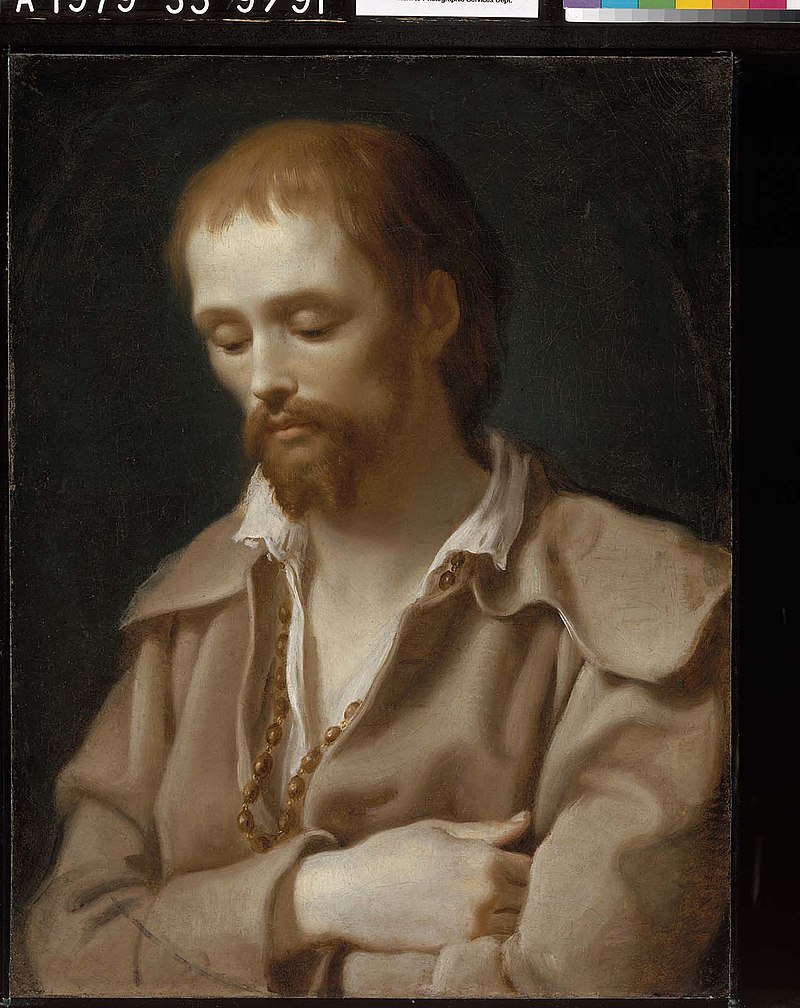
A grace-filled Holy Week to all our readers! As we await and prepare for the Resurrection about to dawn upon us, we might keep in mind two Benedicts: Pope Emeritus Benedict XVI, requiescat in pace, elected on this day in 2005; and today’s commemoration of the mystic pilgrim, Benedict Joseph Labre, who died on this[…]Continue reading→
Saint Lydwina of Schiedam and Suffering Joyfully
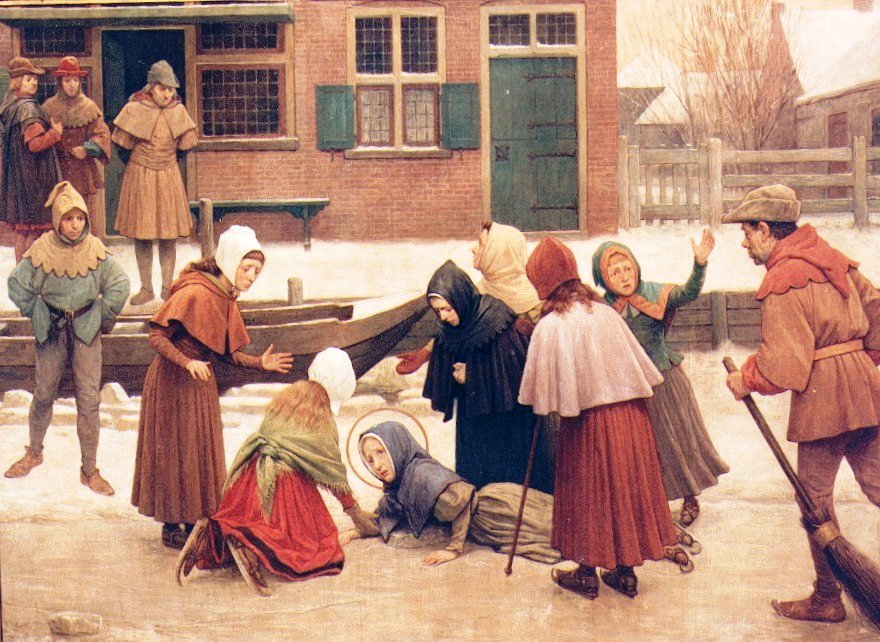
Saint Lydwina of Schiedam (1380 – 1433) was one of the countless and glorious ‘victim souls’ in the history of the Church, those whose lives are filled with suffering, often of an unimaginable intensity, but who suffer joyfully. She was a fifteen-year old Dutch girl, out skating one day, when she fell and broke one[…]Continue reading→
The Glorious Martyrdoms of Martin and Maximus
As we enter into Eastertide, we recall on this 13th of April Pope Saint Martin I (+655), one of the noblest, if most tragic, of the successors of Saint Peter. Born in Umbria, Italy, he was of noble lineage, with great intelligence combined with charity and love of the poor and the Church. While still[…]Continue reading→

Saint Stanislaus of Szczepanów
We celebrate Saint Stanislaus today (+ April 11, 1079), in light of this Easter Octave, a bishop and martyr who accepted the episcopacy only at the direct order of Pope Alexander II. He proved a wise and courageous leader of his flock, put to death by his own king, Boleslaus, for rebuking the monarch’s ‘immoral[…]Continue reading→
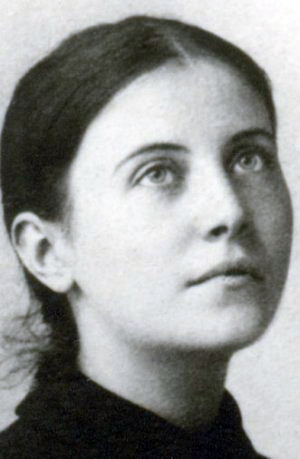
Saint Gemma Galgani
On this April 11th, in 1903 – the same year that the Italian Guiseppe Sarto was elected Pope later that summer as Pius X – a lovely, young Italian woman died, by the name of Gemma Galgani. She lived a brief life of 24 years, as did a number of other young saints, including Pier[…]Continue reading→
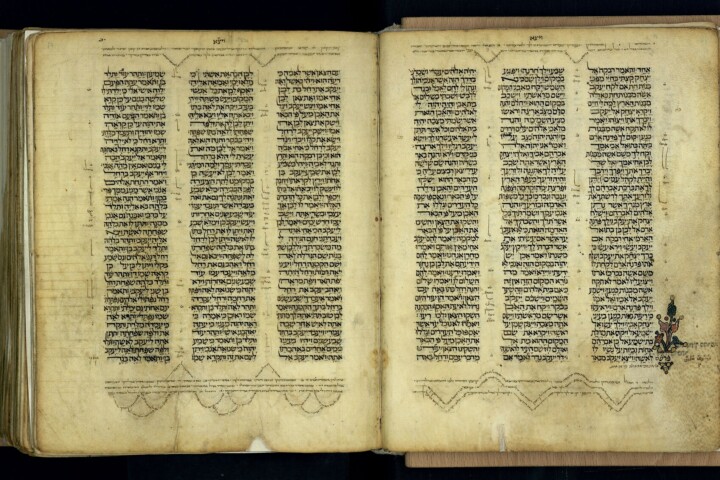
An Ideological and Improper Translation
I noticed something odd with the psalm reading at Mass the other day. Our bishops’ conference here in Canada has decreed that the Mass in English – Novus Ordo – use the ‘NRSV’, the ‘New Revised Standard Version’, an ‘updated’ translation of the original RSV, first published in 1952. This ‘new translation’ has the tendency[…]Continue reading→
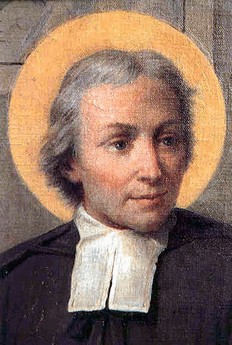
Saint Jean-Baptiste de la Salle: A Teacher for Teachers
Jean-Baptiste de la Salle (1651 – 1719), a French nobleman, ordained a priest, founded the first order in the Church’s history entirely without priests, and this came about almost by accident. I say ‘almost’, for, of course, there are no accidents with God. Destined for ordination from an early age, Jean-Baptiste never looked back, even[…]Continue reading→
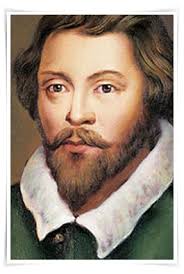
Three Easter Musical Gems: Bach, Palestrina and Byrd
A very blessed and glorious Easter! Christus surrexit vere, alleluia! As we begin this Easter Octave with the great Solemnity of Easter, music to lift the soul would be one of Bach’s Easter cantatas, composed during his time at Leipzig in the early 1700’s, for the six Sundays of this festive season, leading up to[…]Continue reading→
Good Friday and Suffering
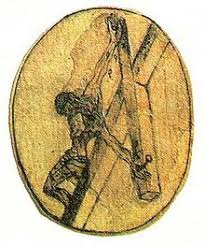
Evil and pain is always a mystery, that whole mysterium iniquitatis, of which Saint Paul writes (2 Thess 2:7). In 1984, Pope Saint John Paul II penned an Apostolic Letter on the nature and purpose of human suffering, Salvifici Doloris (curiously, now looking back, the same year he made his first apostolic journey to Canada).[…]Continue reading→