
Relativism and the meretricious hero
The word altruism is defined as concern for another without regard for injury to oneself. It is used, usually in psychology, to describe heroism—the act of risking your life for somebody else’s. The man who coined the word was Auguste Comte, the founder of positivism.
Comte was by no means a great moral leader, or even a good one. He, like many other scientists of his time, was of the opinion that there was no knowledge outside of human experience and that religion was folly. He gave us the word, and told us that it was caused by a person’s desire to be socially useful.
But that explanation is as riddled with holes as any other. G. K. Chesterton wrote about courage and observed, “No quality has ever so much addled the brains and tangled the definitions of merely rational sages.” There are dozens of instincts that can be explained by the need for self preservation, but it is much more difficult to explain something that works in the opposite direction.
Altruism, like courage, is difficult to explain because it is based in love, and love cannot be described by purely rational minds. For example, say there is a burning building with a person trapped inside. There are ten people outside the house. One of them goes inside and rescues the trapped person. Afterward, no one would ask the nine bystanders why they did nothing. Not running into a burning building makes sense. It would be the hero who has to answer questions like “What were you thinking?” or “What made you do this?” In the end, there is no explanation.
Stories are full of altruism. From Beowulf to The Lord of the Rings to The Extraordinary Education of Nicholas Benedict, courageous heroes abound and heroes, by their very definition, tend to put other people before themselves. What happens, though, when the hero doesn’t choose to put others before himself? The person who rushes into a burning building to save someone is unquestionably heroic. If that person were already inside the building and saved someone on the way out, the action would still be heroic, but far less shocking. If the person were simply running out of the burning building, and by some stroke of luck just happened to guide the trapped person to safety, there is hardly anything besides self preservation and dumb luck.
One particularly good case of this is The Hunger Games. Katniss becomes a heroine mostly because she is trying to save herself. The rest of civilization might get dragged along with her, and they might not. She doesn’t call the shots, or really even make choices. She goes along with what she has to do. The same can be said of Eragon in the Inheritance series. He never actively chooses to be the hero. He gets shoved into it, and the majority of his actions are, once again, self preservation, not altruism. I think it is in Eldest that Eragon spends ages trying to figure out what makes him different from the evil king. In the end, his answer is only that he is a lesser evil. On the flip side, the evil king, Galbatorix, is insane, and has been since the beginning of his reign of terror. His main servant during the story is magically enslaved and is almost incapable of making choices for himself. He is the bad guy because his actions have brought about more harm than the actions of the good guys. There is no question of absolute good or absolute evil. Instead, there is a big circle of relativism.
In The Screwtape Letters, C. S. Lewis writes, “Courage is not simply one of the virtues but the form of every virtue at the testing point, which means at the point of highest reality.” A person cannot accidentally be courageous (he can, however, accidentally become a hero) anymore than he can accidentally commit a mortal sin. Thus, when a hero refuses to make the choice to be courageous, waiting instead for fate to force him to save himself, he misses out on an opportunity to live at the highest point of reality.
The option to opt out of decision making has become quite common in our society. People do what society expects them to do, and hope for the best. But what happens in a world where there is no defined good and evil? What happens when there are only lesser or greater wrongs, when there are only people who do the best they can and hope that no one suffers too badly for their mistakes? There might be no villains, but there cannot be heroes either. If a person is only more or less selfish, then he cannot be selfless. Altruism fades; real, solid goodness is pointless; and we are left with meretricious heroes in a relatively okay world.
A Closed, Unsustainable, Descending Loop
As a follow-up to my thoughts on Payette’s payout, here be a stark image of where are here in Canada. As the graph shows in, well, graphic terms, since 2025, the public sector has contributed to 95.5% of economic growth. The private sector – which funds the public sector, or is supposed to – has[…]Continue reading→
Pope Leo and a Rosary for Peace
Pope Leo XIV has asked Catholics across the world to join him in a Rosary for peace today, at 18:00 Rome time (6 pm), which would be noon from where I write (EST). If you are able, whether at that time or another, and in whatever way you pray, to join in intercession with the[…]Continue reading→
Payette’s Payout
I was glancing through some headlines, and noticed a mention of Julie Payette – engineer and astronaut and sometime the Queen’s representative in Canada – which brought back vague memories. She was appointed Governor-General by Justin Trudeau in 2017. Ms. Payette resigned in 2021, amidst claims that she created a ‘toxic work environment’, with allegations[…]Continue reading→
Your Easter Prayer
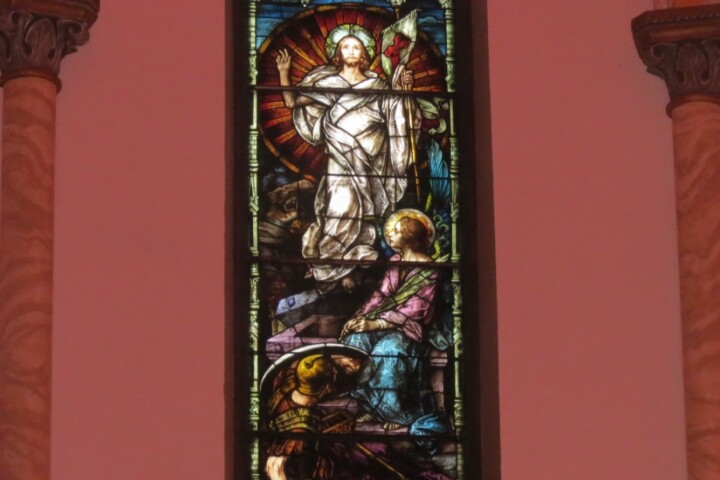
Happy Easter Lord Jesus Christ. It’s Easter day and we smile In the Lord’s in gentle light and His tomb is bare the stone is rolled A story new that must be told And Lord Jesus Christ We love you it’s so true and Lord Jesus Christ has risen From his sleep and the Promises[…]Continue reading→
Three Musical Offerings for the Annunciation
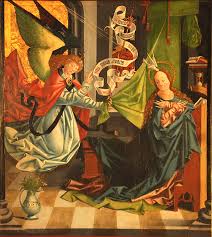
A very blessed Solemnity of the Annunciation to one and all! This March 25th marking the greatest event in history – the Incarnation of the Son of God – goes back to the very origins of the Church, and changed everything. What was lost, is now found, what was dead, is now very much alive.[…]Continue reading→
Eleganti Sums up the SSPX
Bishop Marian Eleganti, auxiliary emeritus of Chur, Switzerland, through which I happened to pilgrimage last summer, sums up the irregular situation of the SSPX. His thoughts bear pondering: Firstly, acting with full autonomy without papal mandate or confirmed mission; secondly, operating with bishops not in union with the Pope and the episcopal college; thirdly, maintaining[…]Continue reading→
The Perils of Sedevacantism
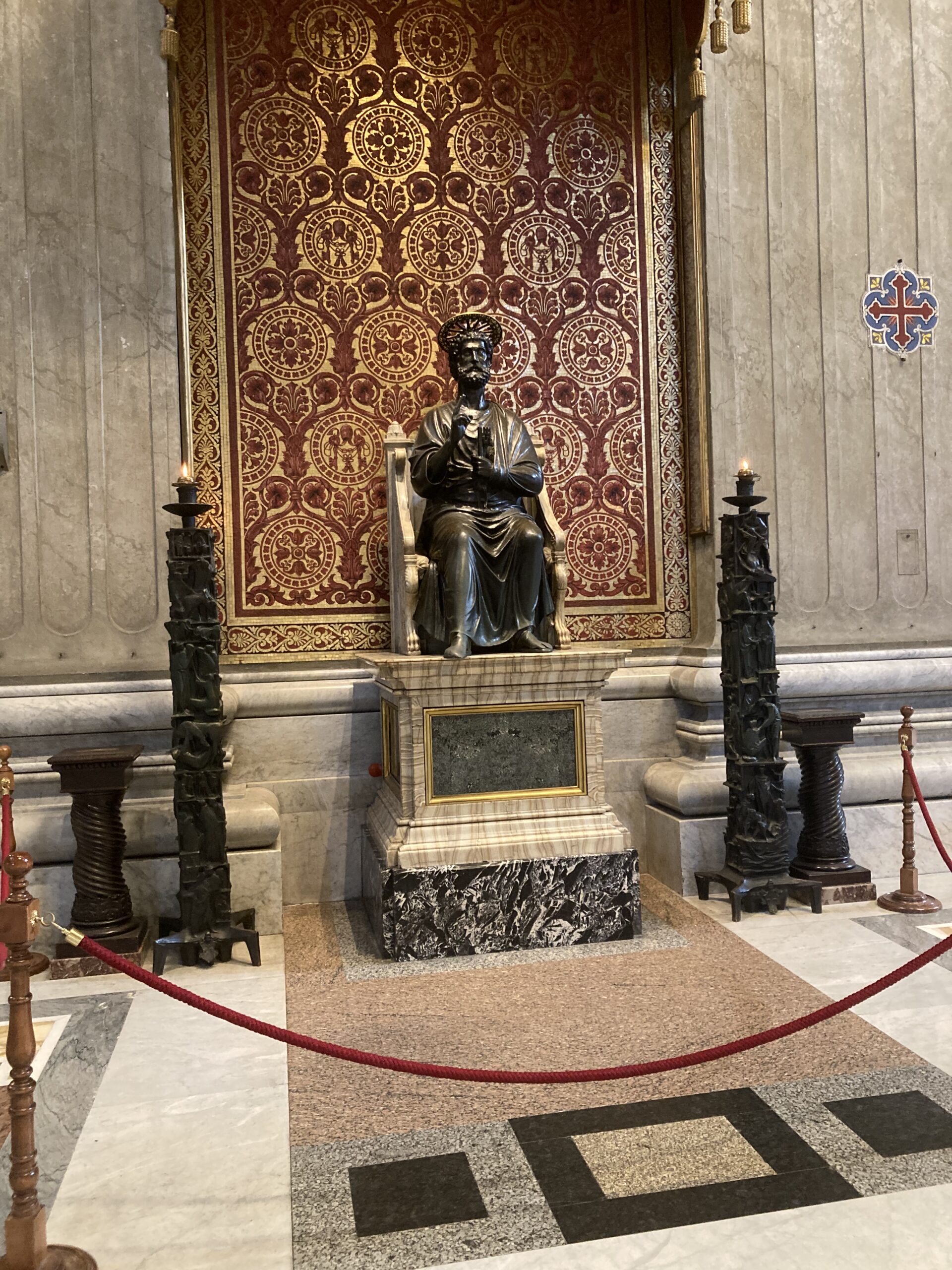
(With John-Henry Westen of LifeSite raising the question of sedevacantism, urging a petition for the cardinals to question the validity of Francis’ and Leo’s papacies, here is a re-post of something I wrote earlier, on why we must tread with great caution in declaring a papacy, or any given pope, null and void. Whatever good[…]Continue reading→

Entropic AI
Entropy may be described as the tendency of all things degrade, to move from order to disorder, from cosmos to chaos, from specificity to entropy. It is the inevitable consequence of any closed system, and encapsulated as the Second Law of Thermodynamics. Any such system – whether that be a machine, a living organism, a[…]Continue reading→
How Do We Know Christ Really Lived?
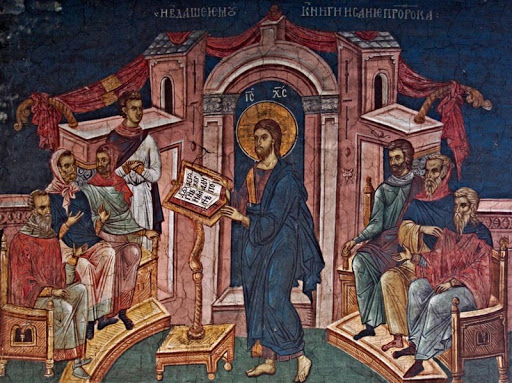
Every now and then we hear in various and sundry places one of the greatest blasphemies of them all: that Jesus never really lived and that the reports of his life and teachings, his death and resurrection, were all made up by unscrupulous men apparently bent on exploiting others for greed and power. At this[…]Continue reading→
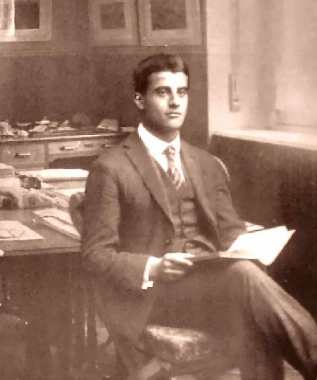
“Verso L ’Alto” – A Meditation on the Hidden Sanctity of Pier Giorgio Frassati
The Italian Alps — that formidable stretch of Europe’s great mountain arc — rise in dramatic splendour above the landscape that so enduringly shaped St. Pier Giorgio Frassati’s life of prayer and adventure. The Australian Alps, sharing the name only in part, resemble their European counterparts more in spirit than in scale. In the former,[…]Continue reading→