
Ideas incarnate
A few weeks ago I began the gargantuan task of liberating my family’s books. They were jailed several years ago when we began traveling full time. Books have to be looked after and, with the house empty ten months out of the year, they just wouldn’t be safe on their own. So we tearfully locked them up in boxes, selecting only two hundred or so of them to come exploring with us.
This year, we expect more frequent visits to the house, so the books are being freed and put back onto shelves. When the rest of my family got home, my mother took over most of the book unpacking, since I have a bad habit of reading every book that I take out of a box. The process was delayed when we had to drive all over two counties trying to find the wood to build a new bookshelf from scratch because somehow, even while packed in boxes, the books had multiplied.
With the new shelf finished, it is time to move on with the unpacking. Each of the two thousand or so books has some sort of history that goes with it. Each one of them is attached to memories about when and where it was read for the first time. Eggbert: the Slightly Cracked Egg was a Christmas present. Little Icicle was the first book that I bought for myself. I broke my arm two chapters into The Return of the King when I was twelve and couldn’t hold the cover open to finish it. Little Women is particularly special because it was the first book that I really, really got into, way back when I was four or five and my mother read it aloud to my sisters and me. There were four of us, and our personalities roughly matched the girls in the story, so it was pretty easy to connect with them.
I especially remember gathering around my mom along with my sisters in the cold of winter, a fire crackling beside us, listening to my mother read Mr. March’s letter to his family. And then I remember that that is absolutely impossible. For one thing, there cannot have been a fire, because we didn’t have a fireplace. It may have been winter, but it might also have been in the summer. We might have been gathered sweetly at our mother’s feet, but it is far more likely that we were sitting on Mom’s lap, or piled on the sofa. The scene that I remember is taken directly from the story and mentally photoshopped into reality.
The fact that my mind has doctored this image into something that only sort of happened is only a little surprising. Memories are notoriously changeable, I was very little, and I was deeply influenced by the book that I was listening to.
Books are powerful things. They have the ability to change the way we think. They tell a story and the story changes the way that we relate to the people around us. It is only natural to identify with the characters in a story, to see the world through their eyes. In reading a book, we open ourselves to new ideas. This can be a very good thing. Reading about the history of the world can help us avoid yesteryear’s mistakes. Reading fairy tales teaches us that dragons can be defeated. Novels help us gain insights into our society.
The movie Inception states over and over again the infectious power of an idea, for good or for evil. Books are ideas incarnate and, sadly, they too have a downside. The author’s thoughts work into the reader’s mind, and those thoughts can be either constructive or destructive. For example, The Lord of the Rings trilogy, by its very nature, acknowledges the existence of a creator without ever mentioning God or religion by name. On the other hand, the characters in Christopher Paolini’s Inheritance series continually bring up the question of whether or not there could be a God or gods or any higher power. Both books tell a good story, both have heroes who defeat metaphorical or literal dragons. And yet, Tolkien’s story is innately constructive, while Paolini’s has a destructive thread woven into it. The difference appears very plainly in the heroes. Frodo never once questions the necessity, validity, or goodness of his quest, even when he doubts it is hobbitly possible. Eragon is bothered by questions and doubts about the validity of his quest throughout the entire series. Good still triumphs, evil still falls, but Frodo and his companions are fighting for the sake of all that is good while Eragon is fighting for the lesser evil.
It would be virtually impossible and fairly senseless to avoid every single book that has a negative aspect. However, it is important to be aware of the effects that even small downsides can have. In C.S. Lewis’s The Voyage of the Dawn Treader, Eustace Clarence Scrubb (who almost deserved his name) is pretty thoroughly described with the simple observation that he only read the wrong books. He is completely unequipped for his first journey in Narnia because he has only read books that assured him that such events were impossible.
In Eustace’s case, reading the wrong books meant he was ill adapted to face Narnia. In real life, reading the wrong books means that we are ill adapted to face Truth. As the world relies more on science than religion, as prince charming is replaced with the ubiquitous jerk, as history becomes more and more subjective, and authors spout politically correct nonsense, books that embrace the age old duty of stories to reflect Truth, Beauty, and Goodness are few and far between. It is easy to accept books that are just good enough. Instead of truth, we get books filled with scientific facts, half truths, amoral or immoral babble, and rewritten history. We accept these substitutes because they are all we can find, but they do not satisfy any hunger for truth.
Books have the ability to suck us in, make us believe in magic, and change the way we look at our lives. They can lift us up, drag us down, fill us with hope, or undermine our faith. Because of the power that books have, it is important to acknowledge that they need to be based in truth, and it is equally important to recognize that many books which contain entertaining, pleasant, and thought-provoking stories fail in this regard.

Saint Kateri , Canada’s Protectress
This was the title given to Saint Kateri Tekakwitha, by Pope Benedict XVI, when he canonized her on October 28th, 2012, along with six others, in Saint Peter’ Square (she had been beatified by Pope John Paul II back in 1980). With Saint Joseph as our protector, along with the Canadian martyrs, we seem to[…]Continue reading→

Remembering Father Alphonse de Valk
(Today marks the sixth anniversary of the death of Father Alphonse de Valk, C.S.B., a faithful, courageous and indefatigable Basilian priest, pro-life-and-family apostle, and the founder of Catholic Insight magazine. Here is what we wrote those on his entering into eternity five years ago, as we continue to remember him in our prayers and thoughts)[…]Continue reading→

My Name is Bernadette
April 16th is a propitious day, for besides the anniversary of Father de Valk’s death, who founded Catholic Insight in its print form decades ago, and the commemoration of the ‘two Benedicts’, mentioned in accompanying posts, today we also recall Saint Bernadette Soubirous, the young visionary to whom the Virgin Mary appeared numerous times at[…]Continue reading→

Canonizing Sister Faustina and Divine Mercy
HOMILY OF THE HOLY FATHER MASS IN ST PETER’S SQUARE FOR THE CANONIZATION OF SR MARY FAUSTINA KOWALSKA Sunday, 30 April 2000 1. “Confitemini Domino quoniam bonus, quoniam in saeculum misericordia eius”; “Give thanks to the Lord for he is good; his steadfast love endures for ever” (Ps 118: 1). So the Church sings on the Octave of[…]Continue reading→

Divine Mercy Sunday – An Echo of Every Mass
Reach out your hand and put it in my side. Do not doubt but believe’… ‘My Lord and my God!’ (Jn. 20:18)). Today is Divine Mercy Sunday, and as we celebrate the end of the Easter Octave, we contemplate the wounded side of our Saviour, the Church’s source of life. On Good Friday in the[…]Continue reading→

First Holy Communion: Sermon from May 16, 1943
Here is a sermon from the good old days by +Rev. Msgr. Vincent Nicholas Foy (August 14, 1915 – March 13, 2017), from 1943. Readers may recall that Pope Saint Pius X, by the decree Quam Singulari in 1910, lowered the customary age of reception of Holy Communion – after the rigours of the plague[…]Continue reading→

In the Glorious Light of Easter, Alleluia!
Set your minds on things that are above, not on things that are on earth, for you have died, and your life is hidden with Christ in God. When Christ who is your life is revealed, then you also will be revealed with him in glory (Col. 3:3-4). The Resurrection of Our Lord and Saviour[…]Continue reading→

An Ancient Homily for Holy Saturday
The time between Good Friday and Easter Sunday is one of waiting, in silence, as the world wonders – anticipates – what will happen, after the death of Christ. We re-live this time each year in the anamnesis of our liturgy, and in turn look forward to the glorious re-creation of all things at the[…]Continue reading→

Europe’s Long Descent
(As we meditate on this day on Christ’s burial, and His descent into hell, it is fitting to ponder here with contributor Peter Marcus how the world seems to be heading there as well. The difference is that, although God cannot ‘redeem’ hell, nor those therein, He can and did redeem the world. There is[…]Continue reading→
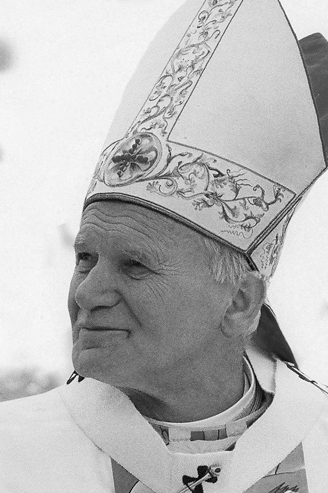
Pope Saint John Paul II’s First Good Friday Homily
ADDRESS OF HIS HOLINESS JOHN PAUL II AT THE CONCLUSION OF THE STATIONS OF THE CROSS AT THE COLOSSEUM Good Friday, 13 April 1979 When we make the Way of the Cross from one station to the next, in spirit we are always at the spot wherethis journey had its “historical” place: where it[…]Continue reading→