
True love
Each year between January and March, my family moves out into the wide world. Some of us go to college, others go to work, and the rest of us fall into the travel plans wherever we might be useful. Then, usually sometime in November, my family returns from our travels across the country and hops back into life as one big happy family in Alabama. My dad and my brother-in-law both work jobs that require a lot of travel in the summer, and then usually work closer to home for winter maintenance. College classes are over, so anyone away at school comes home. Of course, the holidays need attention. Since none of the seven children in my family have actually had justification to find a permanent residence, we all come back to my parents’ house whenever we have nothing else to do. Originally, there were nine of us. My brother-in-law made ten, my niece was number eleven, and this year my nephew brings us up to a full dozen people living in the house.
With a dozen people, certain things are bound to happen. The two bathrooms will be fought over at least five times a day. The laundry is already enough to make everyone exhausted just thinking about it. At this point, a trip with everyone together puts both cars at maximum capacity. Even when the issues of where to put people, things, dirty laundry, and the dog (to whom some people may or may not be allegoric) are momentarily resolved, there are the natural issues that arise when so many people with as many different temperaments are trying to deal with each other. For the next month or two, we will annoy each other, we will fight, we will apologize, we will drive each other crazy, and we will enjoy each other’s company. We will go through this whole ordeal because we love each other.
Literature mirrors life. Everything that occurs in every story ever told or written is somehow a reflection of reality. This is the whole reason to have literature. One of the themes that wind through human history is the search for truth. Of all the truths that humans have searched for, none is more confusing, inspiring, or difficult to explain than love.
In Shakespeare’s As You Like It, Silvius, a shepherd, is asked to tell what love is. He says:
It is to be all made of fantasy,
All made of passion and all made of wishes,
All adoration, duty, and observance,
All humbleness, all patience and impatience,
All purity, all trial, all observance;
As usual, Shakespeare hits the nail right on the head. We fantasize all year long about how great the holidays will be because we get to spend time with our loved ones. We think about how wonderful it will be to see the people that we love most gathered in one place for one celebration. We wish the season would hurry up and arrive. We talk about how much fun we have had in the past because somehow we seem to have forgotten that last year’s holidays were tough enough to inspire a creative writing assignment on how to deal with difficult holidays. We experience a sense of duty as the novelty of having so much family in one place begins to wear off, and yet we continue to follow the rules of dealing with family members.
Shakespeare does a good job of describing the effects of love from the overwhelming happiness to the focus on the less pleasant aspects—trials and impatience. However, Shakespeare’s description looks primarily at the superficial effects, which makes sense, considering that the characters in the play are slightly shallow, falling in and out of love at the drop of a hat. He describes the way that being in love makes a person feel, but he does not move beyond that.
Because Shakespeare’s description is based on feelings it is a reflection of the fact that people rely heavily on emotion when the topic at hand is love. Feelings or emotions, according to the Catechism of the Catholic Church, “are natural components of the human psyche; they form the passageway and ensure the connection between the life of the senses and the life of the mind” (1764). It goes on to say that “By his emotions, man intuits the good and suspects evil” (1771). Because of this, we are attracted to everything that is good in the person that we love, and we are repulsed by all that is evil in them. We dream about the goodness, and we are tried and made impatient by what we consider evil. This explains very well why it is so easy to remember how much fun family gatherings are when we are apart.
It is true that families cannot operate with only the sort of love that Shakespeare’s Silvius describes. True love is made of sterner stuff than human emotions would have us believe, and families require the presence of love that is strong enough to inspire the members to make sacrifices. Rising to meet the challenges of dealing with loved ones is what makes family gathering interesting. So while Shakespeare’s description of love may be superficial and based only on feelings, it also reveals a deeper truer love. Knowing full well all of the complications that are absolutely sure to rain down on us the minute that we walk through the door, all of my family members do, in fact, come home, and we go through the whole ordeal just because we love each other.

Saint Kateri , Canada’s Protectress
This was the title given to Saint Kateri Tekakwitha, by Pope Benedict XVI, when he canonized her on October 28th, 2012, along with six others, in Saint Peter’ Square (she had been beatified by Pope John Paul II back in 1980). With Saint Joseph as our protector, along with the Canadian martyrs, we seem to[…]Continue reading→

Remembering Father Alphonse de Valk
(Today marks the sixth anniversary of the death of Father Alphonse de Valk, C.S.B., a faithful, courageous and indefatigable Basilian priest, pro-life-and-family apostle, and the founder of Catholic Insight magazine. Here is what we wrote those on his entering into eternity five years ago, as we continue to remember him in our prayers and thoughts)[…]Continue reading→

My Name is Bernadette
April 16th is a propitious day, for besides the anniversary of Father de Valk’s death, who founded Catholic Insight in its print form decades ago, and the commemoration of the ‘two Benedicts’, mentioned in accompanying posts, today we also recall Saint Bernadette Soubirous, the young visionary to whom the Virgin Mary appeared numerous times at[…]Continue reading→

Canonizing Sister Faustina and Divine Mercy
HOMILY OF THE HOLY FATHER MASS IN ST PETER’S SQUARE FOR THE CANONIZATION OF SR MARY FAUSTINA KOWALSKA Sunday, 30 April 2000 1. “Confitemini Domino quoniam bonus, quoniam in saeculum misericordia eius”; “Give thanks to the Lord for he is good; his steadfast love endures for ever” (Ps 118: 1). So the Church sings on the Octave of[…]Continue reading→

Divine Mercy Sunday – An Echo of Every Mass
Reach out your hand and put it in my side. Do not doubt but believe’… ‘My Lord and my God!’ (Jn. 20:18)). Today is Divine Mercy Sunday, and as we celebrate the end of the Easter Octave, we contemplate the wounded side of our Saviour, the Church’s source of life. On Good Friday in the[…]Continue reading→
First Holy Communion: Sermon from May 16, 1943
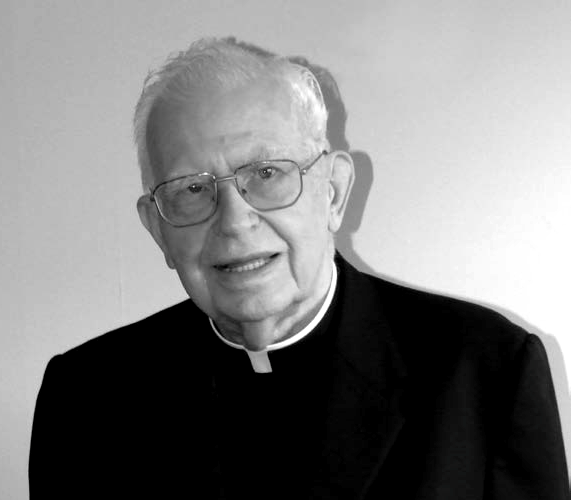
Here is a sermon from the good old days by +Rev. Msgr. Vincent Nicholas Foy (August 14, 1915 – March 13, 2017), from 1943. Readers may recall that Pope Saint Pius X, by the decree Quam Singulari in 1910, lowered the customary age of reception of Holy Communion – after the rigours of the plague[…]Continue reading→
In the Glorious Light of Easter, Alleluia!
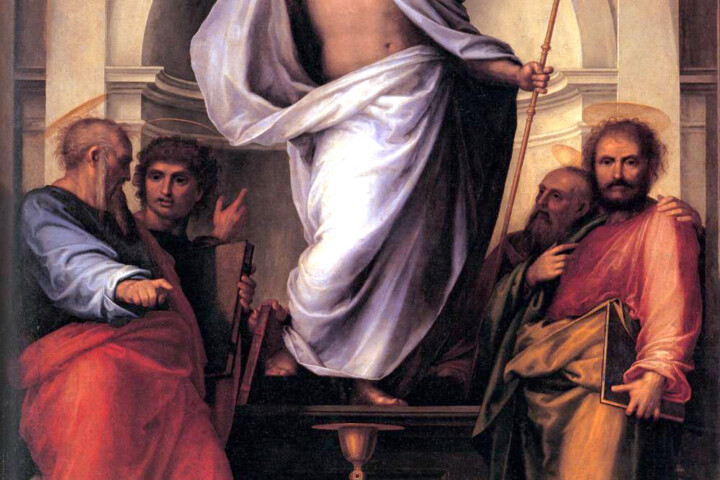
Set your minds on things that are above, not on things that are on earth, for you have died, and your life is hidden with Christ in God. When Christ who is your life is revealed, then you also will be revealed with him in glory (Col. 3:3-4). The Resurrection of Our Lord and Saviour[…]Continue reading→
An Ancient Homily for Holy Saturday
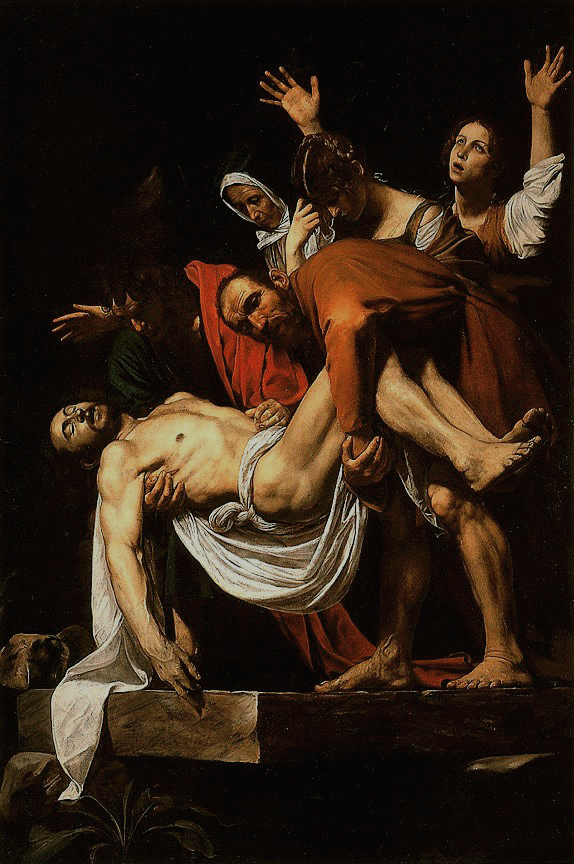
The time between Good Friday and Easter Sunday is one of waiting, in silence, as the world wonders – anticipates – what will happen, after the death of Christ. We re-live this time each year in the anamnesis of our liturgy, and in turn look forward to the glorious re-creation of all things at the[…]Continue reading→
Europe’s Long Descent
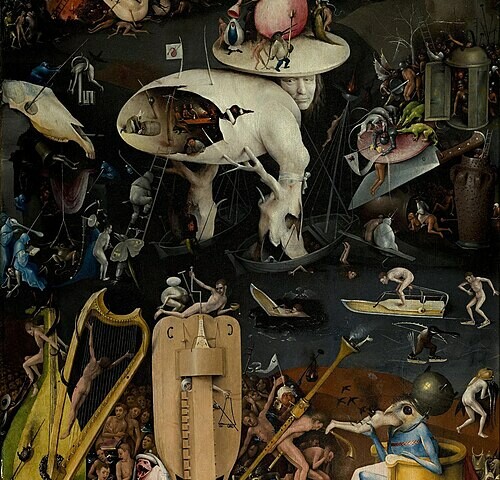
(As we meditate on this day on Christ’s burial, and His descent into hell, it is fitting to ponder here with contributor Peter Marcus how the world seems to be heading there as well. The difference is that, although God cannot ‘redeem’ hell, nor those therein, He can and did redeem the world. There is[…]Continue reading→
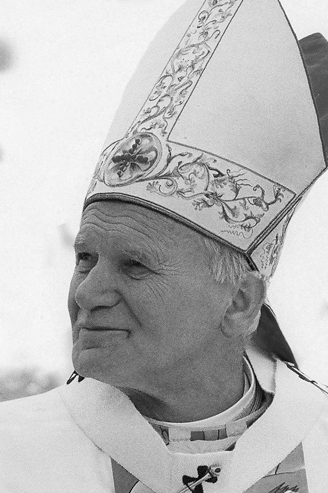
Pope Saint John Paul II’s First Good Friday Homily
ADDRESS OF HIS HOLINESS JOHN PAUL II AT THE CONCLUSION OF THE STATIONS OF THE CROSS AT THE COLOSSEUM Good Friday, 13 April 1979 When we make the Way of the Cross from one station to the next, in spirit we are always at the spot wherethis journey had its “historical” place: where it[…]Continue reading→