
A call to arms
In this battle over what is best for our failing economy and whether we are going to find another job or make ends meet, we have forgotten something so vital that our Founding Fathers are currently rolling in their graves. We have forgotten that our freedoms are not free hand-me-downs that, once implemented, are untouchable—we have forgotten that our freedoms are living principles that must be fought for and protected—kept safe from those who would rather see us slaves to them and to ourselves and our passions.
We’ve forgotten what our country stands for and what we must do to keep it alive. The Puritans arrived in the American colonies for one reason: to live and propagate their faith away from the oppressive rule of the English monarchy. The Puritans coined the phrase “Beacon on a Hill”—a phrase that has been repeated over the course of our 270 year history, from the American Revolutionary times right through to Ronald Reagan and George W. Bush. Those four words embody the sometimes obnoxious quality Americans have of believing we are meant to spread our ideals and Constitutional freedoms to every corner of the globe—but more than this, that we deeply and profoundly believe that we do—or did—have it right.
The American Revolution was fought on the fundamental position that we should rule ourselves—that we should be able to run our own government, a government of the people, by the people, for the people. With this in mind, the colonists set out to build a set of rules that was new and original, while drawing from ancient Roman principles and Enlightenment writers such as Hume and Thomas Paine. What resulted was the American Constitution: a collection of laws, amendments, and principles that have created a world super power from a country that is, in its essence, free.
This position was not attained by lukewarm individuals who took their freedoms and liberties for granted. American freedom has been achieved not by peace, but by blood, war, strife, fighting, battles, and victories. Why?
Because freedom is not free.
The universal cry of “I can’t wait for the election to be over!” is a testament to just how apathetic we are becoming. Yes, people still fight and care, but underlying that statement is the truth that we are sick and tired of being imposed upon by political ads and media coverage of the same topic. Can’t we just go back to car ads and online dating commercials? They take so much less effort. Even I am partly guilty of this. The fact of the matter is these same people are eventually going to start saying, “Does it really matter? It doesn’t really affect me.” On the contrary—even when you say you aren’t taking a stand, that is taking a stand.
Fight against the tendency to long for the end of the elections—because it makes you weak, apathetic, and narcissistic. One of these days, we’ll have reached a point where we don’t have any rights, and we’ll long for the freedom to raise our arms and take back the government for ourselves. But we won’t be able to: we allowed the Patriot Act to pass, an act which violates our Constitutional right to privacy. Then we allowed the HHS Mandate to pass, and it violates our Constitutional right to religious freedom. We passed the Patriot Act because we were afraid and the HHS mandate because we don’t want to be accountable for our own choices and behavior.
Patrick Henry said, “Give me liberty or give me death.” Benjamin Franklin said, “Those who would give up essential liberty to purchase a little temporary safety deserve neither liberty nor safety.” The Massachusetts state motto is, “By the sword we seek peace, but peace only under liberty.” The fact of the matter is, we must rather die than give up our rights to freedom of speech, of religion, of privacy, to bear arms, to fair trial, to a jury, to a lawyer. If we give in to an overbearing government who says we need to give up our right to privacy to keep ourselves safe, then we don’t deserve to have our freedoms: and in the end, the government is just going to keep chipping away our rights little by little until we have none left anyway.
Because we’ve somehow reasoned ourselves into believing that contraception should be free, we’re allowing our government to force religious institutions to violate their own principles and pay for it. In other words, we just voted our religious freedoms and rights away. Today it’s the rights of Catholics; tomorrow it’s going to be the Protestants, Jews, and so on. The idea that our government is forcing a religious institution to violate its own principles is monumental. Don’t let the rhetoric of women’s health and women’s rights whitewash the real issue here. Even if you are for contraception and birth control, the fight isn’t about that: it’s about government intrusion into not only a private institution, but a religious one.
Where has our passion gone? Where has our fight for justice, honesty, and independency gone? Have we really allowed ourselves to be lulled into a false sense of security and comfort—so much so that we’re allowing our government to seep into every facet and corner of our life? Government intrusion is the very thing our Founding Fathers fought against. And here we are, voting ourselves into it. We want the government to pay for everything: our education, our health care, our birth control. We want the government to fight crime and dishonesty, but we don’t want to fight it ourselves; we want the government to take control of our guns because guns kill people, not the person wielding the weapon. We no longer have a unifying vision of justice and freedom for all, because we’re too busy narcissistically attending to our own lives.
Fighting for our rights is an exhausting, constant battle, and we can’t take a break, even for a moment. The soldiers on the battlefield of the American Revolution, the soldiers on the battlefields of WWII—they didn’t get a break. Why should we, cocooned in our cushy homes and our cushy lives? Now is the time to fight–now, when we have the means. One of these days, it’s going to be too late.
It’s a hell of a world out there. – CB

Saint Kateri , Canada’s Protectress
This was the title given to Saint Kateri Tekakwitha, by Pope Benedict XVI, when he canonized her on October 28th, 2012, along with six others, in Saint Peter’ Square (she had been beatified by Pope John Paul II back in 1980). With Saint Joseph as our protector, along with the Canadian martyrs, we seem to[…]Continue reading→

Remembering Father Alphonse de Valk
(Today marks the sixth anniversary of the death of Father Alphonse de Valk, C.S.B., a faithful, courageous and indefatigable Basilian priest, pro-life-and-family apostle, and the founder of Catholic Insight magazine. Here is what we wrote those on his entering into eternity five years ago, as we continue to remember him in our prayers and thoughts)[…]Continue reading→

My Name is Bernadette
April 16th is a propitious day, for besides the anniversary of Father de Valk’s death, who founded Catholic Insight in its print form decades ago, and the commemoration of the ‘two Benedicts’, mentioned in accompanying posts, today we also recall Saint Bernadette Soubirous, the young visionary to whom the Virgin Mary appeared numerous times at[…]Continue reading→

Canonizing Sister Faustina and Divine Mercy
HOMILY OF THE HOLY FATHER MASS IN ST PETER’S SQUARE FOR THE CANONIZATION OF SR MARY FAUSTINA KOWALSKA Sunday, 30 April 2000 1. “Confitemini Domino quoniam bonus, quoniam in saeculum misericordia eius”; “Give thanks to the Lord for he is good; his steadfast love endures for ever” (Ps 118: 1). So the Church sings on the Octave of[…]Continue reading→
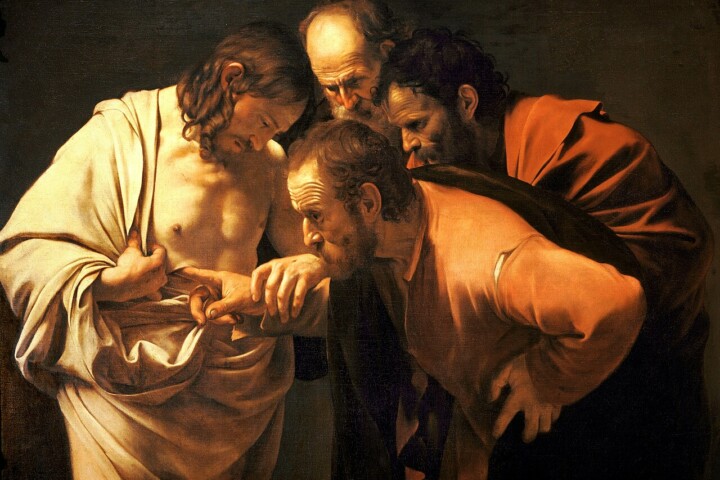
Divine Mercy Sunday – An Echo of Every Mass
Reach out your hand and put it in my side. Do not doubt but believe’… ‘My Lord and my God!’ (Jn. 20:18)). Today is Divine Mercy Sunday, and as we celebrate the end of the Easter Octave, we contemplate the wounded side of our Saviour, the Church’s source of life. On Good Friday in the[…]Continue reading→
First Holy Communion: Sermon from May 16, 1943
Here is a sermon from the good old days by +Rev. Msgr. Vincent Nicholas Foy (August 14, 1915 – March 13, 2017), from 1943. Readers may recall that Pope Saint Pius X, by the decree Quam Singulari in 1910, lowered the customary age of reception of Holy Communion – after the rigours of the plague[…]Continue reading→
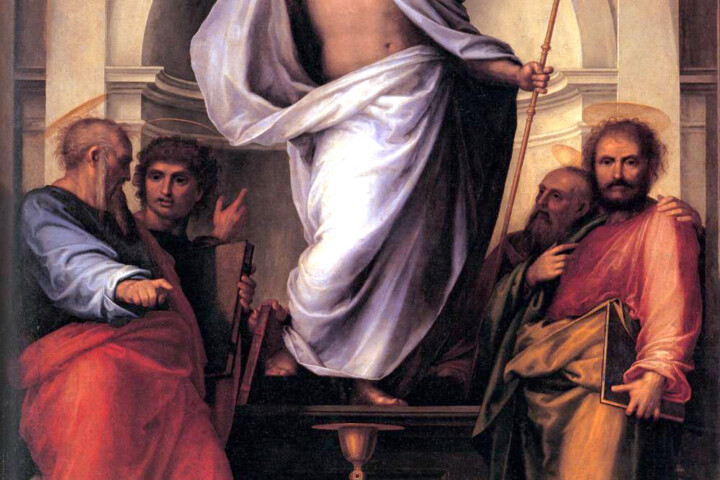
In the Glorious Light of Easter, Alleluia!
Set your minds on things that are above, not on things that are on earth, for you have died, and your life is hidden with Christ in God. When Christ who is your life is revealed, then you also will be revealed with him in glory (Col. 3:3-4). The Resurrection of Our Lord and Saviour[…]Continue reading→
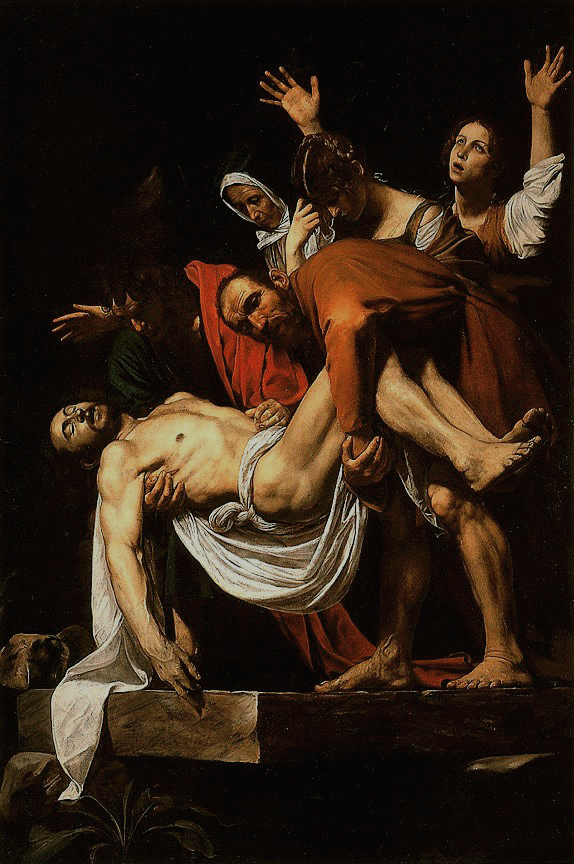
An Ancient Homily for Holy Saturday
The time between Good Friday and Easter Sunday is one of waiting, in silence, as the world wonders – anticipates – what will happen, after the death of Christ. We re-live this time each year in the anamnesis of our liturgy, and in turn look forward to the glorious re-creation of all things at the[…]Continue reading→
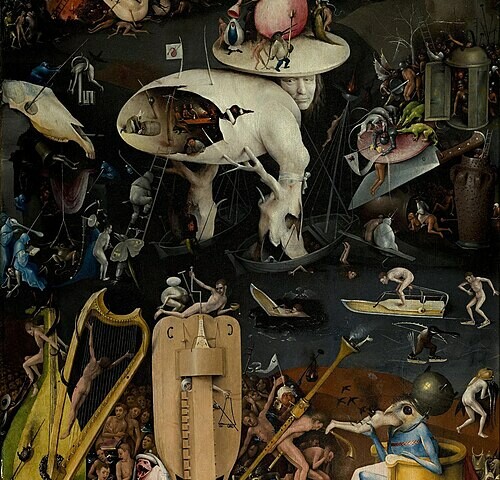
Europe’s Long Descent
(As we meditate on this day on Christ’s burial, and His descent into hell, it is fitting to ponder here with contributor Peter Marcus how the world seems to be heading there as well. The difference is that, although God cannot ‘redeem’ hell, nor those therein, He can and did redeem the world. There is[…]Continue reading→
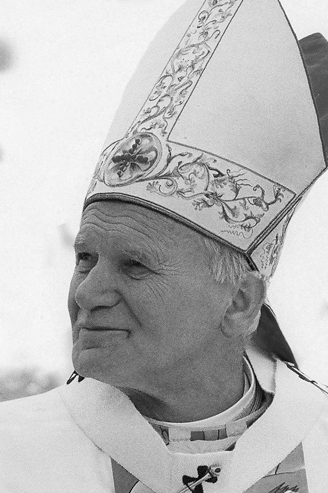
Pope Saint John Paul II’s First Good Friday Homily
ADDRESS OF HIS HOLINESS JOHN PAUL II AT THE CONCLUSION OF THE STATIONS OF THE CROSS AT THE COLOSSEUM Good Friday, 13 April 1979 When we make the Way of the Cross from one station to the next, in spirit we are always at the spot wherethis journey had its “historical” place: where it[…]Continue reading→