
Andre and Joseph
Our October 2012 cover artist, Annalicia DiLollo, has lived in Europe, Canada, and the US; currently she is attending The Institute for the Psychological Sciences in Northern Virginia, just outside of Washington, D.C. In addition to painting she enjoys reading, writing, horseback riding, hiking, sailing, and spending time with friends.
When did you start painting?
I always drew when I was little and I suppose I painted with kid paints. But then my first oil painting experience was my family was on vacation down in Spring Lake, NJ, and we were staying in this beautiful Victorian mansion, and it had a finished garage which was basically like a second house because the woman who owned it was crazy rich, and so we set up a little art studio in the top floor of the garage and my dad is an artist and an oil painter. So he gave my sister and I lessons and I think that I was nine or ten and she was five or six. So we painted a couple paintings up there during the week we were on vacation, and it was awesome. And I did some acrylics after that at different art camps and stuff, but I never really liked acrylics after having worked with oils with my dad.
So you learned a lot from your dad. Who or what else did you learn from?
I went to a couple of summer camps, but I was always the oldest kid there so I invariably ended up being the teacher’s assistant. So mostly it was my dad and my neighbour down the street, Mary [Costa]. She is a professional painter and she has fantastic work. Her painting name is her maiden name, Mary Zink. If you want to look her up, you can probably find some of her stuff—it’s super cool.
She worked with oils?
Yes.
How often did you go to learn from her?
I went, I think, one summer, when I spent a lot of time with her. And she was great. She taught me a lot in a short period of time.
You’ve already said when you started painting. Why did you continue painting? What draws you to it?
I think everybody has some mode of artistic expression. For a lot of people these days it seems like it’s dancing, or singing, or playing instruments, that kind of stuff—I have no talent in that direction at all whatsoever. So I paint. I write too, but mostly I paint.
Kind of like a therapeutic practice?
Yeah. It’s kind of what I do to relax and if I have any kind of deep emotions going on that I can’t really put into words, then they come out in the paint. A lot of times that’s how I love people, because I’m poor, so I can’t buy them presents so I’ll paint them a picture instead.
What do you do with your pieces? Are they ever shown? Are they for sale?
I’ve never done a show. I’m not really a showy person. I don’t like to flaunt stuff, and I hate being the centre of attention so none of that is really an option. I don’t sell it. Mostly I paint for me and I paint for friends, so I either paint because I want it and it means something to me or I paint because my friends want it and it means something to them. So I just give it to them.
I think that’s beautiful. And introducing the idea of beauty, how would you define beauty?
Well, let’s see. First of all, beauty is a transcendental, so it always goes together with truth and goodness. That, I think, is a really difficult thing for people to understand today because there are so many real things about the world that are very ugly. But the reason why those real things are ugly is because they’re not formed from truth. So the great thing about art that has been lost lately is that it has the option of bringing out what is beautiful in an ugly world. So there’s a lot of modern art that actually is beautiful, you just have to know how to look at it to see it that way. So you kind of need the artist to explain what’s going on, and if they’re not there it just looks confusing. But I have no talent for the abstract, so my stuff tends to be more towards impressionism and realism. For me, the most fantastic thing about painting is the colours. I like really deep, rich, vibrant colours because God painted the world in colours and that’s the way you’re supposed to see it.
A follow-up question to that: you’re saying abstract isn’t really your method—how important do you think form is to art?
I think form is very important. And I think once you have mastered form then you can break away from it into the abstract if you are so inclined. I think people who start with the abstract and have no sense of what really is behind it—they’re just shooting paintballs at their canvas. I don’t mean that you necessarily have to replicate something for years and years and then move into the abstract, but you have to have some sort of understanding of the reality of what it is you’re trying to portray. Because if you don’t have an understanding of the form, then your audience is never going to have any idea of what’s going on. So form is important but it’s kind of foundational. You don’t have to stay there. There comes a point where you can’t stay with the form. If you’re trying to portray something that is a powerful truth, but not one found in concrete reality, like an emotion: joy, or sorrow, or love, or hatred, or anything like that is not the same as an apple. You can’t necessarily do a particularly realistic painting of that.
What is the purpose of art?
This is a fun one. There kind of isn’t a purpose, which makes art a spiritual exercise rather than a temporal one. Animals, and insects, and all the rest of creation, which is fantastic and complicated and ingenious in the way the bees build their hives or whatever they do, it’s all great but none of it is art. You know the saying, “art for art’s sake.” Art really is for art’s sake, and I think people are creative artistically which could be drawing, painting, sculpting, architecture, music, dancing—all that kind of stuff is in imitation of God’s creation, which serves no purpose other than enjoyment and the need to express yourself in love in a way that other people can appreciate, if you’re really good, for hundreds of years. Which is the same reason God created the world in the first place: He needed to express himself in love and share that, not because he needed any of his creation for his own self, but just because he needed to overflow his love.
So art, in a way, is an overflowing of love?
It could be. Which I think is part of why a lot of modern art is so sad. Satan wants to twist and corrupt everything that is good and so a lot of art in the last hundred or so years has been born from a place of hatred and misery instead of love and joy. Which is just terrible.
My last question, which is in two parts, is who inspires you and what inspires you?
First we’ll go with what artists inspired me. The dead ones I particularly love are Monet and Rembrandt. There are a lot of others but those are the two big ones. A living one is Leonid Afremov. His stuff is just unbelievable and he has an incredible capacity for colour, light, and shadow.
From a philosophical standpoint, it depends. I couldn’t say that there was any one source, but there are definitely things that hit me with an image when I hear them or read them. So sometimes it’ll be something that I’m reading from Plato, or Kierkegaard, or Chesterton, or in scripture; other times it’ll be a song on the radio that I’ve heard a hundred times and then one day some line pops out at me and I’m like, “Oh my gosh, that is a great image!” There have been a few times where I’ve been hanging out with friends and a particular moment has stuck with me and I’ve painted that. It depends. Sometimes there’s a thought or memory that is just being a pest and you paint it and it goes away.
Do you have any other thoughts about art or painting or your love of them that I haven’t covered?
I think you’ve covered an awful lot of it.
And you’ve been amazing!
Aw, thanks. Art is great. It makes me sad when I have friends that paint that aren’t painting for whatever reason and it makes me really happy when they start up again. Painting specifically is something you usually do by yourself. It’s not a group effort. So it might seem kind of isolationist to people who don’t do it, but there’s nothing more exciting than sharing your art with your friends and seeing what they’ve done recently. I have a couple of other friends who paint and we’re always sending picture messages back and forth—“Look what I did now!” It just makes my day when somebody sends me a new picture that they painted.

Saint Kateri , Canada’s Protectress
This was the title given to Saint Kateri Tekakwitha, by Pope Benedict XVI, when he canonized her on October 28th, 2012, along with six others, in Saint Peter’ Square (she had been beatified by Pope John Paul II back in 1980). With Saint Joseph as our protector, along with the Canadian martyrs, we seem to[…]Continue reading→

Remembering Father Alphonse de Valk
(Today marks the sixth anniversary of the death of Father Alphonse de Valk, C.S.B., a faithful, courageous and indefatigable Basilian priest, pro-life-and-family apostle, and the founder of Catholic Insight magazine. Here is what we wrote those on his entering into eternity five years ago, as we continue to remember him in our prayers and thoughts)[…]Continue reading→

My Name is Bernadette
April 16th is a propitious day, for besides the anniversary of Father de Valk’s death, who founded Catholic Insight in its print form decades ago, and the commemoration of the ‘two Benedicts’, mentioned in accompanying posts, today we also recall Saint Bernadette Soubirous, the young visionary to whom the Virgin Mary appeared numerous times at[…]Continue reading→

Canonizing Sister Faustina and Divine Mercy
HOMILY OF THE HOLY FATHER MASS IN ST PETER’S SQUARE FOR THE CANONIZATION OF SR MARY FAUSTINA KOWALSKA Sunday, 30 April 2000 1. “Confitemini Domino quoniam bonus, quoniam in saeculum misericordia eius”; “Give thanks to the Lord for he is good; his steadfast love endures for ever” (Ps 118: 1). So the Church sings on the Octave of[…]Continue reading→

Divine Mercy Sunday – An Echo of Every Mass
Reach out your hand and put it in my side. Do not doubt but believe’… ‘My Lord and my God!’ (Jn. 20:18)). Today is Divine Mercy Sunday, and as we celebrate the end of the Easter Octave, we contemplate the wounded side of our Saviour, the Church’s source of life. On Good Friday in the[…]Continue reading→
First Holy Communion: Sermon from May 16, 1943
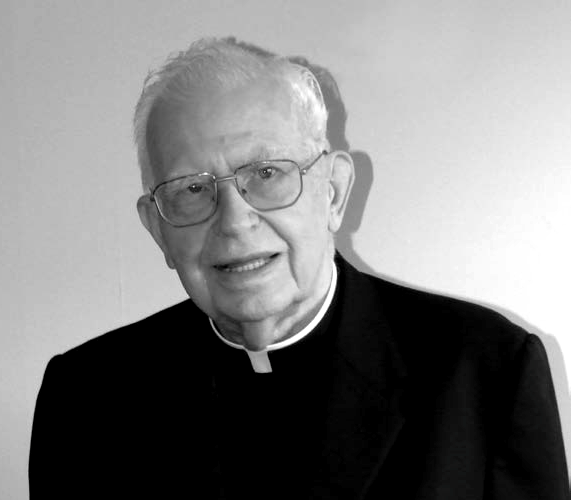
Here is a sermon from the good old days by +Rev. Msgr. Vincent Nicholas Foy (August 14, 1915 – March 13, 2017), from 1943. Readers may recall that Pope Saint Pius X, by the decree Quam Singulari in 1910, lowered the customary age of reception of Holy Communion – after the rigours of the plague[…]Continue reading→
In the Glorious Light of Easter, Alleluia!
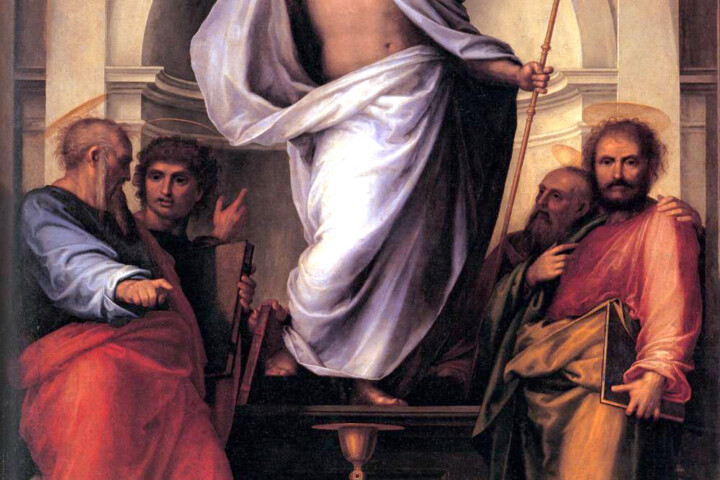
Set your minds on things that are above, not on things that are on earth, for you have died, and your life is hidden with Christ in God. When Christ who is your life is revealed, then you also will be revealed with him in glory (Col. 3:3-4). The Resurrection of Our Lord and Saviour[…]Continue reading→
An Ancient Homily for Holy Saturday
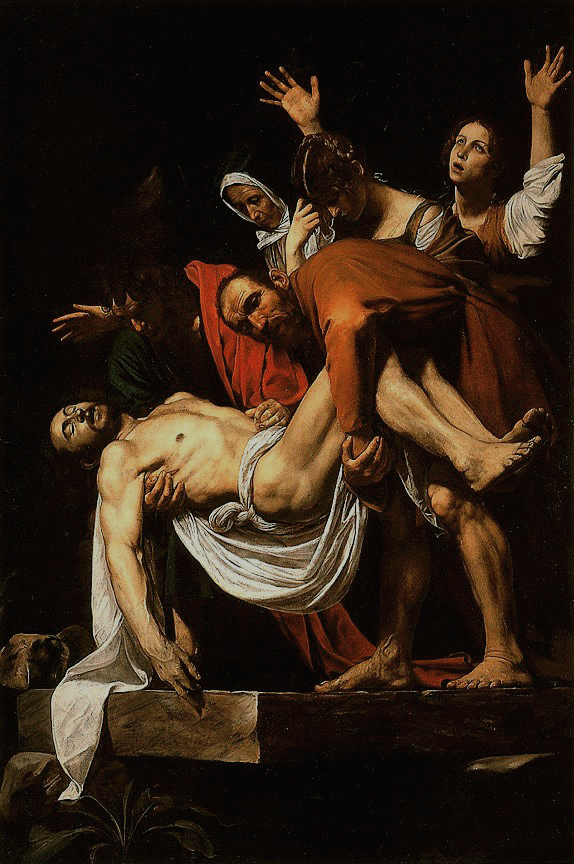
The time between Good Friday and Easter Sunday is one of waiting, in silence, as the world wonders – anticipates – what will happen, after the death of Christ. We re-live this time each year in the anamnesis of our liturgy, and in turn look forward to the glorious re-creation of all things at the[…]Continue reading→
Europe’s Long Descent
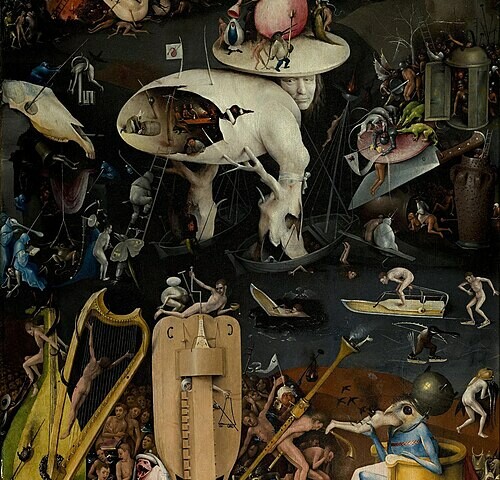
(As we meditate on this day on Christ’s burial, and His descent into hell, it is fitting to ponder here with contributor Peter Marcus how the world seems to be heading there as well. The difference is that, although God cannot ‘redeem’ hell, nor those therein, He can and did redeem the world. There is[…]Continue reading→
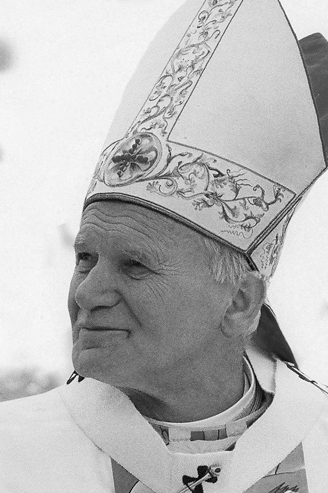
Pope Saint John Paul II’s First Good Friday Homily
ADDRESS OF HIS HOLINESS JOHN PAUL II AT THE CONCLUSION OF THE STATIONS OF THE CROSS AT THE COLOSSEUM Good Friday, 13 April 1979 When we make the Way of the Cross from one station to the next, in spirit we are always at the spot wherethis journey had its “historical” place: where it[…]Continue reading→