

Silence and the Clericalism of Fr. Rodrigues
Father Scott Murray
Scorsese’s film adaptation of Shusaku Endo’s Silence is true to the original. In fact, I don’t believe I have ever seen a movie that so closely follows its source. There are, of course, small changes and not all of Fr. Rodrigues’ interior monologues and narrations make their way into the film, but the plot is unchanged and nearly all of the novel’s dialogues are present. For me, having read the novel more than once, this fidelity to the text was a virtue; however, as I’ve read in a number of reviews and witnessed in the grumblings of some fellow spectators at the cinema, for those who have not read the book the movie may be tedious and difficult to follow. That said, it remains a beautifully crafted film, with breathtaking cinematography and phenomenal acting. For an excellent summary of the film, read Silence: Scorcese’s Spiritual Masterpiece by William Doino Jr.
For my part, I will focus on the “clericalism” of Frs. Rodrigues and Ferreira and how it leads to their apostasy.
To what type of clericalism am I referring? The type that says, ‘Only priests are really called to holiness and total self-sacrifice.’ ‘The poor common folk can’t be expected to live the full Gospel message, so we’ll make concessions for them that we wouldn’t make for ourselves.’ Of course, Rodrigues does not articulate this clericalism so bluntly. No cleric would. It is expressed more subtly in various ways throughout the drama.
Following the interpreter’s first meeting with Rodrigues in prison, he says to the guard as he is leaving, “He is arrogant, and so he will apostatize.” The interpreter and the inquisitor, Inoue, exploit the arrogance of Rodrigues. They even use Ferreira, who fell to the same tactics many years earlier, as a puppet to convince Rodrigues that he is responsible for the suffering of these people and only he can end that suffering. ‘They are his people, he must save them, and it is because of him that they are suffering.’ They say that the peasants aren’t intelligent enough to really understand Christian doctrine, and thus they cannot have true faith in God.
These arguments, and there are many, cultivate the seed in Rodrigues’ mind that the Japanese peasants are simply pawns – fools given a fool’s hope of life beyond the miseries of 17th century Japanese feudalism. That’s it. The actors portraying the interrogators are so convincing in their roles that I found myself, despite being fully aware of the lies, quite fond of their characters and sympathetic to their cause. That was, perhaps, the most unsettling aspect of the film for me. They are not only trying to convince Rodrigues, but also the viewer, that the Church was wrong to send missionaries to Japan in the first place; i.e., Rodrigues is responsible for the suffering and death of a few Japanese, but the Church is responsible for the suffering and death of thousands of Japanese. The result is a sense of guilt for bringing Christ to the Japanese. This deception is insidious, but it takes root in the mind of Rodrigues.
The other side of Rodrigues’ clericalism is that, in addition to demeaning the faith and fortitude of the Japanese, it also denies the true power and goodness of God. At various points in the story God is accused of being silent, which provides the film’s title theme. Despite all that is happening to His people, God does not intervene. He does not ‘save’ them from the persecution. People die, the waves continue to beat against the shore, the cicadas continue to sing, and God remains silent! Rodrigues expects something from God that he does not receive. He wants to be the one to suffer and die for his faith and for the Japanese Christians. They are not supposed to suffer in this way, and so the question slowly grows in Rodrigues’ mind that perhaps God has abandoned them or that He may not even exist.
Why doesn’t God save the Japanese Christians? Is it because He’s not there? Of course, the answer is that God does save those who remain faithful, but He does not do so in the way that the shortsighted worldly mind wants Him to.
Why, then, doesn’t God speak to His people in the midst of these sufferings to console them? But he does speak to them. He sent them the Gospel and the Sacraments. Numerous times the words of Scripture enter the mind of Rodrigues. Is that not God speaking to him? St. Ambrose said, “We address Him when we pray, we hear Him when we read the Sacred oracles of God” (De officiis ministrorum 1, 20, 88). He also speaks through the Christians supporting each other in their words and actions. It is only in his despair that Rodriques is unable to hear God, because he has stopped listening.
It is, then, Rodrigues’ clericalism – his arrogance as the interpreter asserts – that leads him to apostatize. He is not physically tortured. He admits that his life in prison is physically much more comfortable than the life he had been living while serving the peasants of Tomogi. He says that he felt more like a priest while ministering to his fellow prisoners than at any other point during his time in Japan. And yet, at the climax of the story, when the fumie is placed at his feet, he tramples. He could not trust that God would preserve those who were suffering because of His Name. Rodrigues had to save them.
However, before Rodrigues trampled on the fumie, he heard the bronze face of Christ speak to him, “Trample! Trample! I more than anyone know of the pain in your foot. Trample! It was to be trampled upon by man that I was born into this world. It was to share men’s pain that I carried my cross.” The text continues, “The priest placed his foot on the fumie. Dawn broke. And far in the distance the cock crew” (p. 271). Maybe Endo does mean to say that Jesus tells Rodrigues to apostatize. That interpretation, however, clearly cannot be reconciled with orthodox theology, as explained in Apostasy in Shusaku Endo’s Silence by John Paul Meenan. I think, given the argument I’ve presented and the subsequent role that Rodrigues plays in persecuting the remaining Japanese Christians, the command to “trample” can only be attributed to a rationalizing mind, Satan, or both. As he did in the garden, Satan twists the truth to bring about man’s fall. He promised Adam and Eve that they would be like God, and he promises Rodrigues that he will end the suffering. Both are promises that God, too, had made, but He intended to fulfill them in His own way.
Father Scott Murray, a graduate of the Pontifical Lateran University’s Accademia Alfonsiana in Rome, is Parochial Vicar of Our Lady of Lourdes Parish in Pembroke, ON.

Saint Kateri , Canada’s Protectress
This was the title given to Saint Kateri Tekakwitha, by Pope Benedict XVI, when he canonized her on October 28th, 2012, along with six others, in Saint Peter’ Square (she had been beatified by Pope John Paul II back in 1980). With Saint Joseph as our protector, along with the Canadian martyrs, we seem to[…]Continue reading→

Remembering Father Alphonse de Valk
(Today marks the sixth anniversary of the death of Father Alphonse de Valk, C.S.B., a faithful, courageous and indefatigable Basilian priest, pro-life-and-family apostle, and the founder of Catholic Insight magazine. Here is what we wrote those on his entering into eternity five years ago, as we continue to remember him in our prayers and thoughts)[…]Continue reading→

My Name is Bernadette
April 16th is a propitious day, for besides the anniversary of Father de Valk’s death, who founded Catholic Insight in its print form decades ago, and the commemoration of the ‘two Benedicts’, mentioned in accompanying posts, today we also recall Saint Bernadette Soubirous, the young visionary to whom the Virgin Mary appeared numerous times at[…]Continue reading→
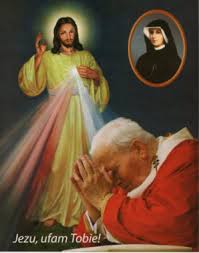
Canonizing Sister Faustina and Divine Mercy
HOMILY OF THE HOLY FATHER MASS IN ST PETER’S SQUARE FOR THE CANONIZATION OF SR MARY FAUSTINA KOWALSKA Sunday, 30 April 2000 1. “Confitemini Domino quoniam bonus, quoniam in saeculum misericordia eius”; “Give thanks to the Lord for he is good; his steadfast love endures for ever” (Ps 118: 1). So the Church sings on the Octave of[…]Continue reading→

Divine Mercy Sunday – An Echo of Every Mass
Reach out your hand and put it in my side. Do not doubt but believe’… ‘My Lord and my God!’ (Jn. 20:18)). Today is Divine Mercy Sunday, and as we celebrate the end of the Easter Octave, we contemplate the wounded side of our Saviour, the Church’s source of life. On Good Friday in the[…]Continue reading→

Saint Stanislaus of Szczepanów
We celebrate Saint Stanislaus today (+ April 11, 1079), in light of this Easter Octave, a bishop and martyr who accepted the episcopacy only at the direct order of Pope Alexander II. He proved a wise and courageous leader of his flock, put to death by his own king, Boleslaus, for rebuking the monarch’s ‘immoral[…]Continue reading→

First Holy Communion: Sermon from May 16, 1943
Here is a sermon from the good old days by +Rev. Msgr. Vincent Nicholas Foy (August 14, 1915 – March 13, 2017), from 1943. Readers may recall that Pope Saint Pius X, by the decree Quam Singulari in 1910, lowered the customary age of reception of Holy Communion – after the rigours of the plague[…]Continue reading→
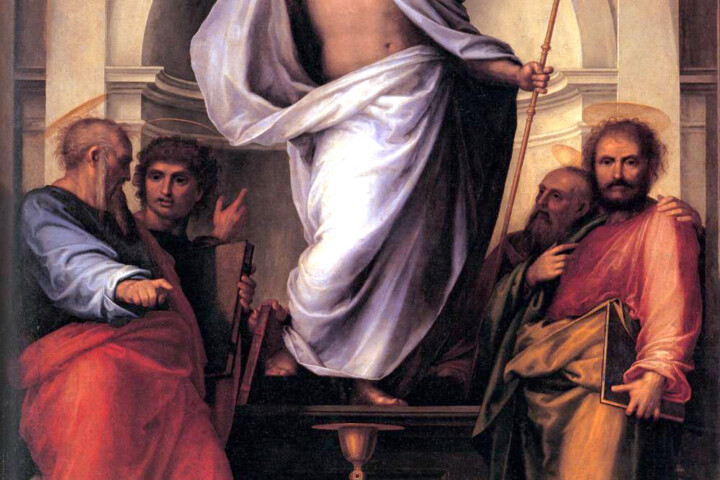
In the Glorious Light of Easter, Alleluia!
Set your minds on things that are above, not on things that are on earth, for you have died, and your life is hidden with Christ in God. When Christ who is your life is revealed, then you also will be revealed with him in glory (Col. 3:3-4). The Resurrection of Our Lord and Saviour[…]Continue reading→
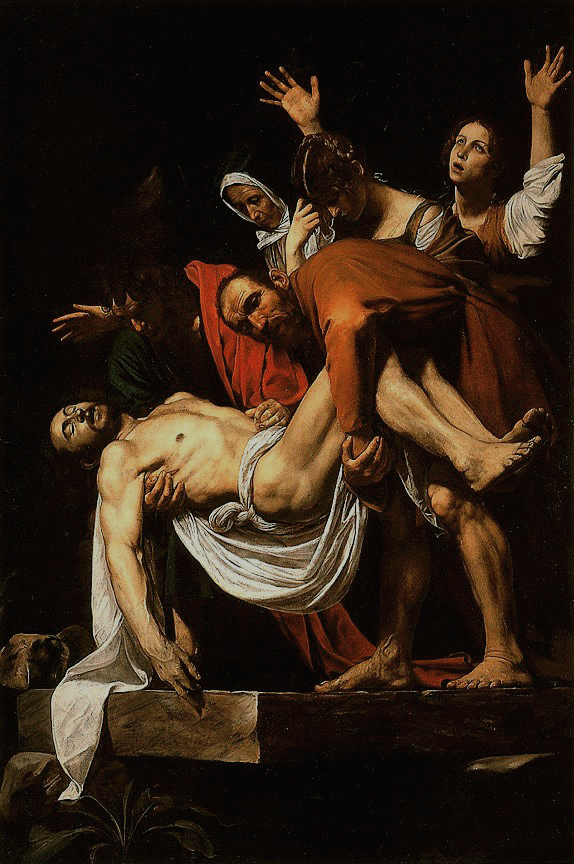
An Ancient Homily for Holy Saturday
The time between Good Friday and Easter Sunday is one of waiting, in silence, as the world wonders – anticipates – what will happen, after the death of Christ. We re-live this time each year in the anamnesis of our liturgy, and in turn look forward to the glorious re-creation of all things at the[…]Continue reading→
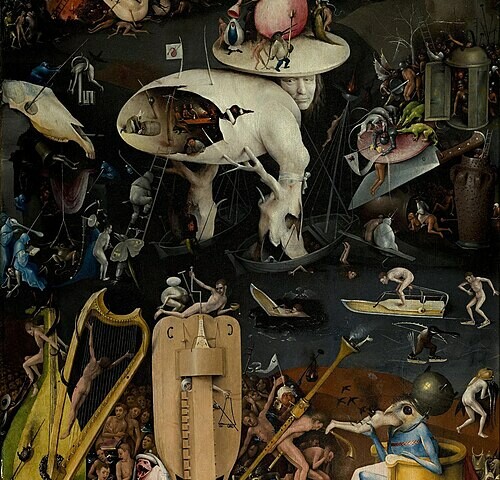
Europe’s Long Descent
(As we meditate on this day on Christ’s burial, and His descent into hell, it is fitting to ponder here with contributor Peter Marcus how the world seems to be heading there as well. The difference is that, although God cannot ‘redeem’ hell, nor those therein, He can and did redeem the world. There is[…]Continue reading→