
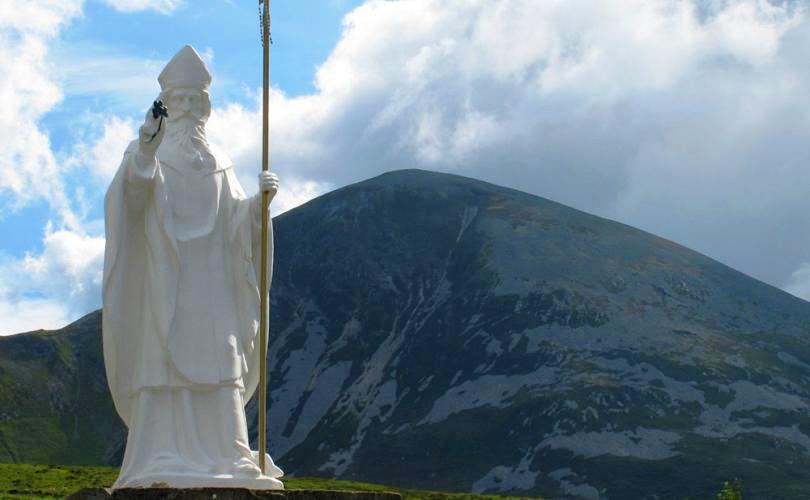
Ireland’s Last Domino
”This day I call the heavens and the earth as witnesses against you that I have set before you life and death, blessings and curses. Now choose life, so that you and your children may live and that you may love the LORD your God, listen to his voice, and hold fast to him. Deuteronomy 30: 19-20
Ireland has at long last given up the ghost. The Holy Ghost, that is. Some 1,500 years after St.Patrick’s death, this island nation – long a sign of contradiction to suicidal Europe – has finally climbed onto the spiritual funeral pyre.
In an anxiously awaited referendum, the Irish people voted 66% to 33% on May 25 to repeal the country’s 8th Amendment which recognized a preborn right to life, deserving of equal protection under the law. While the repeal did not directly legalize abortion, it cleared the path for a government proposal to legalize elective first-trimester abortions, with later abortions supposedly limited to medical emergencies or fatal fetal abnormalities such as in the case Savita Halappanavar
Halappanavar, as readers will remember, was the 31-year-old dentist, originally from India, who died October 28, 2012 at University Hospital Galway due to what was then interpreted as complications of a septic miscarriage at 17 weeks’ gestation, after having been denied an abortion. At 17 weeks into her pregnancy, Halappanavar was told she was suffering a miscarriage. She requested an abortion but, as doctors had already diagnosed, the termination had already begun spontaneously.
Under Irish law and the Irish Constitution, which in 2012 prohibited the abortion of unborn babies, the surgical evacuation of the womb was allowed when a miscarriage was underway or when the baby had already died. Such procedures are regularly carried out in Irish hospitals. In Savita’s case, however, it appears that a surgical intervention that should have happened did not. Her back pain continued for another three days and she died of septicaemia, prompting two investigations – one by the hospital itself and another by the Irish health authority.
At the time of her death, it was widely reported that doctors denied her request “for an abortion” because they detected a foetal heartbeat and Irish law ruled out a termination because “Ireland is a Catholic country.”
Which it was. But this was also another example of how a hard case can be politicized into making bad law in a shifting cultural climate.
By 2012, Ireland’s oncoming rejection of Catholic teaching was already well underway, keeping pace in its own way with the cultural rot and consequent falling away from religious faith that had long been afflicting continental Europe and the rest of the western world.
In fact, since the 1960s, some of the activity of the Irish Church has been increasingly focused on social justice issues – read: leftist ideology. Meaning that the same social trends and influences alienating citizens from the Catholic Church throughout the world – including a hostile media and its daily bombardment of immorality and depravity on TV and elsewhere – were having the same destructive impact on daily life in Ireland. Meaning that the pro-life movement would not be able to influence the culture much longer if orthodox Catholicism in Ireland continued to decline.
Then came the referendum making the rift official. As did a study undertaken by Georgetown University indicating that Ireland now ranks among the top ten nations with the largest number of atheists, following China, Japan, the Czech Republic, France, South Korea, Germany, the Netherlands, Austria, Iceland and Australia. The study also shows how steep Ireland’s decline has been, noting that in 1980, Ireland had one of the highest rates of weekly Mass attendance in the world (84%). By 2006, however, that rate had dropped to 48 percent. Just five years later, that percentage had dropped to an abysmal 18 percent with the number of young people attending weekly Mass in Dublin at just 2 percent.
“A nation that kills its own children has no future,” declared Pope John Paul II.
Padre Pio agreed. “The day that people lose their horror for abortion will be the most terrible day for humanity,” he told a fellow priest. “Abortion is not only a homicide but also a suicide. Shouldn’t we have the courage to manifest our faith before those who commit two crimes within one act? The suicide of the human race will be understood by those who will see the earth populated by the elderly and depopulated of children: burnt as a desert.”
How ironic then that this referendum to change the 8th Amendment to allow abortion should be held May 25th, the 131st birthday of the beloved Pio who professed a deep love for Ireland. Ironic too that the referendum’s so-called ‘victory’ would be heralded by mobs of Irish youth dancing, shouting and weeping with joy over the so-called right to kill their unborn brothers, sisters, sons and daughters.
The spectacle was chilling in another way too. It was as if phantoms were chanting in typical agitprop style: “What do we want? Hellfire! … When do we want it? Now!”
Meaning that if these two saints are right – which they surely are – then the Republic of Ireland has just signed away its once benign future, along with the last vestiges of what had been the most distinctive and morally coherent culture in Europe and consigned it to aimless oblivion while it waits for some imaginary hammer to fall.
Even secular experts agree. In his masterwork The Strange Death of Europe, social historian Douglas Murray explains how Europe’s decline into suicide – of which Ireland is now part – has occurred. Having been browbeaten by decades of ‘progressive’ propaganda into accepting the secular and postmodernist view – that Europe’s once life-enhancing Christian culture had been nothing more than a Nazi-driven horror show and that most continental whites are merely horrible people who deserve punishment – most of the continent now appears to have relinquished its past. And, in so doing, can see no cogent or constructive future for itself whatsoever.
“The tree of Europe is lost,” Murray writes. “And those in power seem persuaded that it would not matter if the people and culture of Europe were lost to the world. Some have clearly decided to dissolve the people and elect another because, as a recent Swedish prime minister put it, only ‘barbarism’ comes from countries like his, whereas only good things come from the outside.”
All confirming that Sweden’s condition is pathological and now terminal. And that having aborted and contracepted its future, as has nearly all the rest of Europe, it’s only logical that Sweden would become the natural target for mass and opportunistic immigration which, in turn, has veered out of its sick government’s control. And Sweden is just one example in the much larger picture that Murray paints.
“More than any other continent or culture in the world today, Europe is now deeply weighed down with guilt for its past (and unrepented sin? My words),” Murray concludes. “There is also the problem in Europe of an existential tiredness and a feeling that perhaps for Europe the story has run out and a new story must be allowed to begin. Mass immigration – the replacement of large parts of European populations by other people – is one way this story has been imagined.”
So, in the case of Ireland, what’s really happened is that the Emerald Isle has officially joined the Culture of Death, as St. Pope John Paul II coined it. And the statistics prove it: having embraced the Left and its social justice warriors, the physical and moral results have followed inevitably. Syphilis and chlamydia rates have doubled in the past decade alone; gonorrhea has quadrupled and HIV rates have exploded. No surprise either that between 2008 and 2017, the Irish birthrate declined nearly 20 percent, and foreign nationals have been responsible for nearly a quarter of live births. Like the rest of Europe.
Of course, the media was jubilant on May 25, proclaiming it a “great day for women.” And cheering even more loudly a week later when – with abortion no longer forbidden by its constitution, and warnings that the final law will be far more radical in practice – the Irish government also moved to ban pro-lifers from praying, protesting or counseling outside abortion facilities.
Prompting this question: How far behind, then, is the push for euthanasia – already a major movement across Europe?
“Ireland is dead-set on killing unborn babies as soon as possible,” reported The Daily Wire’s Paul Bois. “Even though abortion has not yet been enshrined into law by Parliament, lawmakers have actually proposed extending the summer session just so they can ram through the legislation.”
Meanwhile, across Ireland and around the world, many pro-lifers have responded to the defeat with resolve rather than despair, vowing to continue fighting to restore legal protection for the preborn and rallying 30,000 people to pray the Rosary on the coasts of Ireland in the autumn and organizing a public Forty Days of penance in the wake of the abortion referendum. All positive moves.
Still, one can’t shake the feeling that there will be no going back in Ireland. And that, instead, this signals the next stage in the unfolding suicide of Europe already well underway as the natural consequence of the collapse of Christianity, the related collapse of the traditional family and the consequent demographic winter that has prompted the importing of massive numbers of immigrants to augment labour forces and to prop up sclerotic, top-heavy social welfare systems.
But as what’s left of Christendom continues to implode on itself, how could it otherwise? As traditional marriage and disciplined sexual behaviour are packed into museum boxes and the grand art, architecture, sculpture, music and literature of western culture are thrown into vans bound for places unknown, what’s left for post-Christendom?
And, excuse me, but isn’t it all so ugly? Disordered, disorderly, disheveled. Devoid of beauty. Aimless. Pointless. Directionless. Having taken down the entire house, where do we go now? Back to pre-Christianity, reminiscent of the days when St. Patrick and the great missionaries where beginning their salvific work in Ireland?
Nor can I shake the feeling that, despite all the prayers and rosaries that so far haven’t reconverted the souls who voted for death in May, there will be no reversal in Ireland.
Too pessimistic? It gets worse. I can’t shake the feeling either that this green, once graced and graceful isle of romantic imagination may return to its pagan roots. Nor will I be the least surprised to hear one day soon a report that some mystified child has found a snake in the long grass of that physically breathtaking island. And won’t the environmentalists be pinching themselves with joy?
That’s not the end of the story, of course. Far from it. With every apparent death, the seeds of new life are sown, all advancing the Lord God’s arc of history and all working towards the good of all those who love Him. Look too for the unexpected uprising of the young in Ireland who, created by God and hungering for God, wake up one day en masse and rebel against the lying culture that’s been robbing them of brothers, sisters, relatives and friends, all in the unspeakable name of abortion rights.
Will this be the ultimate result of today’s grief-stricken prayers which always and everywhere have the Lord’s ear and may become another essential part of the Lord’s grand working out of all things?

Saint Kateri , Canada’s Protectress
This was the title given to Saint Kateri Tekakwitha, by Pope Benedict XVI, when he canonized her on October 28th, 2012, along with six others, in Saint Peter’ Square (she had been beatified by Pope John Paul II back in 1980). With Saint Joseph as our protector, along with the Canadian martyrs, we seem to[…]Continue reading→

Remembering Father Alphonse de Valk
(Today marks the sixth anniversary of the death of Father Alphonse de Valk, C.S.B., a faithful, courageous and indefatigable Basilian priest, pro-life-and-family apostle, and the founder of Catholic Insight magazine. Here is what we wrote those on his entering into eternity five years ago, as we continue to remember him in our prayers and thoughts)[…]Continue reading→

My Name is Bernadette
April 16th is a propitious day, for besides the anniversary of Father de Valk’s death, who founded Catholic Insight in its print form decades ago, and the commemoration of the ‘two Benedicts’, mentioned in accompanying posts, today we also recall Saint Bernadette Soubirous, the young visionary to whom the Virgin Mary appeared numerous times at[…]Continue reading→
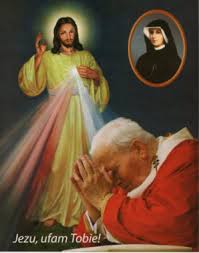
Canonizing Sister Faustina and Divine Mercy
HOMILY OF THE HOLY FATHER MASS IN ST PETER’S SQUARE FOR THE CANONIZATION OF SR MARY FAUSTINA KOWALSKA Sunday, 30 April 2000 1. “Confitemini Domino quoniam bonus, quoniam in saeculum misericordia eius”; “Give thanks to the Lord for he is good; his steadfast love endures for ever” (Ps 118: 1). So the Church sings on the Octave of[…]Continue reading→

Divine Mercy Sunday – An Echo of Every Mass
Reach out your hand and put it in my side. Do not doubt but believe’… ‘My Lord and my God!’ (Jn. 20:18)). Today is Divine Mercy Sunday, and as we celebrate the end of the Easter Octave, we contemplate the wounded side of our Saviour, the Church’s source of life. On Good Friday in the[…]Continue reading→

Saint Stanislaus of Szczepanów
We celebrate Saint Stanislaus today (+ April 11, 1079), in light of this Easter Octave, a bishop and martyr who accepted the episcopacy only at the direct order of Pope Alexander II. He proved a wise and courageous leader of his flock, put to death by his own king, Boleslaus, for rebuking the monarch’s ‘immoral[…]Continue reading→
First Holy Communion: Sermon from May 16, 1943
Here is a sermon from the good old days by +Rev. Msgr. Vincent Nicholas Foy (August 14, 1915 – March 13, 2017), from 1943. Readers may recall that Pope Saint Pius X, by the decree Quam Singulari in 1910, lowered the customary age of reception of Holy Communion – after the rigours of the plague[…]Continue reading→
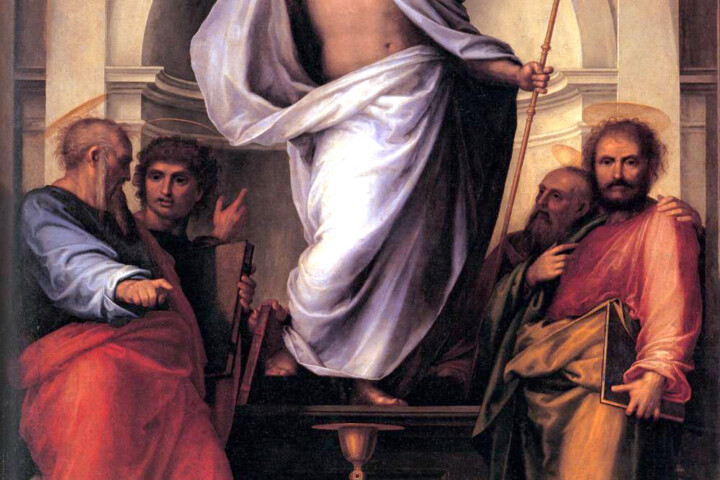
In the Glorious Light of Easter, Alleluia!
Set your minds on things that are above, not on things that are on earth, for you have died, and your life is hidden with Christ in God. When Christ who is your life is revealed, then you also will be revealed with him in glory (Col. 3:3-4). The Resurrection of Our Lord and Saviour[…]Continue reading→
An Ancient Homily for Holy Saturday
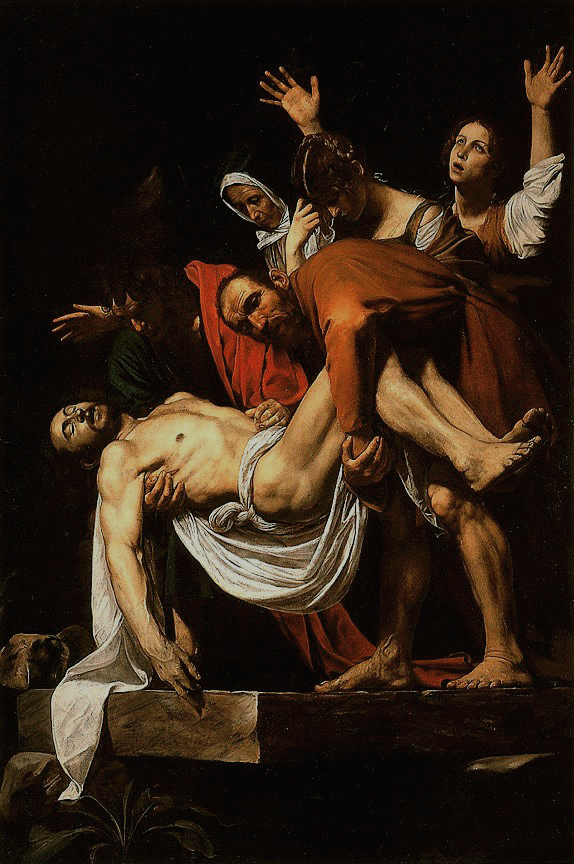
The time between Good Friday and Easter Sunday is one of waiting, in silence, as the world wonders – anticipates – what will happen, after the death of Christ. We re-live this time each year in the anamnesis of our liturgy, and in turn look forward to the glorious re-creation of all things at the[…]Continue reading→
Europe’s Long Descent
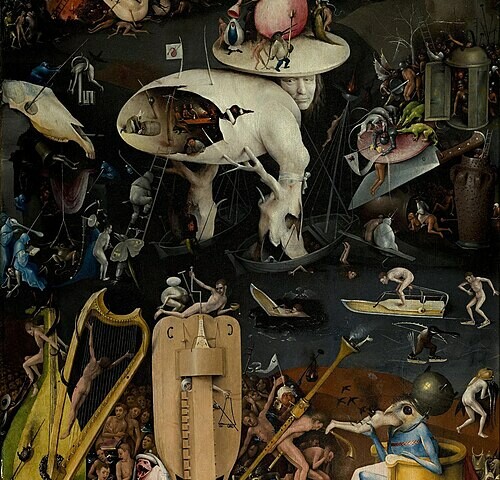
(As we meditate on this day on Christ’s burial, and His descent into hell, it is fitting to ponder here with contributor Peter Marcus how the world seems to be heading there as well. The difference is that, although God cannot ‘redeem’ hell, nor those therein, He can and did redeem the world. There is[…]Continue reading→