
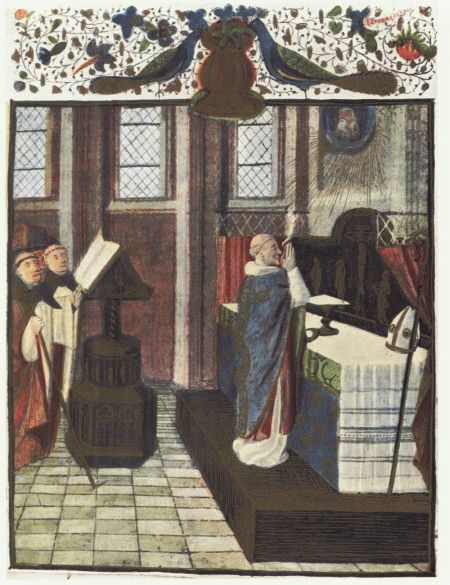
28th Sunday: Eucharist Means Thanksgiving
(From our archives, for this Thanksgiving Sunday)
On this mountain the Lord of Hosts will make for all peoples a feast of rich food (Is 25:6).
Throughout our nation in what we can claim as a truly North American tradition, Canadians are observing Thanksgiving Day. In the observance of what is essentially a harvest festival, we give thanks to God for the fruits of the earth. In so doing we are faithful to the command found in the Book of Exodus: “You shall keep the feast of harvest, of the first fruits of your labour, of what you sow in the field. You shall keep the feast of ingathering at the end of the year when you gather in from the field the fruit of your labour” (Ex 23:16). It is also a time of sharing with those in need, a reminder that there is a solidarity which binds all human beings together and that concern for the wellbeing of our neighbour is never far from our thoughts.
As Catholics, I believe that we can have a deeper understanding of Thanksgiving because of the Eucharist which is the central focus of our lives. It is an ancient saying of the Church that “our way of thinking is attuned to the Eucharist and the Eucharist in turn, confirms our way of thinking.” The word Eucharist means thanksgiving; and so the coming together, sharing, and outreach that define Thanksgiving Day are for us not a yearly or sporadic occurrence, but realities or parts of a rhythm that define our lives always. In fidelity to the third commandment and the Church’s precepts, we come together weekly, that is to say, every Sunday, in the sacred assembly and we share the Banquet that our Lord Himself provides for us. We also share with those in need; and in this constant outreach, we are sent out to invite all to share the grace and goodness of God. It is a simple path that we are invited to walk.
Once again this Sunday the lessons of the Mass teach us about the Kingdom of God; and the truth and reality of this Kingdom is conveyed to us by means of an image, a banquet. Perhaps more than any other parable of the Kingdom, the image of a banquet describes what God’s Kingdom is like. The sharing of food is so ordinary an action and yet so profoundly an expression of care, concern, and even intimacy. It is by means of this action, one essential to the wellbeing and development of life that our Saviour Jesus Christ chose to remain among us and to make His gift of salvation an ever-present Reality in the Eucharistic Banquet.
When at the Last Supper our Lord took bread into His hands and gave it to His disciples, now changed into His Body, He gave His Flesh and Blood, His humanity and His divinity, for these are inseparable from Him; He gave Himself completely. Our Lord gave us His life by means of His Body and it is in this manner that He continues to give Himself to us. The same is true of us. In this life we cannot separate our souls from our bodies. We are by definition, a unity of body and soul. We live our life in Christ through our bodies. Just as His Body was the means by which He offered Himself as a sacrifice to the Father, so too, by means of our bodies we unite ourselves to our Lord’s offering to the Father and we give Him to others, no less through our own self-offering. The Apostle Paul exhorts us: “I appeal to you therefore, brethren, by the mercies of God, to present your bodies as a living sacrifice, holy and acceptable to God, which is your spiritual worship” (Rom 12:1).
Growth and development in the Christian life do not depend on pious exercises or good works done outside our daily life; on a practice of religion in our leisure time, on coming to Mass occasionally. Christ’s life in us must be stable and constant; it has to be expressed and experienced tangibly. Otherwise we risk the danger of reducing religion to mere sentiment. When this happens, religion is no longer a necessary virtue that positively impacts on our lives but an optional exercise devoid of any real meaning. When asked why he became a Catholic, the English poet Fr. Gerard Manley Hopkins explained that it was because of “the common sense of it all.” He further explained:”it was because of its consolations, its marvellous idea of holiness, the faith and devotion of its children, its multiplicity, its array of saints and martyrs, its consistency and unit, its glowing prayers.”
All of these elements and so much more are in evidence when we celebrate the Holy Sacrifice of the Mass and partake of the Eucharistic Banquet. “I appeal to you therefore, brethren, by the mercies of God, to present your bodies as a living sacrifice, holy and acceptable to God, which is your spiritual worship” (Rom 12:1). The charity that the Eucharist inspires and the many ways that this charity is generously shared, these are the tangible expressions of the flowering and growth of the life of Christ in us; for in giving there is always a sacrifice and in this action both gift and giver are transformed. This is the root idea of sacrifice—not so much death but transformation. We, who partake of our Lord’s Banquet each week, understand thanksgiving as expressive of our life always. Each Sunday, not grudgingly, but with gratitude and holy longing, we come to assist and participate in the Holy Sacrifice of the Mass. We make our very own the words of the North African Martyrs of Abitina who, in the year 304, in opposition to the Emperor Diocletian’s anti-Christian edicts were martyred for having worshipped on Sunday: Sine dominico non possumus. We cannot live without the Sunday Eucharist.
“Pray brethren; that my sacrifice and yours may be acceptable to God the Father Almighty.” This invitation to prayer and self-offering rightly distinguishes the difference between the one eternal Sacrifice of our Lord offered through the ministry of the priest and your sacrifices: your offerings, the work of our hands, our labours, our sufferings, our very selves. Everything is offered in sacrifice so that it may be transformed. This is why from the very beginning Christians have brought, along with the bread and wine for the Eucharist, gifts to share with those in need.
It is truly awesome that the Son of God should join us to Himself in His sacrificial offering to the Father. This truth imbues our every act of charity with great meaning and purpose. Our charity and generosity are an integral part of our worship and enable us to worship in spirit and in truth. May the Eucharistic Sacrifice offered on our Altar today and every Sunday so transform our lives that we might simply be in all things and in all times for the praise of God’s glory (Cf. Eph 1:12); “as a living sacrifice, holy and acceptable to God” (Rom 12:1). As you share with others the work of our hands, may God our Father “satisfy every need of yours according to the his riches in glory in Christ Jesus” (Phil 4:20).

Remembering Father Alphonse de Valk
(Today marks the sixth anniversary of the death of Father Alphonse de Valk, C.S.B., a faithful, courageous and indefatigable Basilian priest, pro-life-and-family apostle, and the founder of Catholic Insight magazine. Here is what we wrote those on his entering into eternity five years ago, as we continue to remember him in our prayers and thoughts)[…]Continue reading→

Divine Mercy Sunday – An Echo of Every Mass
Reach out your hand and put it in my side. Do not doubt but believe’… ‘My Lord and my God!’ (Jn. 20:18)). Today is Divine Mercy Sunday, and as we celebrate the end of the Easter Octave, we contemplate the wounded side of our Saviour, the Church’s source of life. On Good Friday in the[…]Continue reading→

Saint Stanislaus of Szczepanów
We celebrate Saint Stanislaus today (+ April 11, 1079), in light of this Easter Octave, a bishop and martyr who accepted the episcopacy only at the direct order of Pope Alexander II. He proved a wise and courageous leader of his flock, put to death by his own king, Boleslaus, for rebuking the monarch’s ‘immoral[…]Continue reading→

First Holy Communion: Sermon from May 16, 1943
Here is a sermon from the good old days by +Rev. Msgr. Vincent Nicholas Foy (August 14, 1915 – March 13, 2017), from 1943. Readers may recall that Pope Saint Pius X, by the decree Quam Singulari in 1910, lowered the customary age of reception of Holy Communion – after the rigours of the plague[…]Continue reading→

In the Glorious Light of Easter, Alleluia!
Set your minds on things that are above, not on things that are on earth, for you have died, and your life is hidden with Christ in God. When Christ who is your life is revealed, then you also will be revealed with him in glory (Col. 3:3-4). The Resurrection of Our Lord and Saviour[…]Continue reading→

An Ancient Homily for Holy Saturday
The time between Good Friday and Easter Sunday is one of waiting, in silence, as the world wonders – anticipates – what will happen, after the death of Christ. We re-live this time each year in the anamnesis of our liturgy, and in turn look forward to the glorious re-creation of all things at the[…]Continue reading→

Europe’s Long Descent
(As we meditate on this day on Christ’s burial, and His descent into hell, it is fitting to ponder here with contributor Peter Marcus how the world seems to be heading there as well. The difference is that, although God cannot ‘redeem’ hell, nor those therein, He can and did redeem the world. There is[…]Continue reading→
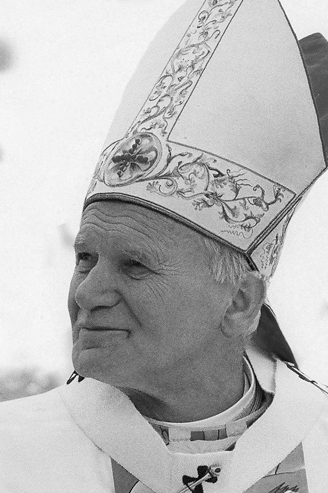
Pope Saint John Paul II’s First Good Friday Homily
ADDRESS OF HIS HOLINESS JOHN PAUL II AT THE CONCLUSION OF THE STATIONS OF THE CROSS AT THE COLOSSEUM Good Friday, 13 April 1979 When we make the Way of the Cross from one station to the next, in spirit we are always at the spot wherethis journey had its “historical” place: where it[…]Continue reading→
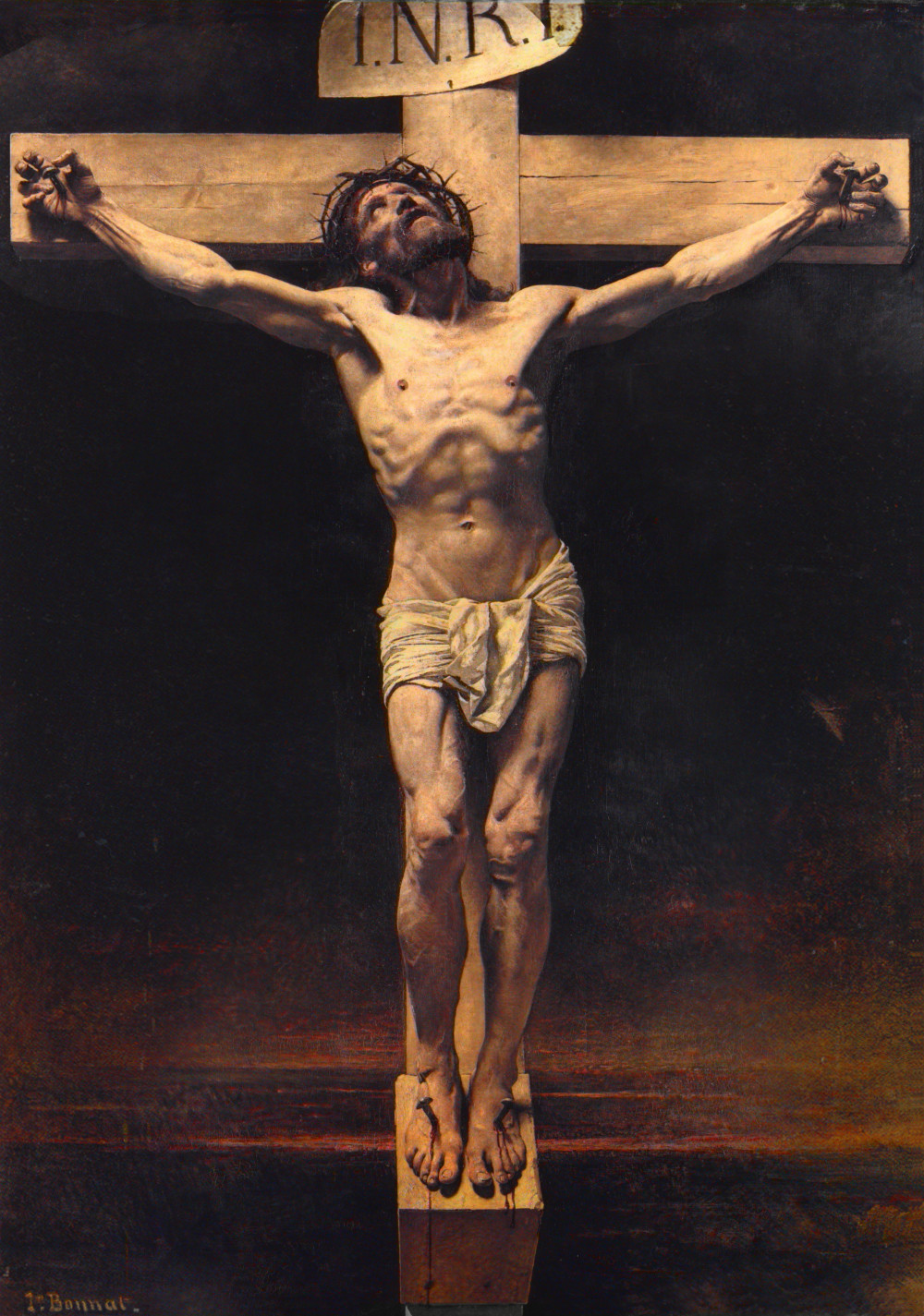
A Meditation for Good Friday: How To Undo the Effects of Sin?
Cardinal Newman, now Saint John Henry Newman, was a towering figure of nineteenth-century Catholicism who is almost universally admired. I say “almost” because not everyone likes him. I knew a priest once, Arthur Caulkins, who has become disenchanted with Newman. As an undergraduate Arthur had been enamoured of Newman, and this interest continued when he[…]Continue reading→
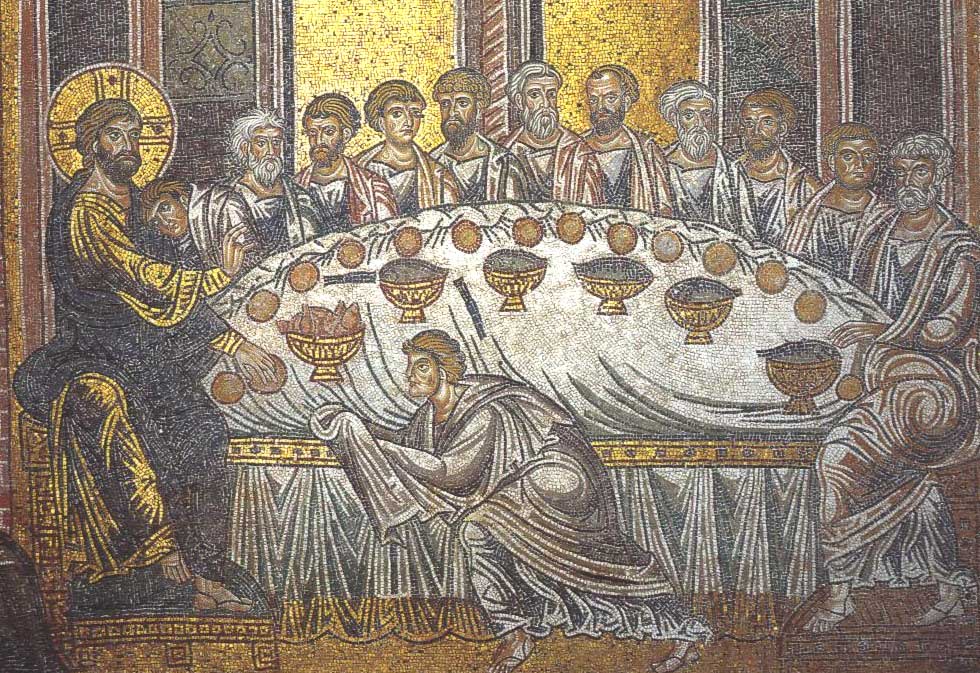
Pope Benedict’s Last Holy Thursday Homily
MASS OF THE LORD’S SUPPER HOMILY OF HIS HOLINESS BENEDICT XVI Basilica of St John Lateran Holy Thursday, 5 April 2012 Photo Gallery (Video) Dear Brothers and Sisters! Holy Thursday is not only the day of the institution of the Most Holy Eucharist, whose splendour bathes all else and in some ways draws it to[…]Continue reading→