
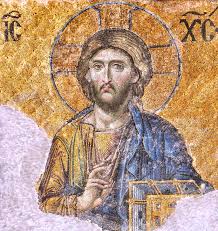
19th Sunday: The Merciful Presence of God
And after the earthquake a fire, but the Lord was not in the fire; and after the fire a sound of sheer silence (1 Kings 19: 12).
The Prophet Elijah’s mysterious encounter with the Lord in the sheer silence was not unlike the experience of Peter and the disciples once Jesus and Peter got into the boat. “The wind ceased” (Mt 14: 33). In the quiet and calm that is experienced after a storm, “those in the boat worshipped Him, saying, ‘Truly you are the Son of God'” (Mt 14:33). In both scenes, the great wind is vanquished by the gentle presence of God. Again we see that God’s omnipotence always works through compassion for He is “rich in mercy” (Eph 2:4). Our Lord’s gentle rebuke of Peter speaks of the meekness of Christ and sheds light on the manner of His ways in relation to our own doubts and lack of trust. Quoting the Prophet Isaiah, St. Matthew says of our Lord that “He will not wrangle or cry aloud, nor will any one hear his voice in the streets; he will not break a bruised reed or quench a smouldering wick till he brings justice to victory and in his name will the Gentiles hope” (Mt 12: 19-21). Jesus does not berate Peter for his fear and hesitation. Rather, He “immediately reached out his hand and caught him, saying to him, ‘You of little of faith, why did you doubt?’” (Mt 14: 31). Who of us has not been afraid? Who of us has not faltered? Who of us has not at some point or other doubted? Peter’s daring walk on the water is in essence, an act of faith assailed by the winds of fear and doubt and weakness.
The act of faith that we have made individually and collectively, but always and in the first place individually, establishes us in a communion with Christ our Saviour in life now. “And those in the boat worshipped him, saying, ‘Truly you are the Son of God.’” They worshipped Him because they recognized powers and abilities that transcend the natural order. He walked on the water, had cured the sick and multiplied loaves and fish, to name but a few of the miracles they had witnessed. “Truly you are the Son of God” (Mt 14: 33). This same confession of faith will also be made at our Lord’s crucifixion by the “centurion and those who were with him keeping watch over Jesus … ‘Truly this was the Son of God!’” (Mt 27: 54). Here too, as St. Matthew recounts the death of our Lord “the earth shook, and the rocks were split” (Mt 27: 51), but then the sheer silence of death and the proclamation of faith: “Truly this was the Son of God!” (Mt 27: 54). This was the profession of faith made by the centurion, a gentile. He will not wrangle “or cry aloud, nor will any one hear his voice in the streets; he will not break a bruised reed or quench a smouldering wick till he brings justice to victory and in his name will the Gentiles hope” (Mt 12: 19-21).
The act of faith is completed by an act of trust which is implied but which in particular circumstances must be explicitly articulated and renewed. “Jesus, I trust in You.” Those who pray the Chaplet of Divine Mercy are familiar with these words revealed to St. Faustina at a time of great global upheaval; a time not unlike our very own. “Lord, I believe; therefore I trust in You.” It could be said that Peter stepped out on the water in faith but he began to sink when his trust failed him. It is noteworthy that in his First Epistle he later wrote: “Cast your anxieties on him, for he cares for you” (1 Pt 5:7). These are words that he wrote to the Christian community of Rome in a time of persecution, not unlike the experience of many of our fellow Christians in many parts of the world today. One need not be suffering persecution however to experience evil and distress. These experiences, whatever their degree of intensity, can shake our confidence, our trust. For this reason, it important for us who have made a serious and purposeful commitment to Christian discipleship, daily to renew our trust in our Lord and to heed His admonition: “Watch and pray that you may not enter into temptation” (Mt 26: 41).
You recall the scene in the Gospels where a father brings his child to our Lord for deliverance from diabolical possession. To him our Lord says, “All things are possible to him who believes. Immediately the father of the child cried out and said, ‘I believe; help my unbelief!’” (Mk 9:24). We do well to commit these words to memory for they are both a profound act of faith and a plea for deeper faith and trust. For years, it has been my practice to say these words at the elevation of the Sacred Host, whether I am celebrating or assisting at Holy Mass. “My Lord and my God. Lord, I believe; help my unbelief.” In the greatest manifestation of His divinity that we are privileged to witness, the transubstantiation of the gifts of bread and wine into the Mystery of our salvation (Prayer over the offerings, Nineteenth Sunday Per Annum, The Roman Missal); in the sheer silence that accompanies this profound experience of God’s Real Presence among us, we worship and we too make our own the words of the disciples on the boat, “Truly you are the Son of God” (Mt 14: 33).
The Holy Sacrifice of the Mass in both the Liturgy of the Word and most especially in the Liturgy of the Eucharist is an encounter with the living Lord who reaches out His hand to us, either to strengthen us or literally to prevent us from sinking. Here He invites us to seek out and receive His goodness and to set aside our wretchedness, to seek His order instead of our chaos, His quiet in place of the furious noise that sometimes assails us. The act of trust that accompanies and completes the act of faith is in essence, an act of abandonment to the love that is faith. That such abandonment produces peace in those who entrust themselves to Him should not be surprising for the Prophet Isaiah declared, “for thus said the Lord GOD, the Holy One of Israel, ‘In returning and rest you shall be saved; in quietness and in trust shall be your strength’” (30:15). Christ our Lord who manifested Himself to His disciples, and who will manifest Himself to us in the silent communion that is ours with Him in the Eucharistic Sacrifice unites us to Himself that we might experience and make known the gentleness of His mercy and the depth of His love.
Our hearts are heavy with sorrow at this time as we hear of the relentless persecution of Iraqi and Syrian Christians. Horrible sufferings and death are being inflicted upon them. What they are being made to suffer is indescribable and best left unsaid in the presence of children. The world has been largely silent as they are literally slaughtered by Mohammedans; and to our shame, those who have warned us of this horror have been unjustly silenced. Our persecuted brethren are experiencing a time of trial and temptation as they are threatened to renounce their faith. One can only imagine their fear and distress. In their name we pray in the words of the Psalmist: “O God, in the abundance of thy mercy answer me. With thy faithful help rescue me … let me be delivered from my enemies and from the deep waters” (69:14). Please pray and sacrifice for them. Any form of assistance that we can give will become for them the hand of Christ reaching out to them; that they may be delivered from our enemies and the deep waters of sorrow and despair. May the steadfast love of the Lord that endures forever be both for them and for us a sure comfort and the assurance of salvation.

Remembering Father Alphonse de Valk
(Today marks the sixth anniversary of the death of Father Alphonse de Valk, C.S.B., a faithful, courageous and indefatigable Basilian priest, pro-life-and-family apostle, and the founder of Catholic Insight magazine. Here is what we wrote those on his entering into eternity five years ago, as we continue to remember him in our prayers and thoughts)[…]Continue reading→

Divine Mercy Sunday – An Echo of Every Mass
Reach out your hand and put it in my side. Do not doubt but believe’… ‘My Lord and my God!’ (Jn. 20:18)). Today is Divine Mercy Sunday, and as we celebrate the end of the Easter Octave, we contemplate the wounded side of our Saviour, the Church’s source of life. On Good Friday in the[…]Continue reading→

Saint Stanislaus of Szczepanów
We celebrate Saint Stanislaus today (+ April 11, 1079), in light of this Easter Octave, a bishop and martyr who accepted the episcopacy only at the direct order of Pope Alexander II. He proved a wise and courageous leader of his flock, put to death by his own king, Boleslaus, for rebuking the monarch’s ‘immoral[…]Continue reading→
First Holy Communion: Sermon from May 16, 1943
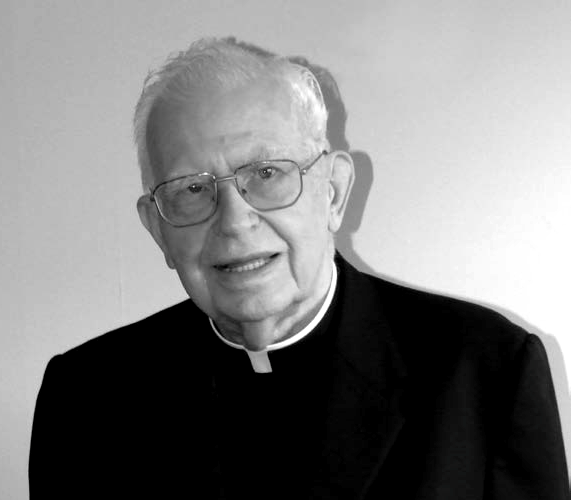
Here is a sermon from the good old days by +Rev. Msgr. Vincent Nicholas Foy (August 14, 1915 – March 13, 2017), from 1943. Readers may recall that Pope Saint Pius X, by the decree Quam Singulari in 1910, lowered the customary age of reception of Holy Communion – after the rigours of the plague[…]Continue reading→

In the Glorious Light of Easter, Alleluia!
Set your minds on things that are above, not on things that are on earth, for you have died, and your life is hidden with Christ in God. When Christ who is your life is revealed, then you also will be revealed with him in glory (Col. 3:3-4). The Resurrection of Our Lord and Saviour[…]Continue reading→

An Ancient Homily for Holy Saturday
The time between Good Friday and Easter Sunday is one of waiting, in silence, as the world wonders – anticipates – what will happen, after the death of Christ. We re-live this time each year in the anamnesis of our liturgy, and in turn look forward to the glorious re-creation of all things at the[…]Continue reading→
Europe’s Long Descent
(As we meditate on this day on Christ’s burial, and His descent into hell, it is fitting to ponder here with contributor Peter Marcus how the world seems to be heading there as well. The difference is that, although God cannot ‘redeem’ hell, nor those therein, He can and did redeem the world. There is[…]Continue reading→
Pope Saint John Paul II’s First Good Friday Homily
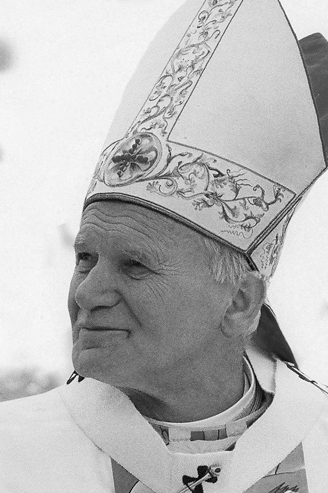
ADDRESS OF HIS HOLINESS JOHN PAUL II AT THE CONCLUSION OF THE STATIONS OF THE CROSS AT THE COLOSSEUM Good Friday, 13 April 1979 When we make the Way of the Cross from one station to the next, in spirit we are always at the spot wherethis journey had its “historical” place: where it[…]Continue reading→
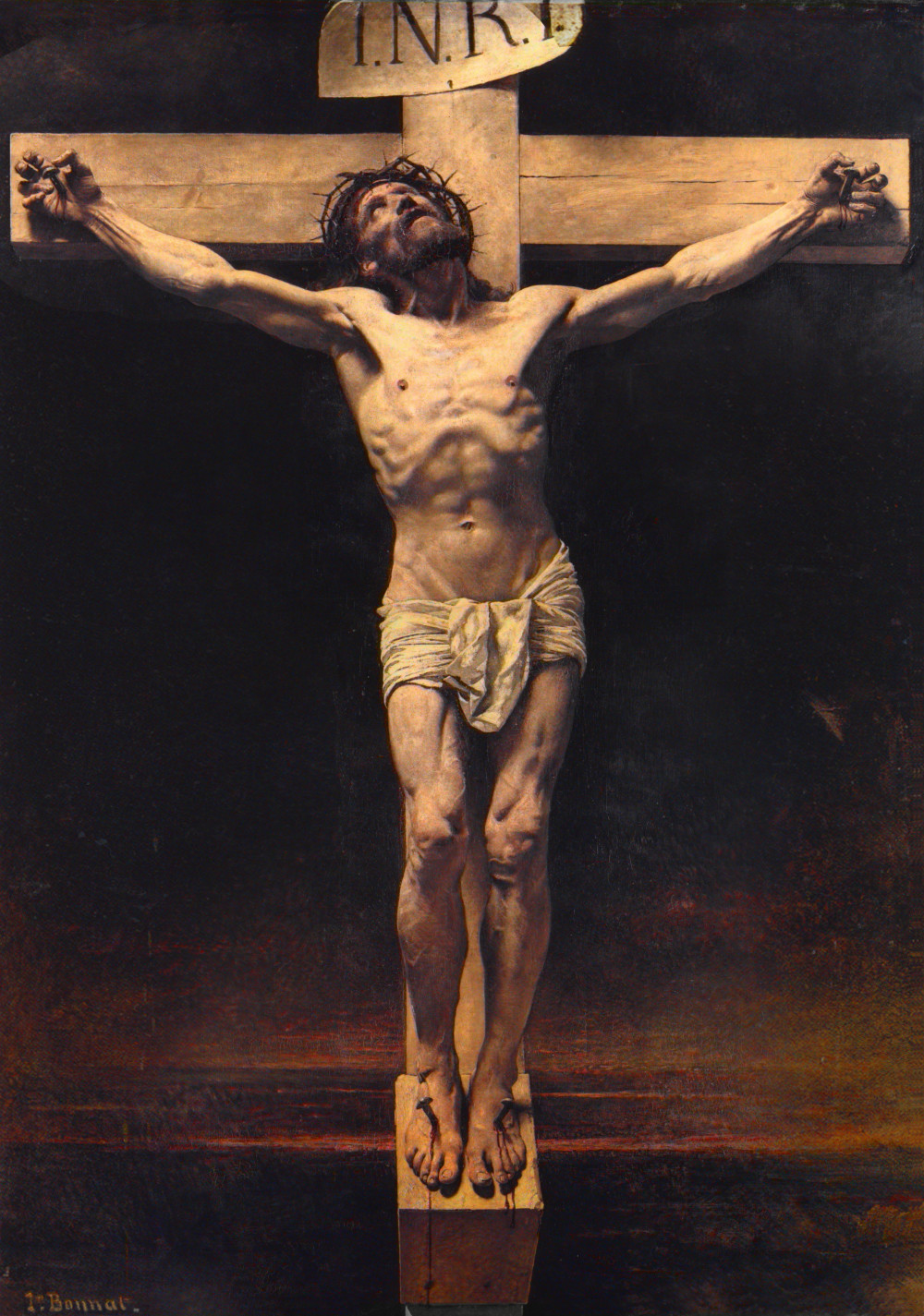
A Meditation for Good Friday: How To Undo the Effects of Sin?
Cardinal Newman, now Saint John Henry Newman, was a towering figure of nineteenth-century Catholicism who is almost universally admired. I say “almost” because not everyone likes him. I knew a priest once, Arthur Caulkins, who has become disenchanted with Newman. As an undergraduate Arthur had been enamoured of Newman, and this interest continued when he[…]Continue reading→
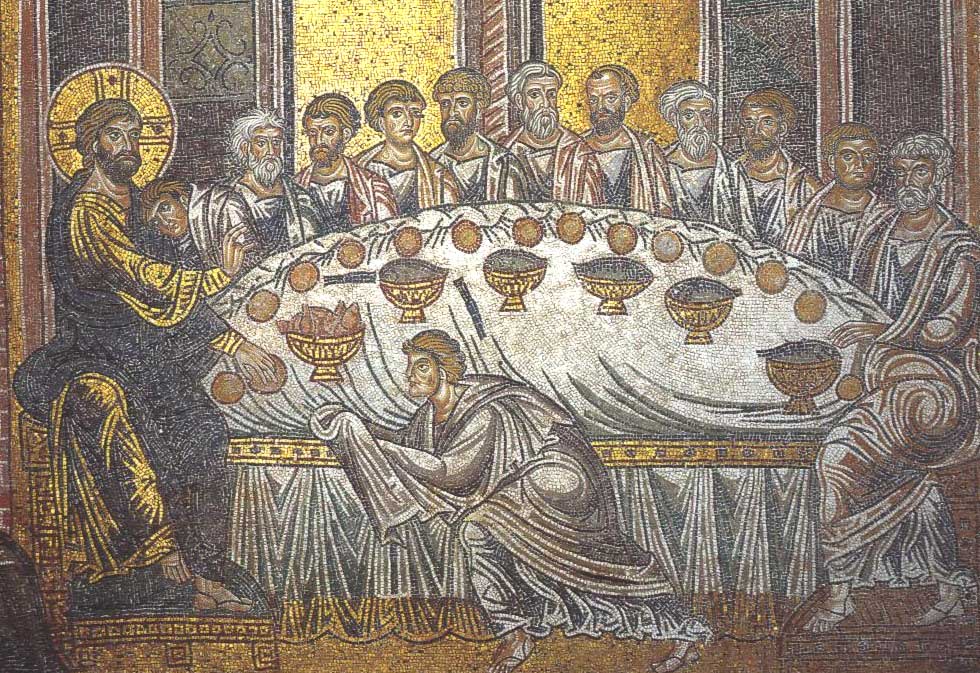
Pope Benedict’s Last Holy Thursday Homily
MASS OF THE LORD’S SUPPER HOMILY OF HIS HOLINESS BENEDICT XVI Basilica of St John Lateran Holy Thursday, 5 April 2012 Photo Gallery (Video) Dear Brothers and Sisters! Holy Thursday is not only the day of the institution of the Most Holy Eucharist, whose splendour bathes all else and in some ways draws it to[…]Continue reading→