
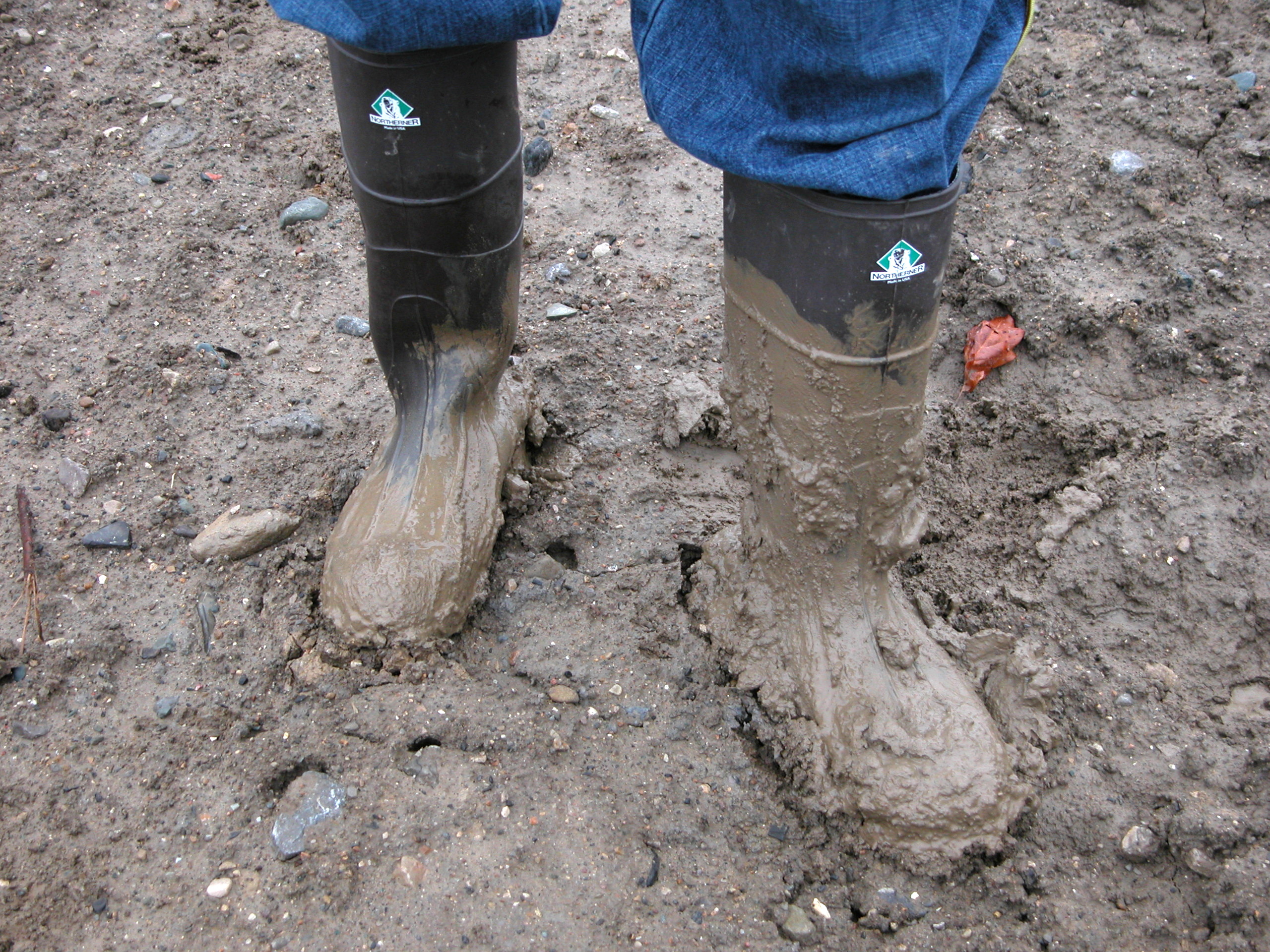
Mud
Most of my family is only at our “home” during the Christmas holidays. Because our time there is short, generally spanning between American Thanksgiving and New Years, my dad likes to plan enormous projects that cannot possibly be completed in the time allowed. The result is like something out of Star Trek, when Captain Kirk is yelling at Scotty to fix the engines in the next thirty seconds while Scotty insists that it will take at least six months. But somehow, he always gets it done in those thirty seconds.
This year, with just four weeks of our stay at home left, he decided to fence our property—just under forty acres. These forty acres are almost entirely covered in subtropical forest. Subtropical forest is mostly made up of pine, dogwoods, and water oak bound to each other by a group of plants that we refer to as thorn vines. Within the category of thorn vines, there are the subgroups: blackberry bush, rubber thorn vine, thick thorn vine, impenetrable thorn vine, snappable thorn vines, and half-inch-long-thorns thorn vine. These ropes of nearly certain death not only make it nearly impossible to get through the forest, they also complicate the process of clearing a path by steadfastly holding in place any trees or saplings that have been cleared. In addition to the thorn vines, our forest, like most of the land around ours, is situated partially on top of a giant mud pit.
It’s really not fun to work in the mud. Really. It’s a bit depressing. You start off the day reasonably clean, carefree, and happy. The first time you cross the boggy patch, you step carefully, hopping from tree root to tree root. Every time you don’t sink it feels like a little victory. Take that, mud! And that! You hop, skip, and jump along, still reasonably clean.
The first time you slip, you don’t notice too much. What’s a spot of mud on your boot in the course of the day? You’re still keeping out of the mud.
You slip again. Your whole shoe is covered in mud now, but that’s all right. You’re still laughing because you didn’t sink up to your knee. But now, because you’ve already got quite a bit of mud on you, you’re less careful. You don’t hop quite so happily. Your foot slips more often because its already slimy. The mud creeps its way onto your jeans, then your hands, and suddenly you have mud all over your face. You’ve stopped cheerfully bouncing from solid spots to tree roots. You stand ankle-deep in mud and your feet each weigh fifteen pounds. Your thoughts turn to Atreyu and Artax slogging through the Swamps of Sadness even though you haven’t watched The Neverending Story since you were seven, and you probably hated it then. And all that is before it starts raining.
And don’t forget the thorn vines.
The thing is, putting up a fence across a bog is pretty dismal work. Kind of like life. The mud of everyday life is always clinging to your boots and slowing you down. It doesn’t have to be something awful—just mud that drags down your ability to enjoy life. Your child might be crying a lot. Your boss might be a jerk. You might not have slept well last night. Your puppy might have forgotten that simple rule you taught him last week called “Don’t eat my knitting.” It could be anything at all.
Day in and day out we go along picking up mud as we slog through the year.
And then comes Lent—simultaneously dreaded and beloved. Finally we get a bit of solid ground to stand on as we scrape all that mud off. You offer up the things that drag you from actual happiness, and you suddenly find yourself feeling a bit lighter and happier because that bad habit that you swore off of for forty days was weighing you down more than you thought. In The Hidden Power of Kindness, Lawrence G. Lovasik writes, “The burden of life presses heavily. Many find life unbearable.”
We think of Lent as a time when we are forced to deny ourselves the things that we want—for instance, on Good Friday when images of steaks and chicken try to dispel those holy thoughts you are supposed to be having. But giving up those things that we so often take for granted anyway helps to rid of us of some of that unbearable burden, by reminding us to focus on the important things. And since mud really isn’t one of them, we get to let it go. Then we are free to replace it with all the good things that make life bearable. Things like kindness, and love, and God, which, far from dragging us down, act sort of like rubber boots, protecting us from the mud that would cling to us.
Photo credit: By Ildar Sagdejev (Specious) (Own work) [GFDL (http://www.gnu.org/copyleft/fdl.html) or CC-BY-SA-3.0-2.5-2.0-1.0 (http://creativecommons.org/licenses/by-sa/3.0)], via Wikimedia Commons.

Saint Kateri , Canada’s Protectress
This was the title given to Saint Kateri Tekakwitha, by Pope Benedict XVI, when he canonized her on October 28th, 2012, along with six others, in Saint Peter’ Square (she had been beatified by Pope John Paul II back in 1980). With Saint Joseph as our protector, along with the Canadian martyrs, we seem to[…]Continue reading→

Remembering Father Alphonse de Valk
(Today marks the sixth anniversary of the death of Father Alphonse de Valk, C.S.B., a faithful, courageous and indefatigable Basilian priest, pro-life-and-family apostle, and the founder of Catholic Insight magazine. Here is what we wrote those on his entering into eternity five years ago, as we continue to remember him in our prayers and thoughts)[…]Continue reading→

My Name is Bernadette
April 16th is a propitious day, for besides the anniversary of Father de Valk’s death, who founded Catholic Insight in its print form decades ago, and the commemoration of the ‘two Benedicts’, mentioned in accompanying posts, today we also recall Saint Bernadette Soubirous, the young visionary to whom the Virgin Mary appeared numerous times at[…]Continue reading→

Canonizing Sister Faustina and Divine Mercy
HOMILY OF THE HOLY FATHER MASS IN ST PETER’S SQUARE FOR THE CANONIZATION OF SR MARY FAUSTINA KOWALSKA Sunday, 30 April 2000 1. “Confitemini Domino quoniam bonus, quoniam in saeculum misericordia eius”; “Give thanks to the Lord for he is good; his steadfast love endures for ever” (Ps 118: 1). So the Church sings on the Octave of[…]Continue reading→

Divine Mercy Sunday – An Echo of Every Mass
Reach out your hand and put it in my side. Do not doubt but believe’… ‘My Lord and my God!’ (Jn. 20:18)). Today is Divine Mercy Sunday, and as we celebrate the end of the Easter Octave, we contemplate the wounded side of our Saviour, the Church’s source of life. On Good Friday in the[…]Continue reading→
First Holy Communion: Sermon from May 16, 1943
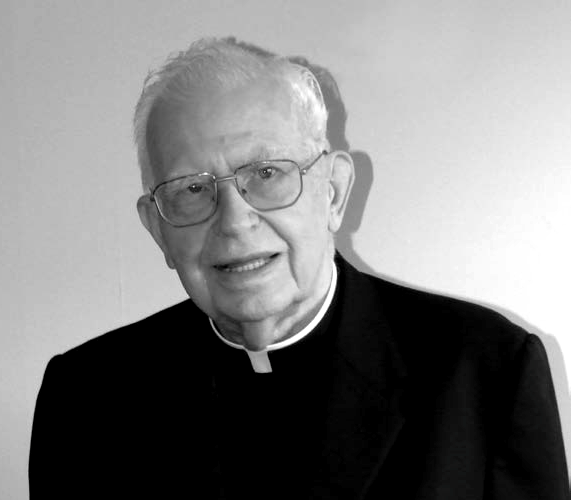
Here is a sermon from the good old days by +Rev. Msgr. Vincent Nicholas Foy (August 14, 1915 – March 13, 2017), from 1943. Readers may recall that Pope Saint Pius X, by the decree Quam Singulari in 1910, lowered the customary age of reception of Holy Communion – after the rigours of the plague[…]Continue reading→
In the Glorious Light of Easter, Alleluia!
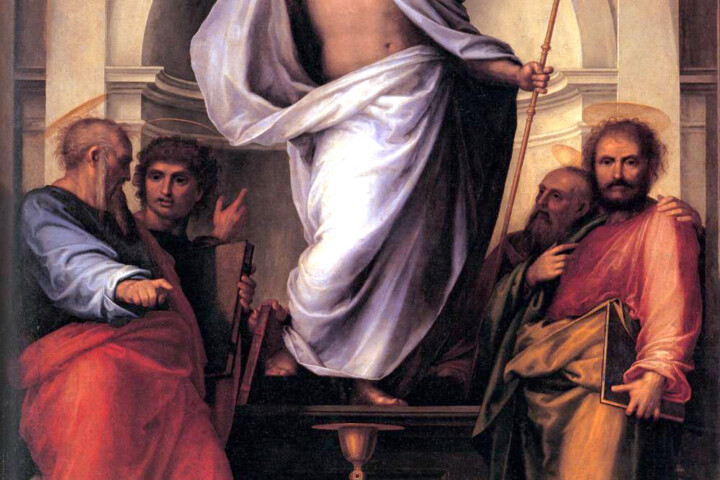
Set your minds on things that are above, not on things that are on earth, for you have died, and your life is hidden with Christ in God. When Christ who is your life is revealed, then you also will be revealed with him in glory (Col. 3:3-4). The Resurrection of Our Lord and Saviour[…]Continue reading→
An Ancient Homily for Holy Saturday
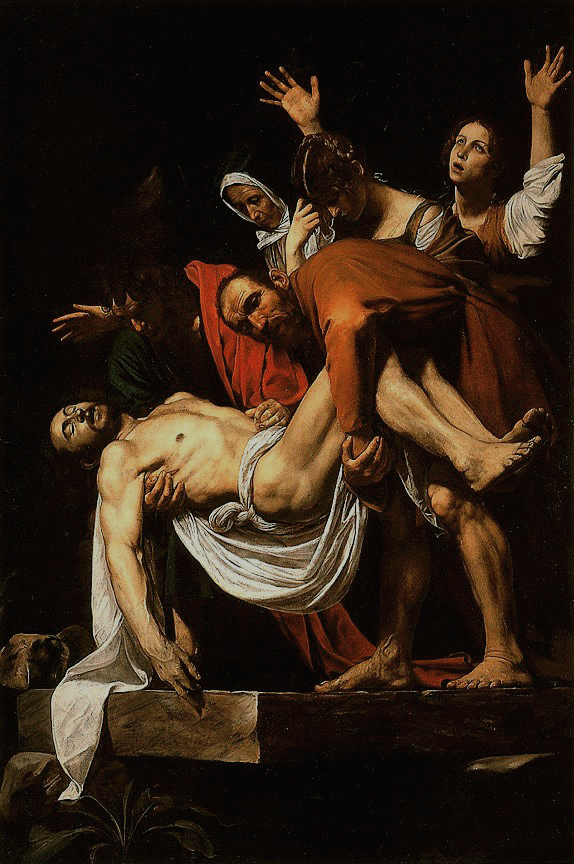
The time between Good Friday and Easter Sunday is one of waiting, in silence, as the world wonders – anticipates – what will happen, after the death of Christ. We re-live this time each year in the anamnesis of our liturgy, and in turn look forward to the glorious re-creation of all things at the[…]Continue reading→
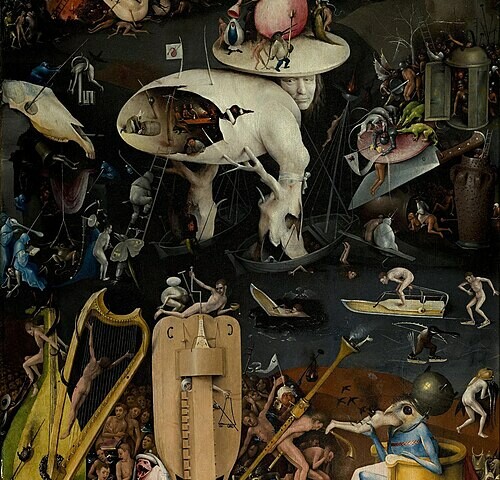
Europe’s Long Descent
(As we meditate on this day on Christ’s burial, and His descent into hell, it is fitting to ponder here with contributor Peter Marcus how the world seems to be heading there as well. The difference is that, although God cannot ‘redeem’ hell, nor those therein, He can and did redeem the world. There is[…]Continue reading→
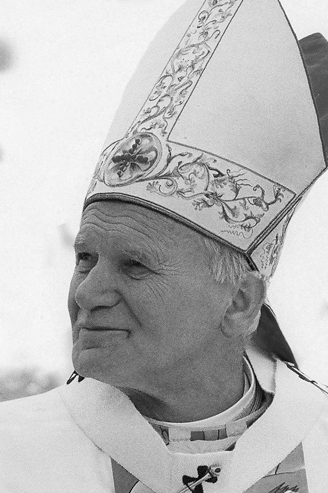
Pope Saint John Paul II’s First Good Friday Homily
ADDRESS OF HIS HOLINESS JOHN PAUL II AT THE CONCLUSION OF THE STATIONS OF THE CROSS AT THE COLOSSEUM Good Friday, 13 April 1979 When we make the Way of the Cross from one station to the next, in spirit we are always at the spot wherethis journey had its “historical” place: where it[…]Continue reading→