
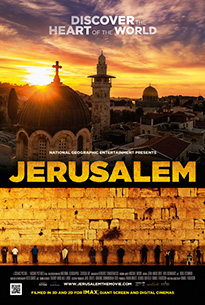
JERUSALEM
On 25 February, the Ontario Science Centre held a media premiere for the National Geographic IMAX film Jerusalem. Writer, producer, and director Daniel Ferguson attended the event along with surprise guests Farah Ammouri, Nadia Tadros, and Revital Zacharie, the three stars of the film. The day consisted of a special viewing for media and students from nearby schools, and a Q&A session followed by a press conference and select private interviews.
The documentary is centred around three young girls: Farah Ammouri, Nadia Tadros, and Revital Zacharie, who tells us what it is like to live in Jerusalem. Farah represents the Muslim quarter, Nadia represents the Christian quarter, and Revital represents the Jewish quarter. Each girl takes the film crew through the city to places that are religiously important to them and talk about how their faith influences their daily lives.
Narrated by Benedict Cumberbatch, the film gives an overview of the three religions and the origins of their holiest places—Judaism’s Western Wall, Christianity’s Church of the Holy Sepulchre, and Islam’s Dome of the Rock. Granted permission to film aerial shots for the first time in twenty-five years, the crew captured images of the city and landscapes that are absolutely breathtaking and transport the viewer to the very heart of Israel.
After the screening, the Q&A session with the director began. When Daniel Ferguson stepped on stage he said, “Before you ask your questions, I have a question for you. If you could ask the girls in the film anything, what would you ask?” A child raised her hand and quietly asked a question. Instead of answering it himself, Ferguson told the audience we would have the opportunity to ask the girls themselves questions. Farah, Nadia, and Revital walked on stage—the crowd broke out into loud applause. The children in the audience eagerly asked questions, such as, “Are you friends now?” The girls answered that even though they had only been together twice in person, they considered themselves as friends. The girls were well-spoken and composed and easily became the centre of attention for the students.
Ferguson received his share of questions afterwards during the press conference. Both he and the girls made up a panel along with Dr. Hooley McLaughlin, Vice-President of the Science Centre. The panel answered a number of questions about technical work, casting the stars, and the rights to film in certain places. The girls were asked about the place of women in what mainstream media sees as male-dominated cultures (they unanimously agreed that women are more important in their cultures than is portrayed by the media) and why they had joined the project. The girls and Ferguson shared the same reasons: they wished to show what life in Jerusalem, behind all the politics, is really like. They wanted to inspire people to find out more about Jerusalem—or even visit it. Most of all, they hoped to forge a connection between these three faiths that live in such close proximity in Jerusalem—that these neighbours will not just walk by each other but be able to interact on a daily basis regardless of their faiths and their differences.
Jerusalem had a large impact on me personally. Although I am familiar with the history of desire and bloodshed behind this Holy City, I had never really considered how people live there now. I was surprised the environment isn’t hostile. Knowing that so many was have been fought due to their differences, I assumed a city with more than three different religious groups would have difficulties living alongside each other. And while there are difficulties, they are not violent or hostile—but social issues between the different cultures. The fact that the religious sects opened their doors to Ferguson and his crew shows they are not unsociable—perhaps just unaware: a situation I think could be easily fixed with a little education about the beliefs and practices of the communities around them. Jerusalem may be the first step.
The information in the film is limited by its 43-minute run time—but the story did its job. The film has awoken a desire in me to know more about this mysterious city and hopefully see it for myself one day.

Saint Kateri , Canada’s Protectress
This was the title given to Saint Kateri Tekakwitha, by Pope Benedict XVI, when he canonized her on October 28th, 2012, along with six others, in Saint Peter’ Square (she had been beatified by Pope John Paul II back in 1980). With Saint Joseph as our protector, along with the Canadian martyrs, we seem to[…]Continue reading→

Remembering Father Alphonse de Valk
(Today marks the sixth anniversary of the death of Father Alphonse de Valk, C.S.B., a faithful, courageous and indefatigable Basilian priest, pro-life-and-family apostle, and the founder of Catholic Insight magazine. Here is what we wrote those on his entering into eternity five years ago, as we continue to remember him in our prayers and thoughts)[…]Continue reading→

My Name is Bernadette
April 16th is a propitious day, for besides the anniversary of Father de Valk’s death, who founded Catholic Insight in its print form decades ago, and the commemoration of the ‘two Benedicts’, mentioned in accompanying posts, today we also recall Saint Bernadette Soubirous, the young visionary to whom the Virgin Mary appeared numerous times at[…]Continue reading→
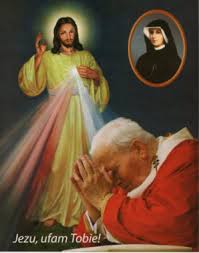
Canonizing Sister Faustina and Divine Mercy
HOMILY OF THE HOLY FATHER MASS IN ST PETER’S SQUARE FOR THE CANONIZATION OF SR MARY FAUSTINA KOWALSKA Sunday, 30 April 2000 1. “Confitemini Domino quoniam bonus, quoniam in saeculum misericordia eius”; “Give thanks to the Lord for he is good; his steadfast love endures for ever” (Ps 118: 1). So the Church sings on the Octave of[…]Continue reading→

Divine Mercy Sunday – An Echo of Every Mass
Reach out your hand and put it in my side. Do not doubt but believe’… ‘My Lord and my God!’ (Jn. 20:18)). Today is Divine Mercy Sunday, and as we celebrate the end of the Easter Octave, we contemplate the wounded side of our Saviour, the Church’s source of life. On Good Friday in the[…]Continue reading→
First Holy Communion: Sermon from May 16, 1943
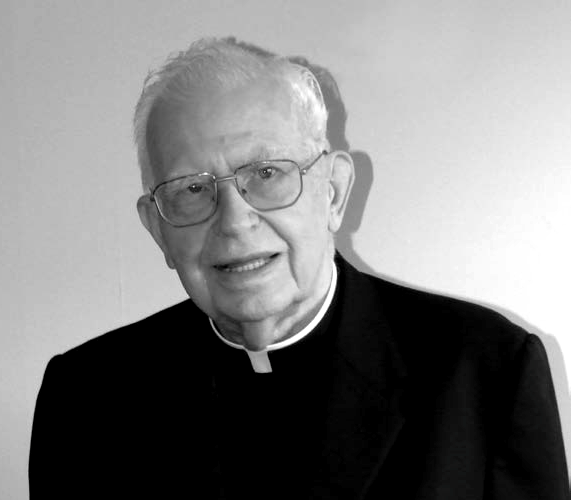
Here is a sermon from the good old days by +Rev. Msgr. Vincent Nicholas Foy (August 14, 1915 – March 13, 2017), from 1943. Readers may recall that Pope Saint Pius X, by the decree Quam Singulari in 1910, lowered the customary age of reception of Holy Communion – after the rigours of the plague[…]Continue reading→
In the Glorious Light of Easter, Alleluia!
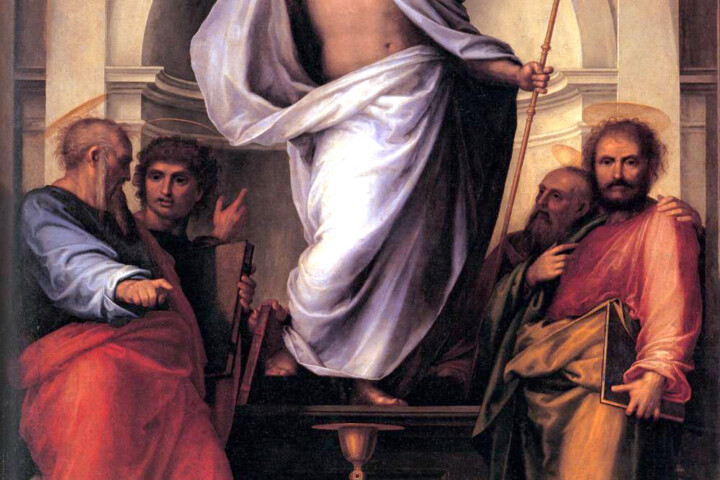
Set your minds on things that are above, not on things that are on earth, for you have died, and your life is hidden with Christ in God. When Christ who is your life is revealed, then you also will be revealed with him in glory (Col. 3:3-4). The Resurrection of Our Lord and Saviour[…]Continue reading→
An Ancient Homily for Holy Saturday
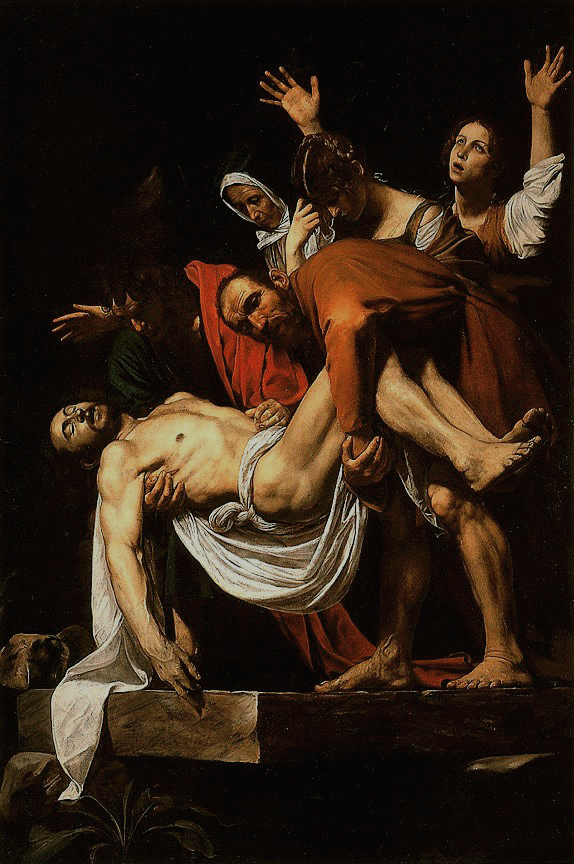
The time between Good Friday and Easter Sunday is one of waiting, in silence, as the world wonders – anticipates – what will happen, after the death of Christ. We re-live this time each year in the anamnesis of our liturgy, and in turn look forward to the glorious re-creation of all things at the[…]Continue reading→
Europe’s Long Descent
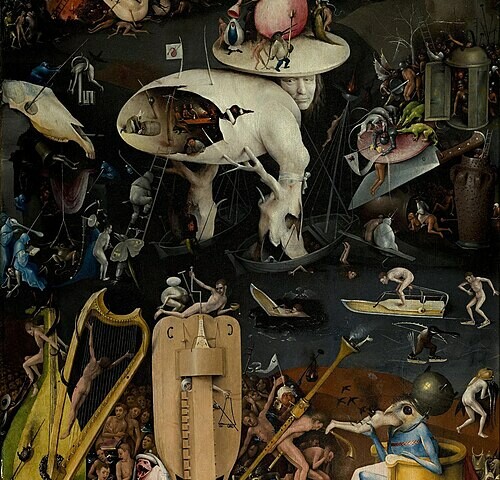
(As we meditate on this day on Christ’s burial, and His descent into hell, it is fitting to ponder here with contributor Peter Marcus how the world seems to be heading there as well. The difference is that, although God cannot ‘redeem’ hell, nor those therein, He can and did redeem the world. There is[…]Continue reading→
Pope Saint John Paul II’s First Good Friday Homily
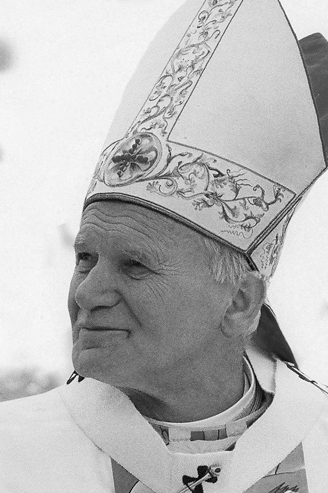
ADDRESS OF HIS HOLINESS JOHN PAUL II AT THE CONCLUSION OF THE STATIONS OF THE CROSS AT THE COLOSSEUM Good Friday, 13 April 1979 When we make the Way of the Cross from one station to the next, in spirit we are always at the spot wherethis journey had its “historical” place: where it[…]Continue reading→