
Rebuilding Catholic culture
This summer, Saskatoon hosted the first ever Rebuilding Catholic Culture Conference on 19 and 20 July. Keynote speakers were Catholic biographer Joseph Pearce and Saskatoon’s own Dr. Ryan Topping—from whose recent book, Rebuilding Catholic Culture (Sophia 2012), the event took its name.
The event was the fruit of an entirely grassroots effort. Along with a few friends, one Saskatoon family—the Sidloskis—wished to offer to the local Christian community a weekend of fruitful learning and immersion in the riches of Catholic culture. And they did! Nearly 200 people attended. And, not to be overlooked, the organizers stayed in the black—which portends well for future events.
As a Ukrainian Catholic priest concelebrating Mass during the weekend, it struck me that a Catholic revival Saskatchewan-style would include both the Christian West and the Christian East, Roman Catholics and Ukrainian Catholics. It would also include a friendship and fellowship with Christian Evangelicals, as evidenced by the participation at the conference book tables by local hero Shawna Sparrow, author of Tough Crowd: My Adventures as a Chastity Educator.
In a world where it is possible to claim that being spiritual without being religious, a Catholic revival will necessarily happen first within the Church. Several times during the presentations I was reminded of the new encyclical by Pope Francis, Lumen Fidei. Trust in the authority of Christ to speak about God: believe in Christ and believe Christ. As the Holy Father has stated, “In many areas in our lives we trust others who know more than we do. We trust the architect who builds our home, the pharmacist who gives us medicine for healing, the lawyer who defends us in court. We also need someone trustworthy and knowledgeable where God is concerned. Jesus, the Son of God, is the one who makes God known to us (cf. Jn 1:18). Christ’s life, his way of knowing the Father and living in complete and constant relationship with him, opens up new and inviting vistas for human experience” (Lumen Fidei, 18).
The work of conversion and rebuilding Catholic culture includes the re-conversion of people who are already baptized Catholics. Their conversion will be away from liberal ideas that are contrary to Church teaching and back to a full acceptance, defense, and teaching of orthodox Catholic Christianity. Rebuilding Catholic culture means challenging people to break free of lethargy and spiritual stupor. Joseph Pearce spoke of the conversion of Oscar Wilde, for instance, and how the playwright’s new zeal for Christianity meant a denunciation of his former homosexual lifestyle. This is not the typical take on Wilde—nor on sex. Today, a false view of the Charter of Rights has led people to believe that any restriction on sexual freedom must be an attack on the person. This is contrary to Wilde who discovered, late in life, that only the Church offers a truly liberating vision of pleasure.
On this, I particularly appreciated hearing the quote from one of Wilde’s poem, “How else but through a broken heart/ May Lord Christ enter in?” As a priest and counselor of souls, I have direct experience of this. The metaphor and feeling of brokenness is a recurring experience in the post-abortion ministry with which I am involved: Rachel’s Vineyard retreats. Abortion is such a violent event that it is very common for a person to conclude that they are beyond hope, that participating in and willing such a trauma places one beyond redemption. When someone finally accepts the invitation to attend one of our healing retreats, the first theme covered exposes that self-condemnation for what it really is: “a lie from the pit of hell,” as the founder of Rachel’s Vineyard, Dr. Theresa Burke, often explains. God can bring new life even from tragedy.
Dr. Topping quoted Chesterton to explain the relationship between faith and reason in the lives of individual Christians and the relationship between Church and culture: “Insofar as religion has gone, reason is going.” In contrast, the problem with relativism, Dr. Topping explained, is that it results in the inability to think and use reason and, further, that the wisdom of the past is dismissed as irrelevant. Whenever a person “seeks after truth, you can’t help but find Christ” (Simone Weil).
Dr. Topping finished with a tour de force of the history of Catholic education in Canada. His primary message was this: parents are the first educators of children. If parents find the classroom contradicts the faith of the home, it’s their responsibility to fix the problem or pull them out. All in all this was a fabulous weekend of learning, worship, and good conversation. The speakers were excellent, but the real praise ought to rest with the organizers who saw a need, and met it. Why shouldn’t every city across the country host something like a Rebuilding Catholic Culture Conference next summer?

Carney’s Amoral Majority
After five defections – euphemistically described as ‘crossing the floor’ – and three by-elections, Mark Carney and his Liberals how have their coveted majority. One wonders what bowls of pottage were offered in back-room deals. In the archaic monarchical system that is the Dominion of Canada, this majority allows the newly-minted Prime Minister to rule[…]Continue reading→

A Tale of Two Benedicts
A grace-filled Holy Week to all our readers! As we await and prepare for the Resurrection about to dawn upon us, we might keep in mind two Benedicts: Pope Emeritus Benedict XVI, requiescat in pace, elected on this day in 2005; and today’s commemoration of the mystic pilgrim, Benedict Joseph Labre, who died on this[…]Continue reading→

Saint Lydwina of Schiedam and Suffering Joyfully
Saint Lydwina of Schiedam (1380 – 1433) was one of the countless and glorious ‘victim souls’ in the history of the Church, those whose lives are filled with suffering, often of an unimaginable intensity, but who suffer joyfully. She was a fifteen-year old Dutch girl, out skating one day, when she fell and broke one[…]Continue reading→

The Glorious Martyrdoms of Martin and Maximus
As we enter into Eastertide, we recall on this 13th of April Pope Saint Martin I (+655), one of the noblest, if most tragic, of the successors of Saint Peter. Born in Umbria, Italy, he was of noble lineage, with great intelligence combined with charity and love of the poor and the Church. While still[…]Continue reading→

Saint Stanislaus of Szczepanów
We celebrate Saint Stanislaus today (+ April 11, 1079), in light of this Easter Octave, a bishop and martyr who accepted the episcopacy only at the direct order of Pope Alexander II. He proved a wise and courageous leader of his flock, put to death by his own king, Boleslaus, for rebuking the monarch’s ‘immoral[…]Continue reading→

Saint Gemma Galgani
On this April 11th, in 1903 – the same year that the Italian Guiseppe Sarto was elected Pope later that summer as Pius X – a lovely, young Italian woman died, by the name of Gemma Galgani. She lived a brief life of 24 years, as did a number of other young saints, including Pier[…]Continue reading→

An Ideological and Improper Translation
I noticed something odd with the psalm reading at Mass the other day. Our bishops’ conference here in Canada has decreed that the Mass in English – Novus Ordo – use the ‘NRSV’, the ‘New Revised Standard Version’, an ‘updated’ translation of the original RSV, first published in 1952. This ‘new translation’ has the tendency[…]Continue reading→
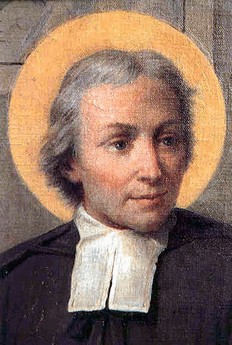
Saint Jean-Baptiste de la Salle: A Teacher for Teachers
Jean-Baptiste de la Salle (1651 – 1719), a French nobleman, ordained a priest, founded the first order in the Church’s history entirely without priests, and this came about almost by accident. I say ‘almost’, for, of course, there are no accidents with God. Destined for ordination from an early age, Jean-Baptiste never looked back, even[…]Continue reading→
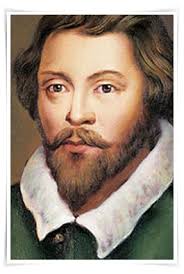
Three Easter Musical Gems: Bach, Palestrina and Byrd
A very blessed and glorious Easter! Christus surrexit vere, alleluia! As we begin this Easter Octave with the great Solemnity of Easter, music to lift the soul would be one of Bach’s Easter cantatas, composed during his time at Leipzig in the early 1700’s, for the six Sundays of this festive season, leading up to[…]Continue reading→
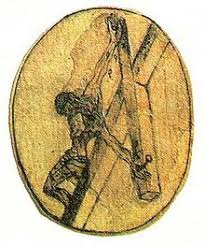
Good Friday and Suffering
Evil and pain is always a mystery, that whole mysterium iniquitatis, of which Saint Paul writes (2 Thess 2:7). In 1984, Pope Saint John Paul II penned an Apostolic Letter on the nature and purpose of human suffering, Salvifici Doloris (curiously, now looking back, the same year he made his first apostolic journey to Canada).[…]Continue reading→