
The Path to Rome
From the preface to The Path to Rome, 1902
I said, “I will start from the place where I served in arms for my sins; I will walk all the way and take advantage of no wheeled thing; I will sleep rough and cover thirty miles a day, and I will hear Mass every morning; and I will be present at high Mass in St. Peter’s on the Feast of St. Peter and St. Paul.”
Then I went out of the church still having that statue in my mind, and I walked again farther into the world, away from my native valley, and so ended some months after in a place whence I could fulfil my vow; and I started as you shall hear. All my other vows I broke one by one. For a faggot must be broken every stick singly. But the strict vow I kept, for I entered Rome on foot that year in time, and I heard high Mass on the Feast of the Apostles, as many can testify—to wit: Monsignor this, and Chamberlain the other, and the Bishop of so-and-so—o—polis in partibus infidelium; for we were all there together.
And why (you will say) is all this put by itself in what Anglo-Saxons call a Foreword, but gentlemen a Preface? Why, it is because I have noticed that no book can appear without some such thing tied on before it; and as it is folly to neglect the fashion, be certain that I read some eight or nine thousand of them to be sure of how they were written and to be safe from generalizing on too frail a basis.
And having read them and discovered first, that it was the custom of my contemporaries to belaud themselves in this prolegomenaical ritual (some saying in a few words that they supplied a want, others boasting in a hundred that they were too grand to do any such thing, but most of them baritoning their apologies and chanting their excuses till one knew that their pride was toppling over)—since, I say, it seemed a necessity to extol one’s work, I wrote simply on the lintel of my diary, Praise of this Book, so as to end the matter at a blow. But whether there will be praise or blame I really cannot tell, for I am riding my pen on the snaffle, and it has a mouth of iron.
Now there is another thing book writers do in their Prefaces, which is to introduce a mass of nincompoops of whom no one ever heard, and to say “my thanks are due to such and such” all in a litany, as though any one cared a farthing for the rats! If I omit this believe me it is but on account of the multitude and splendour of those who have attended at the production of this volume. For the stories in it are copied straight from the best authors of the Renaissance, the music was written by the masters of the eighteenth century, the Latin is Erasmus’ own; indeed, there is scarcely a word that is mine. I must also mention the Nine Muses, the Three Graces, Bacchus, the Maenads, the Panthers, the Fauns, and I owe very hearty thanks to Apollo.
Yet again, I see that writers are for ever anxious of their style, thinking (not saying)— “True, I used ‘and which’ on page 47, but Martha Brown the stylist gave me leave;” or: “What if I do end a sentence with a preposition? I always follow the rules of Mr. Twist in his ‘’Tis Thus ’Twas Spoke,’ Odd’s Body an’ I do not!”
Now this is a pusillanimity of theirs (the book writers) that they think style power, and yet never say as much in their Prefaces. Come, let me do so. Where are you? Let me marshal you, my regiments of words!

Carney’s Amoral Majority
After five defections – euphemistically described as ‘crossing the floor’ – and three by-elections, Mark Carney and his Liberals how have their coveted majority. One wonders what bowls of pottage were offered in back-room deals. In the archaic monarchical system that is the Dominion of Canada, this majority allows the newly-minted Prime Minister to rule[…]Continue reading→

A Tale of Two Benedicts
A grace-filled Holy Week to all our readers! As we await and prepare for the Resurrection about to dawn upon us, we might keep in mind two Benedicts: Pope Emeritus Benedict XVI, requiescat in pace, elected on this day in 2005; and today’s commemoration of the mystic pilgrim, Benedict Joseph Labre, who died on this[…]Continue reading→

Saint Lydwina of Schiedam and Suffering Joyfully
Saint Lydwina of Schiedam (1380 – 1433) was one of the countless and glorious ‘victim souls’ in the history of the Church, those whose lives are filled with suffering, often of an unimaginable intensity, but who suffer joyfully. She was a fifteen-year old Dutch girl, out skating one day, when she fell and broke one[…]Continue reading→

The Glorious Martyrdoms of Martin and Maximus
As we enter into Eastertide, we recall on this 13th of April Pope Saint Martin I (+655), one of the noblest, if most tragic, of the successors of Saint Peter. Born in Umbria, Italy, he was of noble lineage, with great intelligence combined with charity and love of the poor and the Church. While still[…]Continue reading→

Saint Stanislaus of Szczepanów
We celebrate Saint Stanislaus today (+ April 11, 1079), in light of this Easter Octave, a bishop and martyr who accepted the episcopacy only at the direct order of Pope Alexander II. He proved a wise and courageous leader of his flock, put to death by his own king, Boleslaus, for rebuking the monarch’s ‘immoral[…]Continue reading→

Saint Gemma Galgani
On this April 11th, in 1903 – the same year that the Italian Guiseppe Sarto was elected Pope later that summer as Pius X – a lovely, young Italian woman died, by the name of Gemma Galgani. She lived a brief life of 24 years, as did a number of other young saints, including Pier[…]Continue reading→
An Ideological and Improper Translation
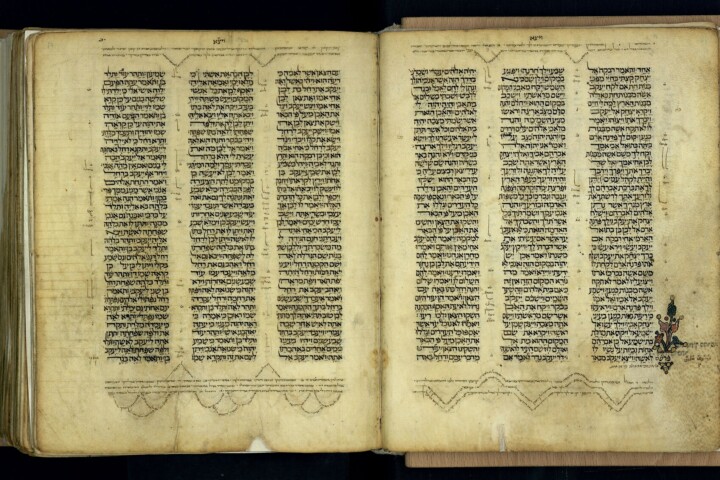
I noticed something odd with the psalm reading at Mass the other day. Our bishops’ conference here in Canada has decreed that the Mass in English – Novus Ordo – use the ‘NRSV’, the ‘New Revised Standard Version’, an ‘updated’ translation of the original RSV, first published in 1952. This ‘new translation’ has the tendency[…]Continue reading→
Saint Jean-Baptiste de la Salle: A Teacher for Teachers
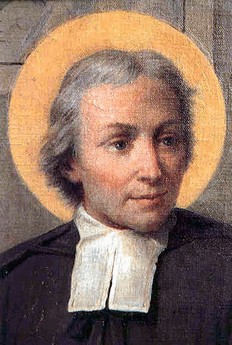
Jean-Baptiste de la Salle (1651 – 1719), a French nobleman, ordained a priest, founded the first order in the Church’s history entirely without priests, and this came about almost by accident. I say ‘almost’, for, of course, there are no accidents with God. Destined for ordination from an early age, Jean-Baptiste never looked back, even[…]Continue reading→
Three Easter Musical Gems: Bach, Palestrina and Byrd
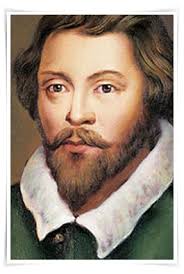
A very blessed and glorious Easter! Christus surrexit vere, alleluia! As we begin this Easter Octave with the great Solemnity of Easter, music to lift the soul would be one of Bach’s Easter cantatas, composed during his time at Leipzig in the early 1700’s, for the six Sundays of this festive season, leading up to[…]Continue reading→
Good Friday and Suffering
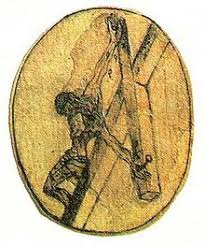
Evil and pain is always a mystery, that whole mysterium iniquitatis, of which Saint Paul writes (2 Thess 2:7). In 1984, Pope Saint John Paul II penned an Apostolic Letter on the nature and purpose of human suffering, Salvifici Doloris (curiously, now looking back, the same year he made his first apostolic journey to Canada).[…]Continue reading→