
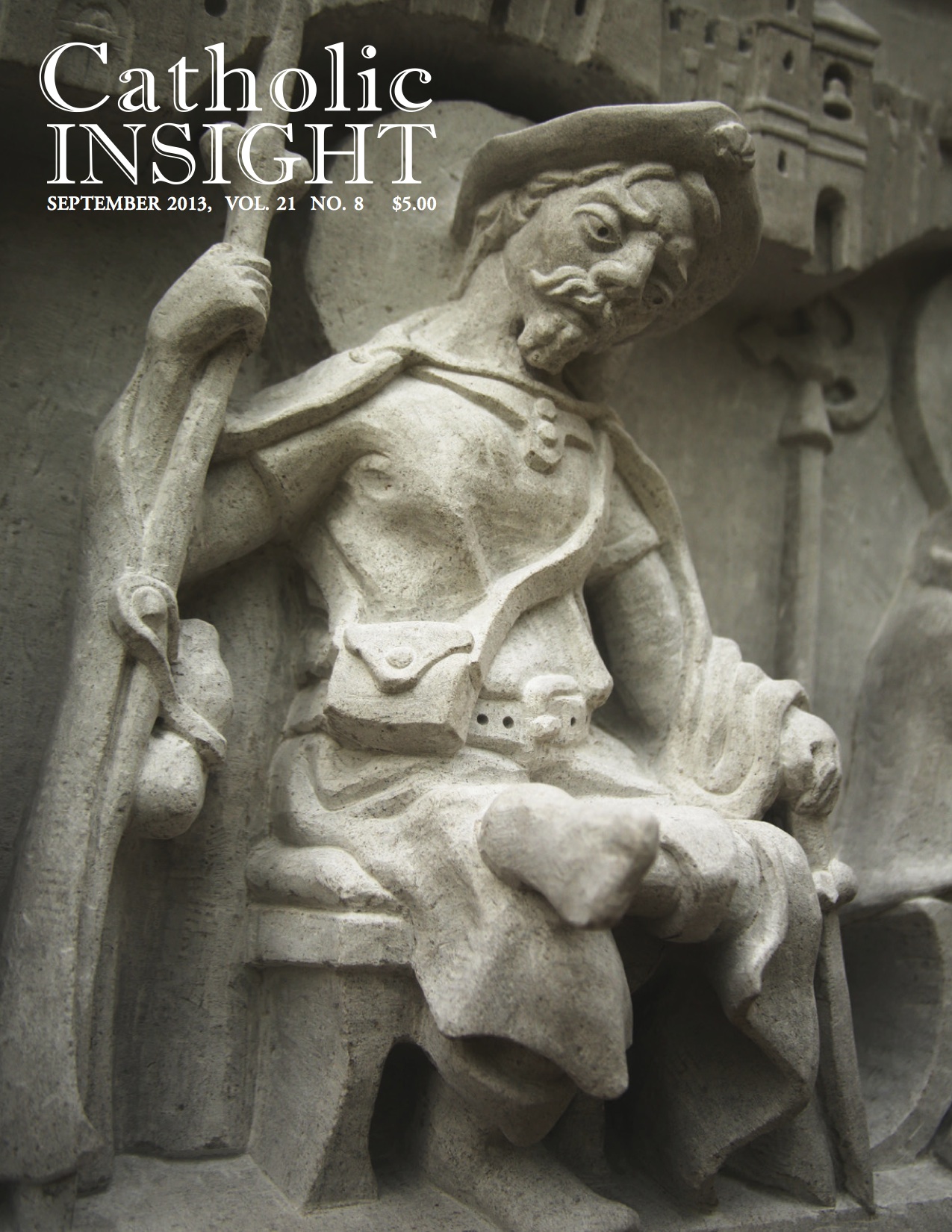
St. James the Greater
Our September artist Andrew Wilson Smith is a freelance sculptor and stone carver, working in a variety of media including cast bronze, plaster, and stone. Mr. Smith has completed a number of sculpture commissions in both sacred and secular settings. In addition to his work as an artist, Mr. Smith is deeply involved in teaching and promoting Liberal Arts education. Beginning in the fall of 2013, Mr. Smith will number himself among the founding faculty of Gregory the Great Academy, a small Liberal Arts boarding school in northeastern Pennsylvania. For more information about the artist, visit andrewwilsonsmith.com. For more information about Gregory the Great Academy, visit gregorythegreatacademy.org.
What is this piece about?
My most recent project is a carving of the twelve Apostles, which is part of the grand portal into the Oratory at Our Lady of the Annunciation Abbey in Oklahoma. The followers of Christ are shown in a timeless space, enthroned in the Heavenly Jerusalem. My intention was to work within a Romanesque idiom, but to still give each Apostle an individual personality. In this close up, St. James the Greater is shown in the guise of a pilgrim en route to the shrine of Santiago in Spain. He carries the staff of a pilgrim and wears a sea shell in his hat, the symbol of baptism and long journeys (the grooves of the shell symbolize many paths culminating at one place). One way of interpreting this part of the sculpture is by understanding the Christian life as a pilgrimage from earth to heaven. St. James wearily rests his booted feet along the way, but is resolved to continue on his journey undaunted.
How did you get your start as an artist?
I had many of great opportunities as a child to visit museums and churches with my parents. I can’t remember a time when I did not own a big black sketchbook, usually a gift from my father.
Who or what did you learn from?
The most formative learning experiences for me were working in the studios of other artists, especially with the sculptor/painter Anthony Visco of Philadelphia. I have always felt that the studio apprentice method of passing on tradition in the arts is superior to the approach taken by art schools. At various times I have had the privilege of passing on this kind of experience to apprentices of my own, which has been very rewarding.
Why did you continue sculpting? What draws you to it?
I sometimes tell people that I took up sculpture because I couldn’t figure out how to paint. I know that’s a bit flippant, but I really can’t imagine working in any other field.
What do you do with your pieces?
Most of my projects are done on commission. I have been very blessed in having had several opportunities to design sculptures as permanent installations in churches and other public spaces. I have also done a number of projects that are now in private collections.
How would you define beauty?
Beauty is one of the three transcendental qualities in nature together with Truth and Goodness. These qualities are forever intertwined in a graceful dance; to separate the Beautiful from the True and the Good is always a mistake and leads to a distorted view of reality. Beauty tends to be the most elusive of these graces. An artist is more likely to discover and depict Beauty if he seeks among her sisters, Truth and Goodness.
Who inspires you and what inspires you?
In general, I would say that I take much of my inspiration from the Western Tradition as a whole. My goal as an artist is to be a participant in this tradition, rather than one of its many eulogists. Modernism has shown itself to be a cultural cul-de-sac, leading nowhere. Most of the traffic has been going around in circles for the last seventy years or so. If we can get back to the road that we were on in the first place, we might stand a chance of getting someplace.

Saint Kateri , Canada’s Protectress
This was the title given to Saint Kateri Tekakwitha, by Pope Benedict XVI, when he canonized her on October 28th, 2012, along with six others, in Saint Peter’ Square (she had been beatified by Pope John Paul II back in 1980). With Saint Joseph as our protector, along with the Canadian martyrs, we seem to[…]Continue reading→

Remembering Father Alphonse de Valk
(Today marks the sixth anniversary of the death of Father Alphonse de Valk, C.S.B., a faithful, courageous and indefatigable Basilian priest, pro-life-and-family apostle, and the founder of Catholic Insight magazine. Here is what we wrote those on his entering into eternity five years ago, as we continue to remember him in our prayers and thoughts)[…]Continue reading→

My Name is Bernadette
April 16th is a propitious day, for besides the anniversary of Father de Valk’s death, who founded Catholic Insight in its print form decades ago, and the commemoration of the ‘two Benedicts’, mentioned in accompanying posts, today we also recall Saint Bernadette Soubirous, the young visionary to whom the Virgin Mary appeared numerous times at[…]Continue reading→
Canonizing Sister Faustina and Divine Mercy
HOMILY OF THE HOLY FATHER MASS IN ST PETER’S SQUARE FOR THE CANONIZATION OF SR MARY FAUSTINA KOWALSKA Sunday, 30 April 2000 1. “Confitemini Domino quoniam bonus, quoniam in saeculum misericordia eius”; “Give thanks to the Lord for he is good; his steadfast love endures for ever” (Ps 118: 1). So the Church sings on the Octave of[…]Continue reading→

Divine Mercy Sunday – An Echo of Every Mass
Reach out your hand and put it in my side. Do not doubt but believe’… ‘My Lord and my God!’ (Jn. 20:18)). Today is Divine Mercy Sunday, and as we celebrate the end of the Easter Octave, we contemplate the wounded side of our Saviour, the Church’s source of life. On Good Friday in the[…]Continue reading→
First Holy Communion: Sermon from May 16, 1943
Here is a sermon from the good old days by +Rev. Msgr. Vincent Nicholas Foy (August 14, 1915 – March 13, 2017), from 1943. Readers may recall that Pope Saint Pius X, by the decree Quam Singulari in 1910, lowered the customary age of reception of Holy Communion – after the rigours of the plague[…]Continue reading→
In the Glorious Light of Easter, Alleluia!
Set your minds on things that are above, not on things that are on earth, for you have died, and your life is hidden with Christ in God. When Christ who is your life is revealed, then you also will be revealed with him in glory (Col. 3:3-4). The Resurrection of Our Lord and Saviour[…]Continue reading→
An Ancient Homily for Holy Saturday
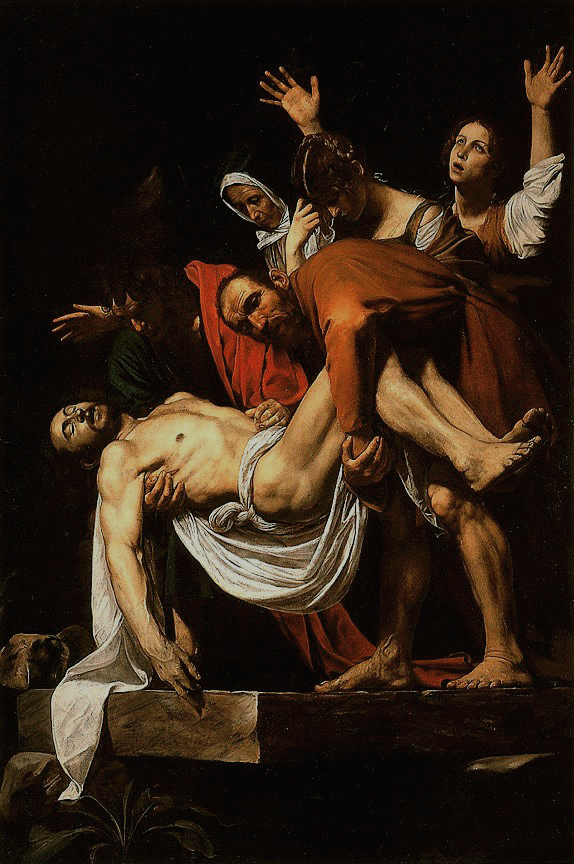
The time between Good Friday and Easter Sunday is one of waiting, in silence, as the world wonders – anticipates – what will happen, after the death of Christ. We re-live this time each year in the anamnesis of our liturgy, and in turn look forward to the glorious re-creation of all things at the[…]Continue reading→
Europe’s Long Descent
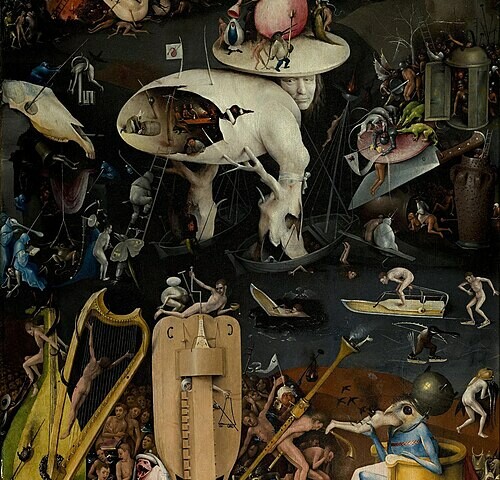
(As we meditate on this day on Christ’s burial, and His descent into hell, it is fitting to ponder here with contributor Peter Marcus how the world seems to be heading there as well. The difference is that, although God cannot ‘redeem’ hell, nor those therein, He can and did redeem the world. There is[…]Continue reading→
Pope Saint John Paul II’s First Good Friday Homily
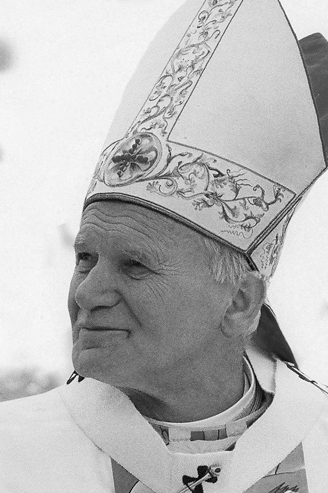
ADDRESS OF HIS HOLINESS JOHN PAUL II AT THE CONCLUSION OF THE STATIONS OF THE CROSS AT THE COLOSSEUM Good Friday, 13 April 1979 When we make the Way of the Cross from one station to the next, in spirit we are always at the spot wherethis journey had its “historical” place: where it[…]Continue reading→