
Be not a bison
A few weeks ago, as my family drove through South Dakota, we spotted a small herd of bison in a cramped, muddy pen. It was sad enough to cause my mother to remark that they were mere shadows of their former selves. Bison invoke imagery of thousands of mighty bovine beasts roaming free across open prairies. You think of snow-covered bison in Yellowstone and adorable little brown bison calves romping among spring flowers. You do not think of sad, scraggly, mud-splattered creatures standing knee-deep in filth. Of course, any animal looks miserable and awful in feedlot conditions; but bison seem particularly awful because what they are is such a far cry from what they should be.
In Mere Christianity, C. S. Lewis says, “There are no ordinary people. You have never talked to a mere mortal. Nations, cultures, arts, civilizations—these are mortal, and their life is to ours as the life of a gnat. But it is immortals whom we joke with, work with, marry, snub and exploit—immortal horrors or everlasting splendors.” This is the same thing that we have been told since our earliest days of Religious Education classes. We are God’s children created in His image, to know, love, and serve Him. Earth is not our home; we were made for Heaven. All of this is constantly drilled into us until it is the easiest thing in the world to ignore. We go through the motions, attending Mass on Sundays and Holy Days of Obligation, we dutifully say the Rosary and go to Confession. But unless we are very careful, it all becomes just a habit.
In North America, life is not that difficult. Most people have what they need to survive. I do not mean that there are not those who struggle, or are poor or homeless; but in North America, for the most part, finding a clean water supply is not an impossible task. Catholics in North America do not have to work very hard to be faithful. It is so much a part of us to be Catholic that it hardly requires any effort or thought. Sure, we have to get in our cars and drive to Mass, but it isn’t like we have to walk thirty miles on unpaved roads without shoes. And more and more, the standards that Catholics and Christians in general are asked to live up to are lowered to make them easier to attain. North America is comfortable. And where faith is concerned, comfortable is probably the most dangerous thing we could be.
Faith thrives on trials and struggle. It abounds in the face of danger and confrontation. It fades when people have everything that they need because then people forget that they ought to be working toward something better. For instance, when my little brother complains about being hungry, I might say to him, “You could be a child starving in Africa,” not “If you live a holy life and do not complain about small things like being hungry for the next ten minutes while I finish cooking your supper, then you will be happy with God in the next world” (where, presumably, supper will not be late because of sisters who manage time badly). The emphasis is constantly on how much more we have than others, not on how much we are lacking ourselves.
This does not mean that we should be miserable. One of the most astounding and incredible things about the saints was, in fact, their capacity for joy. In A Bedside Book of Saints, Fr. Aloysius Roche writes, “It is because our Lord demands great sacrifices from His servants that He compensates and fortifies them with the spirit of joy.” If there is no sacrifice, then there is no reason to look for anything better. If there is no reason to look for anything better, then we probably won’t. We will not strive to be holier; we will not seek out God’s will.
The bison that my mother and I noticed while driving down the road could, without too much trouble, have gotten out of their fence. And immediately on the other side of that fence was an endless stretch of green grass. But they stood there in the mud and filth and misery because they were content to eat and drink only the food that was brought to them. And for a bison, that is probably enough—its not a great life, but it is okay.
But humans require more than “being comfortable.” They require God, which means that it is absolutely crucial that we do climb out of the “comfortable” feedlot and try to be what every human from the beginning of time was meant to be.
Photo source.

Saint Kateri , Canada’s Protectress
This was the title given to Saint Kateri Tekakwitha, by Pope Benedict XVI, when he canonized her on October 28th, 2012, along with six others, in Saint Peter’ Square (she had been beatified by Pope John Paul II back in 1980). With Saint Joseph as our protector, along with the Canadian martyrs, we seem to[…]Continue reading→

Remembering Father Alphonse de Valk
(Today marks the sixth anniversary of the death of Father Alphonse de Valk, C.S.B., a faithful, courageous and indefatigable Basilian priest, pro-life-and-family apostle, and the founder of Catholic Insight magazine. Here is what we wrote those on his entering into eternity five years ago, as we continue to remember him in our prayers and thoughts)[…]Continue reading→

My Name is Bernadette
April 16th is a propitious day, for besides the anniversary of Father de Valk’s death, who founded Catholic Insight in its print form decades ago, and the commemoration of the ‘two Benedicts’, mentioned in accompanying posts, today we also recall Saint Bernadette Soubirous, the young visionary to whom the Virgin Mary appeared numerous times at[…]Continue reading→
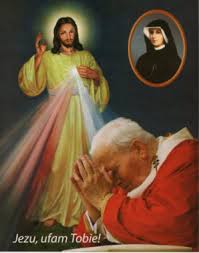
Canonizing Sister Faustina and Divine Mercy
HOMILY OF THE HOLY FATHER MASS IN ST PETER’S SQUARE FOR THE CANONIZATION OF SR MARY FAUSTINA KOWALSKA Sunday, 30 April 2000 1. “Confitemini Domino quoniam bonus, quoniam in saeculum misericordia eius”; “Give thanks to the Lord for he is good; his steadfast love endures for ever” (Ps 118: 1). So the Church sings on the Octave of[…]Continue reading→

Divine Mercy Sunday – An Echo of Every Mass
Reach out your hand and put it in my side. Do not doubt but believe’… ‘My Lord and my God!’ (Jn. 20:18)). Today is Divine Mercy Sunday, and as we celebrate the end of the Easter Octave, we contemplate the wounded side of our Saviour, the Church’s source of life. On Good Friday in the[…]Continue reading→
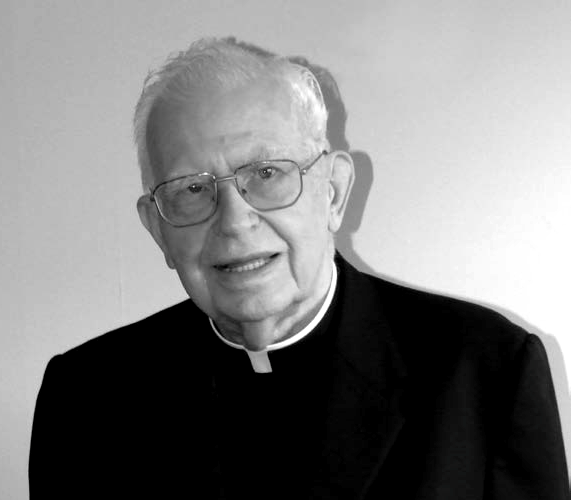
First Holy Communion: Sermon from May 16, 1943
Here is a sermon from the good old days by +Rev. Msgr. Vincent Nicholas Foy (August 14, 1915 – March 13, 2017), from 1943. Readers may recall that Pope Saint Pius X, by the decree Quam Singulari in 1910, lowered the customary age of reception of Holy Communion – after the rigours of the plague[…]Continue reading→
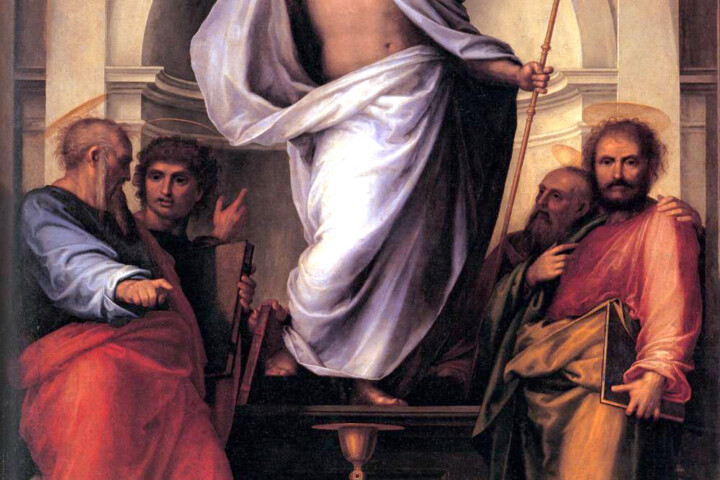
In the Glorious Light of Easter, Alleluia!
Set your minds on things that are above, not on things that are on earth, for you have died, and your life is hidden with Christ in God. When Christ who is your life is revealed, then you also will be revealed with him in glory (Col. 3:3-4). The Resurrection of Our Lord and Saviour[…]Continue reading→
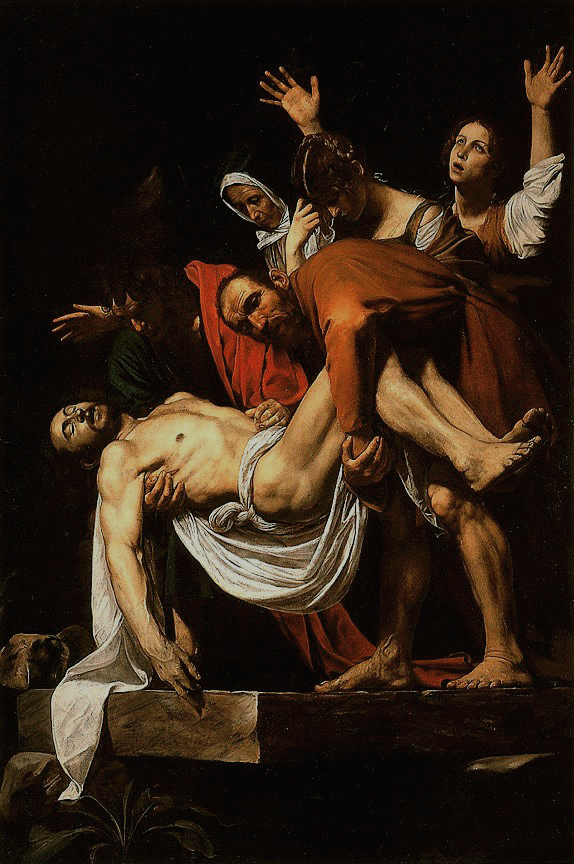
An Ancient Homily for Holy Saturday
The time between Good Friday and Easter Sunday is one of waiting, in silence, as the world wonders – anticipates – what will happen, after the death of Christ. We re-live this time each year in the anamnesis of our liturgy, and in turn look forward to the glorious re-creation of all things at the[…]Continue reading→
Europe’s Long Descent
(As we meditate on this day on Christ’s burial, and His descent into hell, it is fitting to ponder here with contributor Peter Marcus how the world seems to be heading there as well. The difference is that, although God cannot ‘redeem’ hell, nor those therein, He can and did redeem the world. There is[…]Continue reading→
Pope Saint John Paul II’s First Good Friday Homily
ADDRESS OF HIS HOLINESS JOHN PAUL II AT THE CONCLUSION OF THE STATIONS OF THE CROSS AT THE COLOSSEUM Good Friday, 13 April 1979 When we make the Way of the Cross from one station to the next, in spirit we are always at the spot wherethis journey had its “historical” place: where it[…]Continue reading→