

The hub of Christianity
We really have to take back our history. In other words, Catholics have to know about their collective past and be prepared to explain it. Seldom is this as essential as with the Crusades, used by Muslims as well as secularists to attack the Church. Their arguments are mostly nonsense. Palestine, Syria, and Egypt were at one point almost entirely Christian and represented the very epicentre of Christian thought and energy. By the eighth century, Muslim armies has conquered North Africa and most of Spain and were determined to move into other Christian territory. In the eleventh century the Seljuk Turks declared war on Asia Minor (modern Turkey), an area that had then been Christian for a thousand years.
It was only after such systematic provocation that in 1095 Pope Urban II called for Europe to take back these Christian lands, mainly because of the screams for help from the eastern emperor in Constantinople. What followed was a number of attempts over more than a century, some successful and some ludicrous, to win back large chunks of the Middle East. The last Crusaders were defeated and expelled by 1291, but in their time in the region they had experienced success as well as defeat.
The Seljuk Turks were particularly oppressive. They killed unarmed pilgrims, forbade Christian services, and destroyed churches. Moreover, there is no serious doubt that Islam’s intention was to move further west and take all of Europe. In the late fifteenth and early sixteenth centuries, Muslim troops forced Rome to be evacuated and also besieged Vienna. Hardly a war of resistance against an alien aggressor.
Nor were the men who took to the Crusades the impoverished thugs we have been led to believe. New research shows them to have generally been wealthy and to have left land and power behind in Europe. Many if not most were also devoutly religious and saw their duty as a pilgrimage. Holy people, however, sometimes commit unholy acts.
Once in Palestine, Lebanon, and Syria the battles themselves were conducted like any other military confrontation of the era. That is, with terrible loss of life and enormous suffering but generally far less mass cruelty and sadism than routinely employed by the atheistic military forces of Hitler, Stalin, and their friends. Indeed, the crass statement that “more people have died because of religion than anything else” is bizarre. The officially Godless regimes of the twentieth century alone destroyed that vacuous claim.
Once under Christian control, Jerusalem and the greater Christian kingdom always had a Muslim majority and Muslims were allowed to practise their faith. Nor were there any major attempts to convert them to Christianity. Apart from one brief, non-violent, and largely unsuccessful campaign by the Franciscans, Moslems were seldom the targets of proselytizing.
The region returned to Muslim rule and eventually to the Ottoman Turks, who united large parts of the Islamic world and were the most thorough imperialists of the Middle East. It’s significant that when critics speak of colonization they forget that there was never really any genuinely European Christian empire in the region. After hundreds of years of Turkish control the western powers did conquer the Middle East for a brief period but this was a geopolitical imperative rather than religious empire.
Today the Christians of what was once the hub of Christianity and the place of its birth are declining in number and are often persecuted. In Egypt, Iraq, and now Syria, the Christian community is marginalized and frightened, with murder and discrimination achingly common. In Israel and Palestine there is confusion and ambivalence, with towns such as Nazareth and Bethlehem hemorrhaging young Christian men and women.
On an international level, Christianity is the most persecuted faith in the world and there are more martyrs for Christ now, as we speak, than ever before. Yet the secular world still insists on assuming that so much that was and is Christian has to be caricatured.
The Crusades should not have happened. Nor should the Islamic wars of conquest that did so much harm to Christians and Christianity and which provoked and produced the Crusades. A crucial difference is that successive popes have apologized for the wrongs done so many years ago, while both Islamic and atheist fundamentalists say sorry for absolutely nothing.
Carney’s Amoral Majority
After five defections – euphemistically described as ‘crossing the floor’ – and three by-elections, Mark Carney and his Liberals how have their coveted majority. One wonders what bowls of pottage were offered in back-room deals. In the archaic monarchical system that is the Dominion of Canada, this majority allows the newly-minted Prime Minister to rule[…]Continue reading→
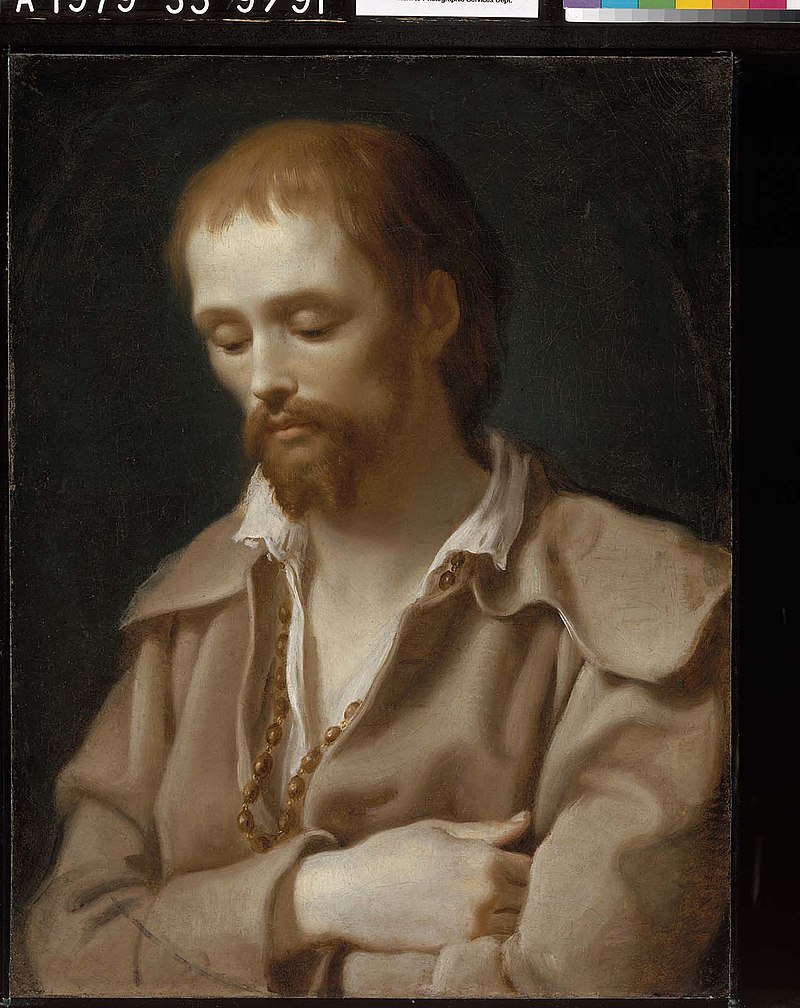
A Tale of Two Benedicts
A grace-filled Holy Week to all our readers! As we await and prepare for the Resurrection about to dawn upon us, we might keep in mind two Benedicts: Pope Emeritus Benedict XVI, requiescat in pace, elected on this day in 2005; and today’s commemoration of the mystic pilgrim, Benedict Joseph Labre, who died on this[…]Continue reading→
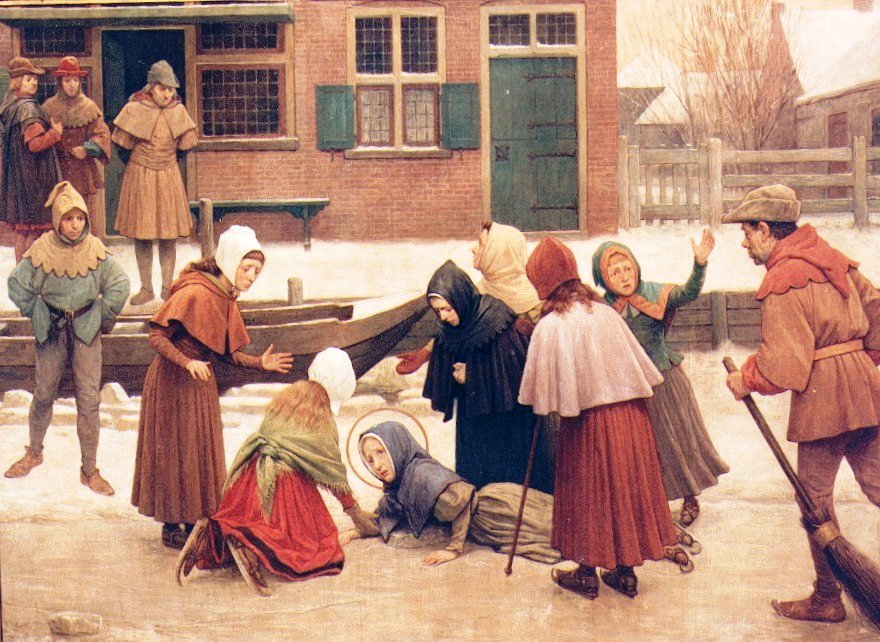
Saint Lydwina of Schiedam and Suffering Joyfully
Saint Lydwina of Schiedam (1380 – 1433) was one of the countless and glorious ‘victim souls’ in the history of the Church, those whose lives are filled with suffering, often of an unimaginable intensity, but who suffer joyfully. She was a fifteen-year old Dutch girl, out skating one day, when she fell and broke one[…]Continue reading→
The Glorious Martyrdoms of Martin and Maximus
As we enter into Eastertide, we recall on this 13th of April Pope Saint Martin I (+655), one of the noblest, if most tragic, of the successors of Saint Peter. Born in Umbria, Italy, he was of noble lineage, with great intelligence combined with charity and love of the poor and the Church. While still[…]Continue reading→

Saint Stanislaus of Szczepanów
We celebrate Saint Stanislaus today (+ April 11, 1079), in light of this Easter Octave, a bishop and martyr who accepted the episcopacy only at the direct order of Pope Alexander II. He proved a wise and courageous leader of his flock, put to death by his own king, Boleslaus, for rebuking the monarch’s ‘immoral[…]Continue reading→
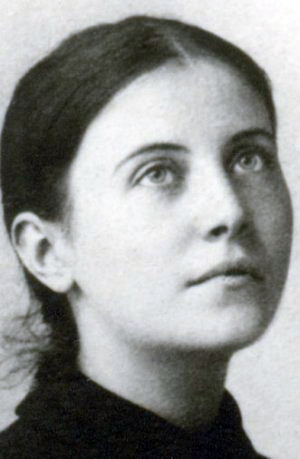
Saint Gemma Galgani
On this April 11th, in 1903 – the same year that the Italian Guiseppe Sarto was elected Pope later that summer as Pius X – a lovely, young Italian woman died, by the name of Gemma Galgani. She lived a brief life of 24 years, as did a number of other young saints, including Pier[…]Continue reading→
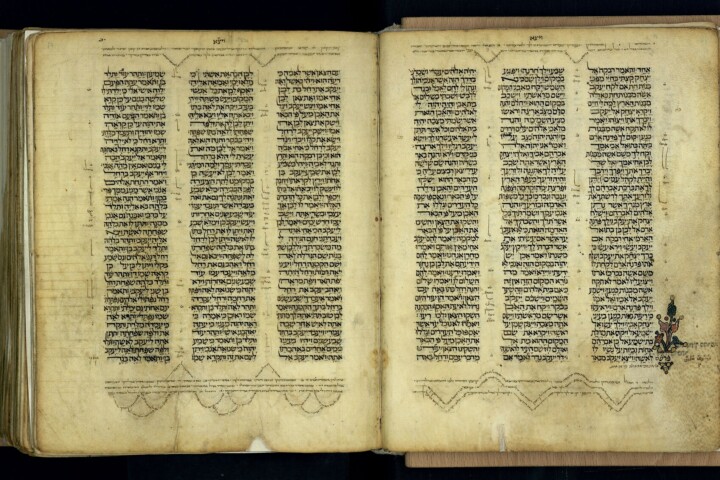
An Ideological and Improper Translation
I noticed something odd with the psalm reading at Mass the other day. Our bishops’ conference here in Canada has decreed that the Mass in English – Novus Ordo – use the ‘NRSV’, the ‘New Revised Standard Version’, an ‘updated’ translation of the original RSV, first published in 1952. This ‘new translation’ has the tendency[…]Continue reading→
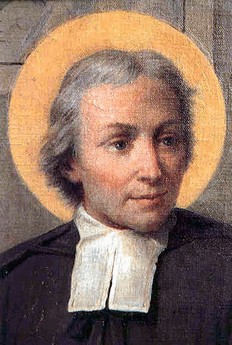
Saint Jean-Baptiste de la Salle: A Teacher for Teachers
Jean-Baptiste de la Salle (1651 – 1719), a French nobleman, ordained a priest, founded the first order in the Church’s history entirely without priests, and this came about almost by accident. I say ‘almost’, for, of course, there are no accidents with God. Destined for ordination from an early age, Jean-Baptiste never looked back, even[…]Continue reading→
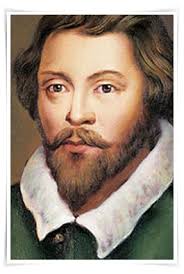
Three Easter Musical Gems: Bach, Palestrina and Byrd
A very blessed and glorious Easter! Christus surrexit vere, alleluia! As we begin this Easter Octave with the great Solemnity of Easter, music to lift the soul would be one of Bach’s Easter cantatas, composed during his time at Leipzig in the early 1700’s, for the six Sundays of this festive season, leading up to[…]Continue reading→
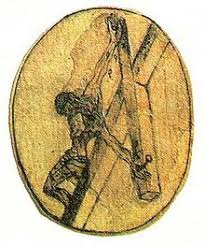
Good Friday and Suffering
Evil and pain is always a mystery, that whole mysterium iniquitatis, of which Saint Paul writes (2 Thess 2:7). In 1984, Pope Saint John Paul II penned an Apostolic Letter on the nature and purpose of human suffering, Salvifici Doloris (curiously, now looking back, the same year he made his first apostolic journey to Canada).[…]Continue reading→