
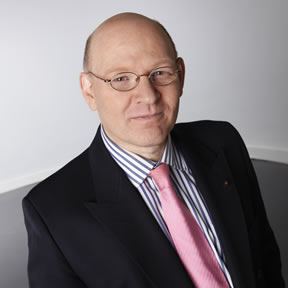
Nine challenges for the next papacy
As I write this column, Pope Benedict is about to conclude his pontificate, the conclave is about to begin, and critics of the Church are, as always, about to make another charge at the castle that is the institution given to the world by Jesus Christ to guide humanity to heaven. I’m not sure who the next pope will be, of course, but I do believe that his Papacy will be one of the most important in history.
If we think of the great, grand challenges to the Church over the centuries—pagan dominance, medieval divisions and heresies, Protestant revolts, Islamic invasions, enlightenment despots, and collectivist dictators—none posed such a threat as the secular, modernist, relativist materialism of the twenty-first century. Barbarians, Lutherans, Jihadists, Communists, and Nazis are identifiable; allegedly well-meaning progressives are far less so.
So, the challenges of the next Papacy. First, the affirmation and confirmation of what we can control. In other words, the cementing of the wall that is Roman Catholic theology. No more internal bleeding and bleeping about change merely because unrepresentative activists demand it. There is nothing wrong with Church teaching, but much that is wrong about those who question it and the reasons why they do so.
Second, a powerful message must be sent to faithful and serious Catholics that they are not alone and that truth comes from Rome. If a bishop or priest is not speaking with and for the Pope, it is the bishop or priest and not the congregant who is in contradiction of orthodoxy.
Third, a more determined stance on helping politicians save their souls. To put it another way, a loving but firm admonishment of MPs, Congressmen, even Prime Ministers and Presidents, who claim to be Catholic but vote for legislation leading to abortion, euthanasia, and the destruction of marriage. They lead other Catholics astray, they harm society, and they lie to God. If they react badly, so be it. That reaction, rather than the episcopal lesson, would expose what is really going on.
Fourth, the creation of more Cardinals in the developing world: in Africa, Asia, and Latin America. These regions not only provide the numbers but also the courage and the authentic observance of the Faith that will rejuvenate Catholicism. The Church is not about banal numerical representation, but must grow according to where the planted seeds have flourished most.
Fifth, the courage to risk a smaller but more genuine Church in the west. The Sacraments are part of the same single body, and we can no more pick and choose which ones we observe than we can decide which limb of a spouse we love or ignore. There are rules to being a Catholic in good standing just as there are rules as to being a good family member.
Sixth, a cleansing in the Church of what Pope Benedict described as “filth.” Moral and sexual corruption will always exist in the world but cannot exist in the epicentre of the Church. Complete intolerance of sexual ambivalence, effeminacy, and physical self-doubt is not hatred but love. It is no coincidence that the Counter-Reformation, cleared of the dirt and reborn with clarity and courage, produced so many saints, martyrs, and spiritual and intellectual giants.
Seventh, a concerted and sophisticated attempt to take back Catholic education and, where that proves impossible, to remove the word “Catholic” from those high schools and universities that consistently teach anti-Catholicism and devour the vulnerable young who assume they are being formed as complete Roman Catholics. This will be painful and perhaps confrontational, but nostalgia has no place in the new Church.
Eighth, the restoration of reverence, dignity, and awe to the liturgy and the Mass. This is not an experience, a happening, or a gathering, but a miracle. The miracle. The body and blood of Jesus Christ presented for and given at every Mass, everywhere, every time. If we don’t get this right, nothing will work at all.
Ninth, prayer. Prayer, prayer, prayer. All the time. Prayer on one’s own, prayer with family, and prayer with groups. Soak the world in prayer, and lift the Church and the Pope high on the clouds of your words to God. One day we will know just how much difference our prayers made—right now we know that nothing can be achieved without them.
God bless the new Pope, and God save him.
Carney’s Amoral Majority
After five defections – euphemistically described as ‘crossing the floor’ – and three by-elections, Mark Carney and his Liberals how have their coveted majority. One wonders what bowls of pottage were offered in back-room deals. In the archaic monarchical system that is the Dominion of Canada, this majority allows the newly-minted Prime Minister to rule[…]Continue reading→
A Tale of Two Benedicts
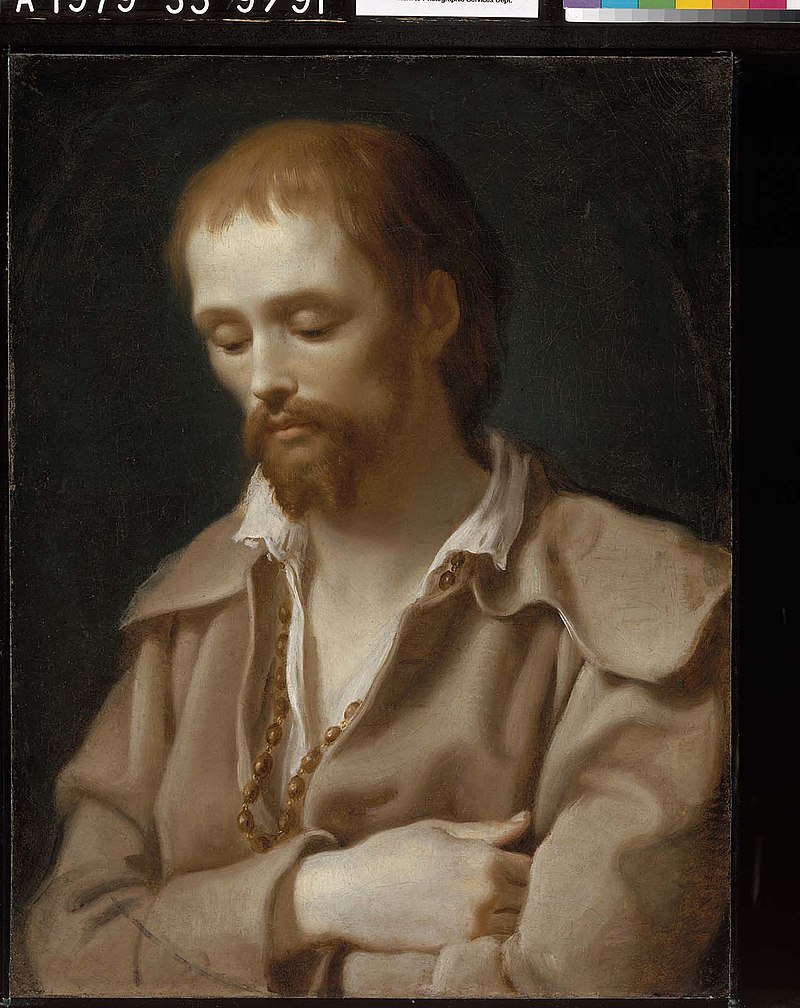
A grace-filled Holy Week to all our readers! As we await and prepare for the Resurrection about to dawn upon us, we might keep in mind two Benedicts: Pope Emeritus Benedict XVI, requiescat in pace, elected on this day in 2005; and today’s commemoration of the mystic pilgrim, Benedict Joseph Labre, who died on this[…]Continue reading→
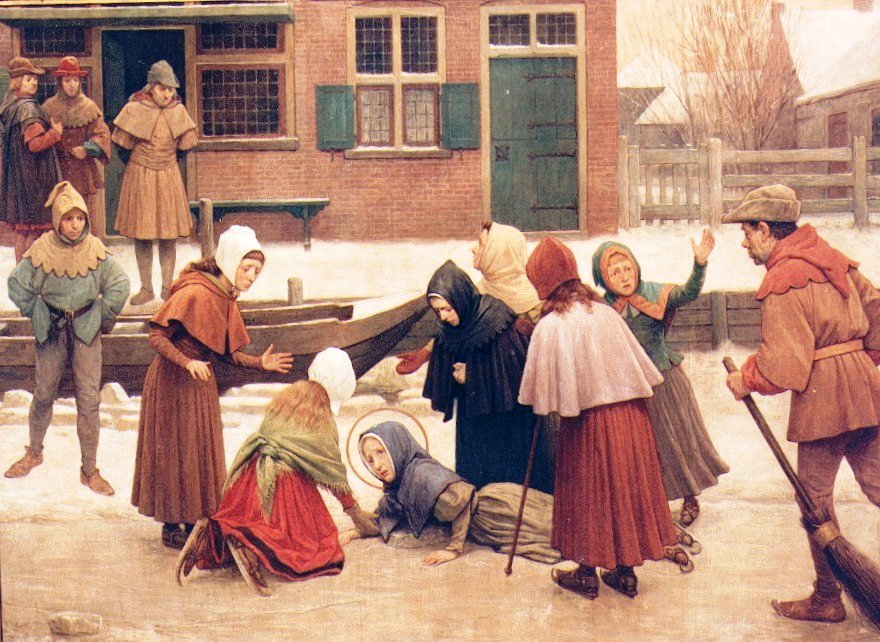
Saint Lydwina of Schiedam and Suffering Joyfully
Saint Lydwina of Schiedam (1380 – 1433) was one of the countless and glorious ‘victim souls’ in the history of the Church, those whose lives are filled with suffering, often of an unimaginable intensity, but who suffer joyfully. She was a fifteen-year old Dutch girl, out skating one day, when she fell and broke one[…]Continue reading→
The Glorious Martyrdoms of Martin and Maximus
As we enter into Eastertide, we recall on this 13th of April Pope Saint Martin I (+655), one of the noblest, if most tragic, of the successors of Saint Peter. Born in Umbria, Italy, he was of noble lineage, with great intelligence combined with charity and love of the poor and the Church. While still[…]Continue reading→

Saint Stanislaus of Szczepanów
We celebrate Saint Stanislaus today (+ April 11, 1079), in light of this Easter Octave, a bishop and martyr who accepted the episcopacy only at the direct order of Pope Alexander II. He proved a wise and courageous leader of his flock, put to death by his own king, Boleslaus, for rebuking the monarch’s ‘immoral[…]Continue reading→
Saint Gemma Galgani
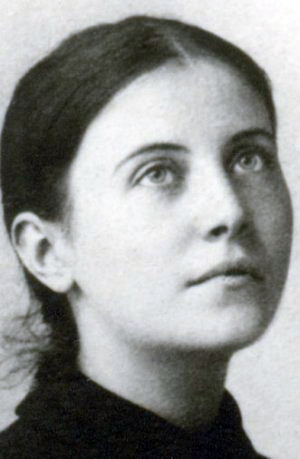
On this April 11th, in 1903 – the same year that the Italian Guiseppe Sarto was elected Pope later that summer as Pius X – a lovely, young Italian woman died, by the name of Gemma Galgani. She lived a brief life of 24 years, as did a number of other young saints, including Pier[…]Continue reading→
An Ideological and Improper Translation
I noticed something odd with the psalm reading at Mass the other day. Our bishops’ conference here in Canada has decreed that the Mass in English – Novus Ordo – use the ‘NRSV’, the ‘New Revised Standard Version’, an ‘updated’ translation of the original RSV, first published in 1952. This ‘new translation’ has the tendency[…]Continue reading→
Saint Jean-Baptiste de la Salle: A Teacher for Teachers
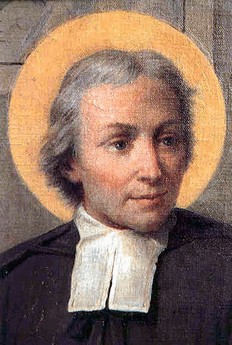
Jean-Baptiste de la Salle (1651 – 1719), a French nobleman, ordained a priest, founded the first order in the Church’s history entirely without priests, and this came about almost by accident. I say ‘almost’, for, of course, there are no accidents with God. Destined for ordination from an early age, Jean-Baptiste never looked back, even[…]Continue reading→
Three Easter Musical Gems: Bach, Palestrina and Byrd
A very blessed and glorious Easter! Christus surrexit vere, alleluia! As we begin this Easter Octave with the great Solemnity of Easter, music to lift the soul would be one of Bach’s Easter cantatas, composed during his time at Leipzig in the early 1700’s, for the six Sundays of this festive season, leading up to[…]Continue reading→
Good Friday and Suffering
Evil and pain is always a mystery, that whole mysterium iniquitatis, of which Saint Paul writes (2 Thess 2:7). In 1984, Pope Saint John Paul II penned an Apostolic Letter on the nature and purpose of human suffering, Salvifici Doloris (curiously, now looking back, the same year he made his first apostolic journey to Canada).[…]Continue reading→