
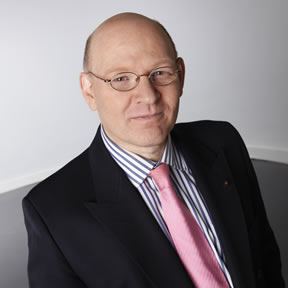
No compromise on love or truth
Newman Centre’s St. Thomas Aquinas Church in Toronto has had its share of controversy. When I first attended Mass there in the late 1980s the sentiments of some of the students were almost hilariously anti-Church. There’s little as funny as privileged North American kids thinking they’re radical because they hurt mummy and daddy.
Matters have improved enormously since then, but recently a dozen “parishioners” have made a lot of noise about leaving the place because it’s too Catholic for them. The pastor, Fr. Chris Cauchi, merely allowed the group Courage to offer its services, and only after congregants struggling with homosexuality had asked for this to happen.
And here, of course, is the problem. There are some people who think there is no struggle involved, and that giving in to homosexual tendencies is fine and dandy, even to be applauded. Courage, on the other hand, offers gentle, empathetic and orthodox spiritual guidance, so that homosexual people can put their eternal well-being before their earthly temptations.
We all struggle with sin, whether it’s homosexual, heterosexual, or non-sexual. It’s a large part of what being human is about. For a Catholic it’s not supposed to be a matter of opinion, or a question of fashion, or an issue of how many homosexuals we know and like, or who has a gay son or a lesbian auntie. It’s nothing more and nothing less than fundamental Church teaching. The Catechism says it firmly but with compassion, and is worth quoting at length:
Basing itself on Sacred Scripture, which presents homosexual acts as acts of grave depravity, tradition has always declared that homosexual acts are intrinsically disordered. They are contrary to the natural law. They close the sexual act to the gift of life. They do not proceed from a genuine affective and sexual complementarity. Under no circumstance can they be approved.
The number of men and women who have deep-seated homosexual tendencies is not negligible. They do not choose their homosexual condition; for most of them it is a trial. This inclination, which is objectively disordered, constitutes for most of them a trial. They must be accepted with respect, compassion, and sensitivity. Every sign of unjust discrimination in their regard should be avoided. These persons are called to fulfill God’s will in their lives and, if they are Christians, to unite to the sacrifice of the Lord’s Cross the difficulties they may encounter from their condition. Homosexual persons are called to chastity.
I have no illusions here, and it must be extraordinarily difficult to spend one’s life with these challenges. Then again, the same sort of people who oppose Courage seem intent on enabling young people with even minimal same-sex attractions to lead the homosexual lifestyle, which indicates they care more about some sort of gay agenda than living a fully formed Catholic life.
This particular case is pretty much par for the course, in that the fact it was reported in the first place must mean that some of those offended wanted it to be made public. They also complained to the university officials, who asked the parish to withdraw the organization. The Newman Centre refused to do so, but emphasized on their website that Courage does not have university endorsement.
One has to wonder what sort of Catholic would report a Catholic church to a secular and often anti-Catholic university because that church offered parishioners solid Catholic teaching and help in crisis. Frankly, we probably know what sort of Catholic: the sort who had far too much influence in years past, still holds positions of power in Catholic education and a few other isolated areas, and longs for a time when their opinions and not Church theology rule the day.
Our position regarding homosexuality should never change—no compromise on love, no compromise on truth. I cannot see into the soul of another person, but I can’t help concluding that if sexual politics and personal attractions matter more than the teachings of Christ’s Church on earth, there is something terribly wrong. If it’s not His Church, why bother to listen?—and in that case leave. If it is, though, you need to pay very close attention indeed to what it says. Even at the University of Toronto.
Carney’s Amoral Majority
After five defections – euphemistically described as ‘crossing the floor’ – and three by-elections, Mark Carney and his Liberals how have their coveted majority. One wonders what bowls of pottage were offered in back-room deals. In the archaic monarchical system that is the Dominion of Canada, this majority allows the newly-minted Prime Minister to rule[…]Continue reading→
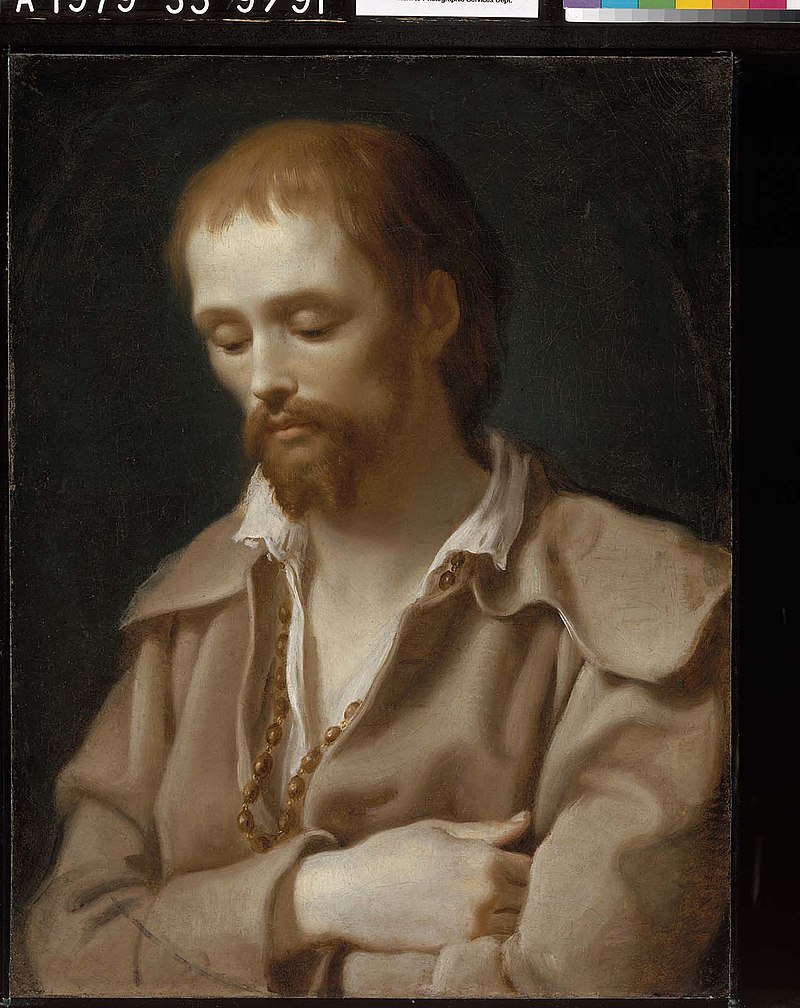
A Tale of Two Benedicts
A grace-filled Holy Week to all our readers! As we await and prepare for the Resurrection about to dawn upon us, we might keep in mind two Benedicts: Pope Emeritus Benedict XVI, requiescat in pace, elected on this day in 2005; and today’s commemoration of the mystic pilgrim, Benedict Joseph Labre, who died on this[…]Continue reading→
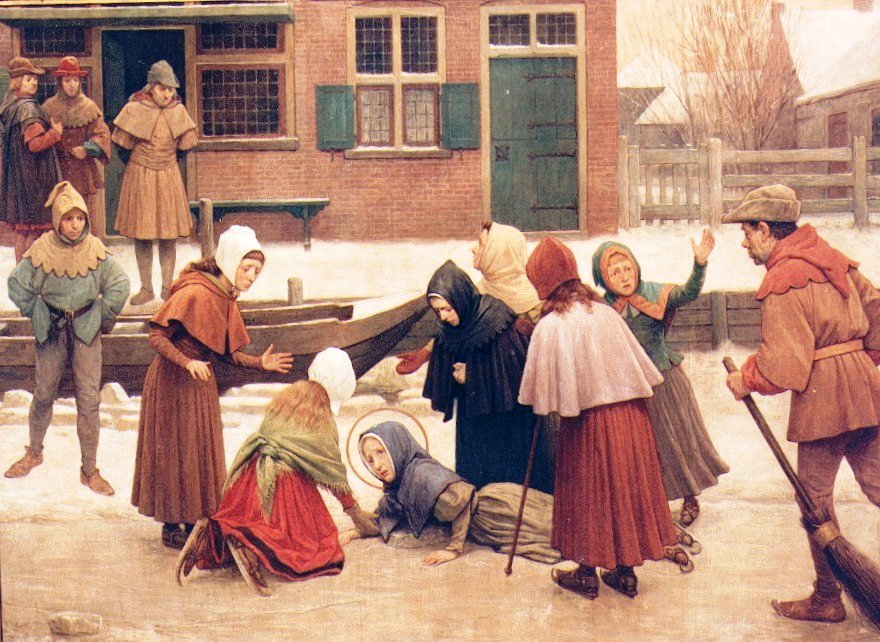
Saint Lydwina of Schiedam and Suffering Joyfully
Saint Lydwina of Schiedam (1380 – 1433) was one of the countless and glorious ‘victim souls’ in the history of the Church, those whose lives are filled with suffering, often of an unimaginable intensity, but who suffer joyfully. She was a fifteen-year old Dutch girl, out skating one day, when she fell and broke one[…]Continue reading→
The Glorious Martyrdoms of Martin and Maximus
As we enter into Eastertide, we recall on this 13th of April Pope Saint Martin I (+655), one of the noblest, if most tragic, of the successors of Saint Peter. Born in Umbria, Italy, he was of noble lineage, with great intelligence combined with charity and love of the poor and the Church. While still[…]Continue reading→

Saint Stanislaus of Szczepanów
We celebrate Saint Stanislaus today (+ April 11, 1079), in light of this Easter Octave, a bishop and martyr who accepted the episcopacy only at the direct order of Pope Alexander II. He proved a wise and courageous leader of his flock, put to death by his own king, Boleslaus, for rebuking the monarch’s ‘immoral[…]Continue reading→
Saint Gemma Galgani
On this April 11th, in 1903 – the same year that the Italian Guiseppe Sarto was elected Pope later that summer as Pius X – a lovely, young Italian woman died, by the name of Gemma Galgani. She lived a brief life of 24 years, as did a number of other young saints, including Pier[…]Continue reading→
An Ideological and Improper Translation
I noticed something odd with the psalm reading at Mass the other day. Our bishops’ conference here in Canada has decreed that the Mass in English – Novus Ordo – use the ‘NRSV’, the ‘New Revised Standard Version’, an ‘updated’ translation of the original RSV, first published in 1952. This ‘new translation’ has the tendency[…]Continue reading→
Saint Jean-Baptiste de la Salle: A Teacher for Teachers
Jean-Baptiste de la Salle (1651 – 1719), a French nobleman, ordained a priest, founded the first order in the Church’s history entirely without priests, and this came about almost by accident. I say ‘almost’, for, of course, there are no accidents with God. Destined for ordination from an early age, Jean-Baptiste never looked back, even[…]Continue reading→
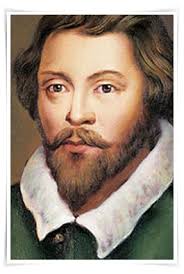
Three Easter Musical Gems: Bach, Palestrina and Byrd
A very blessed and glorious Easter! Christus surrexit vere, alleluia! As we begin this Easter Octave with the great Solemnity of Easter, music to lift the soul would be one of Bach’s Easter cantatas, composed during his time at Leipzig in the early 1700’s, for the six Sundays of this festive season, leading up to[…]Continue reading→
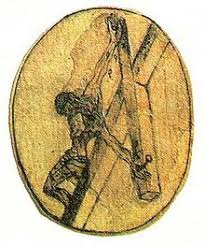
Good Friday and Suffering
Evil and pain is always a mystery, that whole mysterium iniquitatis, of which Saint Paul writes (2 Thess 2:7). In 1984, Pope Saint John Paul II penned an Apostolic Letter on the nature and purpose of human suffering, Salvifici Doloris (curiously, now looking back, the same year he made his first apostolic journey to Canada).[…]Continue reading→