
Eating Corn
When I was growing up, my family planted a vegetable garden almost every summer. It was never a very big garden, just big enough for a decent crop of corn, peppers, tomatoes, eggplants, and watermelons. When I was little, I thought the food we grew was the absolute best in the world. Now that I’m a grown-up and have some more objectivity, I’m pretty sure I was right.
The downside of growing up eating what was arguably the best fresh food in the world is that nothing you buy in the store will ever come even a little bit close to being as good. Ever. The food you can buy in farmers’ markets sometimes comes close, but it very, very rarely matches (food that you don’t slave away half a summer for can never taste as good as food you did) and so, even farmers’ market veggies are a bit disappointing most of the time. But we keep looking. Once in a while, we even manage to find what we are looking for.
A couple Saturdays ago was one of those fortunate days. We were at a farmers’ market in Sioux Falls, South Dakota, and found a farmer selling his first corn crop of the season. Because it was the earliest corn of the year, the ears were all different sizes. As my mother went through them, she instructed my brothers on proper corn selecting technique. A nearby customer asked her to begin the lesson again, and my mom picked up a random ear of corn to demonstrate.
“Look for the nice big ones,” she said, “with plump kernels.” She peeled back a bit of cornhusk to check the corn.
The farmer noticed what was going on. With the brief statement that even the small ears were tasty, he picked one up and peeled back a handful of husk. We all admitted that indeed, the small ear, besides being small, did actually look as good as the larger ones (this is not always the case with corn). I was somewhat impressed that the farmer was willing to rip off so much of the husks, thus damaging the appearance of the corn and making it less desirable for other customers. But that was explained a few moments later when he quietly finished husking the corn and then ate it. Raw. Uncooked, unbuttered, unsalted, unwashed, even. He just ate it.
That was the moment when I knew beyond a doubt that this corn was going to be the best corn I had eaten since my family gave up gardening for full time travel. And it was.
Reflecting on that moment, I find it interesting that while the farmer could have talked for an hour or more, no words could have convinced me of the wonderfulness of that corn more than biting into it did. The world is like that. A great salesman can talk customers into buying inferior products that they don’t want or need, but the great craftsman doesn’t have to.
Neither does the skilled farmer.
Neither does the Christian.
The saints did not go around telling the world that they were Christians; they simply went around being Christians. St. Brigid did not say to people, “I am totally super generous.” She just acted generously. The martyrs didn’t say that persons ought to die for the Faith. They took the bullets (or arrows, guillotines, fires, axes, starvation, stones, etc.) and died.
In most situations in North America, it’s not really hard to claim to be Christian. We are not in hiding, we are not a minority, and we are not being actively sought out and killed. There is even a bit of a thrill about being Catholic. Going against the grain of “society” has an odd sort of coolness and authority—otherwise the hundreds of Catholic politicians would have formally renounced their faith instead of using it to further their careers, and all those “cafeteria Catholic” super cool television characters would have some other religion. It’s pretty easy to call oneself a Catholic. It’s not hard to talk about the greatness of the Church or the pope or the saints or Mary or Mother Teresa.
It is hard to act on those words. It is very hard to live out the life that we are called to. Nonetheless, acting on those words is more necessary than speaking them.
There are a lot of people out in the world who are searching for truth, for something to hold on to as the secular world goes on in its endless quest for the most insane forms of insanity. These people are usually not looking for a religion whose members are great talkers—although they might be drawn to those for a while. What truth seekers are usually really looking for are people who are willing to align their actions with their beliefs. As they wander through the great grocery stores of religions and anti-religions and truth and lies, they are sure to encounter many disappointments. We, as members of the Church Christ himself founded, should be the ones who don’t disappoint. This means, of course, that we need to be eating our corn.

Saint Kateri , Canada’s Protectress
This was the title given to Saint Kateri Tekakwitha, by Pope Benedict XVI, when he canonized her on October 28th, 2012, along with six others, in Saint Peter’ Square (she had been beatified by Pope John Paul II back in 1980). With Saint Joseph as our protector, along with the Canadian martyrs, we seem to[…]Continue reading→

Remembering Father Alphonse de Valk
(Today marks the sixth anniversary of the death of Father Alphonse de Valk, C.S.B., a faithful, courageous and indefatigable Basilian priest, pro-life-and-family apostle, and the founder of Catholic Insight magazine. Here is what we wrote those on his entering into eternity five years ago, as we continue to remember him in our prayers and thoughts)[…]Continue reading→

My Name is Bernadette
April 16th is a propitious day, for besides the anniversary of Father de Valk’s death, who founded Catholic Insight in its print form decades ago, and the commemoration of the ‘two Benedicts’, mentioned in accompanying posts, today we also recall Saint Bernadette Soubirous, the young visionary to whom the Virgin Mary appeared numerous times at[…]Continue reading→

Canonizing Sister Faustina and Divine Mercy
HOMILY OF THE HOLY FATHER MASS IN ST PETER’S SQUARE FOR THE CANONIZATION OF SR MARY FAUSTINA KOWALSKA Sunday, 30 April 2000 1. “Confitemini Domino quoniam bonus, quoniam in saeculum misericordia eius”; “Give thanks to the Lord for he is good; his steadfast love endures for ever” (Ps 118: 1). So the Church sings on the Octave of[…]Continue reading→

Divine Mercy Sunday – An Echo of Every Mass
Reach out your hand and put it in my side. Do not doubt but believe’… ‘My Lord and my God!’ (Jn. 20:18)). Today is Divine Mercy Sunday, and as we celebrate the end of the Easter Octave, we contemplate the wounded side of our Saviour, the Church’s source of life. On Good Friday in the[…]Continue reading→

First Holy Communion: Sermon from May 16, 1943
Here is a sermon from the good old days by +Rev. Msgr. Vincent Nicholas Foy (August 14, 1915 – March 13, 2017), from 1943. Readers may recall that Pope Saint Pius X, by the decree Quam Singulari in 1910, lowered the customary age of reception of Holy Communion – after the rigours of the plague[…]Continue reading→

In the Glorious Light of Easter, Alleluia!
Set your minds on things that are above, not on things that are on earth, for you have died, and your life is hidden with Christ in God. When Christ who is your life is revealed, then you also will be revealed with him in glory (Col. 3:3-4). The Resurrection of Our Lord and Saviour[…]Continue reading→

An Ancient Homily for Holy Saturday
The time between Good Friday and Easter Sunday is one of waiting, in silence, as the world wonders – anticipates – what will happen, after the death of Christ. We re-live this time each year in the anamnesis of our liturgy, and in turn look forward to the glorious re-creation of all things at the[…]Continue reading→

Europe’s Long Descent
(As we meditate on this day on Christ’s burial, and His descent into hell, it is fitting to ponder here with contributor Peter Marcus how the world seems to be heading there as well. The difference is that, although God cannot ‘redeem’ hell, nor those therein, He can and did redeem the world. There is[…]Continue reading→
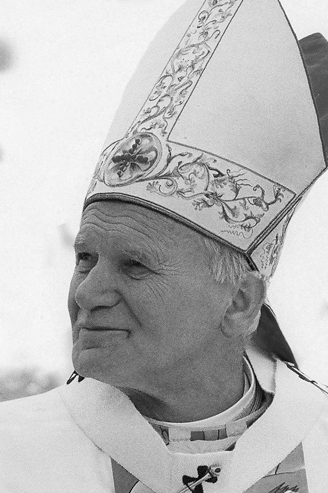
Pope Saint John Paul II’s First Good Friday Homily
ADDRESS OF HIS HOLINESS JOHN PAUL II AT THE CONCLUSION OF THE STATIONS OF THE CROSS AT THE COLOSSEUM Good Friday, 13 April 1979 When we make the Way of the Cross from one station to the next, in spirit we are always at the spot wherethis journey had its “historical” place: where it[…]Continue reading→