
Things real and wonderful
Recently I came across quote from C. S. Lewis that said:
“In a sense a child does not long for fairy land as a boy longs to be the hero…Does anyone suppose that he really and prosaically longs for all the dangers and discomfort of a fairy tale?—really wants dragons in contemporary England? It is not so. It would be much truer to say that fairy land arouses a longing for he knows not what. It stirs and troubles him…with the dim sense of something beyond his reach and, far from dulling or emptying the actual world, gives it a new dimension of depth.”
Normally when I read something by Lewis, the striking thing is the way that his words are still applicable to the world half a century later. It is interesting that while so much has changed in some respects, so little has changed in others.
Curiously, I think that in this case, Lewis’s words are no longer quite true. I understand exactly what he is saying. His words state that the desire for Fairy Land can be translated into a desire for the supernatural, which easily evolves into a desire for God and Heaven.
Today’s society, though, works very hard to eliminate any connection between God and Fairy Land. I know that for myself and most people I know, Lewis has, as usual, hit the nail on the head. But I also think there a growing number of people who really would prefer that the fairy tales were actually true—who really would like to see live dragons and who would eagerly trade in the world that actually exists for one that is more exciting and magical. Looking around, it might not be that difficult to find a reason why.
If a society turns to relativism, then it loses truth. When a society loses truth, then it also loses what is real. If nothing is real, then anything might be real. Something might even more real than reality because it’s all just a pointless game. We see the effects of this in every area of life. There are children that society claims are not children, despite the evidence. We have religions that are more accurately non-religions—confirming the ideas and beliefs of every member, no matter how much those beliefs might contradict each other. People make enormous fortunes that consist of money they never really see. Crowds argue for marriage that is not really marriage. Many families eat food that is scarcely food, the production of which they are entirely disconnected from. When my mother drove a school bus, back in our pre-road trip years, there was an incident where she drove the kids past a field of cows, and a discussion of hamburgers ensued. The kids insisted that hamburgers did not come from cows. These are not isolated inner city kids. They live in a very small, rural town where most people either farm or know someone who does.
In a world where hamburgers appear magically on a grocery store shelf, the antidote is to rediscover real. As much as society doesn’t like admitting it, buying something at a store is a far, far cry from growing or making something by yourself. Many people seem to identify themselves as uncreative or unskilled based on failures they suffered somewhere around the age of five. Up until last year, one of my older sisters steadfastly maintained that she was terrible at anything remotely crafty. She could cook and bake, but crafts were beyond her. Last year she learned that she has some serious skills working with glass. And she can wood burn like nobody’s business. Sometimes a person can surprise herself.
Certainly, not everyone is artistic. Not everyone is handy. But almost anyone can take a little time to make something, something real. Most persons can manage a simple homemade meal, a duct tape wallet, or a simple craft to give as a gift. Almost anyone can grow a little garden, even if that garden is just a little pot of herbs or a single tomato plant into which unlimited love and money are poured for an entire summer for the puny reward of a single tomato (true story). These simple things help to connect a person to something real, and real is good for people.
In his “Letter to Artists” Blessed Pope John Paul II wrote, “There is…an ethic, even a ‘spirituality’ of artistic service, which contributes in its way to the life and renewal of a people. It is precisely this to which Cyprian Norwid seems to allude in declaring that ‘beauty is to enthuse us for work, and work is to raise us up.’”
Actually making or growing or crafting something offers a person something that is real. It gives one a thrill that cannot come from any other source, a satisfaction that cannot be bought. It renews a person, and drags him a little bit away from a robotic world.
In Jessica Day George’s Sun and Moon, Ice and Snow (an adaptation of the “East of the Sun, West of the Moon”) the heroine must face a powerful troll princess. The troll princess can use her magic to reproduce anything she wants. Jewels, diamonds, gold, anything. And yet, she is miserable because she lacks the ability to actually make anything. She spends her life pining over the things that humans make—common, simple, mundane things like washing boards and spinning wheels and hair brushes—simply because she lacks the ability to make or use those things herself. And in the end, it is not any great show of magic or strength that defeats the princess, but her own inability to do anything without magic.
When the readers and watchers of stories spend their days longing for the fairy lands that the stories tell them of, they overlook the magic that belongs to humans; the magic of creating and crafting, the magic of being made in the image of a creator. In the beginning, humanity was given dominion over the world. We were given the ability to make things, grow things, fix things, and, of course, imagine things—up to and including new worlds. People often talk of lost arts, lost ways of doing things and they express that it is a great pity that those things are lost, or even very rare. It would be much, much sadder if we forgot how much we needed those things, and gave up the magic that belongs to us in favor of drooling over magic that only exists in the imagination.
A Closed, Unsustainable, Descending Loop
As a follow-up to my thoughts on Payette’s payout, here be a stark image of where are here in Canada. As the graph shows in, well, graphic terms, since 2025, the public sector has contributed to 95.5% of economic growth. The private sector – which funds the public sector, or is supposed to – has[…]Continue reading→
Pope Leo and a Rosary for Peace
Pope Leo XIV has asked Catholics across the world to join him in a Rosary for peace today, at 18:00 Rome time (6 pm), which would be noon from where I write (EST). If you are able, whether at that time or another, and in whatever way you pray, to join in intercession with the[…]Continue reading→
Payette’s Payout
I was glancing through some headlines, and noticed a mention of Julie Payette – engineer and astronaut and sometime the Queen’s representative in Canada – which brought back vague memories. She was appointed Governor-General by Justin Trudeau in 2017. Ms. Payette resigned in 2021, amidst claims that she created a ‘toxic work environment’, with allegations[…]Continue reading→
Your Easter Prayer
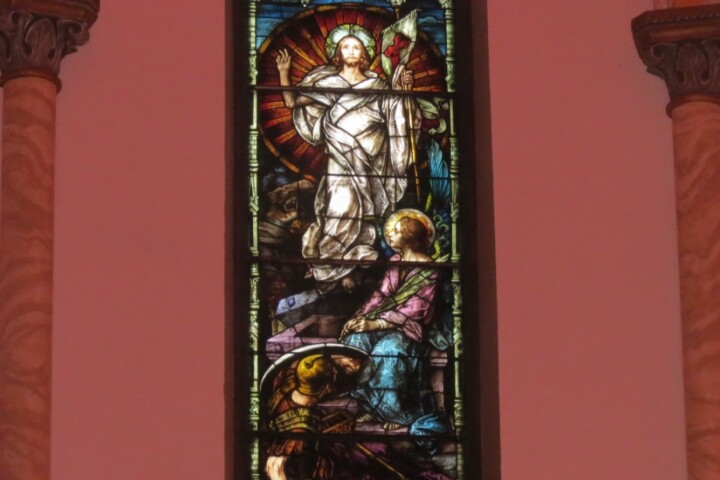
Happy Easter Lord Jesus Christ. It’s Easter day and we smile In the Lord’s in gentle light and His tomb is bare the stone is rolled A story new that must be told And Lord Jesus Christ We love you it’s so true and Lord Jesus Christ has risen From his sleep and the Promises[…]Continue reading→
Three Musical Offerings for the Annunciation
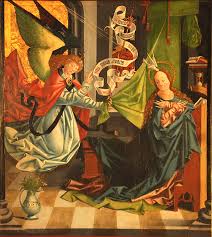
A very blessed Solemnity of the Annunciation to one and all! This March 25th marking the greatest event in history – the Incarnation of the Son of God – goes back to the very origins of the Church, and changed everything. What was lost, is now found, what was dead, is now very much alive.[…]Continue reading→
Eleganti Sums up the SSPX
Bishop Marian Eleganti, auxiliary emeritus of Chur, Switzerland, through which I happened to pilgrimage last summer, sums up the irregular situation of the SSPX. His thoughts bear pondering: Firstly, acting with full autonomy without papal mandate or confirmed mission; secondly, operating with bishops not in union with the Pope and the episcopal college; thirdly, maintaining[…]Continue reading→
The Perils of Sedevacantism
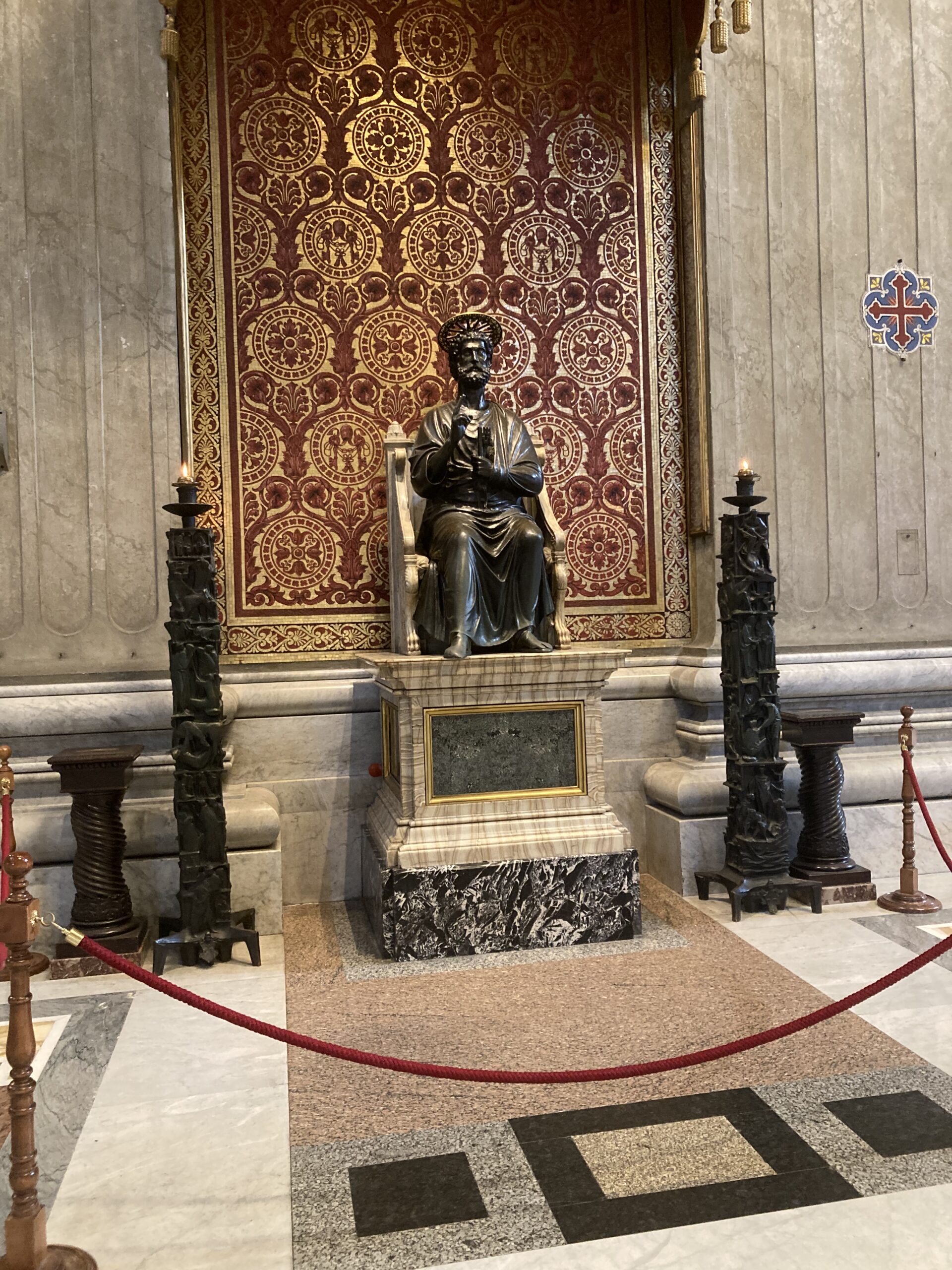
(With John-Henry Westen of LifeSite raising the question of sedevacantism, urging a petition for the cardinals to question the validity of Francis’ and Leo’s papacies, here is a re-post of something I wrote earlier, on why we must tread with great caution in declaring a papacy, or any given pope, null and void. Whatever good[…]Continue reading→

Entropic AI
Entropy may be described as the tendency of all things degrade, to move from order to disorder, from cosmos to chaos, from specificity to entropy. It is the inevitable consequence of any closed system, and encapsulated as the Second Law of Thermodynamics. Any such system – whether that be a machine, a living organism, a[…]Continue reading→
How Do We Know Christ Really Lived?
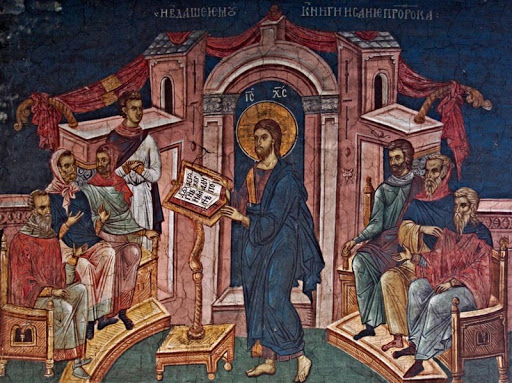
Every now and then we hear in various and sundry places one of the greatest blasphemies of them all: that Jesus never really lived and that the reports of his life and teachings, his death and resurrection, were all made up by unscrupulous men apparently bent on exploiting others for greed and power. At this[…]Continue reading→
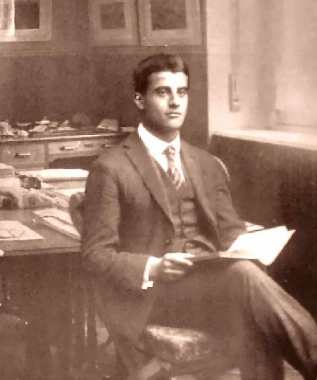
“Verso L ’Alto” – A Meditation on the Hidden Sanctity of Pier Giorgio Frassati
The Italian Alps — that formidable stretch of Europe’s great mountain arc — rise in dramatic splendour above the landscape that so enduringly shaped St. Pier Giorgio Frassati’s life of prayer and adventure. The Australian Alps, sharing the name only in part, resemble their European counterparts more in spirit than in scale. In the former,[…]Continue reading→