
The Making of a Saint
“You dream of great deeds. Everyone, these days, reads about Charles de Foucauld. Many have a starry-eyed look. They wonder if they shouldn’t become a Little Sister or Brother of de Foucauld. But, when I listen to their conversations, I want to cry. Not one of them stops to think what a heroic life he really led. He lived in a little hut in the blistering desert, with its cold and searing nights, amongst strange, primitive human beings. He saw his whole life as a failure but still remained faithful to God’s strange call! He rose and offered Mass, then spent a whole day doing small things. All of this means hanging on a cross for years instead of hours, but nobody seems to be aware of this. Most just see the romance of his life, not the reality.” – Catherine Doherty, Dearly Beloved Vol I, p 156.
I find myself doing that a whole lot—getting that starry-eyed look when I’m reading lives of the saints; saints like Gemma Galgani or Blessed Margaret of Castello or Padre Pio. I stop to imagine their cute little brown and black habits, or what it was like to have the gifts of scent or bi-location, or how it would feel to have people falling over themselves to touch them. Rarely do I think about Blessed Margaret being walled up in a cell for 13 years, St. Gemma’s constant pain, or the horrifically scary beatings from the devil the good padre endured. Saints have become charming cartoon characters that have floated into our lives, telling their interesting story to a disengaged audience, and then leaving as they came.
I tell myself things like, “They lived in a different time” or “They were ‘special’ people—not normal like me” or “I don’t have any of the natural piety they have” or “That’s fine for them but I could never practice that level of prayer and self-discipline.” I mean, come on. They’ve been declared saints because something in the way they have lived screams ‘heroic virtue.’ So what’s the point of striving to live up to standards that seem impossibly high? If sainthood is synonymous with bi-location, physical, mental, and spiritual agony, and beatings from devils, then why even bother aiming for it? It sounds impossible—and not to mention exceedingly unpleasant.
Well, for starters, because with God, anything is possible and God desires to make you a saint (even you–inhaling the last chocolate donut on a Friday in Lent). And saints cannot be made without suffering. Why? Because Jesus, the Lord God, suffered profoundly. But God is likely not asking you to be nailed to an honest-to-goodness real life cross. Sure, some will be asked to pour themselves out in pain and anguish for their lives, but many aren’t. Most ordinary folks like me get up every day, eat breakfast, go to work, come home, eat dinner, and go to bed. There’s no stigmata or visions involved, so how do we become saints?
Well, we’ve been given this itty bitty little thing called time—this exact moment in fact. We are asked to choose Christ every minute of every day and the saints were experts at it—whether they were abbots and abbesses of great monasteries or humble, simple doormen. They governed their charges and opened their doors to the best of their abilities—and through it, they earned their eternal reward. “But,” you say, “that’s easy—I can do what I have to do every day!” And that’s just it. Heroic virtue isn’t me setting out to levitate and bi-locate or get the stigmata. Heroic virtue, that which the saints achieved to different degrees, is cultivated from doing the right and good things you know you should do, over and over and over again every day, for the love of God and your neighbour. Whatever duty this moment holds, the saints-in-progress are paying close attention to it and doing it to the best of their abilities. If they’re levitating all over the place, fighting visible devils, and smelling like roses in the meantime—icing on the cake!
“You see, this is the essence of our vocation: to connect an ordinary and seemingly boring life with its repetitious details, with Love Who is God. Then the boredom vanishes, and a day spent in sorting buttons is glorious. Then a day at the typewriter, when your back is aching and your mind reeling with tiredness, is a day that has redeemed many souls; how many, God alone knows. We must have that awareness and make that connection. If it isn’t made, it is a wasted day. What a horrible and a tragic thought that one of the most precious gifts of God, time, has been wasted.” – Catherine Doherty, Dearly Beloved Vol I, p. 158.
So what do you have to do today? Make your bed—or just get out of it? Love your kids? Study hard? DO IT! You are on the road to heaven just by doing what’s in front of you as best you can, and it’s those mundane tasks that are taking you there.

Saint Kateri , Canada’s Protectress
This was the title given to Saint Kateri Tekakwitha, by Pope Benedict XVI, when he canonized her on October 28th, 2012, along with six others, in Saint Peter’ Square (she had been beatified by Pope John Paul II back in 1980). With Saint Joseph as our protector, along with the Canadian martyrs, we seem to[…]Continue reading→

Remembering Father Alphonse de Valk
(Today marks the sixth anniversary of the death of Father Alphonse de Valk, C.S.B., a faithful, courageous and indefatigable Basilian priest, pro-life-and-family apostle, and the founder of Catholic Insight magazine. Here is what we wrote those on his entering into eternity five years ago, as we continue to remember him in our prayers and thoughts)[…]Continue reading→

My Name is Bernadette
April 16th is a propitious day, for besides the anniversary of Father de Valk’s death, who founded Catholic Insight in its print form decades ago, and the commemoration of the ‘two Benedicts’, mentioned in accompanying posts, today we also recall Saint Bernadette Soubirous, the young visionary to whom the Virgin Mary appeared numerous times at[…]Continue reading→

Canonizing Sister Faustina and Divine Mercy
HOMILY OF THE HOLY FATHER MASS IN ST PETER’S SQUARE FOR THE CANONIZATION OF SR MARY FAUSTINA KOWALSKA Sunday, 30 April 2000 1. “Confitemini Domino quoniam bonus, quoniam in saeculum misericordia eius”; “Give thanks to the Lord for he is good; his steadfast love endures for ever” (Ps 118: 1). So the Church sings on the Octave of[…]Continue reading→

Divine Mercy Sunday – An Echo of Every Mass
Reach out your hand and put it in my side. Do not doubt but believe’… ‘My Lord and my God!’ (Jn. 20:18)). Today is Divine Mercy Sunday, and as we celebrate the end of the Easter Octave, we contemplate the wounded side of our Saviour, the Church’s source of life. On Good Friday in the[…]Continue reading→

First Holy Communion: Sermon from May 16, 1943
Here is a sermon from the good old days by +Rev. Msgr. Vincent Nicholas Foy (August 14, 1915 – March 13, 2017), from 1943. Readers may recall that Pope Saint Pius X, by the decree Quam Singulari in 1910, lowered the customary age of reception of Holy Communion – after the rigours of the plague[…]Continue reading→

In the Glorious Light of Easter, Alleluia!
Set your minds on things that are above, not on things that are on earth, for you have died, and your life is hidden with Christ in God. When Christ who is your life is revealed, then you also will be revealed with him in glory (Col. 3:3-4). The Resurrection of Our Lord and Saviour[…]Continue reading→

An Ancient Homily for Holy Saturday
The time between Good Friday and Easter Sunday is one of waiting, in silence, as the world wonders – anticipates – what will happen, after the death of Christ. We re-live this time each year in the anamnesis of our liturgy, and in turn look forward to the glorious re-creation of all things at the[…]Continue reading→

Europe’s Long Descent
(As we meditate on this day on Christ’s burial, and His descent into hell, it is fitting to ponder here with contributor Peter Marcus how the world seems to be heading there as well. The difference is that, although God cannot ‘redeem’ hell, nor those therein, He can and did redeem the world. There is[…]Continue reading→
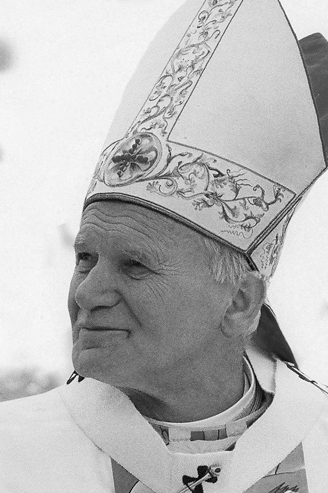
Pope Saint John Paul II’s First Good Friday Homily
ADDRESS OF HIS HOLINESS JOHN PAUL II AT THE CONCLUSION OF THE STATIONS OF THE CROSS AT THE COLOSSEUM Good Friday, 13 April 1979 When we make the Way of the Cross from one station to the next, in spirit we are always at the spot wherethis journey had its “historical” place: where it[…]Continue reading→