
The duty to defend
For it’s Tommy this, an’ Tommy that, an’ “Chuck him out, the brute!’’ But it’s “Saviour of ’is country,’’ when the guns begin to shoot; Yes it’s Tommy this, an’ Tommy that, an’ anything you please; But Tommy ain’t a bloomin’ fool—you bet that Tommy sees! – Rudyard Kipling, 1892
Pacifism is a religious version of a wolf in sheep’s clothing; a mockery of the obligation to labour for peace in the world; a caricature of that zeal for peace that is our obligation as Catholics. Pacifists are often mis-described as “sons of God,” an allusion to Our Lord’s sermon when he said “Blessed are the peacemakers: for they shall be called children of God” (Matt 5:9). However, there are few beliefs less capable of promoting the cause of peace than pacifism. This blessing of Our Lord is more aptly applied to those who are willing to fight to bring about peace for the innocent and the vulnerable.
The Catechism, in typically charitable and muted lan- guage, condemns pacifism:
Public authorities, in this case, have the right and duty to impose on citizens the obligations necessary for national defence. Those who are sworn to serve their country in the armed forces are servants of the security and freedom of nations. (CCC 2310)
Nevertheless, pacifists are to be tolerated and given accommodation consistent with what a Christian nation would extend to any of its misguided and confused brothers and sisters:
Public authorities should make equitable provision for those who for reasons of conscience refuse to bear arms; these are nonetheless obliged to serve the human community in some other way. (CCC 2311)
This is the unchanged teaching of the Catholic Church from apostolic times.
So what is so bad about pacifism? It places a private, unfounded aesthetic scruple above the Christian obligation to defend the innocent, the weak, and the vulnerable against unjust aggressors. Not all pacifists are cowards, in the same way that not all soldiers are heroes. Many pacifists contributed to the defense of Canada throughout our history without taking up arms. These are good folk and kindly, however mistaken they might be; folk to be welcomed, but not emulated.
There are others, however, who are opportunistic pacifists. These hide behind the sacrifices made by the rest of the country so they can luxuriate in smug satisfaction that their hands are clean. The apt parable for them is that of the man who buried the talents given to him for safekeeping. The talents may not have been lost, but no good was achieved.
These pacifists are the self-appointed advocates for peace at all costs, who confuse the public with sloppy thinking hidden beneath high rhetoric. When you dig a little below the surface you discover that their real objection is that soldiers are rank and file common people who see right and wrong in dogmatic terms; the kind who see murderous terrorist attacks as the actions of murderers and terrorists. Yet whenever danger comes near, these professional pacifists are the first to call on our soldiers to do their duty!
This parallels the situation experienced by faithful Catholics in Canada. Trendy theologians who argue in comfort and style about relaxing the definition of marriage and the aging groupies who enjoy the company of these sophists confuse ordinary Catholics about what the Church teaches with sloppy reasoning hidden by pious sounding rhetoric. These have contempt for parish priests and the laity in the pew who provide for them. These self-important elitists despise ordinary Catholics.
Do you work to end abortion? You will be accused of being angry. Do you think that the word “marriage” means marriage? You will be called a bigot. Do you believe in the Real Presence? You will be accused of stifling the promise of Vatican Two.
Yet when the worm turns, and it is turning, our sycophant colleagues and their hip theologians will discover that the left-wing friends they have been ardently courting will abandon them. Then, and it is beginning to happen, they will call on the rest of us to defend our Catholic institutions, the very institutions that have been gutted of Catholic meaning.
As always, it will be ordinary Catholics in the pew who once again will carry the burden of fighting for the Church.
Carney’s Amoral Majority
After five defections – euphemistically described as ‘crossing the floor’ – and three by-elections, Mark Carney and his Liberals how have their coveted majority. One wonders what bowls of pottage were offered in back-room deals. In the archaic monarchical system that is the Dominion of Canada, this majority allows the newly-minted Prime Minister to rule[…]Continue reading→
A Tale of Two Benedicts
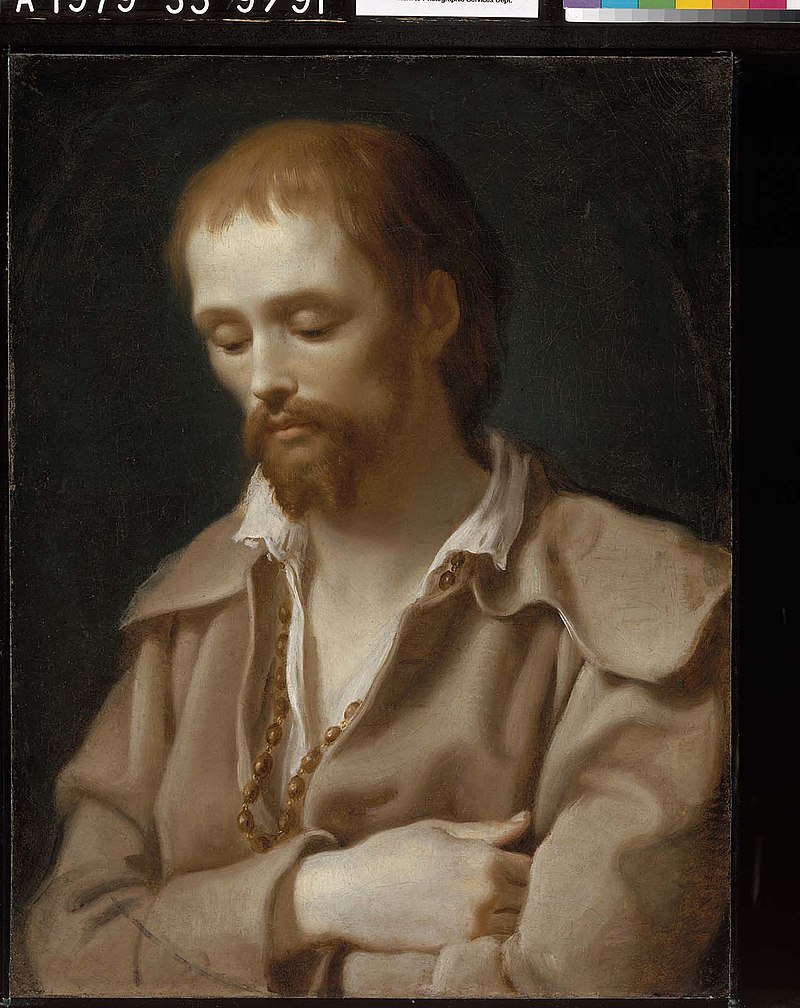
A grace-filled Holy Week to all our readers! As we await and prepare for the Resurrection about to dawn upon us, we might keep in mind two Benedicts: Pope Emeritus Benedict XVI, requiescat in pace, elected on this day in 2005; and today’s commemoration of the mystic pilgrim, Benedict Joseph Labre, who died on this[…]Continue reading→
Saint Lydwina of Schiedam and Suffering Joyfully
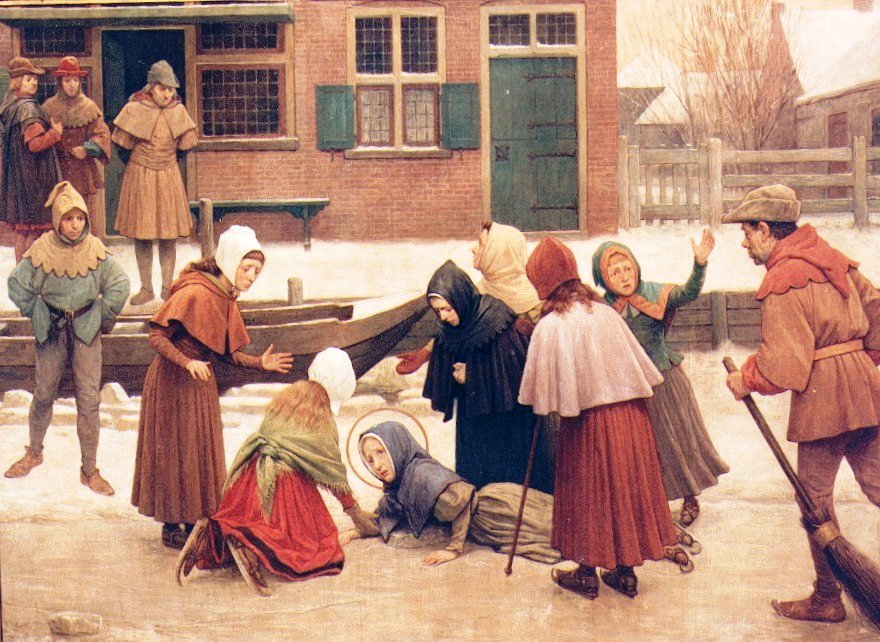
Saint Lydwina of Schiedam (1380 – 1433) was one of the countless and glorious ‘victim souls’ in the history of the Church, those whose lives are filled with suffering, often of an unimaginable intensity, but who suffer joyfully. She was a fifteen-year old Dutch girl, out skating one day, when she fell and broke one[…]Continue reading→
The Glorious Martyrdoms of Martin and Maximus
As we enter into Eastertide, we recall on this 13th of April Pope Saint Martin I (+655), one of the noblest, if most tragic, of the successors of Saint Peter. Born in Umbria, Italy, he was of noble lineage, with great intelligence combined with charity and love of the poor and the Church. While still[…]Continue reading→

Saint Stanislaus of Szczepanów
We celebrate Saint Stanislaus today (+ April 11, 1079), in light of this Easter Octave, a bishop and martyr who accepted the episcopacy only at the direct order of Pope Alexander II. He proved a wise and courageous leader of his flock, put to death by his own king, Boleslaus, for rebuking the monarch’s ‘immoral[…]Continue reading→
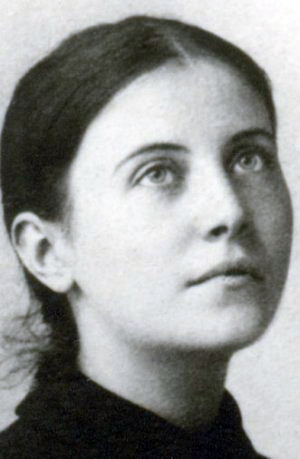
Saint Gemma Galgani
On this April 11th, in 1903 – the same year that the Italian Guiseppe Sarto was elected Pope later that summer as Pius X – a lovely, young Italian woman died, by the name of Gemma Galgani. She lived a brief life of 24 years, as did a number of other young saints, including Pier[…]Continue reading→
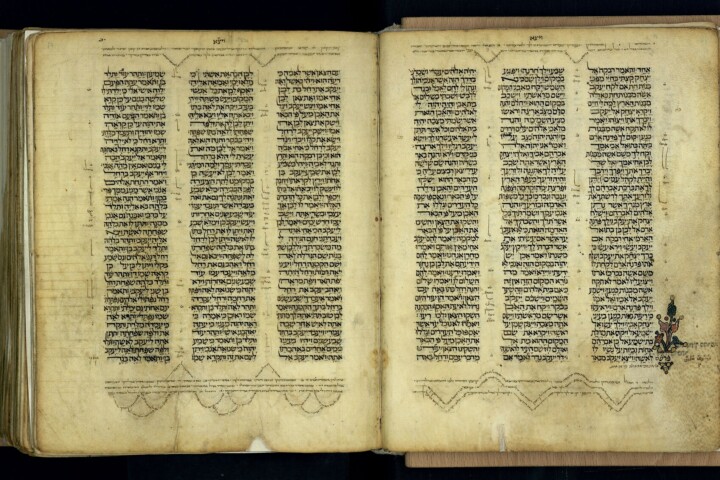
An Ideological and Improper Translation
I noticed something odd with the psalm reading at Mass the other day. Our bishops’ conference here in Canada has decreed that the Mass in English – Novus Ordo – use the ‘NRSV’, the ‘New Revised Standard Version’, an ‘updated’ translation of the original RSV, first published in 1952. This ‘new translation’ has the tendency[…]Continue reading→
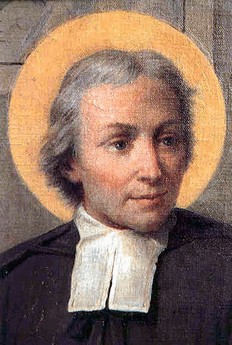
Saint Jean-Baptiste de la Salle: A Teacher for Teachers
Jean-Baptiste de la Salle (1651 – 1719), a French nobleman, ordained a priest, founded the first order in the Church’s history entirely without priests, and this came about almost by accident. I say ‘almost’, for, of course, there are no accidents with God. Destined for ordination from an early age, Jean-Baptiste never looked back, even[…]Continue reading→
Three Easter Musical Gems: Bach, Palestrina and Byrd
A very blessed and glorious Easter! Christus surrexit vere, alleluia! As we begin this Easter Octave with the great Solemnity of Easter, music to lift the soul would be one of Bach’s Easter cantatas, composed during his time at Leipzig in the early 1700’s, for the six Sundays of this festive season, leading up to[…]Continue reading→
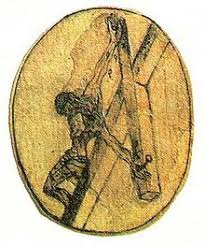
Good Friday and Suffering
Evil and pain is always a mystery, that whole mysterium iniquitatis, of which Saint Paul writes (2 Thess 2:7). In 1984, Pope Saint John Paul II penned an Apostolic Letter on the nature and purpose of human suffering, Salvifici Doloris (curiously, now looking back, the same year he made his first apostolic journey to Canada).[…]Continue reading→