
Fairy tales
I deny that biology can destroy the sense of truth, which alone can even desire biology. – G. K. Chesterton, The Long Bow
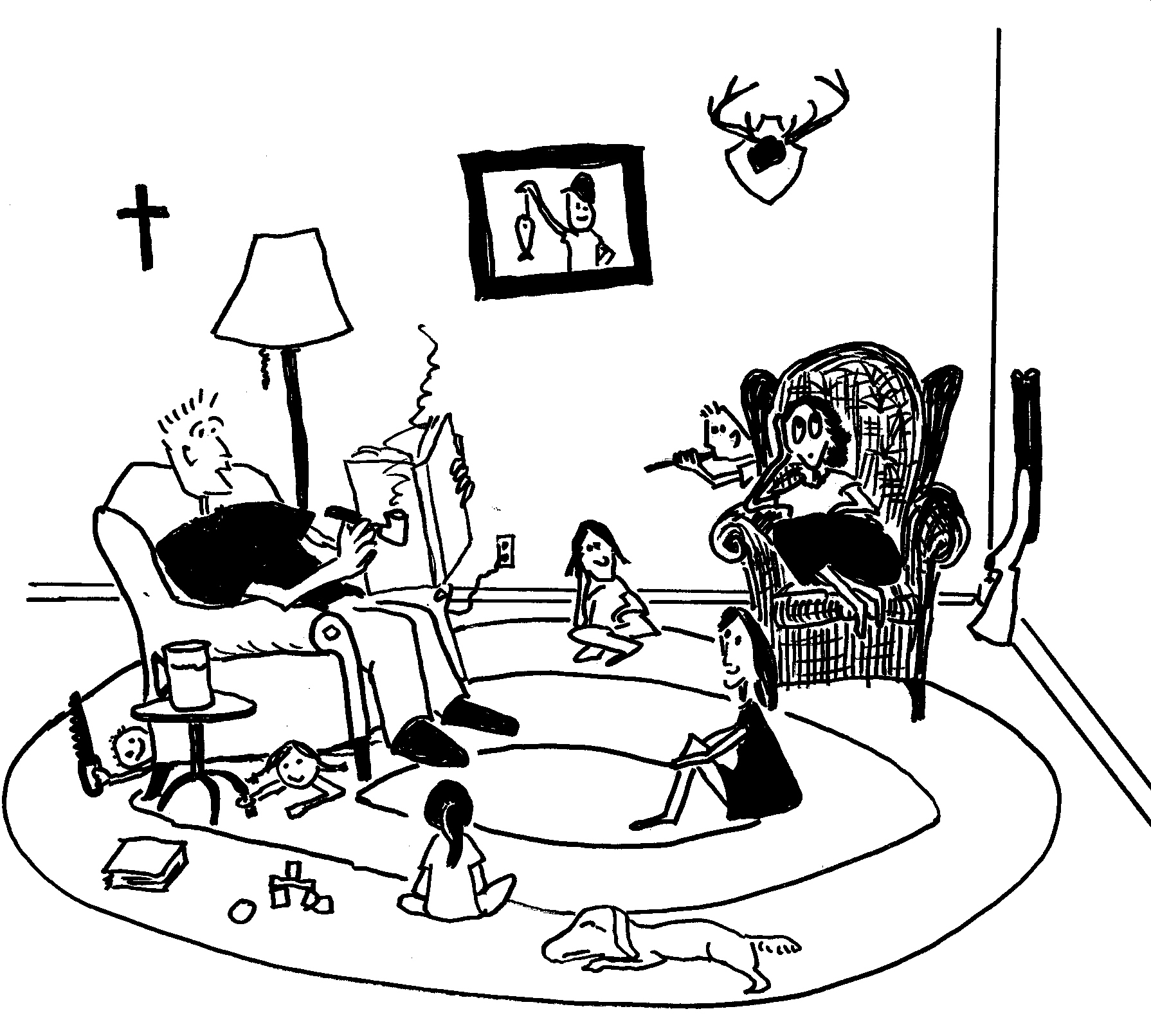
“Papa, tell us some fairy tales!” all the children cried in a single voice.
“If you promise to be good, and not to fight, Patrick and Anna, and to pay attention, Sally, and when I’m finished to go straight to bed, especially you two, Elizabeth and Pippa.”
“We will, we will,” everyone promised.
“Okay, then let us begin,” their father said. “The first book is by Richard Dawkins, called All from Nothing.”
“Goody! Hurray!” all the children yelled, except for Margaret, who was sitting in an old wing-backed chair reading Little Women. “That story is silly,” she said critically.
“Now Margaret, don’t you ruin it for the little ones,” Papa said sternly (but inwardly quite proud of his precocious ten-year-old). “Now let us begin. In the beginning there was nothing, nothing at all. Then gradually, over millions and millions of years…”
“Papa?”
“Yes, Patrick?”
“If there was nothing, how could there be time? Isn’t time something?”
“Yes, Patrick, but in a fairy tale you can have time.”
“Oh.”
“Huh!” whispered Margaret.
“…gradually, over millions of years, a little spark of energy appeared that grew until it exploded!”
“Ohhhhh! What then, Papa, what then?”
“It exploded into…”
“Papa?” asked Patrick.
“Yes?”
“If there was nothing, then where did the spark come from?”
“Quiet, Patrick! You’re ruining the story for the little ones!” said Papa.
“Huh!” whispered Margaret, a little louder this time.
“Where was I? Oh yes, it exploded into a big ball of energy and matter, and kept growing and growing, turning into Time and Space and…”
“Papa?”
“Quiet, Patrick!”
“…and Space, and slowly, all the stars, and the sun, and the earth, and the other planets appeared. The earth was a big blob of molten rock which cooled down to make a skin or crust. Water was formed…”
“Huh!” said Margaret disdainfully.
“…water was formed and in the water all kinds of chemicals were drifting about aimlessly, until some of the chemicals became alive, turning into crystals that could make other crystals exactly like themselves. These wonderful crystals slowly changed into one-celled creatures that ate…”
“But Papa!” cried Patrick, Sally, and Elizabeth all together. “If the crystals only made other crystals exactly like themselves, how could they change?”
“Well, over time things change, you know,” said Papa. Margaret pointedly shifted in her chair and raised her eyes.
“Papa, this is a silly story,” Sally said, and Patrick and Anna and Elizabeth and even little Hugh nodded in agreement.
“I haven’t even got to how people evolved yet,” said Papa.
“Can you tell us another story?” asked Anna. “Okay. This one is called Always and Always, by Stephen Hawking.”
“I hope this one makes more sense then the last one,” said Sally.
“Long, long ago, when the world was very young, even before the world as we know it was made, the whole world could fit into a small baby speck of energy. Everything was in that speck. The speck, in fact, was what was left over as the older mother universe had died and shrunk into itself. It got smaller and smaller until it was so small you couldn’t even see it with a microscope! Then, when it was finished shrinking and couldn’t shrink any more, it changed direction and began to grow! It grew so fast that it exploded into the world all around us. And someday, when it gets tired of growing, it will again begin to shrink into a tiny speck and do this over and over again, forever and ever.”
Papa looked at his children. They were staring at him and Margaret was chuckling to herself.
Patrick blurted out, “But that is so stupid!”
“Now, Patrick.”
“But it is, Papa,” this from little Hugh.
“It’s just reincarnation,” said Sally, who had a big word for everything. “And,” continued Sally, “if that was true, why would anyone ever do anything? Or care about anything at all if everything just happens over and over again?”
“You might as well be a drunk!” shouted out Elizabeth.
“Elizabeth! Watch what you say!” ordered Papa.
“Well, why not? If everything happens again and again, why do anything or make anything or work hard? You will only need to do it all again,” persisted Elizabeth.
Papa picked up some other books. “Since you don’t like these, then maybe I can find something you do like. How about Just Print More by Bob Rae, or Why Bother Working when Money is Free? by Thomas Mulcair? Or this classic, I Know Best but Should Have Known Better by Gregory Baum? Here is a book with lots of pictures of polar bears in it, Warmer Warmer Give me Money! by Al Gore…”
“Papa, I think we have outgrown these fairy tales. They’re not believable,” said Margaret.
“Yes,” said Sally.
“Yes,” said Anna.
“Yes,” said Patrick.
“Yes, not believable,” repeated Elizabeth and Hugh, with tiny Pippa nodding her head.
Carney’s Amoral Majority
After five defections – euphemistically described as ‘crossing the floor’ – and three by-elections, Mark Carney and his Liberals how have their coveted majority. One wonders what bowls of pottage were offered in back-room deals. In the archaic monarchical system that is the Dominion of Canada, this majority allows the newly-minted Prime Minister to rule[…]Continue reading→

A Tale of Two Benedicts
A grace-filled Holy Week to all our readers! As we await and prepare for the Resurrection about to dawn upon us, we might keep in mind two Benedicts: Pope Emeritus Benedict XVI, requiescat in pace, elected on this day in 2005; and today’s commemoration of the mystic pilgrim, Benedict Joseph Labre, who died on this[…]Continue reading→

Saint Lydwina of Schiedam and Suffering Joyfully
Saint Lydwina of Schiedam (1380 – 1433) was one of the countless and glorious ‘victim souls’ in the history of the Church, those whose lives are filled with suffering, often of an unimaginable intensity, but who suffer joyfully. She was a fifteen-year old Dutch girl, out skating one day, when she fell and broke one[…]Continue reading→

The Glorious Martyrdoms of Martin and Maximus
As we enter into Eastertide, we recall on this 13th of April Pope Saint Martin I (+655), one of the noblest, if most tragic, of the successors of Saint Peter. Born in Umbria, Italy, he was of noble lineage, with great intelligence combined with charity and love of the poor and the Church. While still[…]Continue reading→

Saint Stanislaus of Szczepanów
We celebrate Saint Stanislaus today (+ April 11, 1079), in light of this Easter Octave, a bishop and martyr who accepted the episcopacy only at the direct order of Pope Alexander II. He proved a wise and courageous leader of his flock, put to death by his own king, Boleslaus, for rebuking the monarch’s ‘immoral[…]Continue reading→
Saint Gemma Galgani
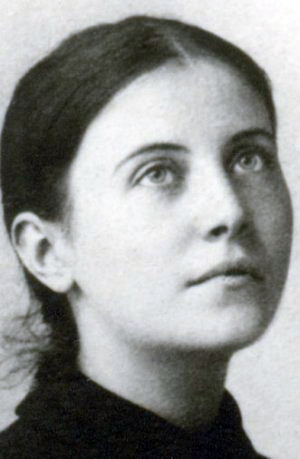
On this April 11th, in 1903 – the same year that the Italian Guiseppe Sarto was elected Pope later that summer as Pius X – a lovely, young Italian woman died, by the name of Gemma Galgani. She lived a brief life of 24 years, as did a number of other young saints, including Pier[…]Continue reading→
An Ideological and Improper Translation
I noticed something odd with the psalm reading at Mass the other day. Our bishops’ conference here in Canada has decreed that the Mass in English – Novus Ordo – use the ‘NRSV’, the ‘New Revised Standard Version’, an ‘updated’ translation of the original RSV, first published in 1952. This ‘new translation’ has the tendency[…]Continue reading→
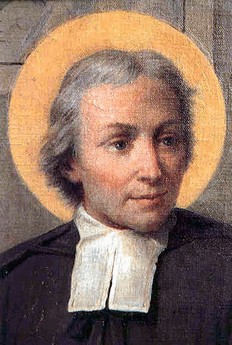
Saint Jean-Baptiste de la Salle: A Teacher for Teachers
Jean-Baptiste de la Salle (1651 – 1719), a French nobleman, ordained a priest, founded the first order in the Church’s history entirely without priests, and this came about almost by accident. I say ‘almost’, for, of course, there are no accidents with God. Destined for ordination from an early age, Jean-Baptiste never looked back, even[…]Continue reading→
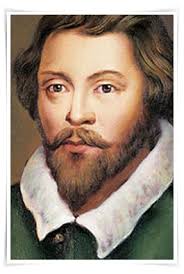
Three Easter Musical Gems: Bach, Palestrina and Byrd
A very blessed and glorious Easter! Christus surrexit vere, alleluia! As we begin this Easter Octave with the great Solemnity of Easter, music to lift the soul would be one of Bach’s Easter cantatas, composed during his time at Leipzig in the early 1700’s, for the six Sundays of this festive season, leading up to[…]Continue reading→
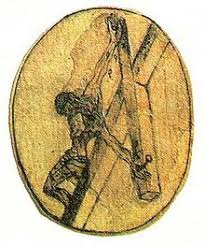
Good Friday and Suffering
Evil and pain is always a mystery, that whole mysterium iniquitatis, of which Saint Paul writes (2 Thess 2:7). In 1984, Pope Saint John Paul II penned an Apostolic Letter on the nature and purpose of human suffering, Salvifici Doloris (curiously, now looking back, the same year he made his first apostolic journey to Canada).[…]Continue reading→