
God be with ye
I was speaking with a colleague, Fred, who is an atheist, and he told me that he preferred to use Xmas on his Christmas cards rather than Christmas. This, he said, would not give offence to people who did not accept the entire Christian association with Christmas. Never mind the obvious, that there is no Christmas without Christianity. This reaction to Xmas is a common mistake, and one that we ourselves can easily fall into. I pointed out to him that the X in Xmas means Christ, and it is not an X but the Greek letter Chi, the first letter in Christ’s name. The use of the symbol X for Christ originates in the early Church, when advertising your Christianity meant martyrdom. Not that the early Christians would not willingly be martyrs, but there is an obligation to avoid this sacrifice if possible. The use of Xmas is filled with sacred imagery, when Christians celebrated Christmas in secret during the apostolic age, an age of ardent faith.
For us in Canada, with so many traditional Christmas practices coming from the British Isles, this idea of celebrating Christmas in secret has a more recent history. During the age of Cromwell, the Puritans would put Catholics to death; to even be accused of being a Catholic was to forfeit your right to be assumed innocent until proven guilty. The use of a symbol such as Xmas under these circumstances carries these historic meanings, especially for those of us of Irish, Scottish, or English background. So I congratulated my atheist friend on his traditionalism, in adopting this more reverent, deeply symbolic and Christian form of identifying this important day on his Xmas cards.
I asked him if he ever used the words good bye. He had. I then asked if he was being a hypocrite intentionally or simply out of ignorance. “Good bye,” I explained, “is a contraction of the words God be with ye, or God b’ye. This seems pretty religious to me. Similarly, our practice of honouring the pagan gods Woden, Thor, and Frida, among others, setting aside one day of the week for them, not to mention the gods of the moon and the sun. Janus, Mars, and the two Caesars who would be gods, the calendar is filled with religion, and every day atheists piously say “God be with you” to each other.
Of course, he did not want to follow this line of argument, so he changed the approach and began discussing the place of religion in the public domain. Fred argued that as a secular society we should not have overtly religious holidays or symbols. He cited as an example “the ubiquitous use of the cross on graves at the side of the road or on public memorials for the dead. Not everyone is a Christian. Must we always see crosses when we drive?”
“Yes, you must, whether you like it or not,” I answered him.
“There is a society of atheists who are suing municipalities to get them to remove all public crosses, you know.”
“Rather a hard task, I would think, since crosses hold up the telephone lines” I said, as I pointed out the row of wooden crosses extending down both sides of the street, carrying telephone and electric wires. “What about them; can you describe a more secular type of telephone pole?” My friend grew despondent and we walked along in silence for a while. But, not for long, for like all good atheists, he could not stop talking about religion.
“Well, at least we in Canada are not like those Americans, who have In God We Trust on their money. Their country is filled with religious symbols. That is crazy, and should not be tolerated,” he countered, thinking he had me. Non sequitors always give such hope to sloppy thinkers.
I pulled out a quarter from my pocket and read the words, CANADA 2003 25 cents, and on the other side, Elizabeth II D. G. Regina. “That means Deo Gratias Regina, or in English, queen by the grace of God. I take it you know that Elizabeth is more or less the Anglican Pope” I said inaccurately. “I take it you must be a republican then, and prefer the American model of separation of Church and State.”
We continued on in silence.
“Well, good bye Dave, it has been interesting,” Fred said as he turned to go.
“Thanks Fred! I appreciate that, and may the good God be with you, too. And happy tenth day of Christmas to you! Or if you prefer, happy Thor’s-day.”

Carney’s Amoral Majority
After five defections – euphemistically described as ‘crossing the floor’ – and three by-elections, Mark Carney and his Liberals how have their coveted majority. One wonders what bowls of pottage were offered in back-room deals. In the archaic monarchical system that is the Dominion of Canada, this majority allows the newly-minted Prime Minister to rule[…]Continue reading→

A Tale of Two Benedicts
A grace-filled Holy Week to all our readers! As we await and prepare for the Resurrection about to dawn upon us, we might keep in mind two Benedicts: Pope Emeritus Benedict XVI, requiescat in pace, elected on this day in 2005; and today’s commemoration of the mystic pilgrim, Benedict Joseph Labre, who died on this[…]Continue reading→

Saint Lydwina of Schiedam and Suffering Joyfully
Saint Lydwina of Schiedam (1380 – 1433) was one of the countless and glorious ‘victim souls’ in the history of the Church, those whose lives are filled with suffering, often of an unimaginable intensity, but who suffer joyfully. She was a fifteen-year old Dutch girl, out skating one day, when she fell and broke one[…]Continue reading→

The Glorious Martyrdoms of Martin and Maximus
As we enter into Eastertide, we recall on this 13th of April Pope Saint Martin I (+655), one of the noblest, if most tragic, of the successors of Saint Peter. Born in Umbria, Italy, he was of noble lineage, with great intelligence combined with charity and love of the poor and the Church. While still[…]Continue reading→

Saint Stanislaus of Szczepanów
We celebrate Saint Stanislaus today (+ April 11, 1079), in light of this Easter Octave, a bishop and martyr who accepted the episcopacy only at the direct order of Pope Alexander II. He proved a wise and courageous leader of his flock, put to death by his own king, Boleslaus, for rebuking the monarch’s ‘immoral[…]Continue reading→

Saint Gemma Galgani
On this April 11th, in 1903 – the same year that the Italian Guiseppe Sarto was elected Pope later that summer as Pius X – a lovely, young Italian woman died, by the name of Gemma Galgani. She lived a brief life of 24 years, as did a number of other young saints, including Pier[…]Continue reading→
An Ideological and Improper Translation
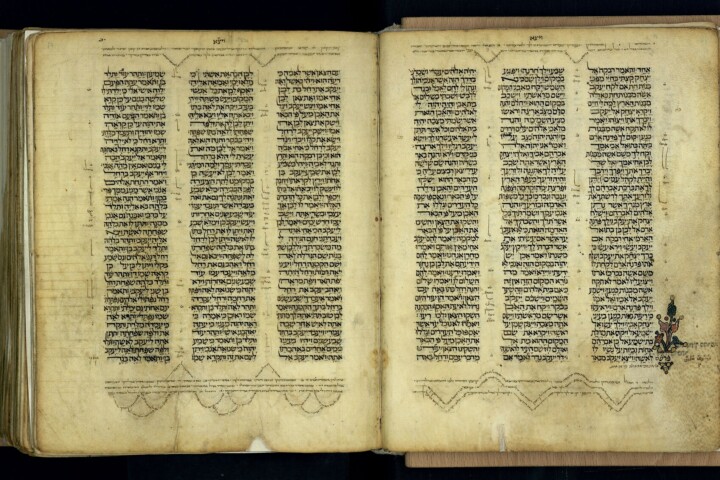
I noticed something odd with the psalm reading at Mass the other day. Our bishops’ conference here in Canada has decreed that the Mass in English – Novus Ordo – use the ‘NRSV’, the ‘New Revised Standard Version’, an ‘updated’ translation of the original RSV, first published in 1952. This ‘new translation’ has the tendency[…]Continue reading→
Saint Jean-Baptiste de la Salle: A Teacher for Teachers
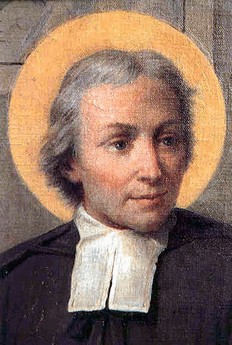
Jean-Baptiste de la Salle (1651 – 1719), a French nobleman, ordained a priest, founded the first order in the Church’s history entirely without priests, and this came about almost by accident. I say ‘almost’, for, of course, there are no accidents with God. Destined for ordination from an early age, Jean-Baptiste never looked back, even[…]Continue reading→
Three Easter Musical Gems: Bach, Palestrina and Byrd
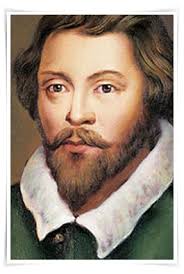
A very blessed and glorious Easter! Christus surrexit vere, alleluia! As we begin this Easter Octave with the great Solemnity of Easter, music to lift the soul would be one of Bach’s Easter cantatas, composed during his time at Leipzig in the early 1700’s, for the six Sundays of this festive season, leading up to[…]Continue reading→
Good Friday and Suffering
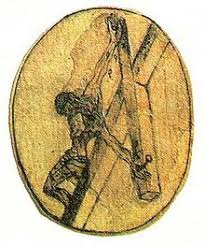
Evil and pain is always a mystery, that whole mysterium iniquitatis, of which Saint Paul writes (2 Thess 2:7). In 1984, Pope Saint John Paul II penned an Apostolic Letter on the nature and purpose of human suffering, Salvifici Doloris (curiously, now looking back, the same year he made his first apostolic journey to Canada).[…]Continue reading→